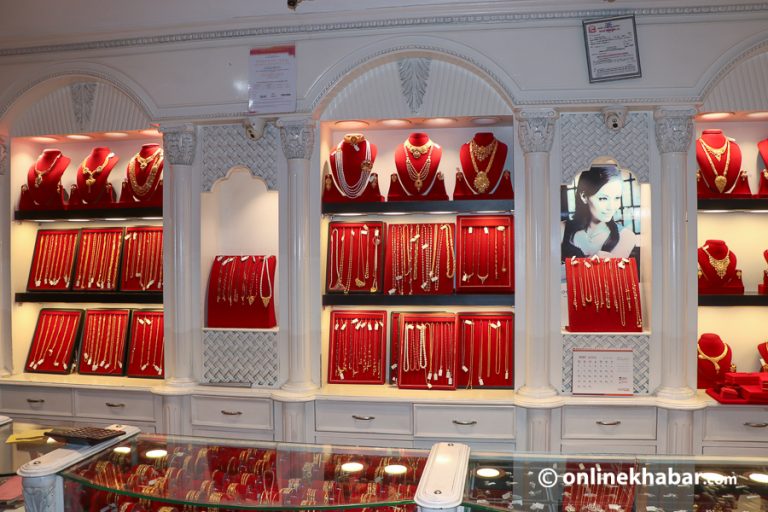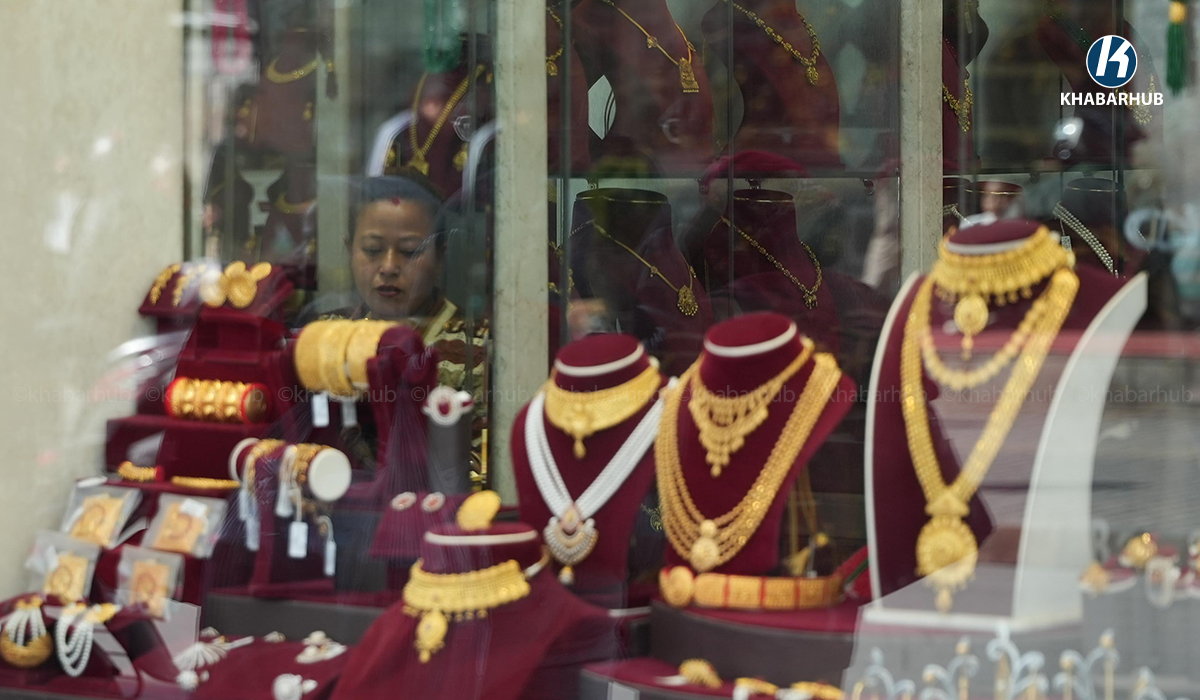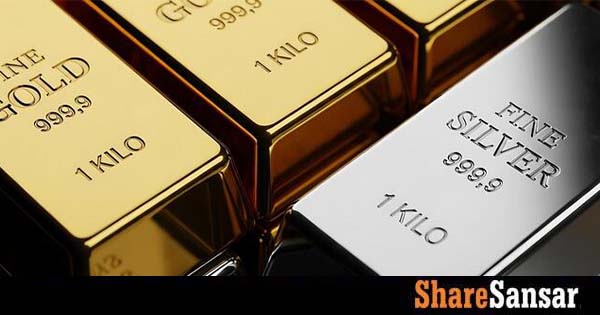
The price of gold in Nepal has fallen by Rs78,400 per tola from its record high in January, with the precious metal trading at Rs260,900 on Wednesday, as a stronger US dollar and expectations of higher interest rates in the United States weigh on international prices.
In January, buyers paid Rs339,300 for a tola of gold, the highest rate recorded in the country. The latest price is around 23 percent below that peak. Internationally, gold has fallen from approximately $5,594 an ounce in January to $3,763 on Wednesday, a decline of nearly 33 percent.
Tej Ratna Shakya, former president of the Federation of Nepal Gold and Silver Dealers’ Association, said expectations of US interest rate hikes and changes in the exchange rate between the dollar and Indian rupee were among the major reasons behind the decline.
“International conflicts or political developments that would push investors towards gold as a safe-haven asset are not evident at present,” said Shakya.
Gold prices fell more than 2 percent on Wednesday, Reuters reported, as the dollar strengthened and markets anticipated another interest rate increase by the US Federal Reserve. Investors were expecting a possible 0.25 to 0.50 percent increase. Higher interest rates generally make gold less attractive because the metal does not generate interest.
Inflation in the United States, running at around 4 percent annually, has also strengthened arguments for tighter monetary policy. Gold traditionally attracts investors during wars, political crises and economic uncertainty because it is considered a safe investment. The absence of immediate geopolitical pressures, alongside expectations of higher borrowing costs, has weakened demand.
The exchange rate has also contributed to the decline in Nepal. Gold is imported in US dollars, so a fall in the dollar's value against the Nepali rupee reduces import costs. The dollar's selling rate, which stood at around Rs152 earlier this month, had fallen to Rs149.86 on Wednesday, according to the Nepal Rastra Bank.
Nepal's currency is pegged to the Indian rupee at Rs160 for IRs100. Consequently, movements in the Indian currency against the dollar also affect the Nepali rupee. Reuters has reported that the Indian rupee strengthened amid increased foreign investment, with the dollar falling from around 97 to 93 Indian rupees.
Market forecasts remain divided. Markets.com has projected that international gold prices could fall from around $3,800 to $3,500 an ounce. Goldman Sachs, meanwhile, has forecast a price of $4,150 an ounce by the end of 2026, revising down its earlier projection of $4,650.
Shakya expects gold prices to find support at around $3,500 an ounce. If the dollar exchange rate, geopolitical situation and US interest rate outlook remain unchanged, he estimates that the domestic price could fall to around Rs250,000 per tola.
The estimate takes account of Nepal's import costs and taxes. Commercial banks import gold and pay 20 percent customs duty. Consumers also bear an additional 1 percent in bank charges and the skills-promotion fee collected by traders.
One troy ounce equals 31.1 grams, while a tola weighs 11.664 grams. Based on an international price of $3,500 an ounce and applicable taxes, Shakya estimates that gold could cost around Rs250,000 a tola in Nepal.
Gold crossed Rs300,000 a tola for the first time in Nepal in January 2026 amid geopolitical tensions and economic uncertainty. The record of Rs339,300 was set on January 29, after which prices began retreating.
Nepal's gold prices are determined largely by international rates, the dollar-rupee exchange rate and import duties, rather than domestic demand and supply alone.
Gold is widely viewed as a hedge against currency market volatility. Traditionally, it moves in the opposite direction of the US dollar, as weakness in the dollar makes dollar-priced gold cheaper for holders of other currencies, and vice-versa. In Nepal, individuals are not allowed to buy raw or bar gold directly from the central bank, commercial banks or bullion traders. While the central bank authorises commercial banks to import up to 20 kg of gold per day, traders can buy only one kg at a time from banks.
Khanal works in the economics bureau of Kantipur Media Group and writes on the stock market, banking and investment.