As Israel’s post-election political scenario continues to unfold, analysts and experts tell Al Jazeera that Israel’s occupation of parts of southern Syria is likely to continue regardless of who becomes the country’s next prime minister.
Israeli incursions and raids in the provinces of Quneitra and Deraa intensified in recent weeks as Israel’s caretaker Prime Minister Benjamin Netanyahu and de facto leader of the opposition Gadi Eisenkot try to form a new government.
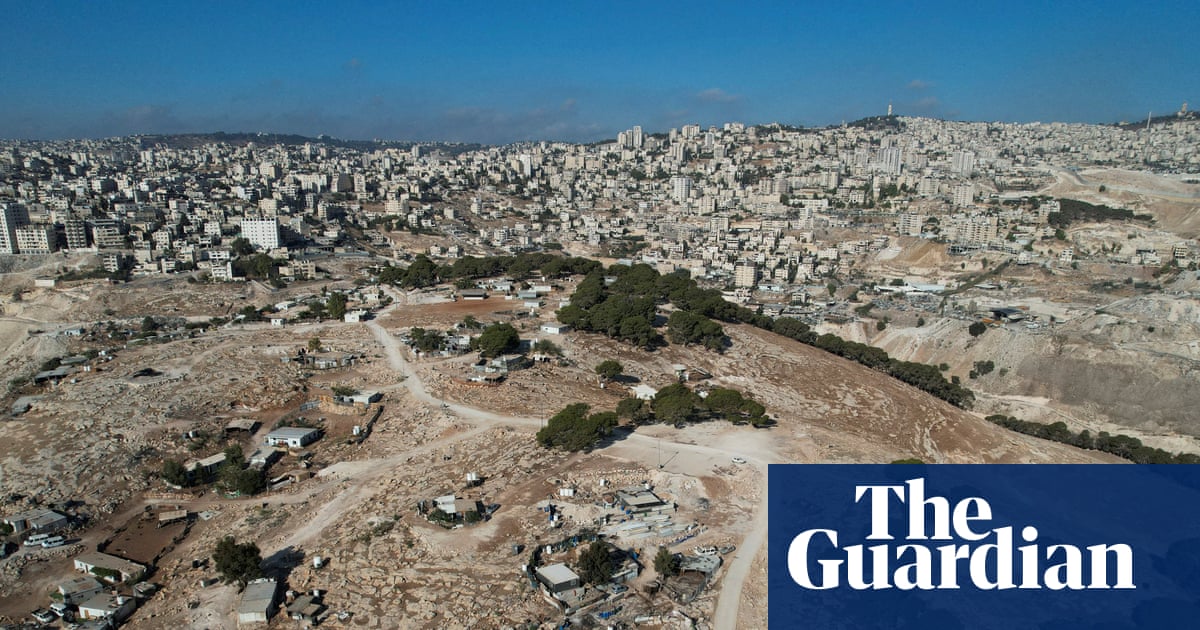
Since the fall of Bashar al-Assad’s regime in December 2024, Israel has occupied key strategic points in southern Syria, such as Jabal al-Sheikh, which Israelis know as Mount Hermon.
Israel’s continued violations of Syrian sovereignty are piling pressure on the new government led by President Ahmed al-Sharaa in Damascus, which has been targeted in Israeli air strikes . Syria has sought to harness its deepening ties with regional and international powers to pressure Israel to stop its incursions, but this strategy does not yet appear to be bearing fruit.
Israeli raids, often resulting in detentions or civilian deaths, are leading to continued instability in southern Syria, which has already suffered from the 14-year war between al-Assad’s forces and the opposition. But even with a prospective change in government in Israel following last month’s election, the endgame has not changed for Israel, analysts say.
“Israel appears to want both to dematerialise the south and the freedom to intervene there,” Navvar Saban, a researcher in security and military affairs at the Arab Center for Contemporary Syrian Studies in Damascus, told Al Jazeera.
“Israel is turning its military presence into an established reality before any settlement. Repeated incursions, checkpoints, construction, [are all] strengthening its control and negotiation leverage.”
Syrians in areas close to the Israeli occupation of their land live in a constant state of fear, with homes being raided and civilians being arrested. The fate of 35 Syrians detained by Israel is still unknown, according to a report by the Syrian Network for Human Rights (SNHR).
Israeli forces have also conducted a series of air and artillery strikes on villages and countryside in southern Syria, with 69 people killed since 2024, the SNHR report said.
On Tuesday, a video emerged of an Israeli raid in the province of Deraa , one of the areas heavily targeted by Israel.
Israeli forces left a local home with bullet holes in the window, walls charred with soot, and belongings tossed across the floor. Locals and experts say Israeli troops routinely raid homes and detain residents in the area, while Syrian authorities appear powerless to prevent them.
Israel has occupied the Golan Heights since 1967 and illegally annexed the strategic Syrian territory in 1981. In December 2024, during the collapse of the al-Assad regime, Israel invaded and occupied neutral areas of the Golan, along with more Syrian lands. Over the next year, Syria was attacked more than 600 times , despite the new government in Damascus saying it posed no threat to Israel.
For the past two years, Syria’s stated priorities have mostly been internal. The new government has worked to remove international sanctions and spur a stuttering local economy . Internationally, Syria has said it wants no problems with its neighbours and has tried to reintegrate the country into the regional fold after years of broken relations under al-Assad.
But since October 2023, when the genocide in Gaza began, Israel has adopted a more outwardly aggressive strategy with its neighbours, including Lebanon and Syria. In recent months, Israel has been intensifying its incursions and raids on southern Syria in particular.
A report published in late October by the Arab Reform Initiative found that Israel had conducted 678 ground incursions and 168 raids into southern Syria between January and September 2026. In September alone, it launched 113 incursions, 27 raids and 24 artillery shelling incidents into southern Syria, showing what the report called “a trend toward escalation”.
Due to the situation, government officials have been prevented from performing their duties in many parts of southern Syria, effectively putting these areas under Israeli security control. Syrians arrested by Israeli forces have recounted brutal prison conditions, including physical and psychological abuse.
Externally, this is the biggest “challenge for al-Sharaa and his government” Issam al-Reis, a senior military adviser and research director at Damascus-based nonprofit Etana Syria, told Al Jazeera.
“Everything else could be solved, including Suwayda and the integration of the SDF, but the truth is this is the biggest concern to the government,” he said, referring to the Syrian Democratic Forces, officially dissolved in August.
Israeli elections last month came with the prospect of a new government.
Matan Kahana was elected parliament speaker on Tuesday , in a blow to the prospect of Netanyahu returning to power. He is an ally of Eisenkot, the Yashar party leader invited to form the next government to replace Netanyahu, Israel’s longest-serving premier.
But analysts say even if Eisenkot succeeds and forms a government, there will be few changes in Israel’s policy on Syria.
“The [Israeli] government could change their diplomatic approach, but I would not assume it would abandon Israel’s security demands or withdraw automatically,” researcher Saban said. “The security demands for the Israelis will never change. The ratio of it might change, the approach might change. But the security demand is always present in the Israeli mentality.”
Al-Reis, who is also a former military officer who defected from the Syrian Army, said decisions taken by Israel in southern Syria are dictated by military matters and not political concerns.
“Therefore, it will not change as a result of the electoral government change,” he said.
Even Israeli soldiers who have taken part in the occupation of southern Syria have said they are unconvinced by the army and the government’s narrative that southern Syria poses a security concern to Israel.
“The feeling [is] that there’s some bluff everybody is playing along with. We’re there, so we need to invent a story that it’s dangerous,” one soldier told the Israeli daily Haaretz.
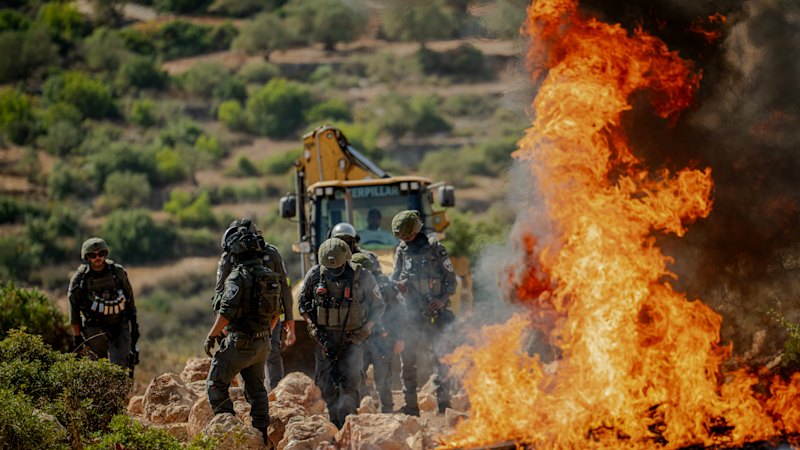
Without a clear policy or mission, troops fire at civilians, shoot at animals, or conduct night-time searches during which families are pulled from their beds, detained and questioned, similar to Israeli conduct in the occupied West Bank.
Israel has claimed it is in southern Syria to counter groups opposed to Iran operating in the territory, although since the fall of the al-Assad government, Iran-linked militias have been withdrawn.
Still, since then it has at various times alleged that the ISIL (ISIS) group and Lebanon’s branch of the Muslim Brotherhood are present in Syria, although the latter denies it operates outside Lebanon’s borders.
Saban said, because many residents of southern Deraa and Quneitra are farmers, guns are present in the region, but this is far from the narrative painted by the Israeli military.
“It’s a weaponised culture [because] they are farmers with herds, but resistance to incursion is not automatically evidence of an organised, externally directed network,” he said. “The Israelis are trying to project that the whole area is an organised resistance. But there isn’t any organised resistance. People having arms over there does not mean that they are part of a network.”
Saban believes that Israel’s presence and endgame in southern Syria are less about beating back the so-called resistance and more about creating a new reality on the ground. This is one in which the Israeli military can operate freely without opposition from locals or the Syrian government.
“It is clear that there is no intention at all to withdraw from Syrian territory,” al-Reis said.