

A coroner’s investigation into Northern Ireland ’s most venerable cold case has concluded that the victim was decapitated more than 2,000 years ago.
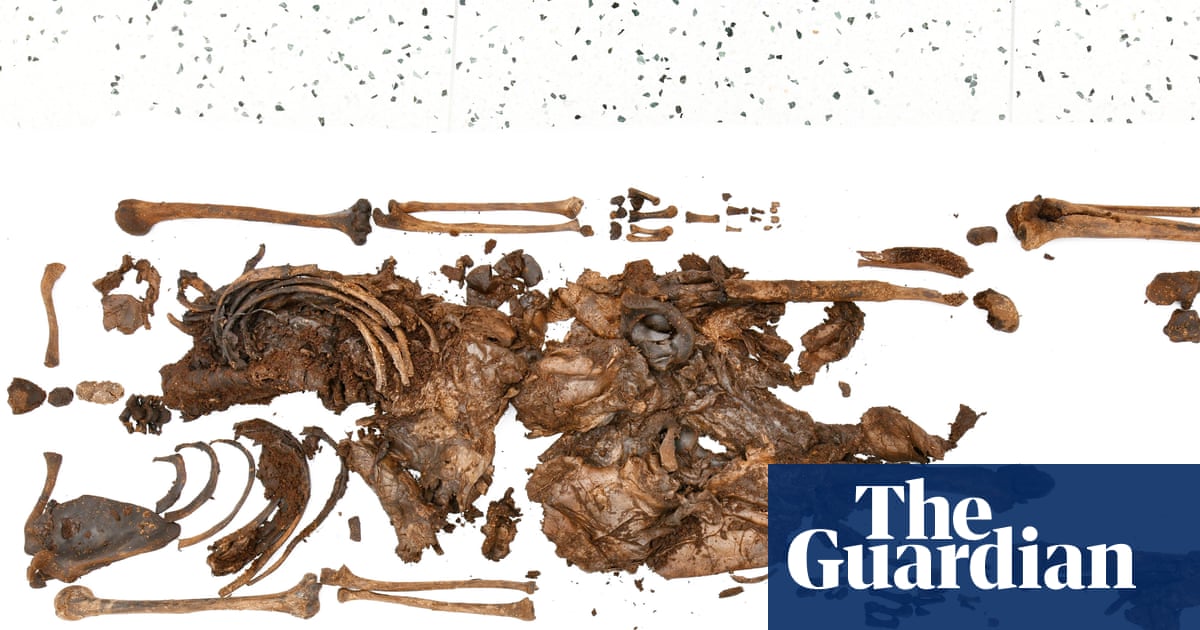
The inquest-style inquiry determined that Ballymacombs More Woman – the name given to iron age remains found in a County Derry bog three years ago – was between 15 and 22 years old when she was beheaded from behind with a bladed weapon.
The inquiry, hosted at the Ulster Museum on Monday, was not a formal inquest but adopted the structure and methodology of a coroner’s investigation and drew on the latest archaeological, forensic and scientific evidence to examine the death.
“The purpose of the exercise is not to impose modern legal conclusions upon the distant past, but to provide a framework through which the available evidence could be assessed and the story of a previously unknown young woman could be told,” said the coroner for Northern Ireland , Joe McCrisken, who chaired the investigation.
“Although separated from us by more than 20 centuries, she was once a living member of her community, and the investigation sought to restore, insofar as possible, an understanding of her life, death and place in history.”
The precise circumstances surrounding the woman’s death remain unknown, but evidence suggests it was part of a tradition of ritualised killing and sacrifice documented among other iron age bodies discovered across north-western Europe.
“What we have learned from this detailed research has allowed us to share her story with clarity and confidence,” said Hannah Crowdy, the head of curatorial at National Museums NI. “She has provided a significant insight into the iron age, and how we as a society have evolved over time.”
Peat workers discovered the remains in a bog in the townland of Ballymacombs More outside Bellaghy in October 2023, leading to an archaeological excavation which uncovered bones – though no skull – and a woven artefact.
Initially thought to be male, the body was called Bellaghy Boy until it was found to be female and renamed Ballymacombs More Woman. Residents in the area have given her a different name: Áine, after a mythical goddess.
Previous bog body discoveries such as Ireland’s Clonycavan Man and Denmark’s Tollund Man and Grauballe Man have given researchers insights into iron age societies. They also inspired poetry by the late Nobel laureate, Seamus Heaney , who grew up near Bellaghy.
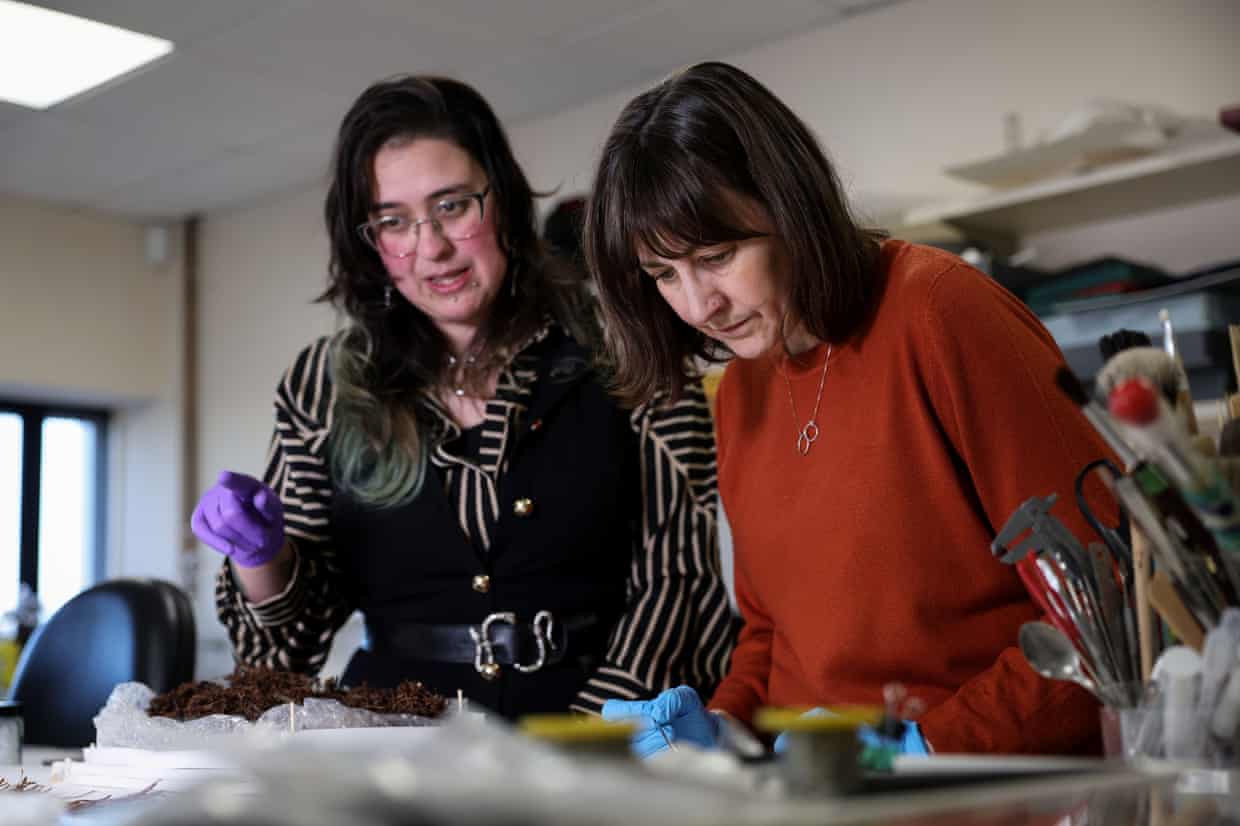
The coroner’s investigation had the imprimatur of the lady chief justice, Siobhan Keegan, as part of the judiciary’s outreach programme. It drew on specialists from Irish, UK and Danish universities and interviewed witnesses including Police Service of Northern Ireland officers and employees of Bulrush Horticulture, whose work led to the discovery of the remains.
Using techniques such as micro-CT scanning, digital mapping and 3D imaging, the inquiry strove to establish who the deceased was and where, when and how she died.
The remains provided a bridge to the iron age, said Crowdy. “Her legacy will provide a crucial resource for research and learning, and an important reminder of how relevant museums are in connecting the past to the present day, not only for our visitors, but across academia too.”