India has become a rice-producing powerhouse, thanks to advances in crop science and subsidies introduced decades ago to ensure the country could feed itself.
But the transformation has also created a growing surplus, much of which is exported, even as the government faces mounting costs from subsidising production.
A Reuters review of federal government communications with state governments and interviews with 10 officials and more than a dozen scientists reveal growing concern within Prime Minister Narendra Modi’s administration over the financial burden of subsidising rice that feeds consumers abroad as well as at home.
Rice subsidies account for more than two-thirds of India’s federal food subsidy bill, which has more than doubled in a decade to 2.28 trillion rupees ($24.1 billion) in 2025/26.
“In effect, we are using taxpayers’ money to subsidise foreign consumers,” said Ashok Gulati, an agricultural economist and former government adviser on crop prices. He said the surplus was being “dumped on global markets at prices that undercut competitors”.
Even as poor rainfall linked to El Niño is expected to result in a smaller harvest in 2026/27 , ample stocks mean the US Department of Agriculture (USDA) still forecasts an increase in Indian exports over the next two years.
The surplus stems partly from new rice varieties that have made large areas of flood-prone eastern India suitable for reliable cultivation. This has helped raise national output by 50 percent in a decade, to a record 154 million tonnes in 2025/26, well above domestic consumption of 107 million tonnes in the country of 1.4 billion people.
The increase has been supported by a federal rice subsidy system introduced in the mid-1960s, when India struggled to feed its population. More recently, state governments have also offered bonuses on top of the federal minimum support price, further encouraging production.
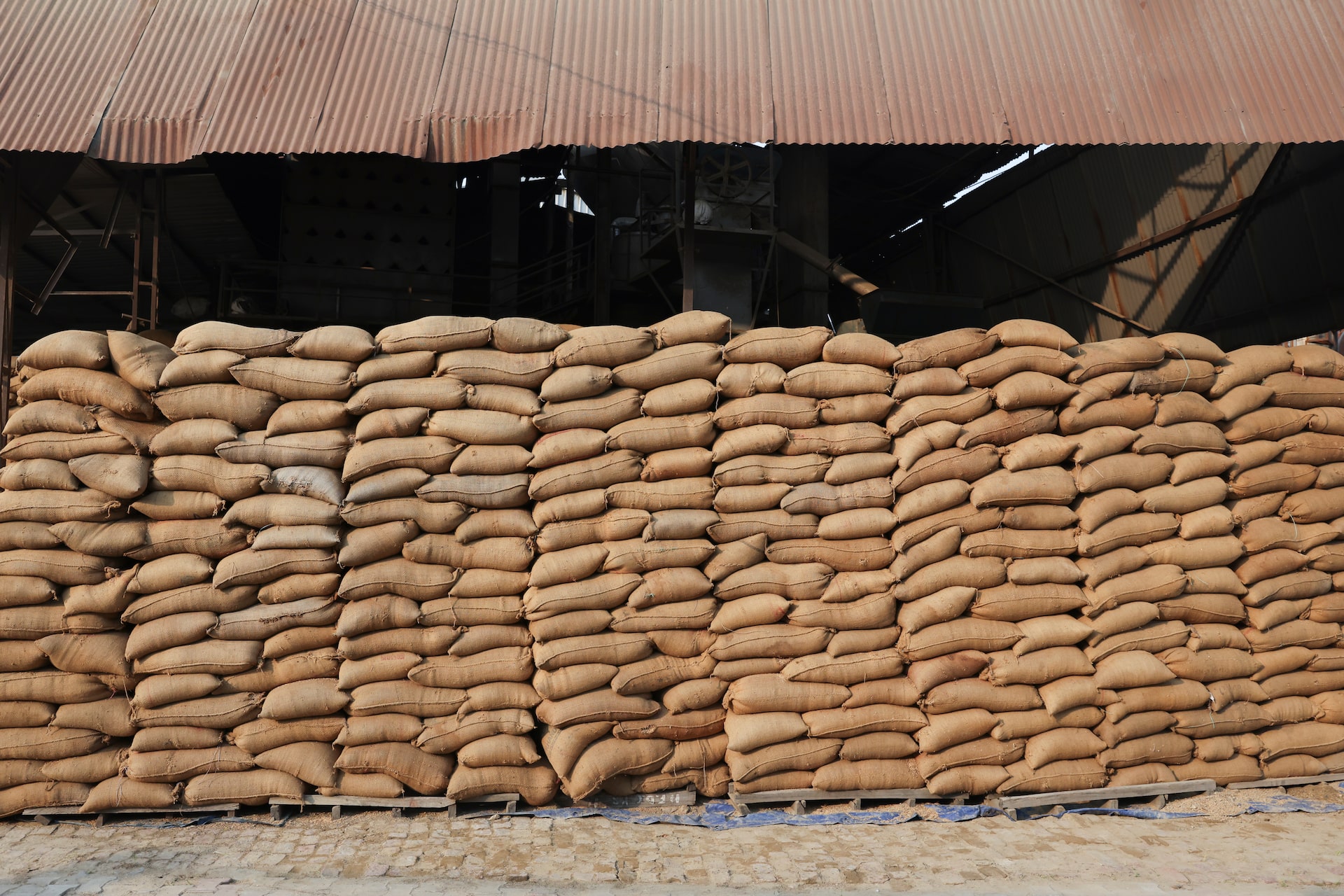
In 1965, the government urged Indians to skip dinner one day a week because of poor harvests. Today, rice exports have doubled in a decade to 22.3 million tonnes in 2025. Indian grain accounts for 40 percent of global rice trade, while storage space for the growing stocks is running out.
“We have run out of space,” said Navin Aggarwal, a private miller in Cuttack, in the eastern state of Odisha, where production has surged. “We have been waiting for government agencies to lift the rice they have already bought from us.”
Under the subsidy system, the federal government sets a minimum support price for rice every year, taking into account production costs, including labour and fertiliser. The guaranteed price gives farmers an incentive to grow the crop. Rice-producing states often offer additional payments, making cultivation even more profitable.
The resulting surpluses have fuelled tensions between the federal government and state administrations over these bonuses. They encourage further rice production, leaving less land for crops such as oilseeds and pulses, which India needs to import.
One senior federal food ministry official told Reuters that rice-producing states continued to pressure the ministry to purchase more rice, describing the situation as “exasperating”.
The tensions extend beyond India. As Indian exports rise, competing producers, from Thailand and Vietnam to the United States, have voiced growing frustration.
US President Donald Trump accused India in December of “dumping” rice, or selling it below cost. New Delhi, which is negotiating a trade deal with Washington, rejected the allegation, saying it exports premium-priced basmati rice to the United States.
Trade body USA Rice said in April that “unfair competition from bad actors like India” threatened US sales.
A US Department of Agriculture spokesperson told Reuters in a statement that Washington had “long raised concerns” about India’s rice subsidies. US trade, commerce and White House officials did not respond to requests for comment.
Thailand, meanwhile, called for cooperation with India and Vietnam in 2025 to prevent prices from falling. In October, Bangkok said India's large stocks were adding to pressure on Thai exporters.
Indian rice sells at a discount of about $110 per tonne compared with benchmark Thai rice, which was trading at around $497 per tonne in mid-November.
Thai and Vietnamese officials did not respond to requests for comment. India’s finance, agriculture, food and trade ministries also did not reply.
‘We grow more rice than we can eat’
India’s rice revolution has been driven in part by Swarna-SUB1, a variety released for commercial cultivation in 2009 by Indian researchers. They developed it by combining the flood-tolerant FR13A variety with the widely cultivated, high-yielding Swarna variety.
Traditionally, most rice production came from northern and north-western India, particularly Punjab and Haryana. The new variety has since transformed cultivation in flood-prone eastern India.
Chandramohan Yadav is a farmer in Bihar, in eastern India. His village, Sisonee, lies near the Kosi River, known as the “River of Sorrows” because of its devastating floods.
Rice production in Bihar rose 182 percent over the past 15 years to 8.75 million tonnes in 2025/26. In neighbouring Odisha, output increased 50 percent to 10.2 million tonnes.
Researchers are working to develop a variety that combines flood and drought tolerance, which would help farmers dependent on increasingly unpredictable monsoon rains, said Rameswar Sah, a senior scientist at the state-run ICAR-Central Rice Research Institute.
New varieties are expected to add at least 10 million tonnes to national output over the next five years, according to estimates cited by two scientists and two government officials.
A report by NITI Aayog, the government’s top policy advisory body, seen by Reuters, projected that total production would reach 171 million tonnes by 2036. Domestic demand, however, would rise only to 110 million tonnes.
Faced with the growing surplus, the government has directed some rice towards ethanol production . But government stocks continue to rise, reaching a record 55.47 million tonnes on October 1, more than four times the official target.
In a document seen by Reuters, the federal food ministry said in September that the government planned to add 13.1 million tonnes of storage capacity to address a “growing mismatch between procurement and offtake and regional imbalances”.
Bhagwant Mann, chief minister of Punjab, urged the federal government in a September 29 letter to move 600,000 tonnes of government-purchased rice from the previous year’s harvest to other warehouses. Otherwise, he warned, delays in purchasing the new harvest could trigger “unrest” among farmers.
State bonuses in government crosshairs
Farmers in India, where agriculture employs more than 40 percent of the workforce, have opposed any move to reduce subsidies. Protests in 2020 and 2021 against farm laws, which farmers feared would end the federal minimum support price system, forced the government to repeal the legislation in November 2021.
Unwilling to overhaul the federal subsidy system, the government has sought to curb additional payments offered by state governments. It has made little progress, as state administrations fear electoral backlash if they withdraw the incentives.
The federal food ministry approached the finance ministry three times over the past two years, urging it to prevent states from offering bonuses, three government sources said.
In a January 9 letter seen by Reuters, the finance ministry’s Department of Expenditure urged states to align their incentives with national priorities by encouraging the cultivation of other crops. It also warned that water-intensive rice cultivation was putting pressure on groundwater resources .
India spent $22.7 billion on importing oilseeds and pulses in 2025, a 120 percent increase over the past decade. Rice exports, meanwhile, earned the country $12 billion, according to trade ministry data.
Experts say rice cultivation requires more fertiliser than oilseeds and pulses, adding to India’s fertiliser subsidy burden . The fertiliser ministry estimates that the bill will exceed 3 trillion rupees ($31.8 billion) in 2026/27, four times its level a decade ago.
Food ministry officials also raised concerns about rice bonuses with state food officials in September 2025 and March 2026, four government sources said.
Abhishek Govilkar, head of agribusiness at consultancy BigMint, said persuading state officials to scrap the bonuses would not be easy.
“State governments see bonuses as a tool to win elections,” he said, making it “difficult for the government to check its runaway expenditure”.