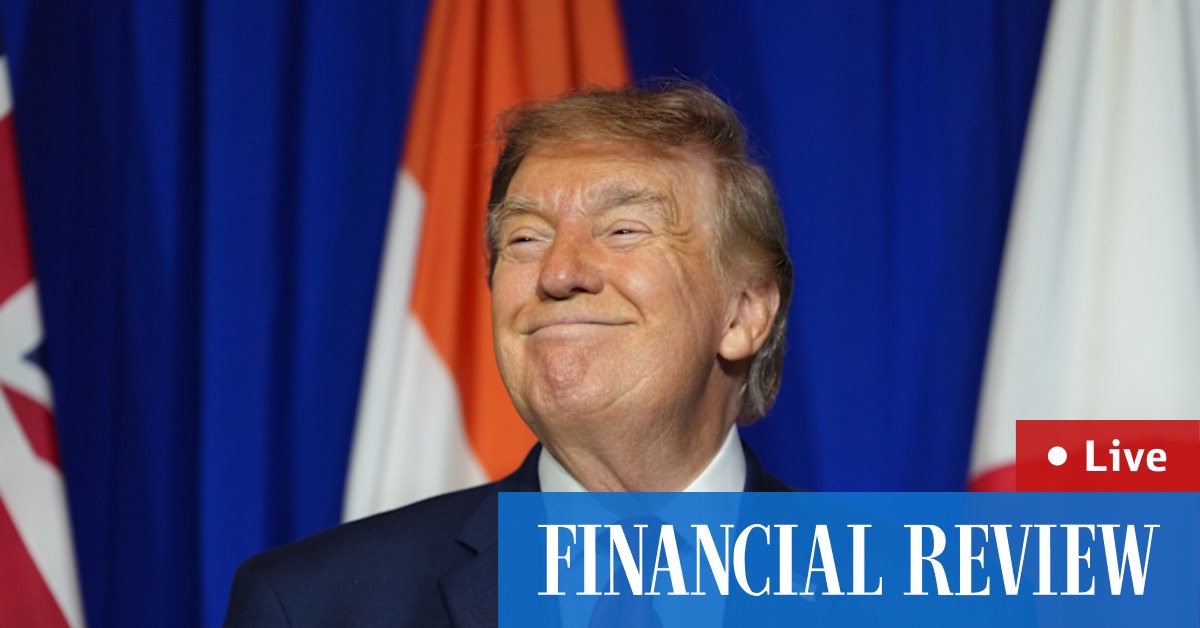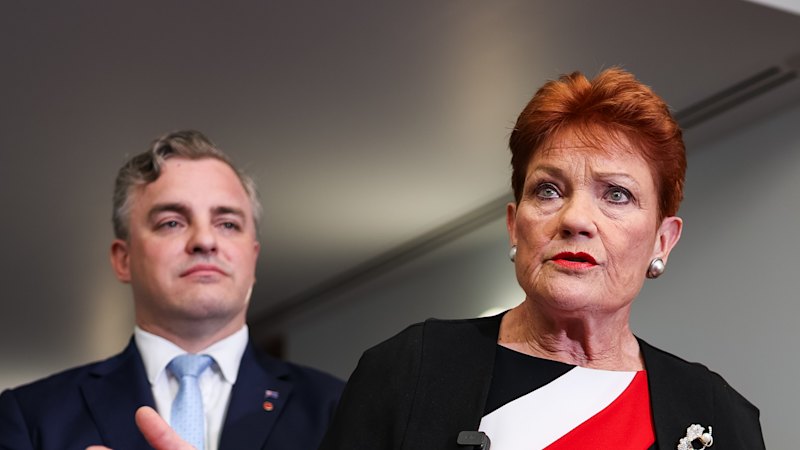
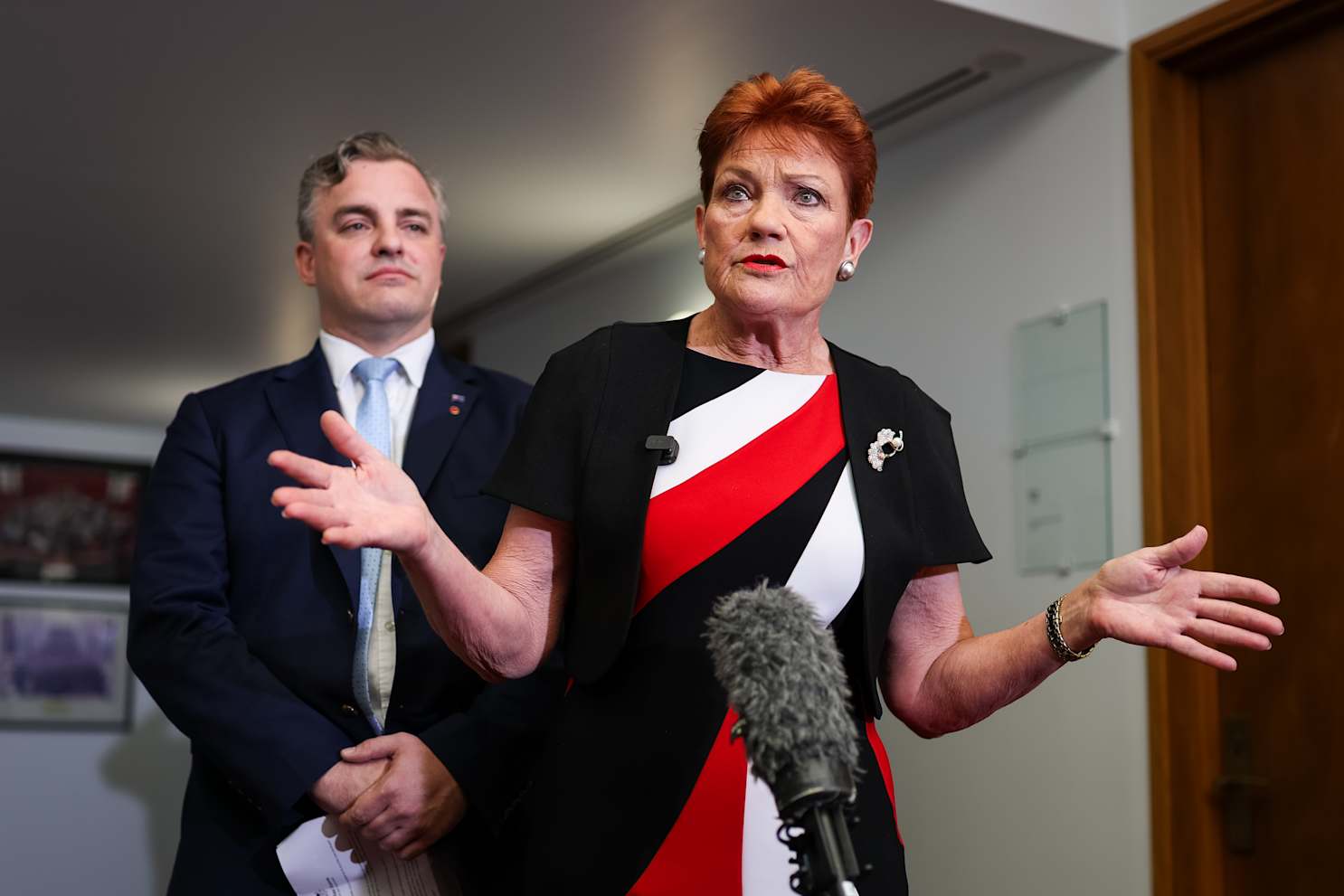
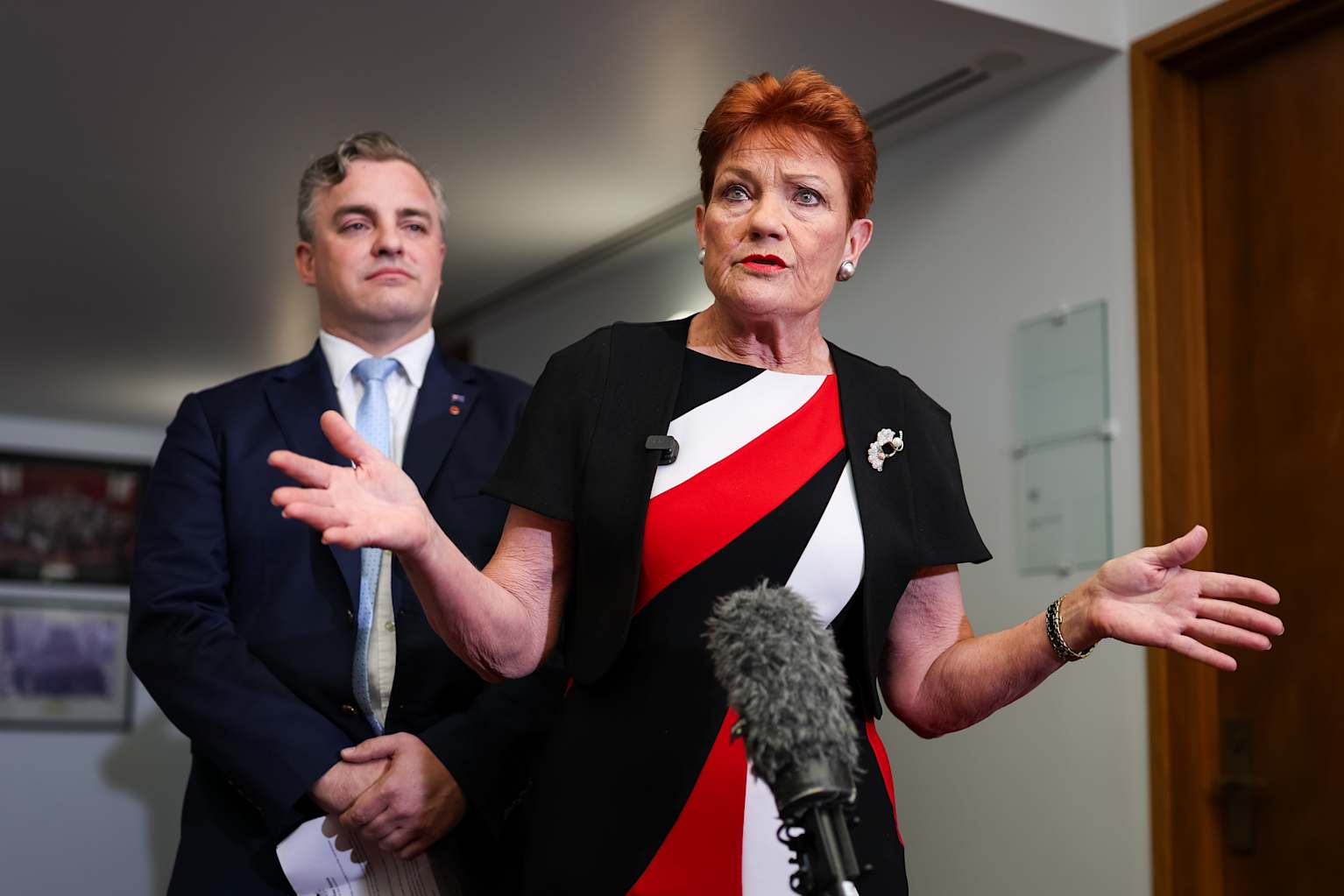
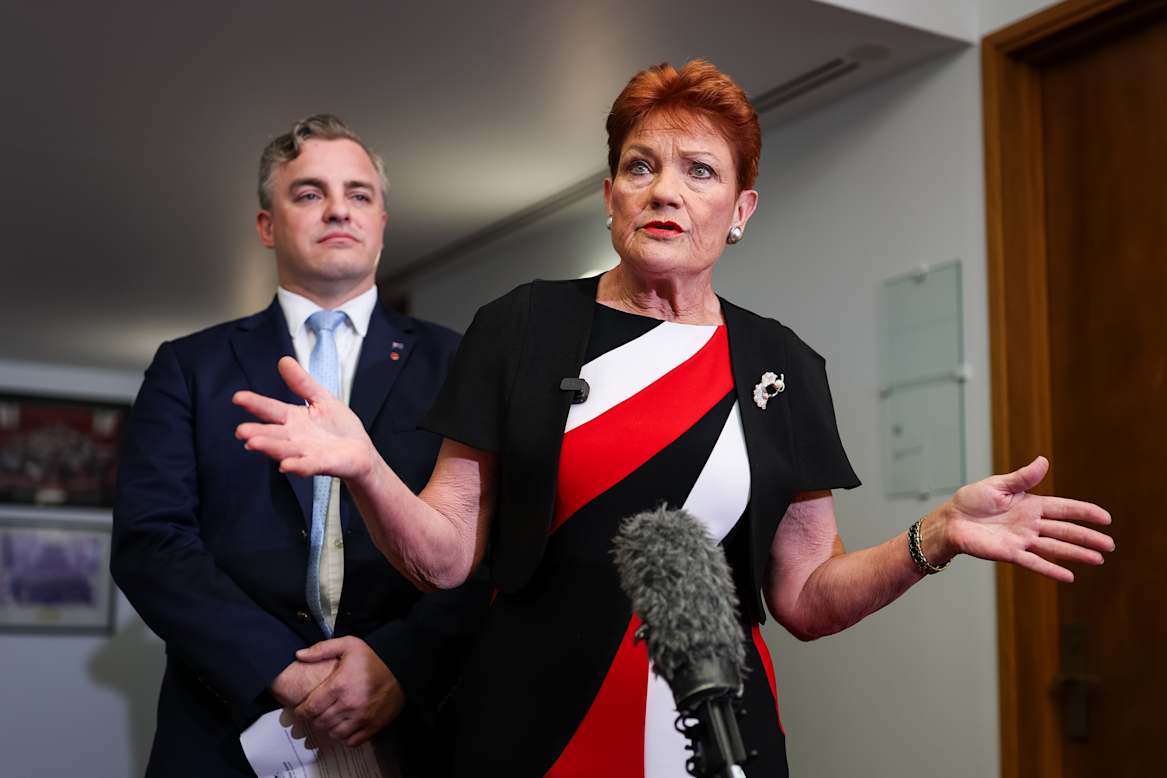
One Nation leader Pauline Hanson has wrongly claimed Donald Trump’s war in Iran has not contributed to inflation, while confirming her crackdown on parent visas could force more than 10,000 parents and grandparents out of the country.
Described as “MAGA-first” by Liberals including Andrew Hastie , Hanson declined to say on Wednesday whether she wanted Trump to wind down the conflict, which has spiked global oil prices and which the Reserve Bank has repeatedly said is adding to Australia’s pre-existing inflation problem.
“That’s not up to me to decide whether Donald Trump should end the war,” Hanson told reporters in Canberra. “No country like Iran should have nuclear weapons.
“Cost of living was not due to the war in Iran. That’s been bad management by an absolutely incompetent government that has driven it up. Even [bank governor] Michele Bullock from the RBA has called it out time and time and time again. It’s out of control spending by the current government.”
Speaking on Tuesday, Bullock said the price of oil and the uncertainty caused by the war in the Middle East were key inflation risks along with the AI construction boom. She said while inflation was already too high before the war, the conflict and its impact on oil prices had made the situation worse.
Hastie, who has been targeted by Hanson, told this masthead: “Pauline Hanson will be the last one to take down the MAGA flag even after Donald Trump has left office.”
Hanson underlined her long-term reluctance to criticise Trump while holding a press conference to explain her latest hardline migration policy.
As the Coalition aims to gain ground by focusing on inflation, Hanson is steering the national conversation back to migration by pledging to axe the 7000 visas given to parents and grandparents each year.
The populist-right party released an uncosted estimate, based on its own analysis of Treasury figures, that cutting parent visas and slashing the refugee intake by 90 per cent could save federal and state taxpayers $140 billion over decades.
However, the policy did not reference the cost of repaying the nearly $50,000 fee already paid by many people in the 161,000 in the parent visa backlog, some of whom die waiting to be accepted. Immigration analyst Abul Rizvi said the cost of refunding would be about $1 billion.
Making matters more complicated, Rizvi said at least 13,000 had applied for parent visas while living onshore on different visas, including bridging visas.
Asked if those already living in Australia would be able to stay after their parent visa fee was refunded, Hanson said: “They can’t.”
Her comments raise the spectre of a future Hanson-led government pushing thousands of parents and grandparents to depart the country.
Rizvi, previously a senior migration bureaucrat in the Howard government, said many parent visa holders performed a childcare role for grandchildren, which did not show up in Treasury estimates that suggest parent visa holders cost the taxpayer more than $500,000 over their lifetimes.
The visa holders are immediately eligible for Medicare but must wait 10 years for benefits such as the age pension or unemployment benefits. The $500,000 figure stems from the fact that the people come to Australia as older people, meaning they use services in the same way as other Australians, but do not contribute to tax revenue because they did not spend their working lives here.
The parent visa also requires a financial guarantee of $10,000 by the person’s sponsor in case the parent is forced to draw on benefits.
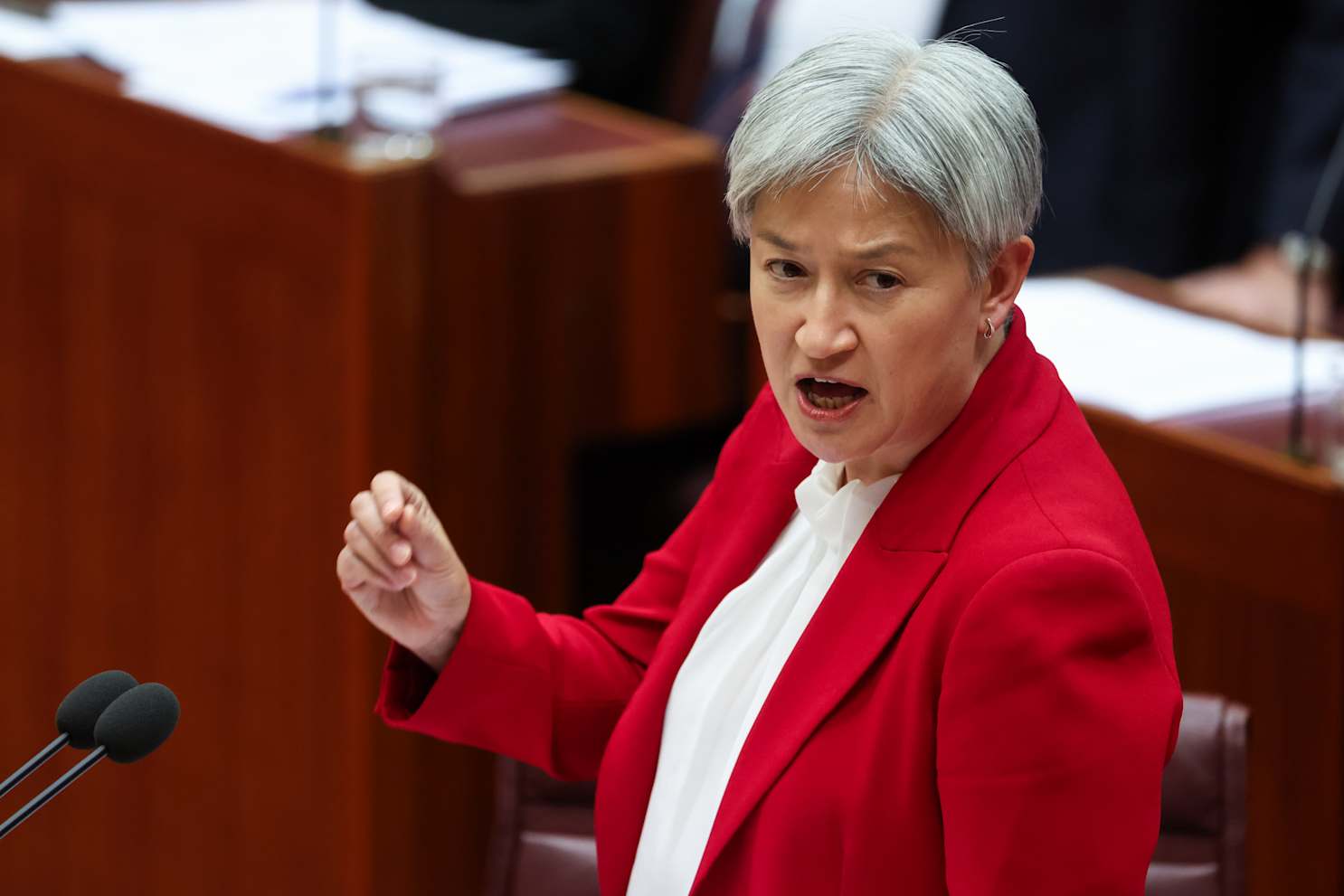
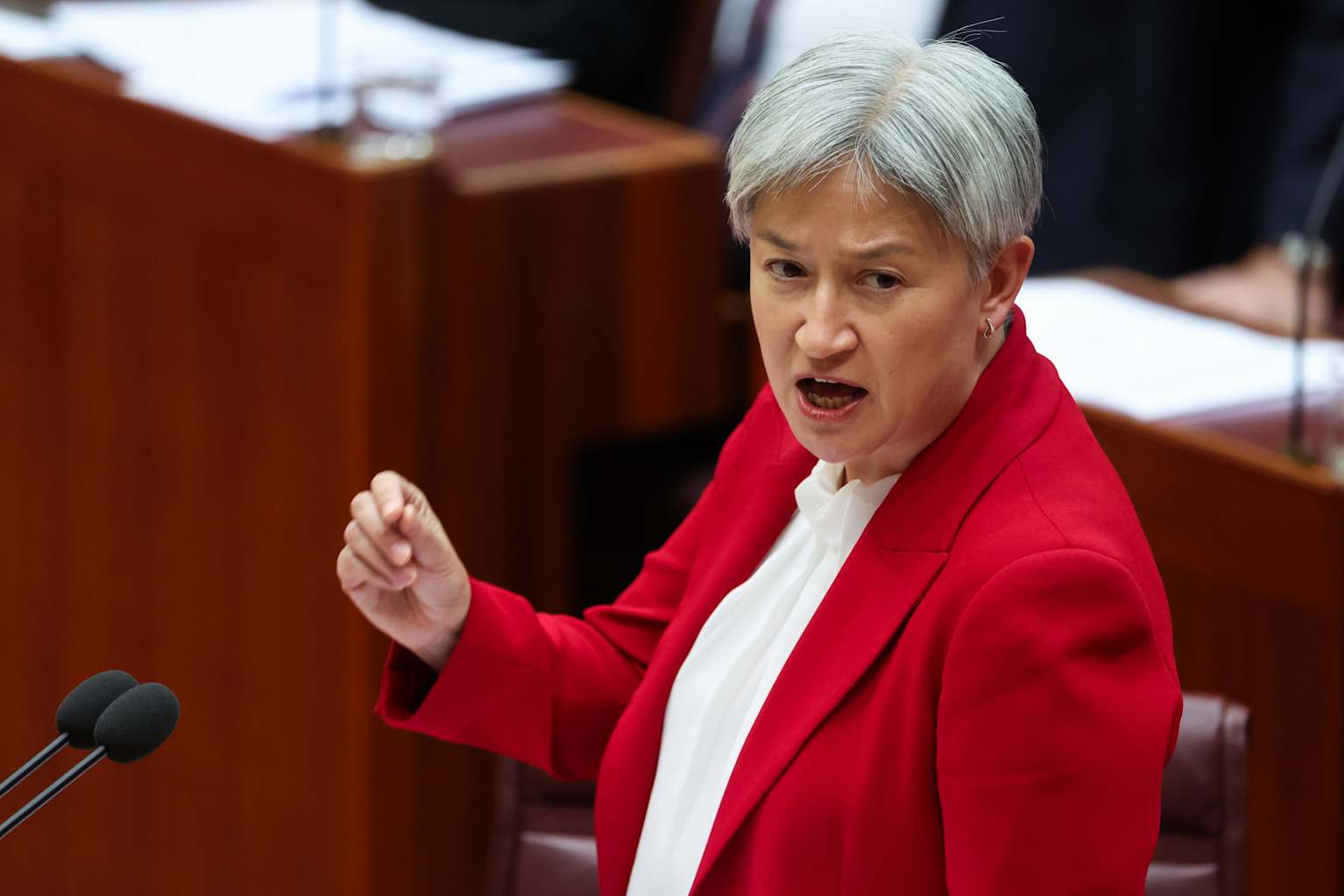
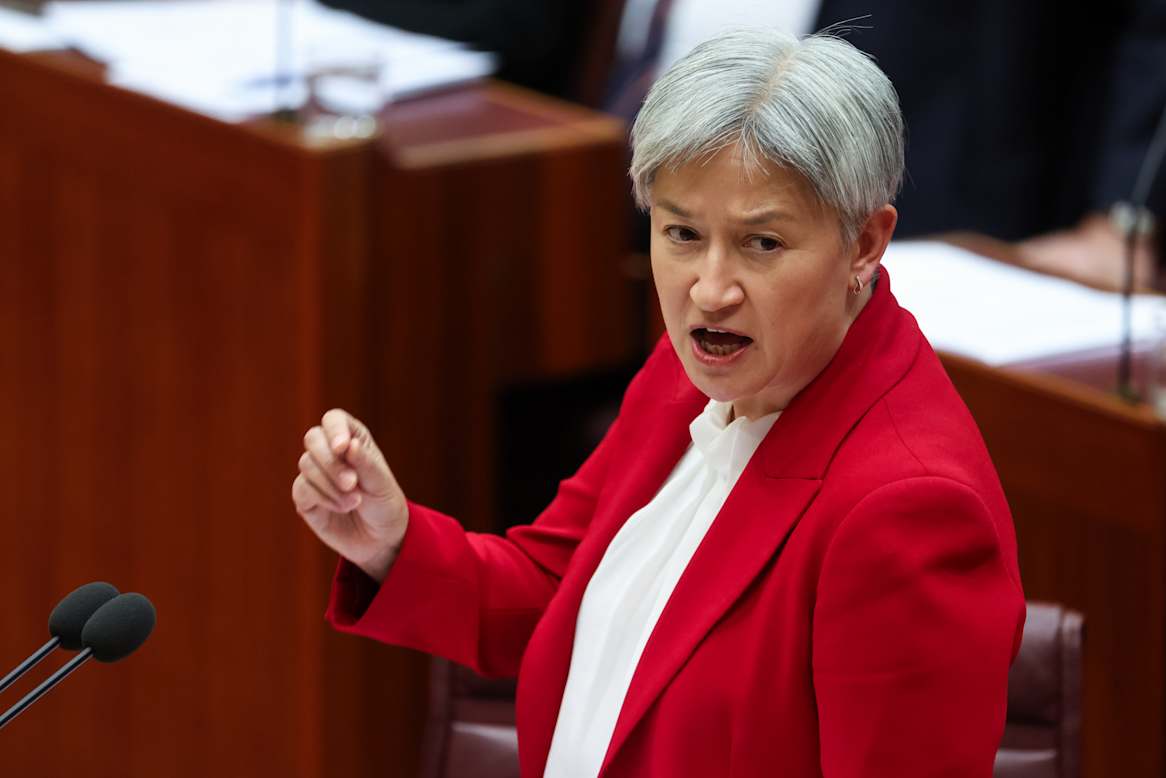
Foreign Minister Penny Wong described the changes as “very harsh on many families”.
“I’d say to many of our multicultural communities, the ending of parent visas would be very harsh on so many families in Australia,” Wong told reporters.
Hanson’s policy also pledged to cut refugee visas from 20,000 to 2000 per year. Wong said the world was facing “unprecedented people movement” and that Australia’s refugee intake was a “very small contribution” on the global stage.
“Refugees also make such a great contribution to Australia. [Businessman and former chairman of Westfield] Frank Lowy was a refugee,” Wong said. “I think we all spoke about the Socceroos and the way in which that team represented multicultural Australia.
“I know that [One Nation] think dividing Australians is the best response to the politics of the time. I take a different view.”
Cut through the noise of federal politics with news, views and expert analysis. Subscribers can sign up to our weekly Inside Politics newsletter .
You have reached your maximum number of saved items.
Remove items from your saved list to add more.
You've used all of your gift articles. 3 more will become available on the 1st of every month.