World leaders are increasingly acknowledging that the climate safety threshold of 1.5C will soon be breached as the world continues to warm, despite fierce negotiations at the United Nations 31st Conference of the Parties (COP31).
"The latest science tells us that we will overshoot 1.5," Chris Bowen — climate change and energy minister, and president of negotiations at COP 31— has said.
"But we can still return if we work together and act with urgency, solidarity and resolve. That is our challenge here."
On Monday, an 18-page draft agreement was released seeking an "immediate and accelerated transition away from fossil fuels".
While the draft agreement's language will likely be significantly tempered before consensus is reached, it contains some of the most ambitious language seen in decades of COP summits.
Your trusted source for staying up-to-date with the world around you. Get free daily news updates and analysis, straight to your inbox.
As negotiations continue for their second and final week at the meeting co-hosted by Australia in Türkiye , a super-charged El Niño event threatens to make 2027 the hottest year on record.
This year alone, Europe has suffered punishing heatwaves that have left tens of thousands dead, Nepal has been devastated by flooding , and fires have ravaged nations from Canada to Indonesia .
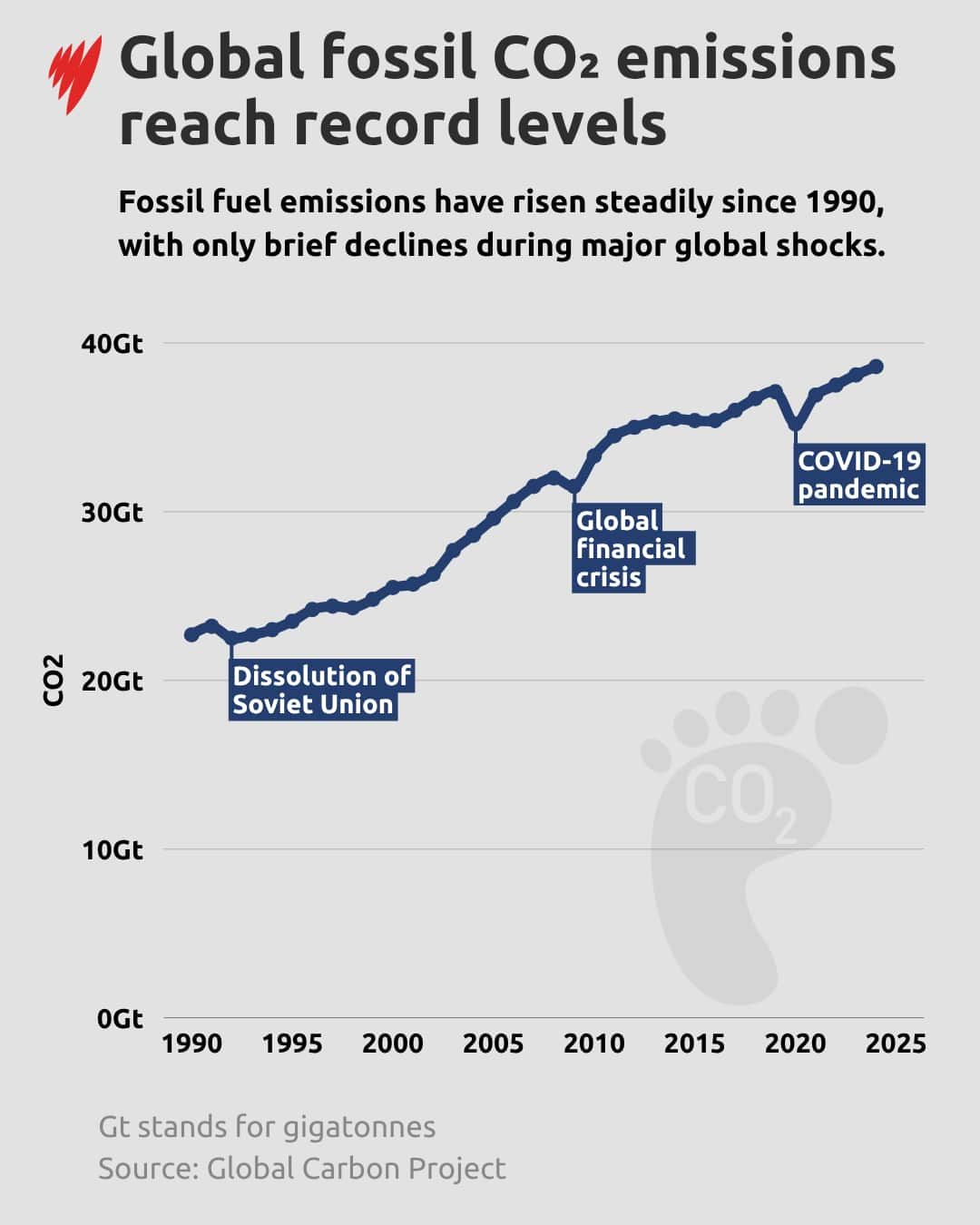
As the global climate looks set to surpass 1.5C, experts say environmental devastation is likely to increase year-on-year, unless the curve of global temperatures can be bent downward.
Whatever the outcome of COP31, average global temperatures are still set to exceed the 1.5C target agreed upon at Paris in 2015, according to a recent landmark UN report. This means that the world will likely enter the era of "overshoot" by 2030.
According to Anita Talberg, decarbonisation lead at the climate policy consultancy Climate Resource, "1.5 degrees is not dead; it's still the goal."
"What's not possible is not to overshoot 1.5 in getting there, and that's why we're talking about overshoot pathways now," she told SBS News.
"The most ambitious scenarios we have in front of us now reach around 1.7 degrees and then come back down so that we can hit that target of 1.5 by the end of the century."
The target of 1.5C was agreed to because, beyond that, the global climate is likely to become far more unstable and unpredictable. In addition, tipping points that could trigger feedback loops of accelerating warming become more likely.
At Paris, the target was to keep warming "well below" 2C. At present, the world is on track to heat by 2.6C, according to the UN, but that pathway is not locked in.
"Since the Paris Agreement, if you take into consideration all of the countries' climate commitments they've submitted to the UNFCCC [United Nations Framework Convention on Climate Change], we've now brought down the projection in temperatures by at least a degree," Talberg said.
If the 137 countries with formal net-zero targets achieve them, temperature projections would drop to between 1.7C and 2.3C, although they require deep emissions cuts in the near term.
"There has been a dramatic, or a notable, improvement since Paris in the last 10 years, and so there's every chance that that base will keep moving," Talberg said.
However, low-lying and small island states have continued to push back on the idea that surpassing 1.5C is a temporary and manageable overshoot.
"It is not an abstract target. It is an existential threat to our food, our economies and sovereignty," Surangel Whipps Jr, president of Palau, told COP31 attendees.
"The International Court of Justice has confirmed that climate obligations are binding. COP31 must be where commitments become delivery."
Halting and then reversing global warming requires not only reaching net-zero emissions but net-negative: removing more greenhouse gases from the atmosphere than humanity adds.
While that's "technically possible", there's still a lack of political will to achieve it, Wesley Morgan of the University of New South Wales' Institute for Climate Risk and Response told SBS News.
"We would need to first and foremost shift away from coal, oil, and gas," he said, adding that many fossil fuel exporting nations are likely to reject any COP31 commitments that threaten their economic outlook.
Instead, one of the key targets being pushed at the conference by Bowen and the COP leadership is lifting global electrification from 23 per cent to 35 per cent by 2035. On current trends, the world would hit 28 to 30 per cent by that deadline.
Doing so would require a fourfold increase in the annual rate of electrification, but could cut global emissions by 45 per cent relative to 2025 levels if achieved, the International Energy Agency estimates.
"If Bowen can land that, it will be a significant outcome," Morgan said. "It might be politically easier to land than an explicit target of cutting the use of fossil fuels."
The draft text also calls to triple renewable energy, end fossil fuel subsidies, and phase out the use of coal, oil, and gas.
Still, Australia's position as one of the world's largest fossil fuel exporters, led by a government that has greenlit at least 37 new or expanded fossil fuel projects, has not gone unnoticed, with the Australian Pavilion subjected to protests from youth advocates and Pacific leaders.
"A breached 1.5C will drown our history and identities," Shiva Gounden, head of Pacific at Greenpeace Australia Pacific, said at the event. "Every fraction of a degree of overshoot [is] fuelling more irreversible harm for our communities."
While COP gatherings have been criticised as failing to deliver substantive shifts in action to combat climate change, Morgan said they remain "critically important" in achieving consensus on an issue requiring global cooperation.
"I have every confidence that humanity will continue to deal with this crisis because we can't afford not to," he said, noting the rapid pace of renewable energy rollout seen in recent years.
"But we're in an in-between space at the moment where a lot of loss and damage is already baked in. As our economies transform, however, we can avoid a lot worse."