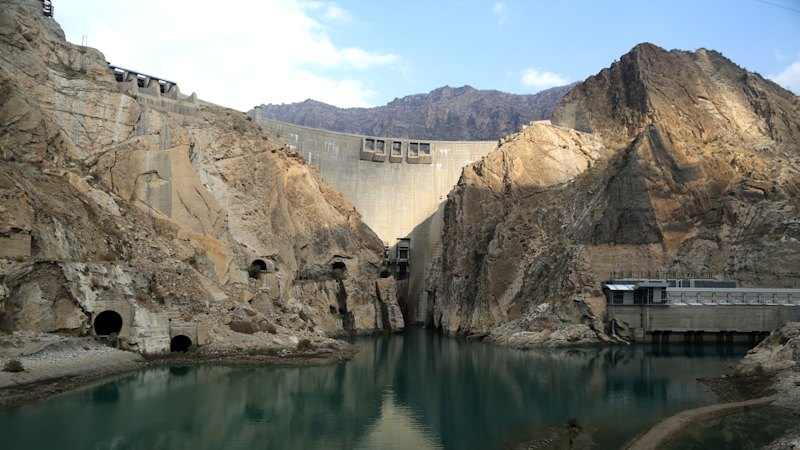
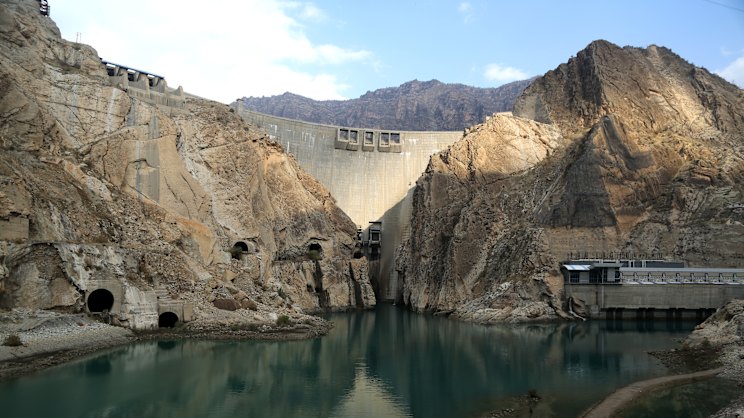
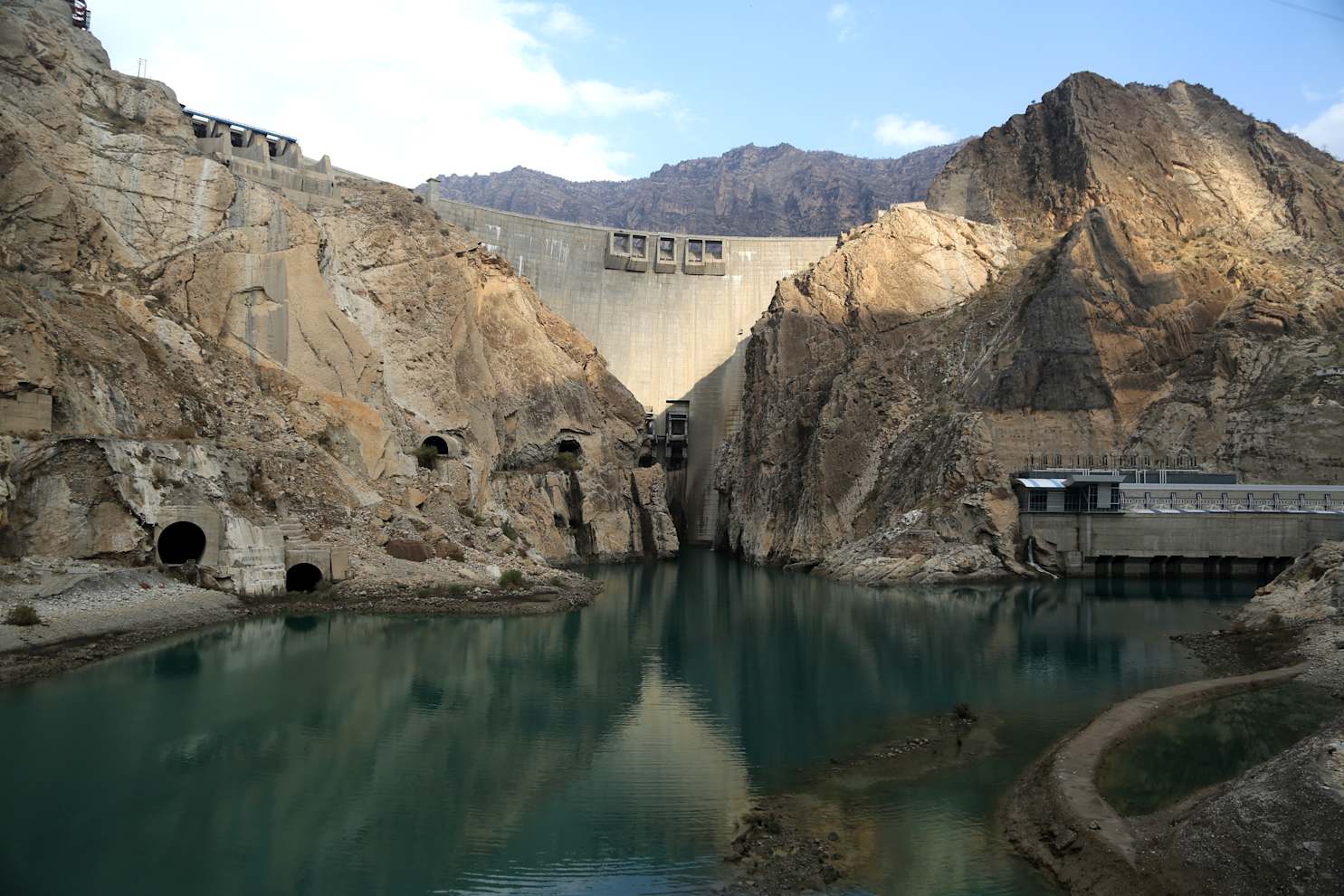
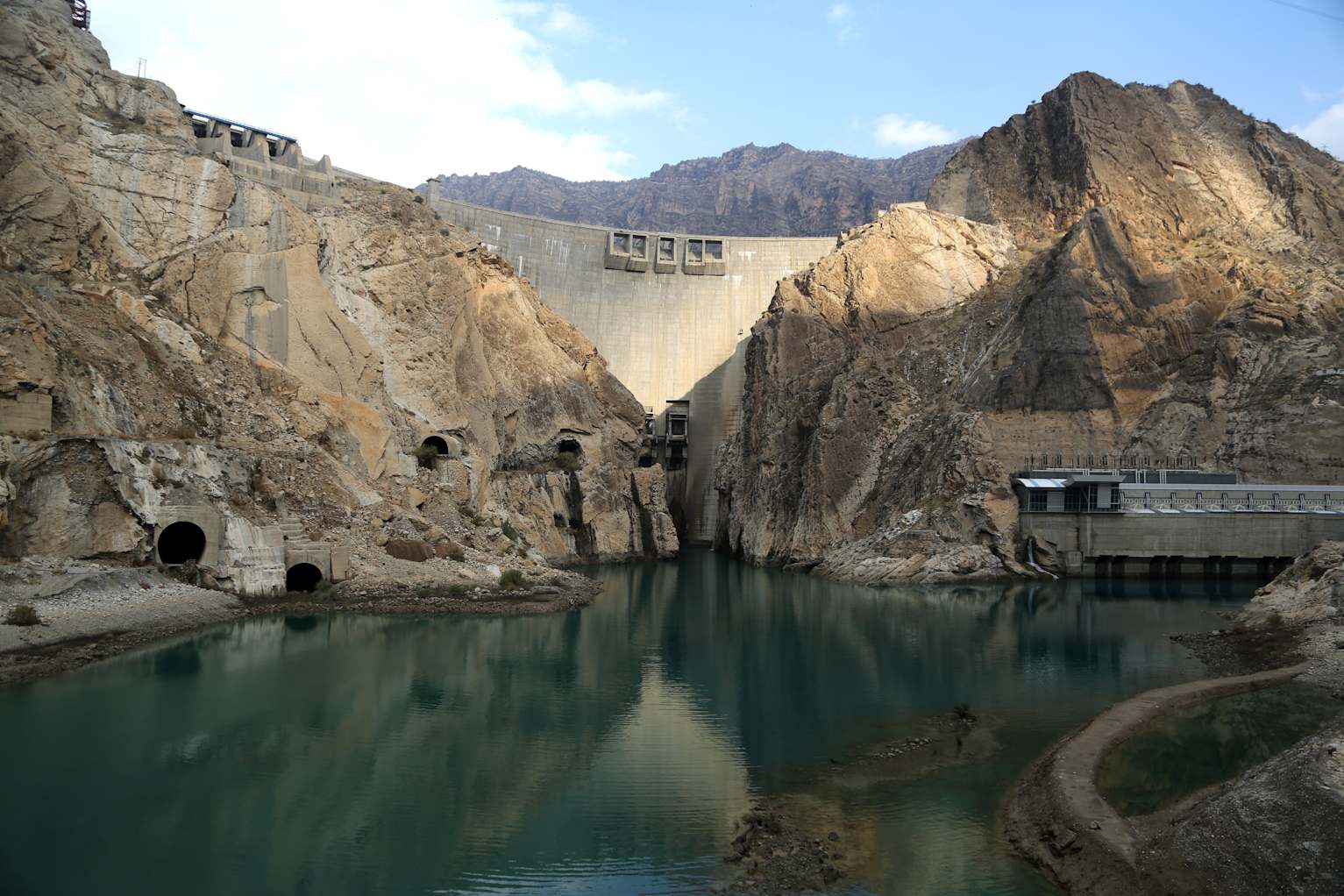
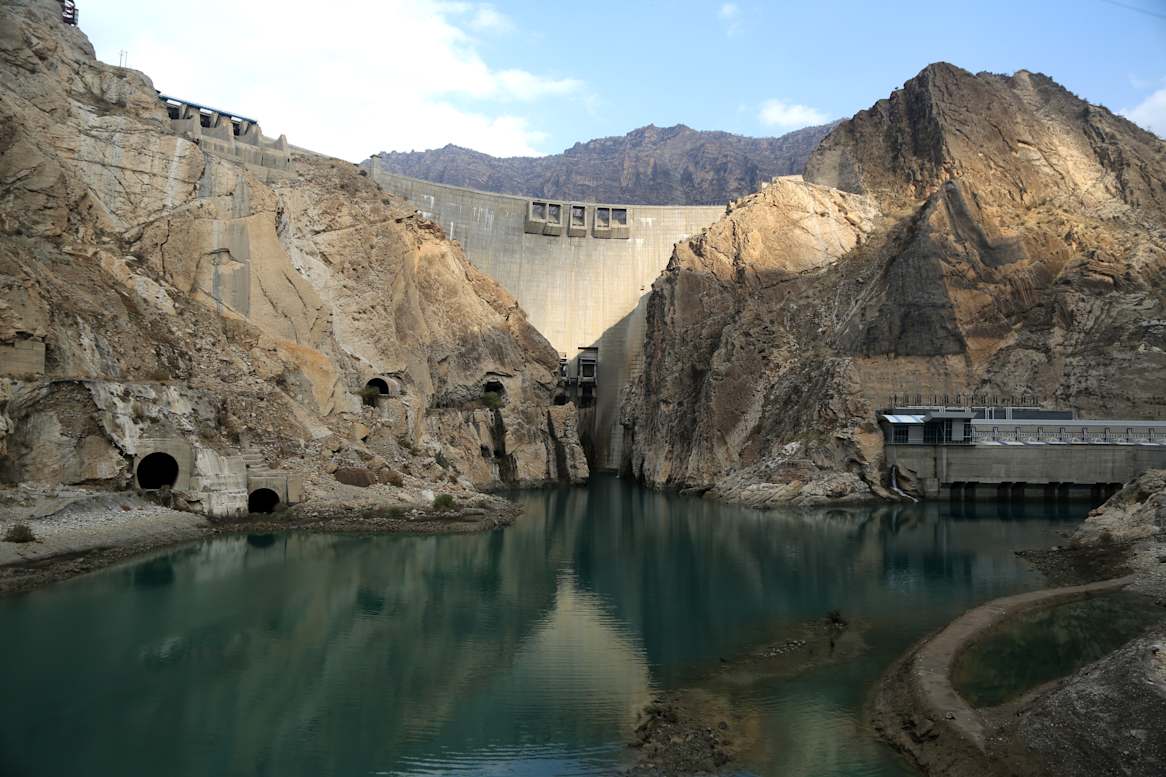
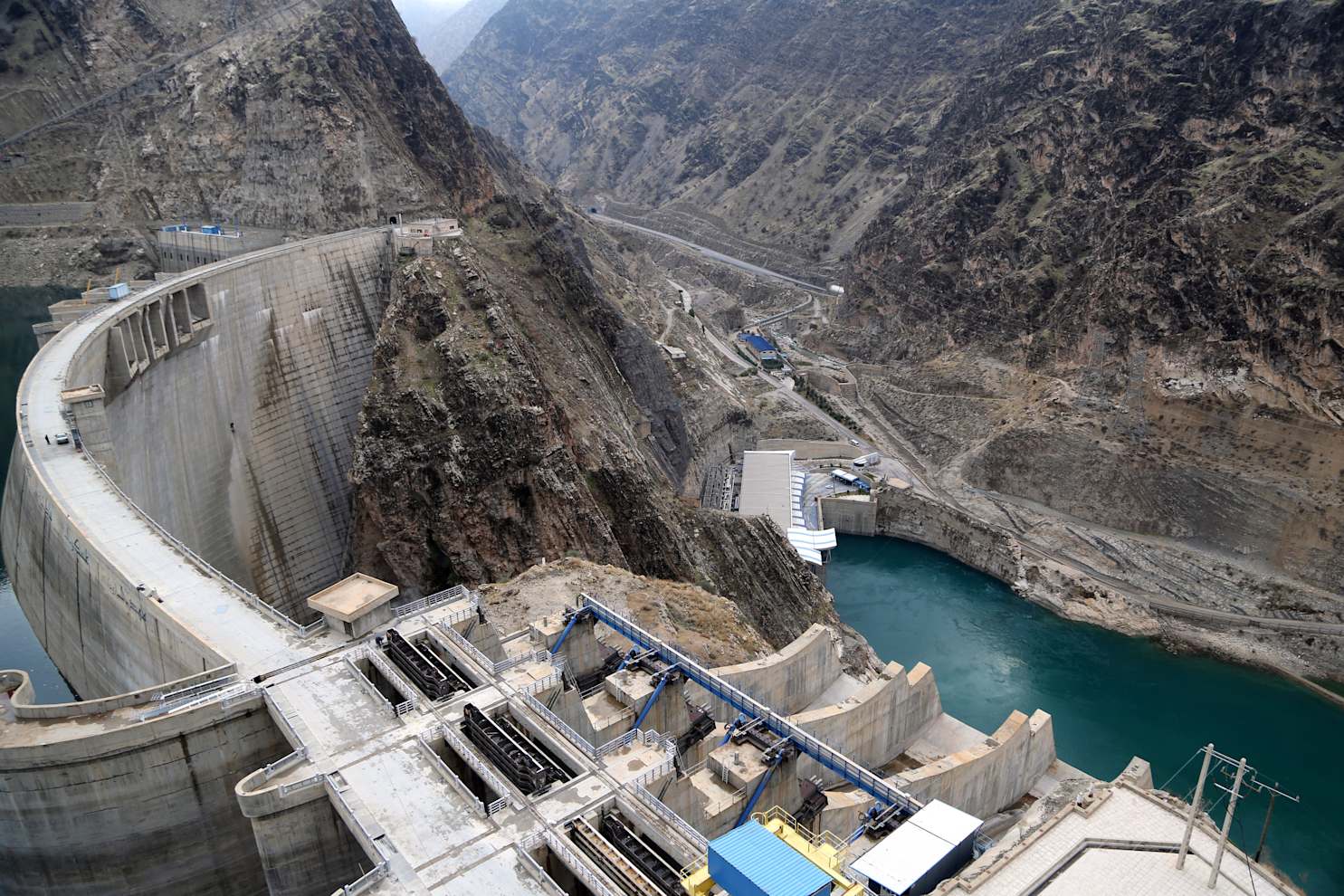
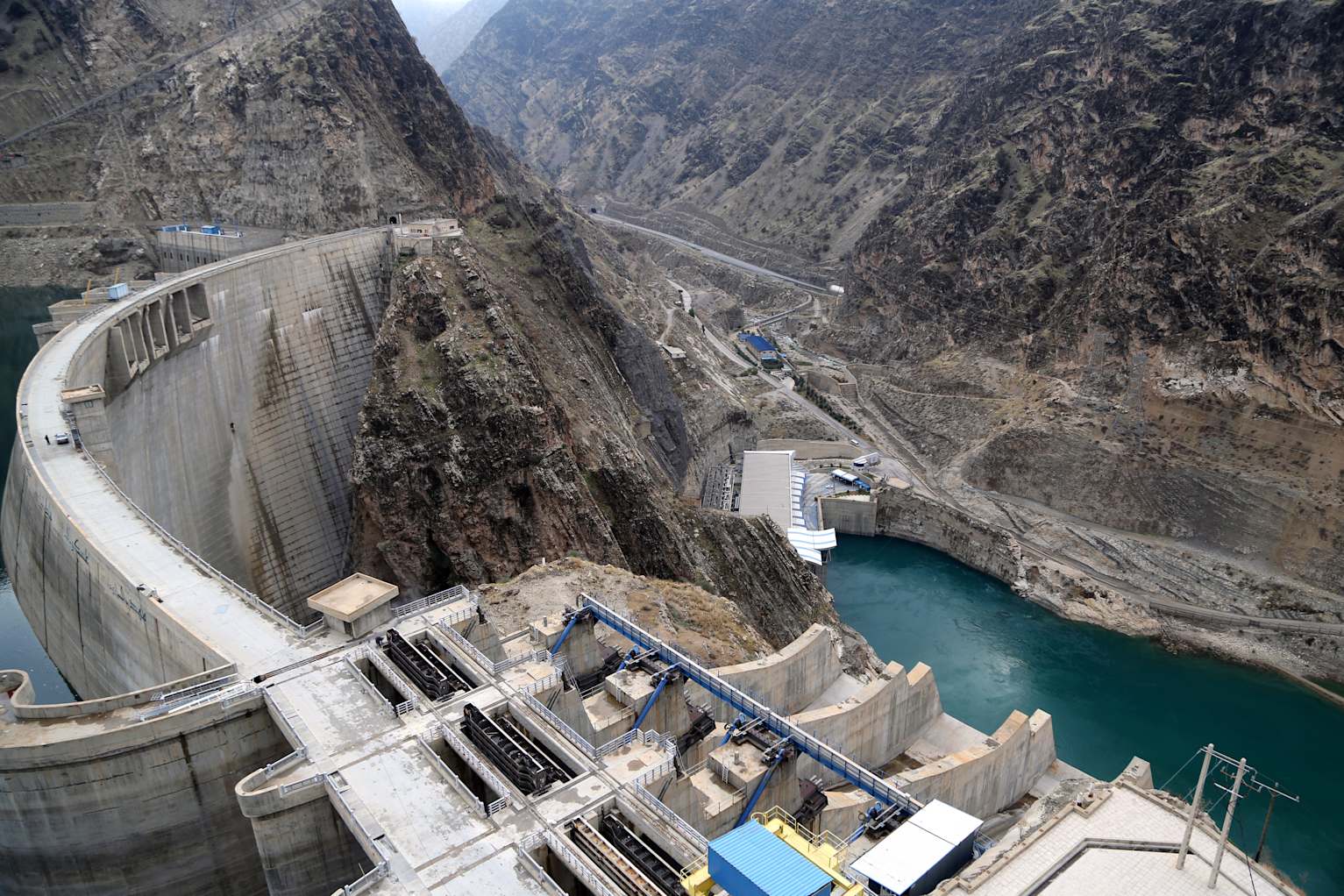
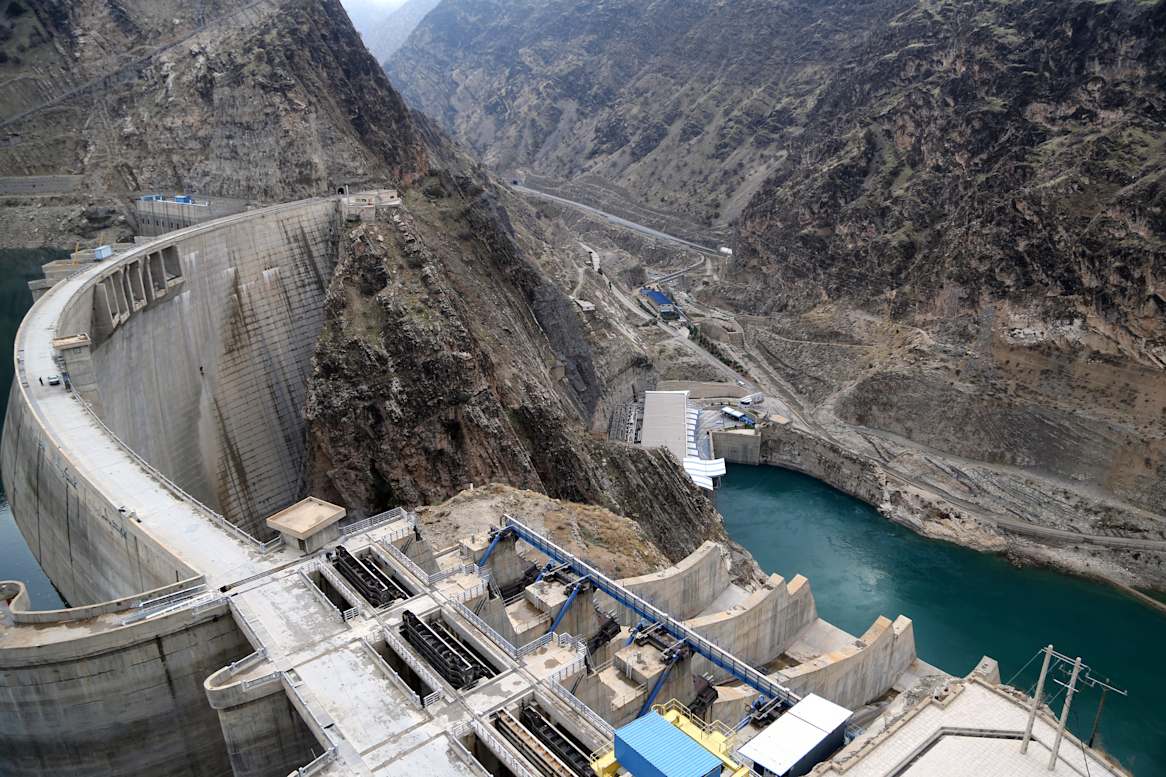
Environmentalists have long been mystified by the significant proliferation of dams and water transfer projects such as pipelines and tunnels across Iran, especially in regions that had no apparent need for them.
Some analysts think they now know the answer after US and Israeli airstrikes on concealed Iranian missile sites this year targeted many of the same areas. These analysts have concluded that the water projects may have been developed to support the country’s military buildup.
Given the secrecy surrounding Iran’s missile program, any connection between it and Iran’s ambitious, decades-old initiative to develop water infrastructure remains speculative. But some experts find the evidence highly suggestive.
Nima Shokri, an expert on water security, and his team at the Hamburg University of Technology in Germany, had for years tracked an unusually high number of dams across Iran – at least 533 of them, among the most of any country in the region.
“It was always puzzling to me,” he said. “Why were they building so many dams?”
In the spring, Shokri was perusing news about the war in his home country when he came across a map plotting airstrikes that had targeted suspected military sites. The pattern – a semicircle of dots from north to south – nearly matched that of his own map marking the locations of dams.
His old question, he said, was superseded by a new one: “Why does it seem that wherever we have dams, there is a missile strike close by?”
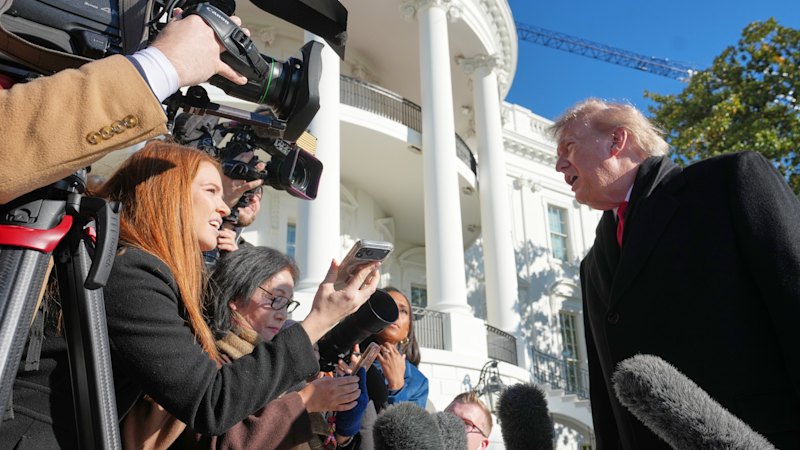
Placing sophisticated and sprawling military sites near the continuous water and power supply provided by dams would be logical, said seven water and military experts interviewed by The New York Times.
This gives Iran “operational continuity,” said Danny Citrinowicz, a former longtime Iran analyst for Israel’s military intelligence agency.
“Iran has a strong incentive to ensure that its missile complexes are not dependent on the broader national infrastructure for essential services,” Citrinowicz said. He added that it was reasonable to assess “that Iran has invested in some degree of autonomous or redundant infrastructure,” such as dams and water projects, for its missile facilities.
Iran’s Ministry of Foreign Affairs and the Ministry of Energy, which is partly responsible for dam construction, did not respond to requests for comment. Iran’s Revolutionary Guard, which also plays a role in dam construction, did not respond to a request either.
Iran calls the subterranean sites its “missile cities” – heavily fortified tunnels and rooms dug deep beneath the mountains, used not only to store and deploy long-range ballistic missiles and drones, but also to produce them.
Farzin Nadimi, a senior fellow with the Washington Institute and an expert on Iranian military affairs, estimates that there are at least 30 missile sites across the country. Very few countries maintain as elaborate a system of underground military sites as Iran, he said, citing North Korea as an exception.
As a country that often experiences water shortages, Iran still does need dams. “Many dams in Iran serve essential civilian purposes, including water supply, irrigation and hydropower generation, particularly in a water-scarce country. Any potential military role should not overshadow these functions,” Shokri said.
By highlighting the extent and location of concealed missile sites in remote parts of the country, the US and Israeli airstrikes may also have shed light on another puzzle that has troubled environmentalists: what are the reasons behind a string of arrests in 2018 of wildlife conservationists working in protected areas?
The Revolutionary Guard, whose intelligence arm carried out the arrests, did not comment about them for this article, and a definitive explanation remains elusive. But some environmentalists said they now suspect that the conservation workers may have accidentally happened upon sensitive military sites.
In 2018, the intelligence wing of the Revolutionary Guard detained dozens of conservationists on charges of espionage. One of them, Kavous Seyed-Emami, a founder of the Persian Wildlife Heritage Foundation, died in state custody. Several other members of the group, who spent years in prison, said they were tortured and sexually harassed.
At the time, senior Iranian officials said that they were unaware of the allegations of mistreatment and that they would be examined.
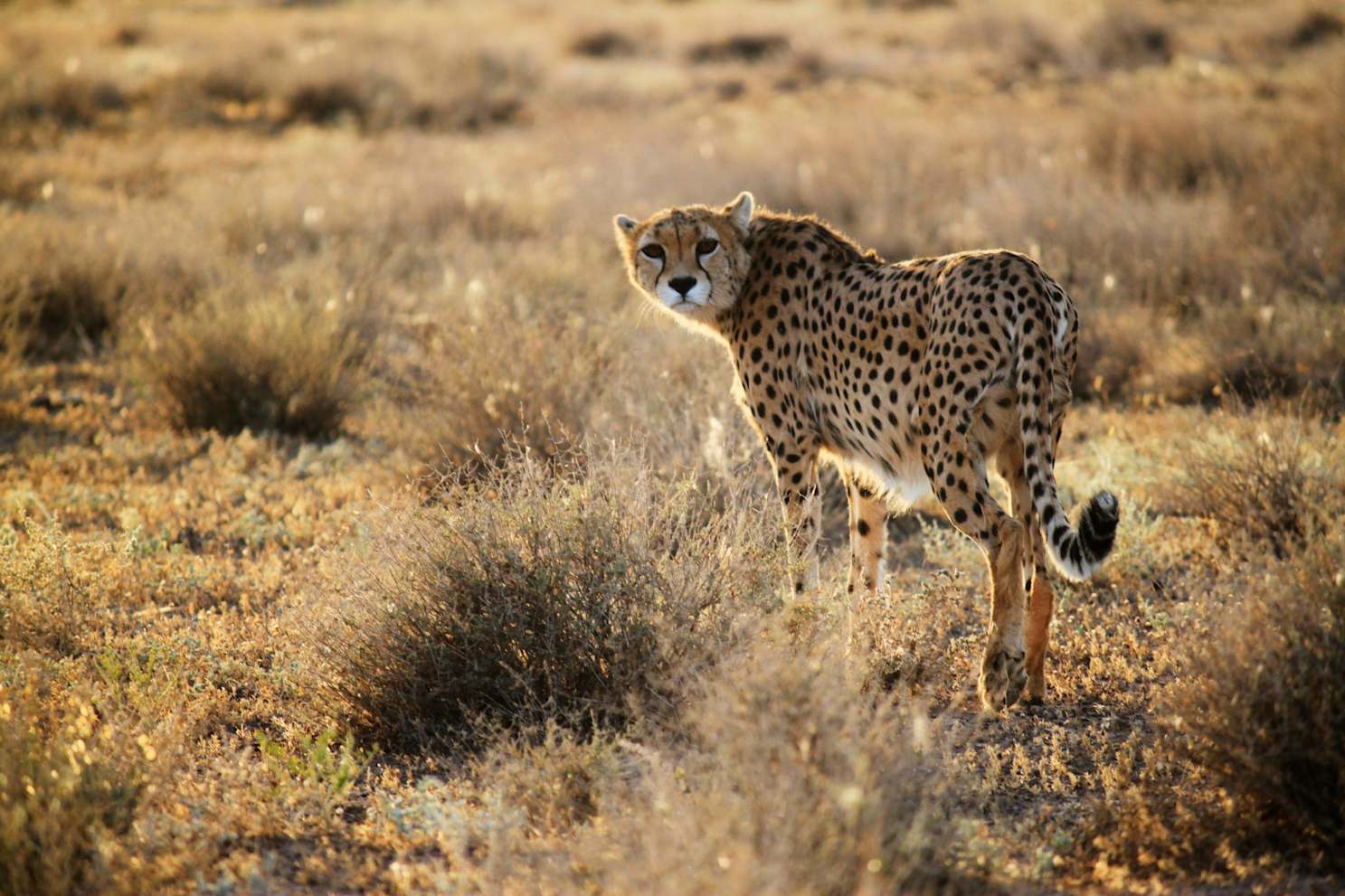
Iranian authorities accused the conservationists of using cameras – intended for monitoring the habitats of rare and endangered species such as the Asiatic cheetah – to instead gather intelligence for the United States and Israel.
“One of the accusations levelled against me was that I had trained lizards to spy on military installations,” said Morad Tahbaz, a founder of the Persian Wildlife Heritage Foundation, who spent more than five years in prison.
Political analysts suspected an effort by the Revolutionary Guard to undermine the reformist government in power at the time, which was trying to open the country to investment and expertise in various sectors, including the environment.
“I think it is possible that the Guard saw anyone doing fieldwork near these sites, even wildlife conservationists, as a potential security threat,” said Nik Kowsar, a prominent Iranian environmental and water analyst in exile in Washington.
Kaveh Madani, who was deputy head of Iran’s department of environment when he was arrested in the 2018 crackdown, said that conservation groups never worked in wilderness areas without permission from the government and intelligence services.
The targeting of two Iranian regions in recent airstrikes provides intriguing examples.
Amir Aghakouchak, a prominent water expert at the University of California, Irvine, had long been perplexed by the construction of a massive project to transfer water from the mountainous Zagros region to central Yazd.
Airstrikes in March on the Yazd region prompted reports, including in The Financial Times , of a major missile facility in the area. Aghakouchak said he began to suspect that the water project “may have been influenced, at least in part, by military considerations”.
Tahbaz said he was always mystified, during his time in prison, by his interrogators’ fixation on his team’s work in Hormozgan province, where there was a project to support the rare Laristan wild sheep. “They were incredibly sensitive about that area,” he recalled.
On July 14, US airstrikes hit the Tarom Protected Area in Hormozgan, killing the family of a local wildlife ranger in the process. The US military said it was targeting military infrastructure and coastal defences. Nadimi said the location was not far from where military analysts believe Iran constructed a missile base deep below ground.
Environmentalists knew the area for something entirely different.
“It had a storage shed with hay,” Kowsar said, “for Laristan wild sheep.”
This article originally appeared in The New York Times .
You have reached your maximum number of saved items.
Remove items from your saved list to add more.
You've used all of your gift articles. 3 more will become available on the 1st of every month.