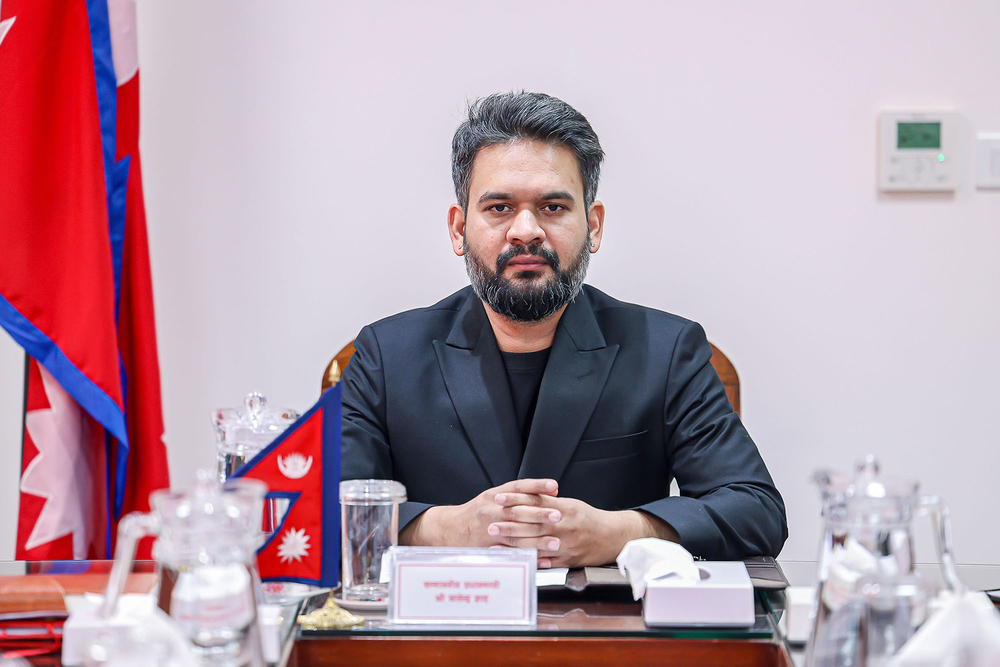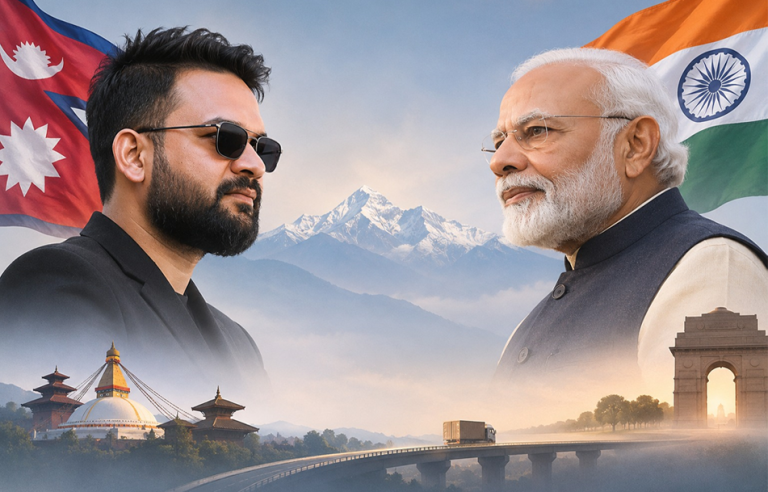
Opposition leaders have urged Prime Minister Balendra Shah to consult major political parties and agree on a common national agenda before visiting India, saying he should use the trip to rebuild trust and advance longstanding issues in bilateral relations.
They say the visit should go beyond requests for financial assistance and project support to address concerns over the border, existing treaties, trade barriers, water resources, and air connectivity. A shared position, they argue, would strengthen the prime minister’s hand in talks with New Delhi and signal that Nepal’s core interests are backed across the political spectrum.
The Prime Minister’s Secretariat, however, said no decision had been made on holding consultations with political parties. A source at the Ministry of Foreign Affairs also said it was not aware of any plan to discuss the visit agenda with party leaders.
Nepal is preparing to seek an assistance package worth around $2 billion from India. According to diplomatic sources, the proposal includes $1 billion in concessional loans, $500 million in grants, and another $500 million for reconstruction and rehabilitation following damage caused by the August 26 Bhotekoshi catastrophe. The package is expected to feature prominently during Shah’s India visit.
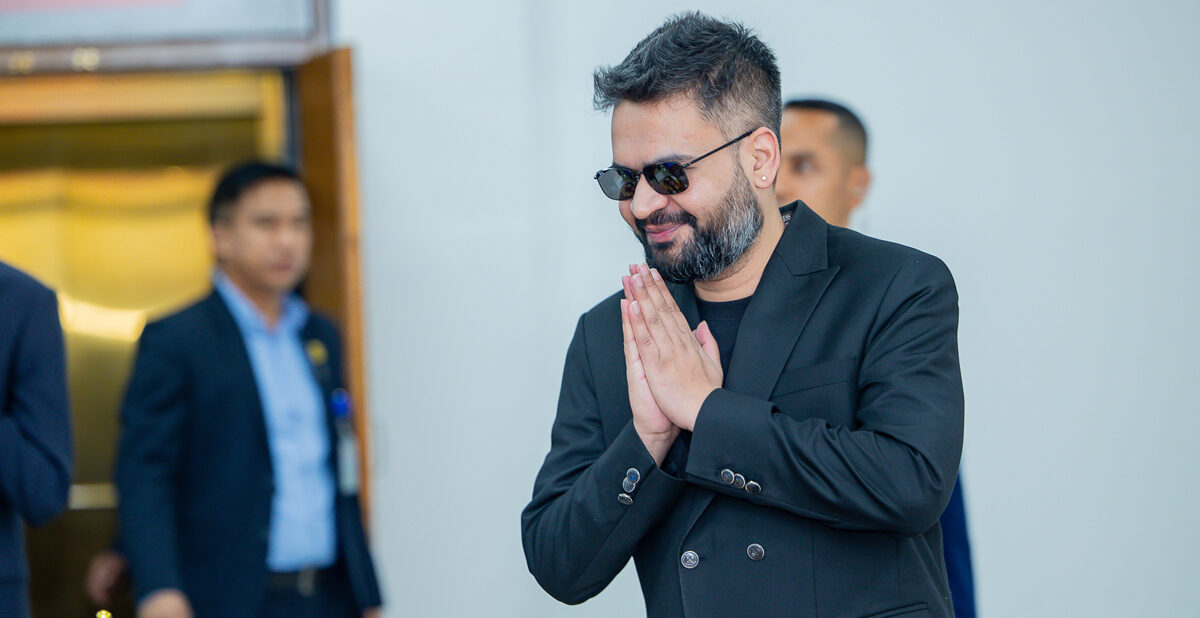
Shah is scheduled to visit India from November 22 to 25, with delegation-level talks with Indian Prime Minister Narendra Modi scheduled for November 23. The visit would be Shah’s first official bilateral trip abroad since taking office on March 27. Kathmandu is reportedly seeking reconstruction assistance, additional air-entry routes for its international airports and progress on the Pancheshwar Multipurpose Project, while hoping to raise border disputes.
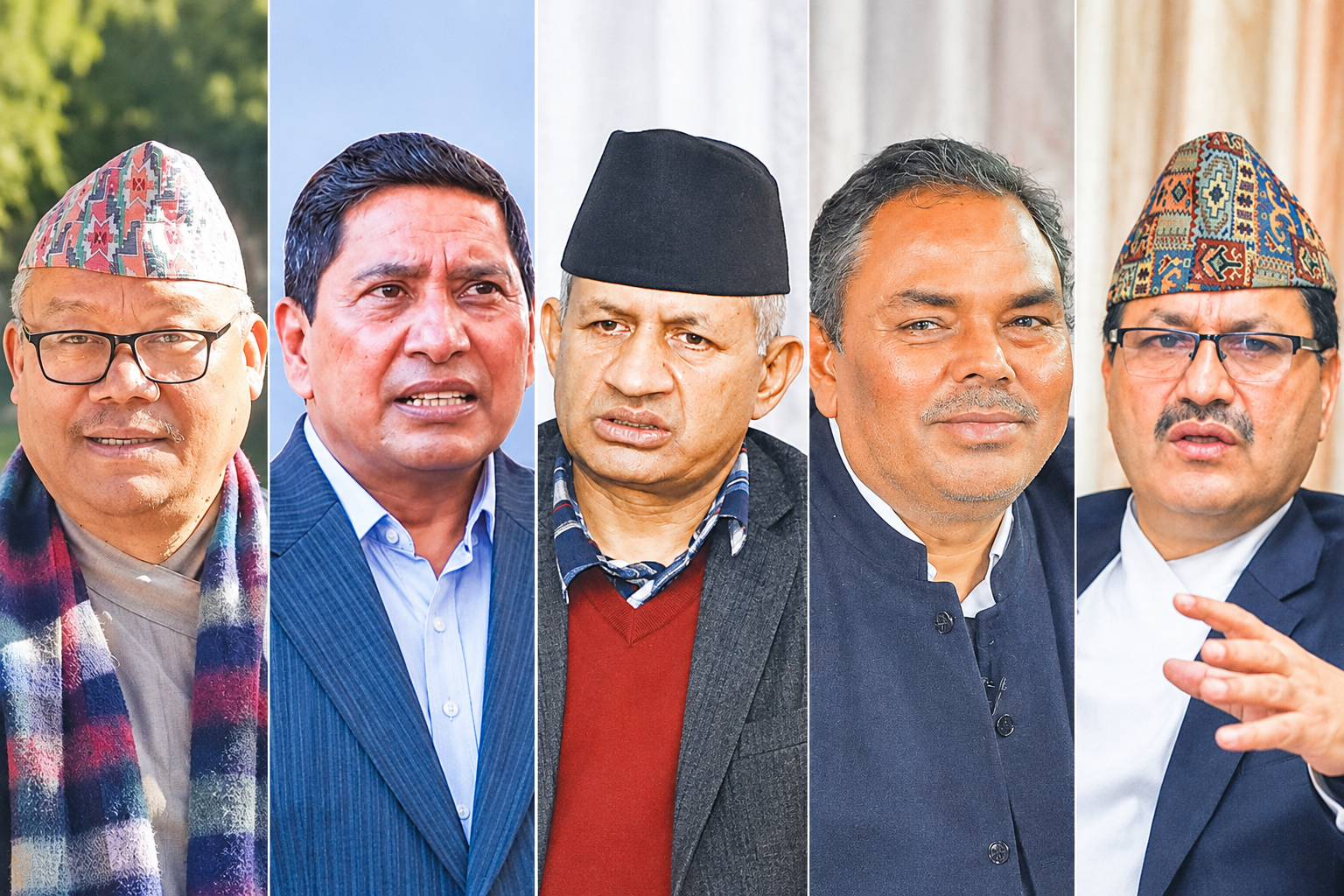
Bhishma Raj Angdembe, Congress parliamentary party leader in the House of Representatives, said consultations with political parties before major foreign visits would help the prime minister negotiate from a stronger position. But, he said, the government had ignored such advice before attending the UN General Assembly and the COP31 climate summit.
“Consulting political parties before foreign visits or major international conferences would strengthen the prime minister’s position, but he has continued to disregard this,” said Angdembe. “Even when he went to the United Nations, he ignored parliament and the political parties. He should have represented the country’s sensitivities before embarking on the visit.”
“Ruling Rastriya Swatantra Party and the government itself are confused. We have been consistently offering suggestions in the national interest, but the government has continued to ignore them,” said the Congress leader.
Former foreign minister Pradeep Gyawali, who is a CPN-UML leader, said Shah’s first priority should be to address the trust deficit that has emerged between the two countries since the new government took office. “The prime minister’s attention should be on resolving the crisis of confidence and turning the present chill into warmth,” he said. “He should use this visit as an opportunity to state clearly what Nepal wants.”
“I am not very confident that he will do so, but when the prime minister visits India, he must carry the confidence that the entire nation stands behind him,” said Gyawali. “He should send a message that not only different groups within the ruling party but also the opposition support him on the national agenda.”
Narayan Kaji Shrestha, a leader of the Nepali Communist Party and also a former foreign minister, said the prime minister should secure national consensus on major issues, including sovereignty, before engaging India. Such consensus, he said, required clarity of policy and agreement among political parties and other national forces.
“First, we must recognise the importance of Nepal-India relations and work to remove the doubts that have emerged,” said Shrestha. He added that both India and China were closely watching Nepal’s geopolitical situation after [last year’s] Gen Z movement, and that uncertainty over the new government’s approach had created suspicion.
“India and China are observing Nepal’s geopolitical situation with interest. Questions remain about the role this government will play and the kind of relations it wants to maintain,” he said. “The first task, therefore, is to remove those doubts and build cordial relations.”
Former foreign minister NP Saud suggested that Nepal should maintain a balanced foreign policy towards its northern and southern neighbours, guided by national needs rather than domestic political considerations. China and India each have important economic, commercial, security, cultural, and people-to-people ties with Nepal, he said.
“Balance in foreign policy means moving ahead by accommodating both neighbours on the basis of our needs,” said Saud. “Our relations with China and India shape our foreign policy and the international balance of power. These policies must be determined through national consensus, with all parties on board.”
According to Gyawali, Nepal and India should use established bilateral mechanisms to resolve outstanding disputes rather than expect every issue to be settled during one visit. Several issues inherited from history remain unresolved, including parts of the boundary and provisions in past treaties that Nepal considers damaging to its national dignity.
“These are not problems created by the present government or the current Indian government, but there are many issues left unresolved by history,” he said. “Some treaty provisions hurt our national self-respect. Certain treaties need to be reviewed, and some issues need to be raised again. The prime minister must present these matters clearly.”
Water resources remain among the biggest unfinished areas of cooperation, said Gyawali. He cited the Upper Karnali hydropower project, which has remained incomplete for nearly 15 years, and other projects that have failed to make expected progress. “The two sides should set clear deadlines for completing them,” he said.
According to Shrestha, Nepal should approach both neighbours with confidence and seek relations based on mutual respect, equality, and benefit. Raising issues concerning sovereignty, territorial integrity, and national interest, he said, should not be interpreted as hostility towards another country.
“We have every right to raise matters concerning our sovereignty, territorial integrity, independence and national interests. That is not an anti-Indian position.”
Shrestha said the prime minister should make economic cooperation the centrepiece of his discussions with India, focusing on strengthening bilateral economic ties, benefiting from India’s growing economy and reducing Nepal’s one-sided dependence on its southern neighbour. He urged the government to address issues concerning energy, tourism, and investment, as well as recurring barriers to exporting Nepali goods to the Indian market.
Shrestha also called for serious talks on reviewing old treaties and agreements in light of present-day needs and the changing global situation. He specifically mentioned the Kalapani and Susta boundary disputes and urged the prime minister to seek a practical way forward on the report of the Eminent Persons’ Group (EPG) on Nepal-India relations. India has yet to formally receive the report, which was finalised eight years ago, in July 2018.
“What is India’s position on the EPG is important. The question is whether the report will remain shelved indefinitely or whether an environment can be created for it to be received,” he said. He also suggested discussions on establishing a coordination mechanism among Nepal, China, and India to jointly manage climate-induced natural disasters.
Another former foreign minister, Saud said reducing Nepal’s large trade deficit with India should be another priority. Around two-thirds of Nepal’s trade is with India, but the imbalance remains substantial. Nepal should seek better access for mineral products, agricultural goods, fruits grown in the hills, and livestock products, he said.
Saud also urged India to follow through on its commitment, made during former prime minister Pushpa Kamal Dahal’s visit, to purchase 10,000 MW electricity from Nepal over 25 years. Meeting that target would require greater generation capacity and investment, he said.
The lack of suitable air-entry routes has constrained international operations at Gautam Buddha International Airport in Bhairahawa and Pokhara International Airport. Nepal has been seeking additional routes since long, but a final agreement remains pending.
Janata Samajbadi Party chair and former foreign minister Upendra Yadav also said Shah should raise national interest, border disputes, security, investment, water resources, and trade in substantive talks. He called for a diplomatic mechanism to resolve recurring boundary disputes and said Nepal should press for the benefits and rights it is entitled to as a landlocked country.
“Efforts must be made to make the relationship stronger and more trustworthy,” said Yadav. “We should discuss how to bring investment, capital and technology from India for Nepal’s development.” He further said the prime minister should also raise problems faced by Nepali people living in border areas.
With the visit approaching, opposition leaders say consultation at home is as important as preparation with New Delhi. Their central message is that a prime minister negotiating with India should carry a clear mandate that extends beyond his party and government.