For decades, stone and bronze deities stolen from centuries-old shrines across the Kathmandu Valley have surfaced thousands of miles away in Western museums and private collections. A few have been repatriated but hundreds, if not thousands, are still away.
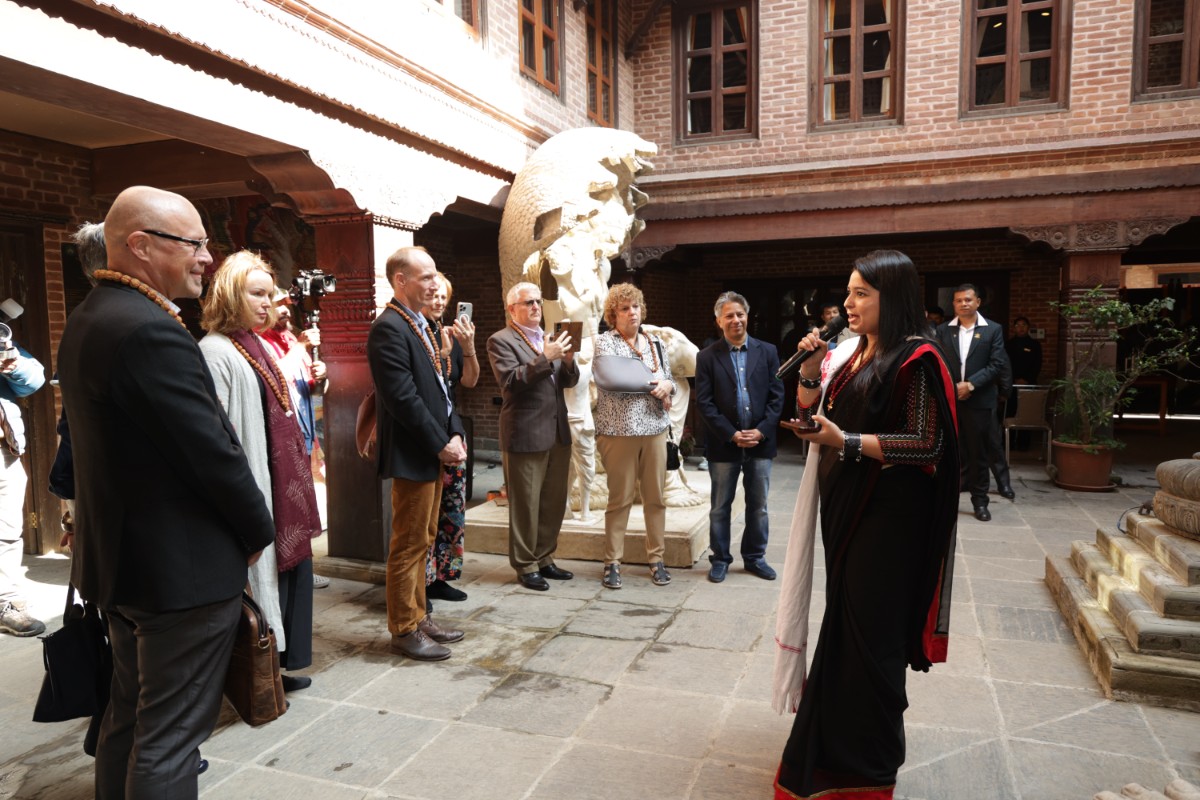
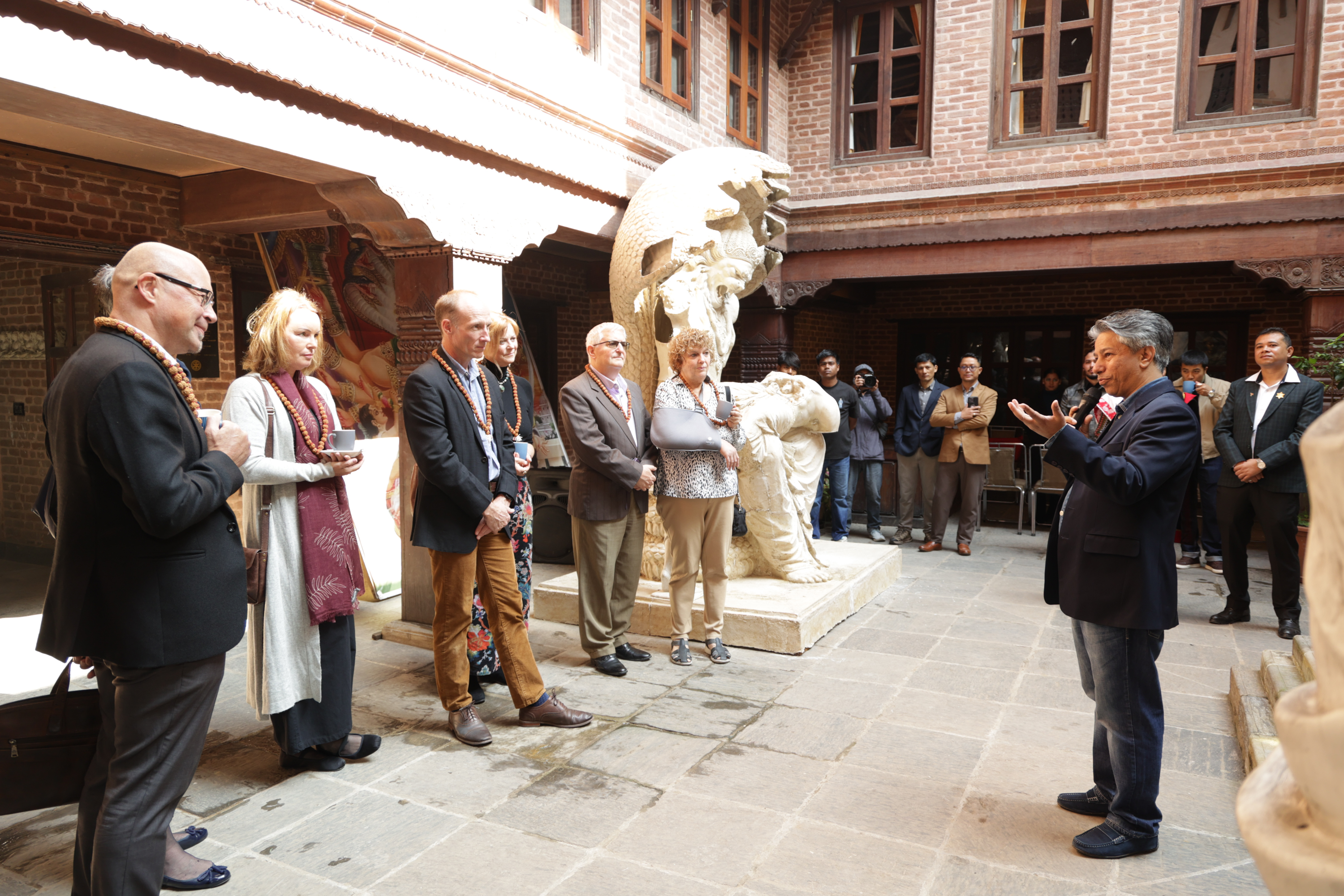
On Saturday, diplomats, conservationists and local heritage custodians gathered in Bhaktapur to confront the loss—and to debate what bringing those artifacts home truly means.
The weeklong ‘Bring Me Home’ festival, organised by the non-profit Namuna Foundation, coincided with the International Day Against Illicit Trafficking in Cultural Property, marked every November 14 under the 1970 UNESCO Convention. Ambassadors from Australia, Switzerland, Norway and Israel attended alongside UNESCO’s representative to Nepal and former Australian envoy Felicity Volk.
Organisers said the title reflects the longing of displaced deities to return to the neighbourhoods where their spiritual identities remain alive. Yet for the traditional community trusts, or guthi s, that have guarded Nepal’s shrines for generations, repatriation is only half the battle. Many recovered statues end up locked behind museum glass in Kathmandu rather than restored to active worship.
“For us, the true home of a deity is the temple or shrine,” said Prashant Mali, an advisor to the Navadurga Bhawani Devi Guthi based in Thecho, Lalitpur. “Keeping them safe in a museum is not bad, but deities require daily worship— nitya puja and aarti .”
Because they are the centre of devotees’ faith, placing them back in their sacred sites with proper security and surveillance is vital, he added.
When an idol vanishes, Mali said, communities improvise by installing replicas or continuing rituals before an empty plinth, though in some neighbourhoods, festivals and daily worship have ground to a halt. Preserving what remains, he added, depends on pairing the elder’s memories and guthi records with modern safeguards like surveillance cameras and stronger diplomatic coordination.
That gap between museum preservation and living faith is central to the festival curated by Shreena Nepal, programme coordinator at Namuna Foundation, under the guidance of Rabindra Puri, who began working in heritage conservation in 2003.
“The people of our country should be aware of this problem,” Puri said at the inauguration, adding that the foundation plans to mark the observance annually to build public pressure against heritage crime. “The return of these identities is a victory for the entire community.”
At the centre of the programme, which runs through November 21, is an exhibition by the Museum of Stolen Art, displaying a curated selection of stone statues that art historian Lain Singh Bangdel documented in 1989 as stolen from Nepal. Alongside live stone-and-wood-carving demonstrations, documentary screenings and a “homecoming of heritages” segment, the exhibition aims to introduce younger Nepalis to the scale of what was taken.
International envoys framed Nepal’s losses as part of broader reckoning over looted cultural property. Jaco du Toit, the UNESCO representative to Nepal, urged embassies to designate focal points to trace claims swiftly, noting that restitution “touches really at the centre of identity and people’s lives and what they believe in.”
Australian Ambassador Simon Ernst pointed to parallel efforts to recover Aboriginal cultural property and ancestral remains held overseas. “It’s not just a movement in Nepal, that movement is going on around the world,” he said. “You’re part of a broader global movement, and all power to you.”
For organisers, the core mission is to sensitise the Nepali public and international visitors—and to build the social, ethical and political pressure needed to push national and international authorities to stop the continuing loss of Nepal’s heritage.
Aarya Chand is a reporter at The Kathmandu Post covering social issues. Before moving to the social beat, Chand was an intern covering culture and lifestyle for the Post.