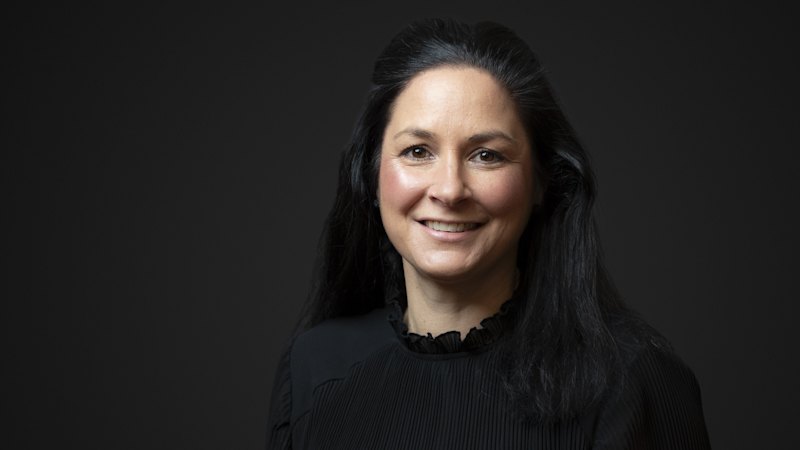
The secretive, six-year Investigation Cuvier relates to allegations of misconduct in Tasmania's public service. ( ABC News: Magie Khameneh )
Barrister Chris Gunson, SC, has told a Tasmanian parliamentary committee the state's integrity commission does not have the power to table its investigation reports in parliament.
Meanwhile, the final report from Tasmania's first-ever integrity tribunal is still secret a year after being handed down, with the Integrity Commission "unclear" if it can legally release it.
The commission says it is attempting to "resolve" the legal impasse.
Tasmania's Integrity Commission does not have the power to publicly table its investigations in parliament, a senior lawyer has told a parliamentary committee.
It means long-running investigations into multiple MPs and the final report from its first-ever integrity tribunal may never see the light of day.
It comes as the commission confirmed to the ABC its powers to release the final report into a six-year-long investigation were "unclear".
Barrister Chris Gunson SC, who has acted in multiple Integrity Commission cases, yesterday told a parliamentary committee into the Integrity Commission that the Supreme Court had recently ruled that the commission did not have the power to table its investigative reports.
That is how it makes its reports public.
Chris Gunson told a parliamentary committee the Tasmania's Integrity Commission does not have the power to table its reports in parliament. ( ABC News )
"Over the last week or so, or last week, there was a judgement delivered in the Supreme Court in relation to one matter that I'm not authorised to speak generally about that matter, but a ruling to the effect that the commission does not have the power to table investigation reports in parliament," Mr Gunson told the committee.
The very existence of the Supreme Court case and its judgement are suppressed.
Asked about this finding and whether it would act to urgently update the legislation, the government said it was "committed to maintaining a strong and effective integrity framework".
The Integrity Commission has been asked for a response to Mr Gunson's comments.
The Integrity Commission has told the ABC that its powers to make findings public were "unclear" in relation to at least one report.
The probe, dubbed Investigation Cuvier , was the first time in the commission's 16-year history it invoked its ability to set up a powerful Integrity Tribunal behind closed doors, following a complaint received in 2018.
The secretive, six-year investigation related to allegations of misconduct in the public service, including that a practitioner working across both the public and private sector misused public resources, breached their contractual obligations, undertook private work in public hours, failed to declare gifts and benefits, and used funds for professional development without proper clearance.
Further allegations were identified by the commission against two senior public officers, as well as potential misconduct by an employee related to a recruitment process, according to a summary of the initial investigation from 2022 published on the commission's website.
The tribunal also looked into the potential systemic and organisational failures that may have facilitated the alleged misconduct — but it's not known which government organisation is at the heart of the probe.
Under Tasmania's laws, a Tribunal can decide to publish its findings, but the Integrity Commission says the Tribunal ceased to exist after it provided its report to involved parties.
According to Chief Commissioner Robert Hay KC, it was therefore unclear whether the Commission, as a separate entity, could decide to publish the details.
"Once appointed, the Tribunal is a separate body from the Integrity Commission and the Integrity Commission Board's powers regarding the Tribunal under the Integrity Commission Act 2009 — including whether the Board can determine to publish the Tribunal's report — are unclear," he said.
The Integrity Commission's chief commissioner, Robert Hay KC, says the body is trying to fix the issue. ( ABC News: Owain Stia James )
Centre for Public Integrity executive director Catherine Williams said it was "critically important" that the report saw the light of day.
"We know that public reporting really is a fundamental function of integrity commissions, and it's a fundamental function because public reporting promotes transparency as well as accountability and public confidence, and it assures the community that when there are allegations of misconduct made, they'll be properly investigated," Dr Williams said.
"If integrity commissions are not able to report as they see fit in respect of their activity to the parliament, their function is undermined, their ability to help maintain the integrity of our democracy is undermined, and their ability to help foster public trust is undermined."
Dr Williams said an urgent legislative solution was needed if the commission did not believe it could report its findings to parliament.
Dr Catherine Williams says it is essential for anti-corruption bodies to promote transparency. ( ABC News )
Tasmania's shadow attorney-general, Ella Haddad, wants to see the report released.
"It is really quite unacceptable that that work could now be completed, six years in, a long investigation, and the public could be none the wiser about what the result of that is.
"I think it also doesn't quite pass the pub test that 16 years into their operation and their existence, the powers they hold might still be unclear."
Greens integrity spokesperson Cassy O'Connor was also concerned that the public was yet to be informed of the details of Investigation Cuvier.
"It was an investigation into allegations that were so serious in the Integrity Commission's mind that for the first time in their history they decided to establish a tribunal, and yet here we are more than a year after the chief commissioner handed down his decision on that tribunal investigation, and we're all still in the dark," she said.
"It's definitely of potential concern when we don't know the outcome of this investigation, whether or not misconduct was established, whether or not there was a referral to law enforcement, whether or not the government or the minister responsible for the relevant agency has been informed either, and that's a big problem.
Mr Gunson told the parliament's Joint Standing Committee on Integrity, which monitors and reviews integrity entities, that one way to make reports public might be for the commission to refer them to the committee.
"It would be open for the committee to determine to publish the report or table it or publish a summary of it," Mr Gunson said.
"I see that as being the appropriate way to inform the public because it just provides a system of checks and balances by going through this committee.
"So the committee might form the view … [that] 'we do really need to tell the public about this, but we also don't want to tell the public about these quite personal matters [relating] to maybe a minister'.