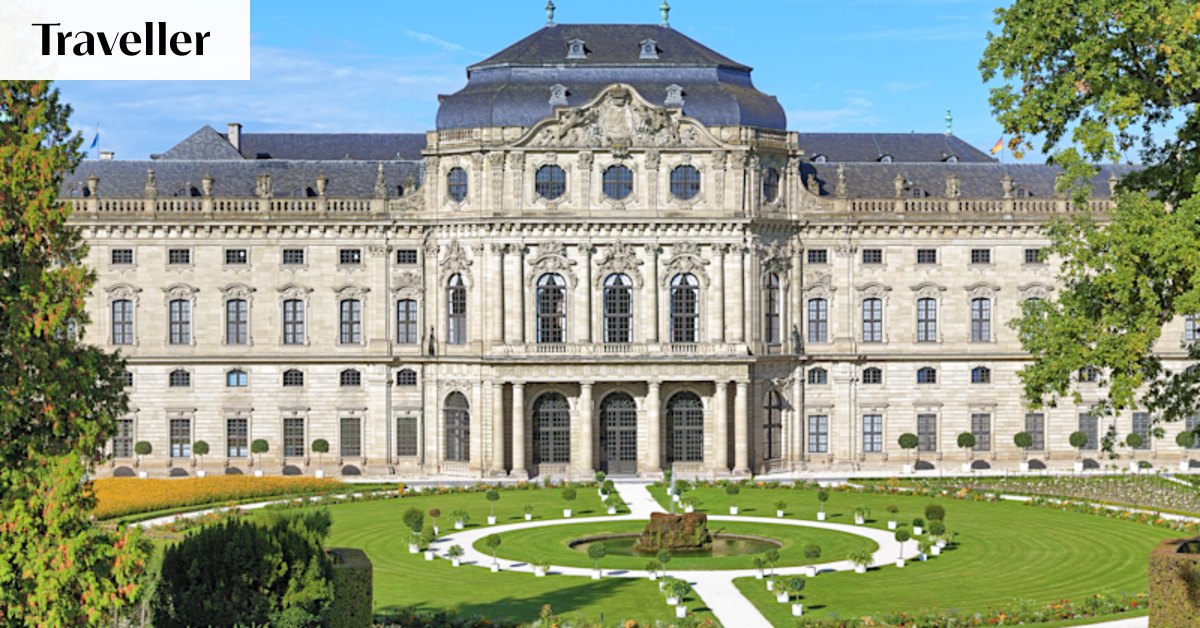
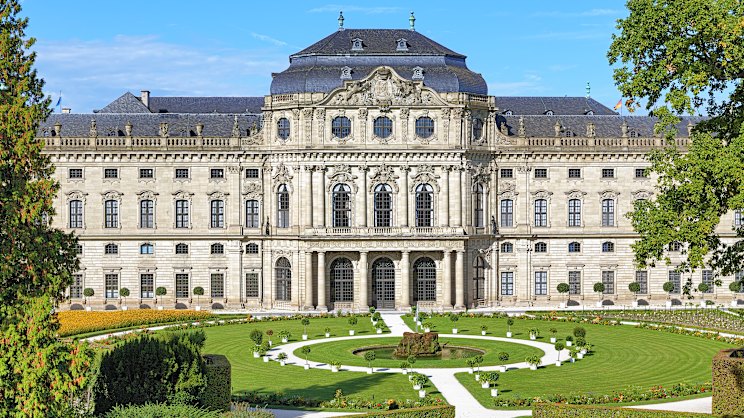
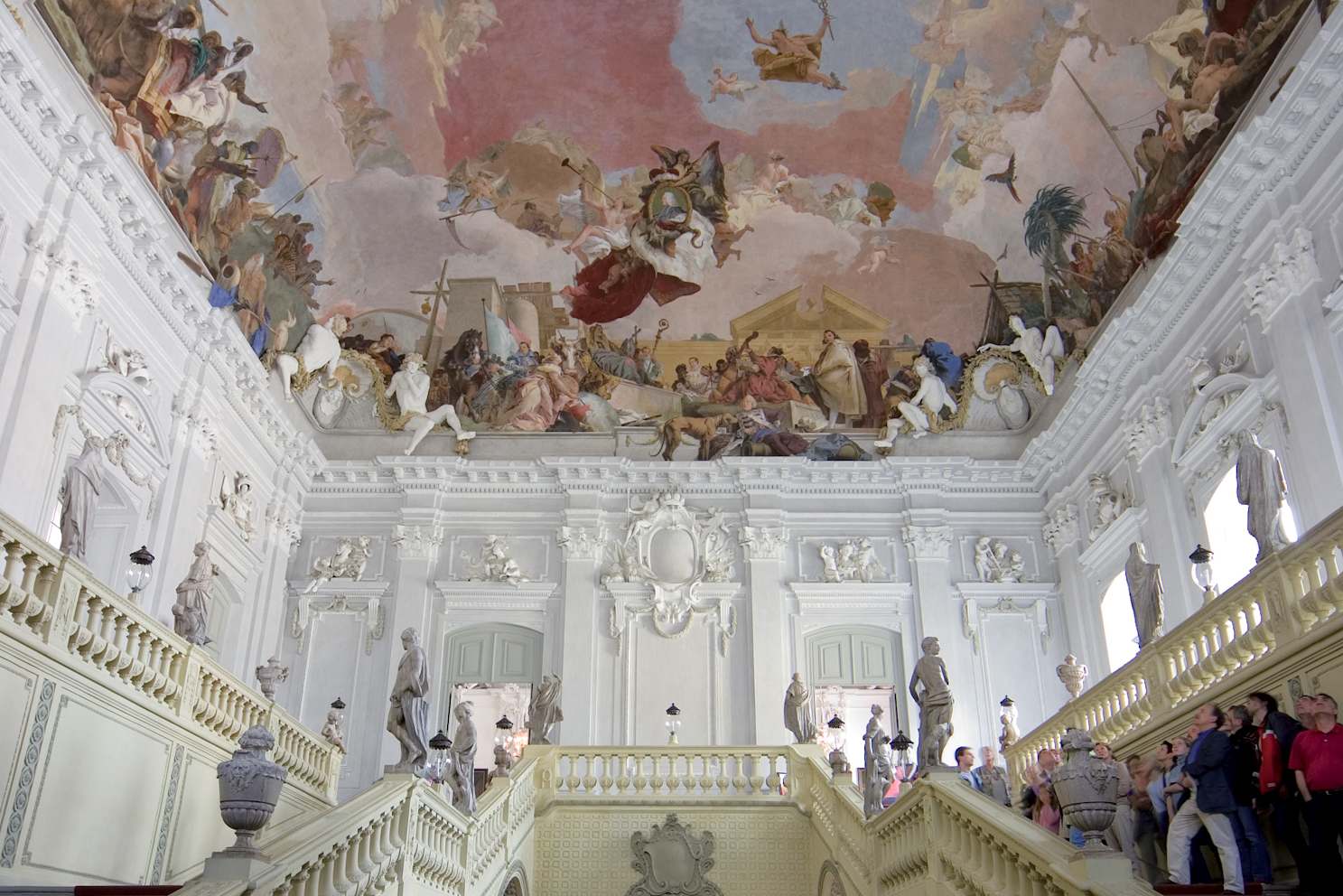
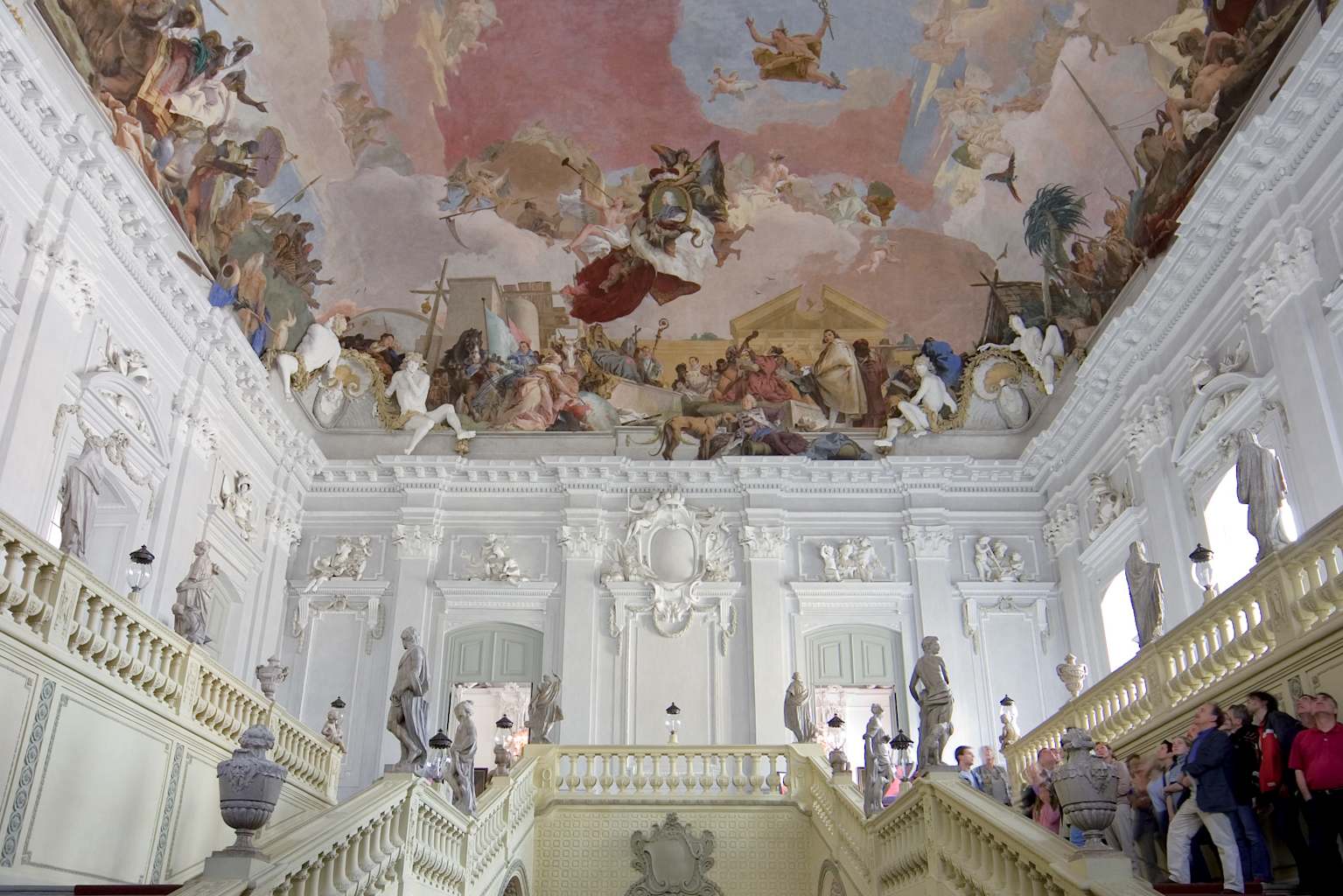
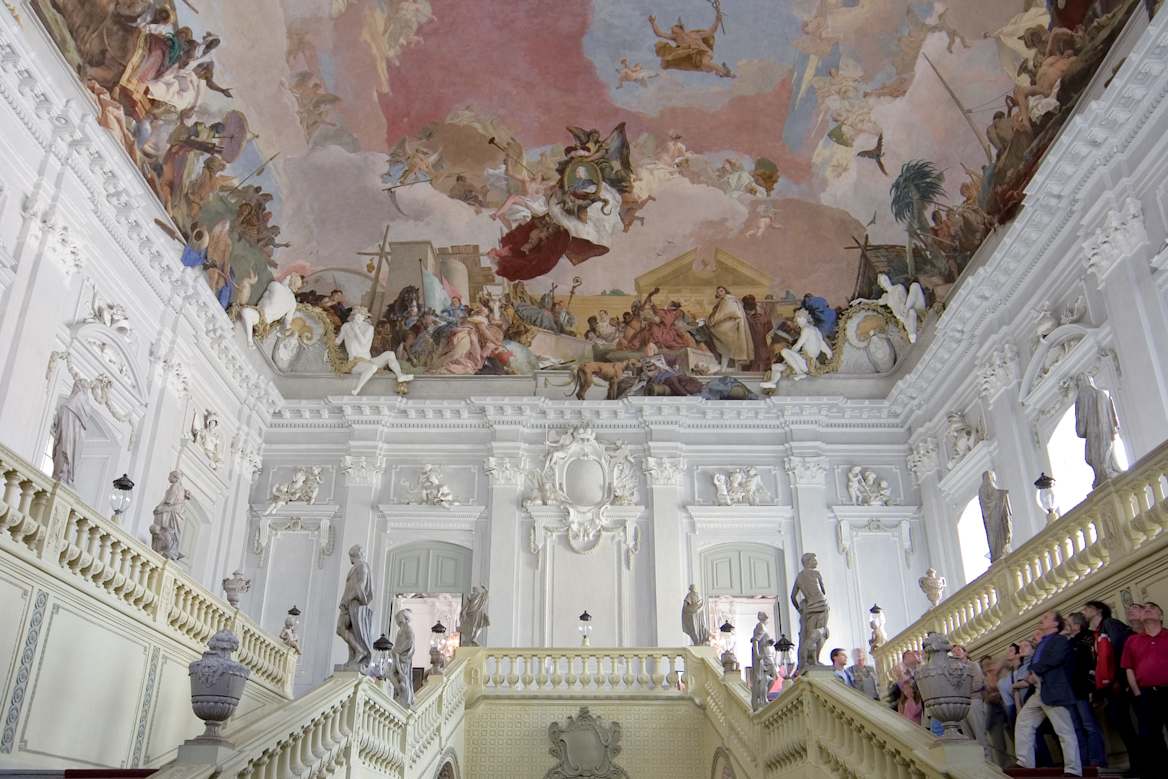
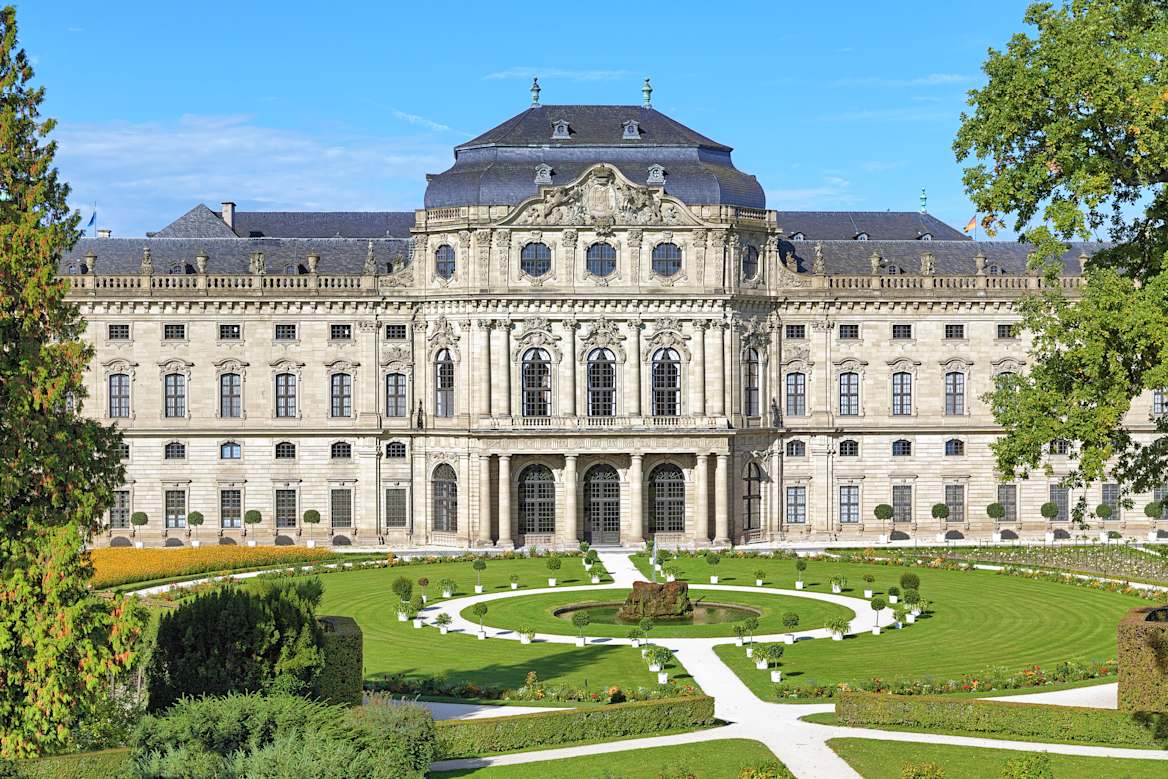
Nothing in Wurzburg Residenz palace makes much sense, not least the elephant on the staircase ceiling, with a trunk like a vacuum-cleaner fitting and ears like oyster shells. It was painted not by Dr Seuss but by the great Venetian artist Tiepolo (1696–1770), who clearly had never seen an elephant in his life.
Tiepolo had presumably never seen a Native American either. Nor a parrot. Nor an angel blowing a trumpet while baring her breasts to a bishop in a powdered wig. Nor a woman in pink almost kissing a mournful cow draped in a tapestry. The artist must have been quite the prankster. I can imagine he kept daubing increasingly ridiculous things on the ceiling of this German palace – an albino crocodile, cannibals, flying horses bursting through Barbie-pink clouds – while waiting for his patron to snort in disbelief.
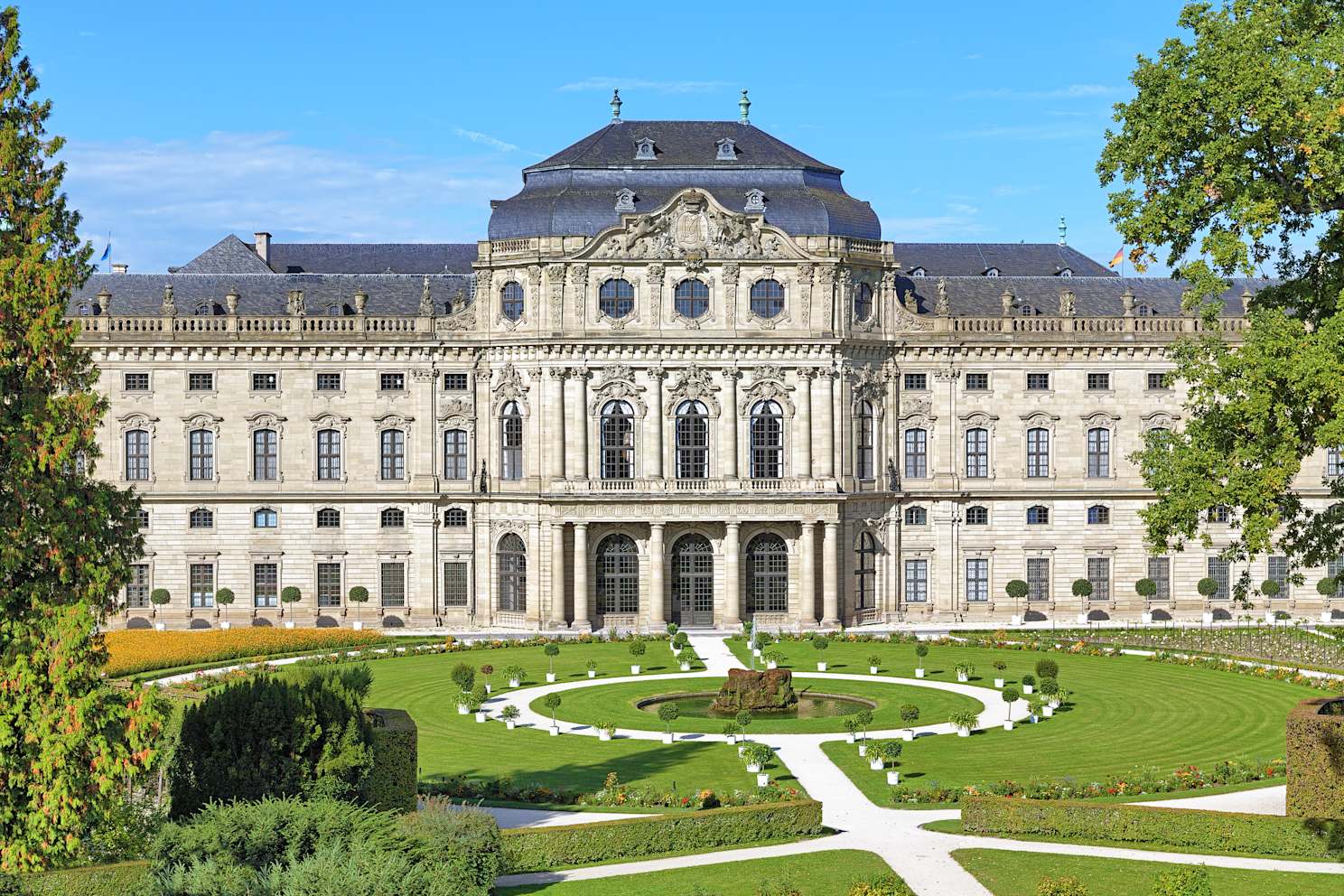
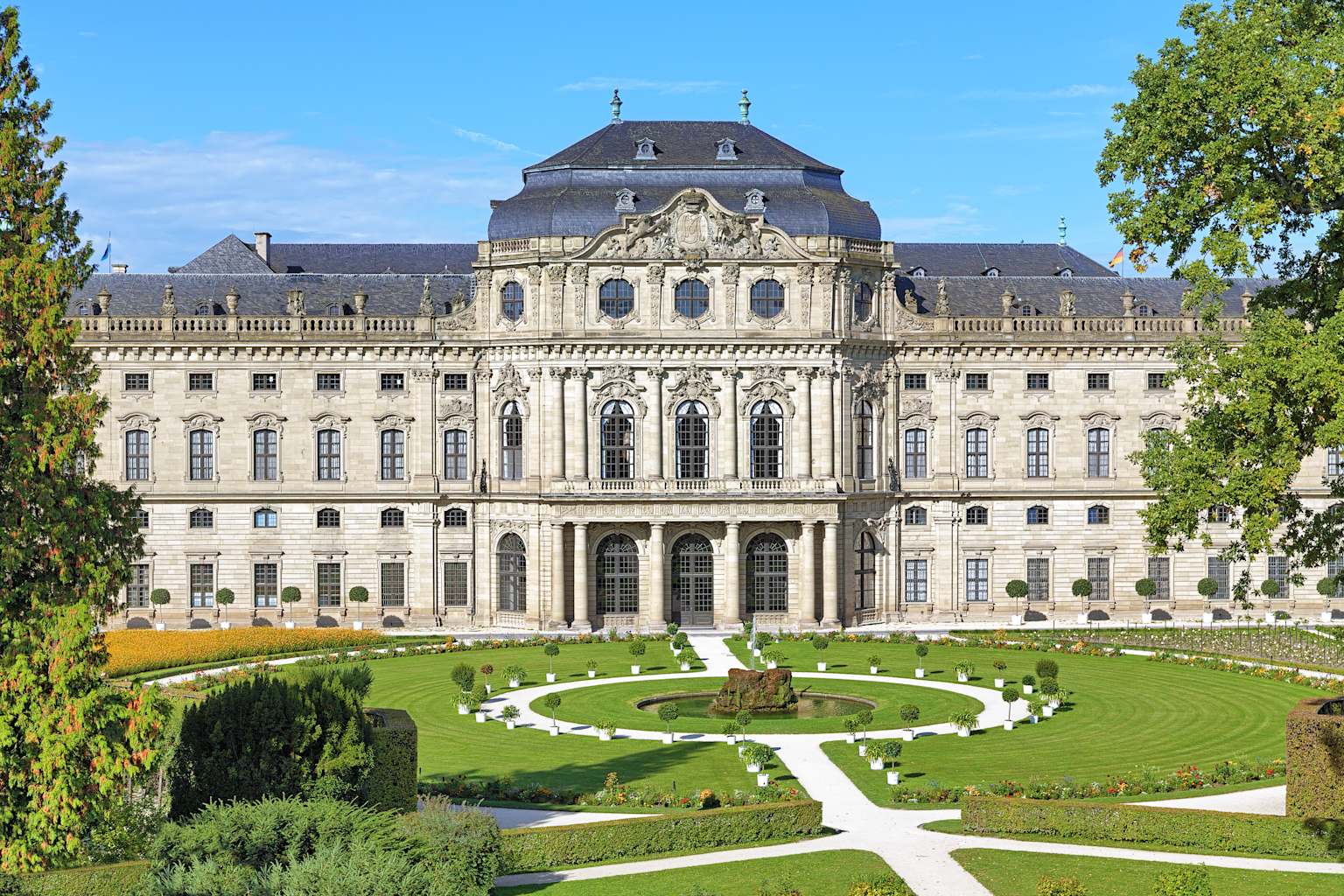
But the prince-bishop of Wurzburg apparently never did because Tiepolo’s fresco is the least improbable thing in this palace. Even by 18th century standards, the prince-bishop who built it had a Trumpian disregard for budget, restraint or modesty.
Every room is mind-boggling. Ceilings get ever more encrusted in stucco. Just as you assume the entire continent’s gold supply must have run out, more gilt is splattered over pillars and cornices. Frescoes, tapestries and paintings convey the message that the bishop and his illustrious family are descended from Greek gods, conquering generals and ladies of impeccable wobbly chinned heritage.
The palace that sports this glorious, camp madness erupts in the agreeable university town of Wurzburg, south-east of Frankfurt, once a tiddly ecclesiastical principality. The Tiepolo fresco will crick your neck with its swirl of colour and dubious representations of the four continents (Australia had yet to be identified by Europeans). The Imperial Hall is loud in pink and yellow, and sags with statues and chandeliers.
Get exclusive travel deals delivered straight to your inbox. Sign up now.
The enfilade of apartments in the southern wing just gets more outrageous as you shuffle between red ropes. No rapper’s crib could match the rock-candy pillars, flocks of dimpled cherubs, gilt-encrusted cornices and wedding-cake stucco. Greek nymphs with unfortunate wardrobe malfunctions flit through every fresco like Playboy bunnies.
The overload culminates in the rococo Mirror Cabinet, all glitter and imagined Chinese scenes. The decor explodes with flowers, exotic animals and dozens of human figures reflected from multiple angles. You might wonder how anyone lived here without getting sore eyes or knocking over a porcelain thingamajig. It’s enough to give you a headache.
Wurzburg Residenz is one of the great sensory sights of Europe, but you might go beyond mere looking at the cavorting, ripped Greek heroes to find a story about the Catholic Church’s ornate reaction to the Reformation, the rapacity of colonialism, and the social standards of the times in which show trumped substance.
It was a time in which the upper classes were obsessed with family bloodlines, the glorification of often pointless battles, and classical myth. And while historical Europe is often presented as jolly and artistic, you can hardly miss the heart of darkness under the gold leaf.
Construction of Wurzburg Residenz cost 1.5 million times the average worker’s weekly wage in the mid-18th century, which in modern Australian terms would be $3 billion. If you want to know why Europe had reformations and revolutions, this palace gives you an unsubtle hint.
Wurzburg Residenz might even tell you something about today, and what happens when too few people have too much power and money. The result, it seems, isn’t more teachers or nurses, but plenty of stripper angels – and the occasional elephant.
DETAILS Residenz Wurzburg is open daily with free guided tours in English at 11am and 3pm. Admission is €9 ($14). See residenz-wuerzburg.de ; Viking Cruises’ 11-day “Rhine & Main Explorer” cruise from Basel to Nuremberg (or the reverse) spends a day in Wurzburg. Numerous departures between late May and late November 2027. From $4795 a person twin share, including dining, beverages with meals, Wi-Fi, a shore excursion in every port, entry to Residenz Wurzburg and gratuities, see vikingrivercruises.com.au
The writer was a guest of Viking Cruises
You have reached your maximum number of saved items.
Remove items from your saved list to add more.
You've used all of your gift articles. 3 more will become available on the 1st of every month.