
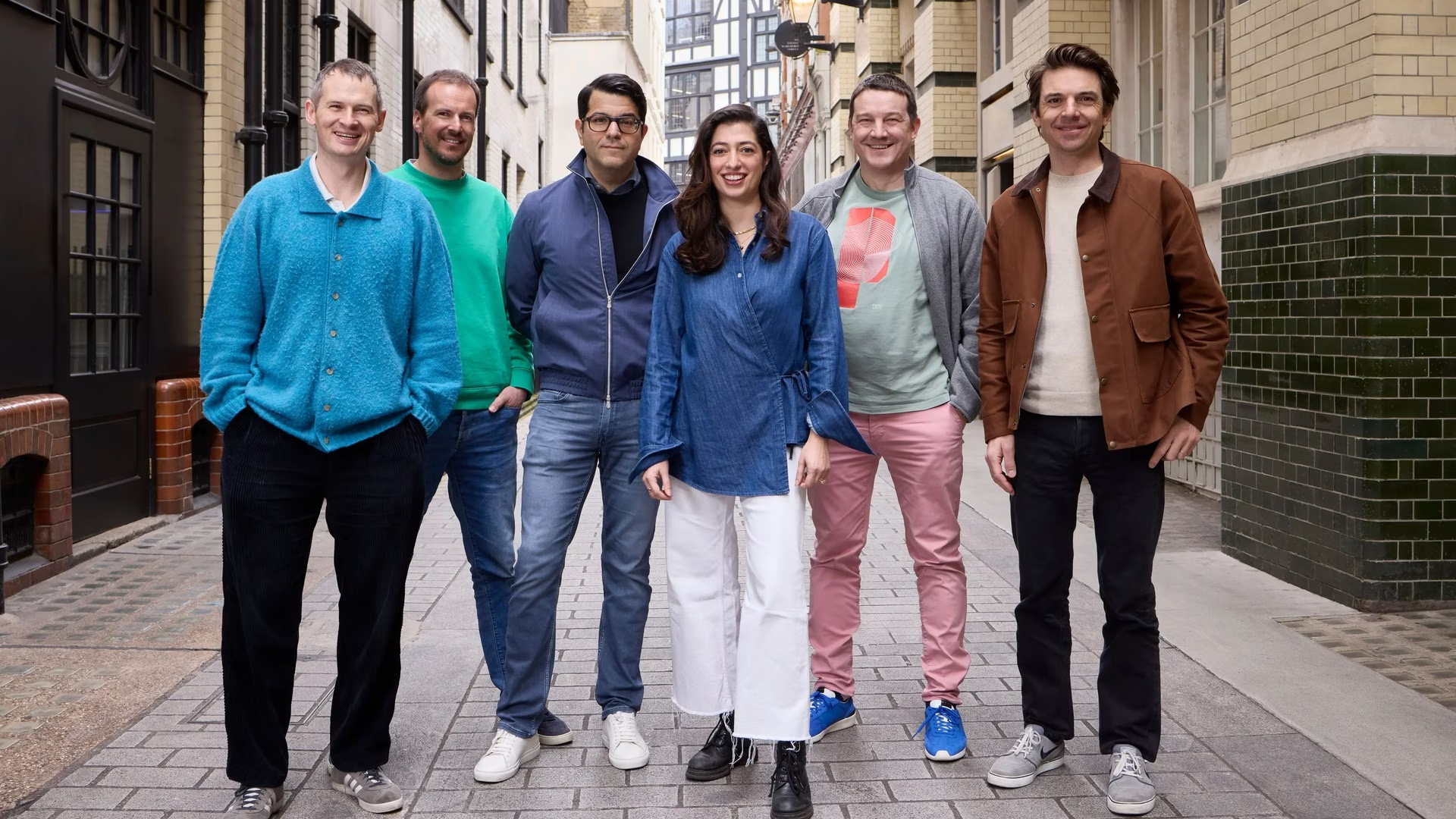

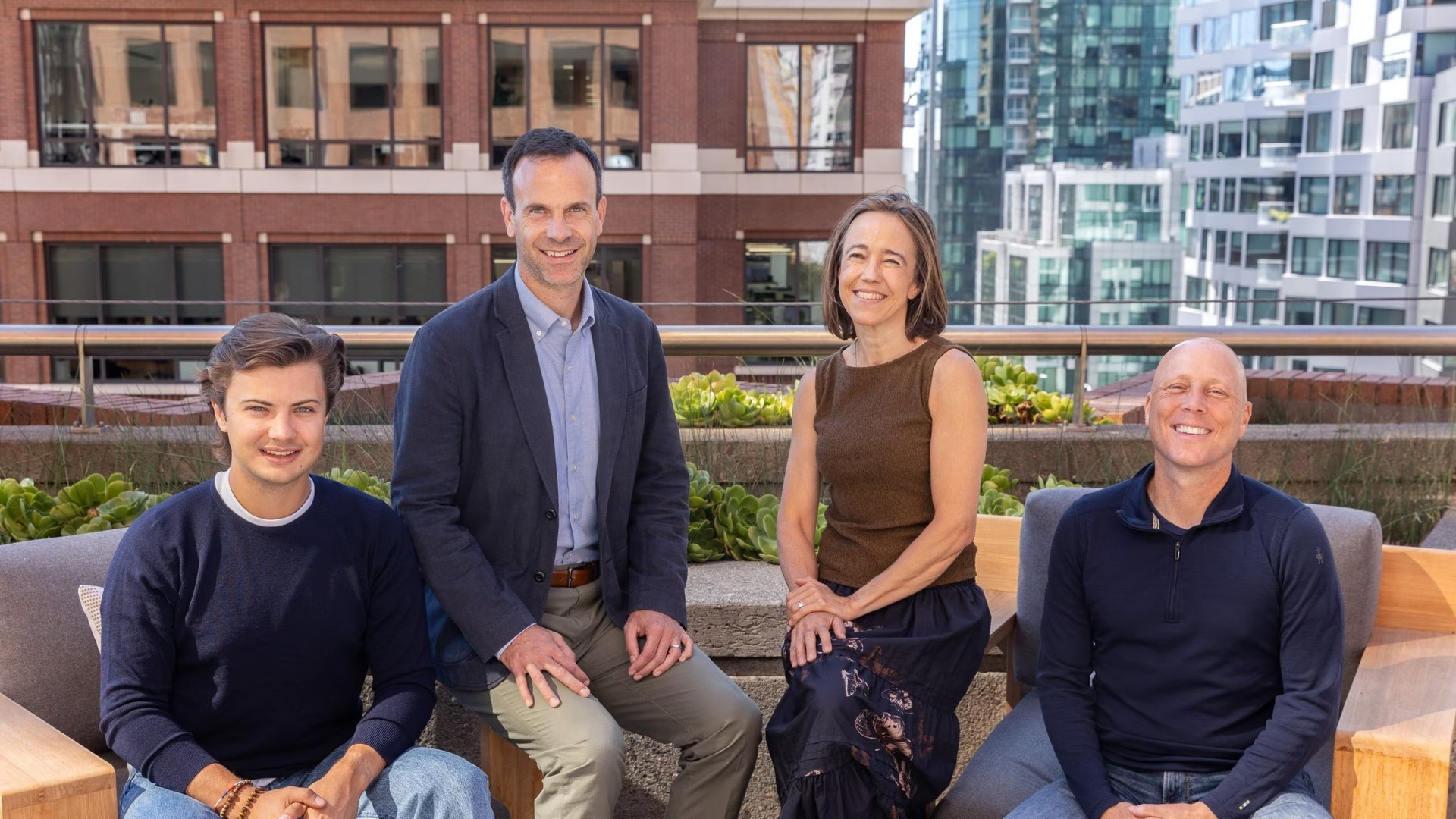
Knit Health’s co-founders, from left: Jonas Knecht, co-CTO; Jonathan Kolstad, CEO; Maya Petersen, chief scientist; and Ted Robertson, COO.
Knit Health, a startup building an AI model that predicts what care patients will need next, has raised a $35m Series A led by NEA. Town Hall Ventures, SignalFire and existing investors joined the round, Knit Health said in a statement on Monday.
Chief executive Jonathan Kolstad first disclosed the round to Will Maddox at Axios Pro . The money will fund the rollout of Med-BEAM across health systems and other healthcare groups. Knit calls the model a world model for healthcare.
Scientists from the University of California, Berkeley founded Knit in 2025. It has raised $46.6m so far. Earlier seed and pre-seed backers include Frist Cressey Ventures, Uncork Capital, Moxxie Ventures, Coalition Operators and The Aligned Fund.
According to Knit, much of healthcare’s key information never makes it into notes. It sits in the orders, referrals and diagnoses that clinicians make, and in what happens next. That makes it hard for large language models to tell where a patient is heading, the company said.
Med-BEAM learns from billions of real healthcare decisions and hundreds of millions of patient records that follow people over time. It predicts the care a patient is likely to need and shows how different treatments could change their course.
Knit said it trains only on data it has clear, documented rights to use. All of that data is fully de-identified before it reaches the company. Med-BEAM checks its predictions against real clinical outcomes. That lets it flag when there is too little evidence to be confident.
“Healthcare still operates too often on what amounts to chance: which doctor you see, which day you arrive, which hospital you enter,” Kolstad said in the statement.
Knit compared Med-BEAM with a group of models from frontier AI labs. Each had to predict the clinical actions for hospitalised patients over the next 24 hours. Knit picked no outcome in advance.
Med-BEAM was up to four times more accurate, 100 times faster and 250 times cheaper than the models tested, Knit said. The company added that its model’s confidence matched real outcomes more closely.
Blake Wu, a partner at NEA, said one model could power “dozens of critical workflows”. He listed care management, patient navigation, clinical trial recruitment, specialist scheduling, hospital-at-home care and treatment-response prediction .
Get the most important tech news in your inbox each week.