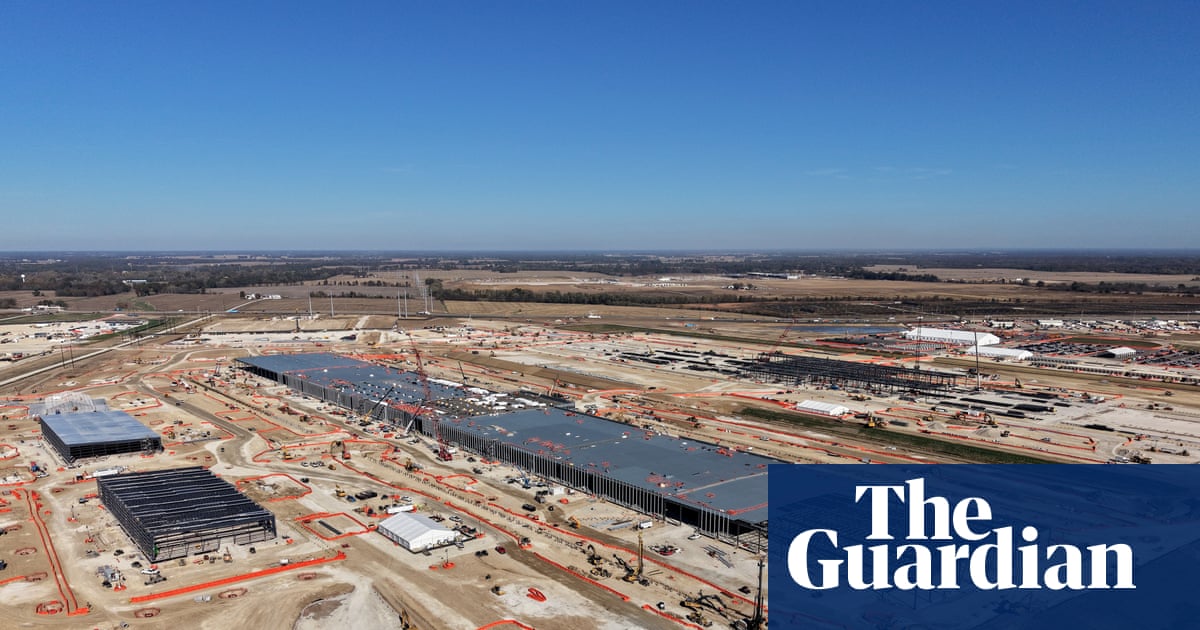
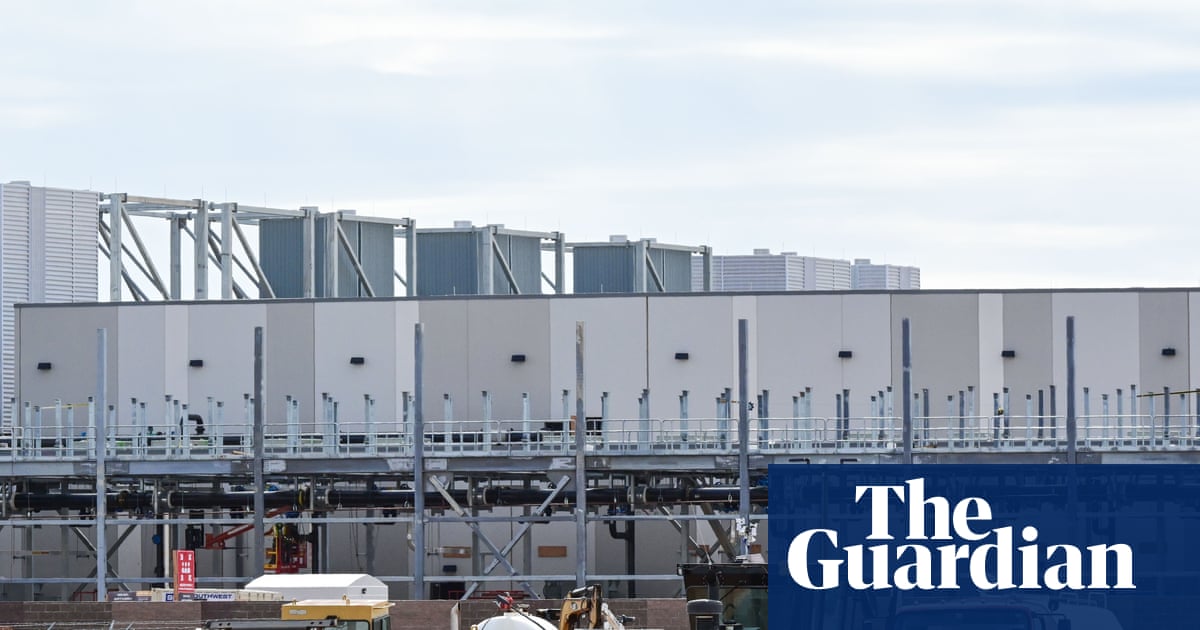
Just 400 hyperscale data centers connected in the US used as much electricity as the state of Michigan in a single year, new Harvard research has found.
The study, published Monday in Nature Sustainability , also finds that the majority of that electricity was generated using fossil fuels , and data center emissions are three times higher than they were before the AI boom.
Federal and state governments do not track data center use separate from the rest of the power sector, despite mounting projections that data centers are putting serious strain on the American power grid. Individual data centers’ power use is often considered proprietary business information, and data center operators and utilities do not have to disclose specific numbers to the public.
The Harvard study specifically focuses on hyperscale data centers—the largest types of facilities, which have become flashpoints in community opposition across the country. While often used for AI inference or training, not all of the hyperscalers surveyed in this study are being used for AI.
“Hyperscalers have been growing fast, even before the AI boom,” says Jon Koomey, an energy researcher who was not a part of the study.
To assemble their dataset, the Harvard researchers put together a list of 403 hyperscale data centers around the country that were operational between May 2024 and April 2025 using a mix of industry research and satellite data. The team then modeled these facilities’ energy use in a variety of scenarios and calculated the energy mix of the regional grids to estimate individual facilities’ carbon emissions. Not all regions were created equal: Data centers in Virginia, Oregon, Ohio, and Iowa—the first of which is home to Data Center Alley—were responsible for more than 50 percent of the energy use in the study.
“Knowing for certain data centers how much they use over a year is a really useful thing,” says Koomey, who notes that a peer-reviewed study is more rigorous than some back-of-the envelope calculations . Koomey has been involved in a regular report from Lawrence Berkeley National Laboratory since 2007 that approximates the energy and water use of the industry. “Sometimes we know it, but sometimes it’s behind an NDA, and no one ever sees it.”
While based on recent data, the study may already be outdated—a reflection of how fast the data center industry is moving. The average size of a facility in the new study is 40 megawatts, which is relatively small compared to some of the data centers under development today. Developers are building campuses that are hundreds or even thousands of megawatts, and there are proposals for still larger data centers.
“Some of the massive campuses being proposed today are substantially larger than the typical facility in our dataset,” says Gianluca Guidi, a postdoctoral research fellow at Harvard’s T. H. Chan School of Public Health and the lead author of the study.
The study also does not look at developers who choose to build power plants onsite, known as behind-the-meter power—a factor Koomey calls a “wild card” in accurately assessing total data center power use. Plans for behind-the-meter power generation have skyrocketed at proposed data center sites across the US over the past year, with as many as 189 gigawatts in the pipeline earmarked for data centers alone. Many of these plants rely increasingly on inefficient natural gas turbines . BloombergNEF estimated last week that if all of the behind-the-meter power plants in the development queue in the US get built, it could increase overall US emissions by 10 percent.
While the federal government hasn’t tracked data center energy use to date, that could change soon, and it could be a boon to researchers and the public. The Energy Information Agency, the arm of the federal government that tracks energy use across various sectors, conducted three pilot surveys of data center power use across 10 states this year. Those pilot surveys are now complete, EIA spokesperson Lee Tucker tells WIRED, and the agency is currently using them to design a potential voluntary survey for the sector.
In your inbox: Inside WIRED’s newsroom with Katie Drummond
They war-gamed dimming the sun —it went worse than you think
The Big Interview: Nathan Fielder tells us everything
Live tracker: Elon Musk’s America PAC is spending big on the midterms
Introducing the app: More ways to make the most of WIRED