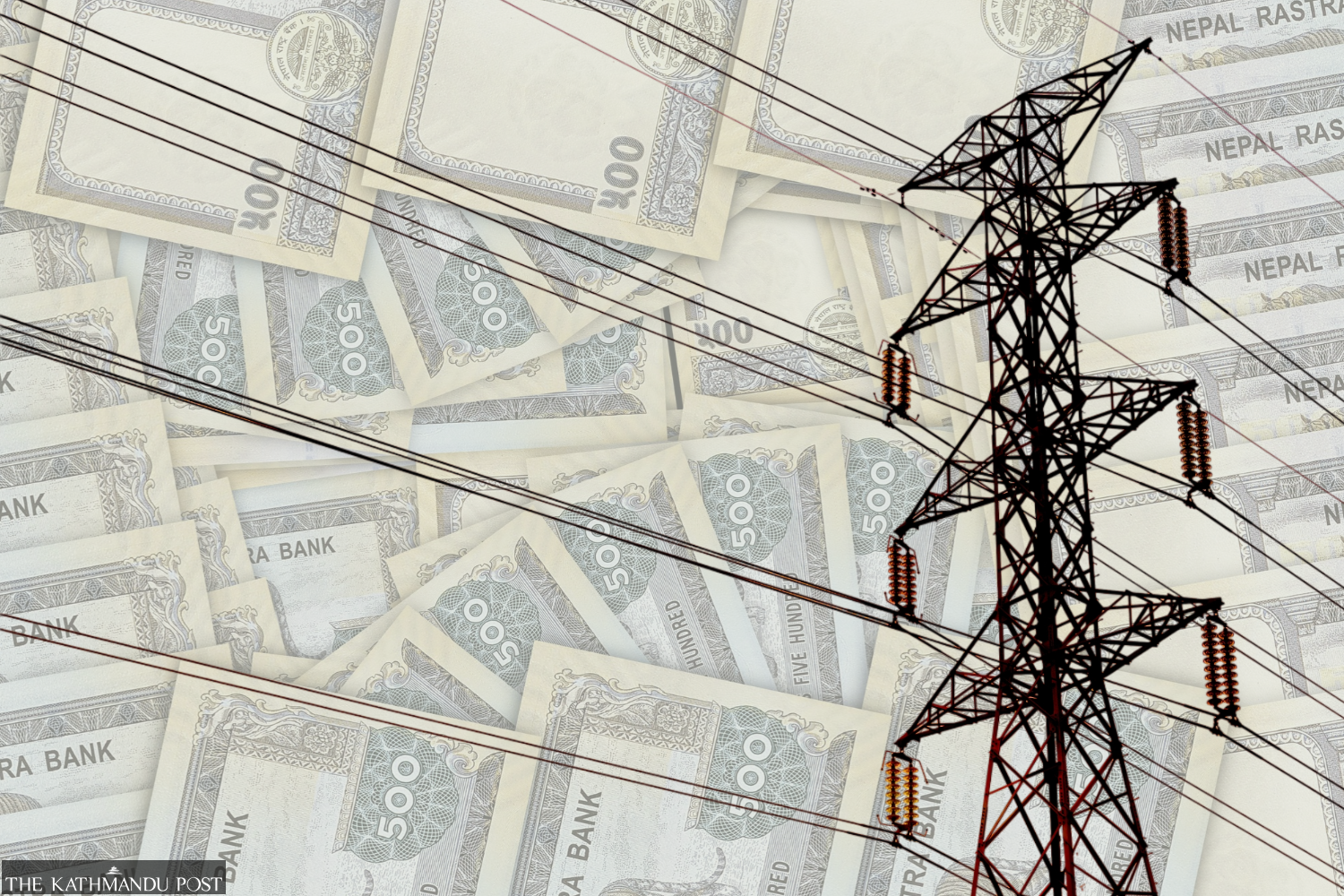
Nepal risks being left with hundreds of megawatts of surplus electricity each day after failing to secure timely approval from India to sell power through its energy exchange, following the expiry of existing export arrangements.
The inability to export power translates into an estimated Rs135.82 million in potential daily revenue loss for the state-owned power utility, Nepal Electricity Authority.
The authorisation to export 609 megawatts of electricity supplied to three Indian states expired at the end of October. NEA has traditionally shifted such exports to the Indian Energy Exchange (IEX) after its medium-term power sale agreements expire. But India has yet to approve the arrangement this year, leaving Nepal unable to sell the electricity through the exchange.
NEA Managing Director Dirghayu Kumar Shrestha said the utility had submitted a proposal to convert the existing arrangements into exchange-based exports in August, but had received no approval from the Indian side despite nearly three months having passed.
Under bilateral agreements, Nepal has been exporting 404MW to Haryana and another 205MW to Uttar Pradesh and Bihar, bringing the total to 609MW.
Bangladesh exports also come to a halt
An additional 40MW of electricity supplied to Bangladesh under a seasonal arrangement has also stopped after the export period expired on Sunday. Nepal has been exporting power to Bangladesh annually between June 15 and November 15.
With exports of 609MW to India and 40MW to Bangladesh on hold, the NEA stands to lose an estimated Rs135.82 million in potential daily revenue, based on an average export rate of 5.45 Indian rupees per unit. The estimated loss is equivalent to around INR84.88 million per day, or approximately Rs135.82 million in Nepali currency.
Nepal currently has approval to export around 1,169MW of electricity to India and Bangladesh. Of this, 649MW is covered by medium-term bilateral agreements and 521MW by sales through the Indian Energy Exchange. Converting the electricity covered by bilateral agreements to exchange-based sales would allow Nepal to export more power whenever domestic generation exceeds demand.
The NEA has been selling surplus electricity generated during the monsoon through the IEX’s day-ahead and real-time markets, where prices are determined competitively. Under the bilateral medium-term agreements, it also supplies electricity to Indian states of Haryana, Bihar, and Uttar Pradesh.
An NEA official blamed the current situation on the failure of senior officials at the Energy Ministry and the utility to act effectively and in time, despite knowing that the export authorisation would expire in October. Shrestha, however, said the utility had already sent a request in August to convert the 649MW covered by medium-term arrangements into exchange-based exports.
According to the NEA, the country is currently generating between 2,600MW and 2,700MW against domestic demand of around 2,200MW to 2,300MW. Consumption has also remained relatively low because businesses and factories have yet to resume full operations after the Chhath festival, leaving the utility with a growing surplus that it cannot readily sell.
Not all surplus electricity can be exported, however. Shrestha said the utility must keep around 200MW to 300MW in reserve to maintain system security and prevent disruptions to domestic supply if a major power plant suddenly goes offline.
Such reserves are essential in case of an unexpected outage at a large facility such as the 456 MW Upper Tamakoshi Hydropower Project, he said.
Electricity generation and export volumes are typically higher during the monsoon, when rivers carry greater volumes of water. But river flows begin to decline from November-end, reducing hydropower generation and the amount available for export.
During winter, domestic generation is expected to fall below demand, forcing Nepal to import electricity from India. The NEA estimates that it will need to import around 500MW continuously from mid-January to mid-March, with purchases rising to 800MW to 900MW during peak-demand hours.
Seema covers business and economy for Kantipur Publications.