Out of curiosity, researchers at a small artificial intelligence lab in Accra, Ghana, removed the guardrails on their drug discovery AI model in 2024. They asked it to design toxins instead.
The model produced designs for 1,020 proteins and 5,000 small molecules. The researchers never made any of them in a lab, but software that predicts how poisonous a substance is scored all of them as likely toxic. Some of them resembled ricin, a deadly poison. The study was uploaded to the preprint server arXiv in May 2025.
“We were all shocked,” Darlington Akogo, founder of MinoHealth AI Labs, told Rest of World.
For Akogo, the results also raised a new question: If someone took designs like these to a company that makes DNA to order, would anyone stop them?
Across Africa, the need to regulate DNA synthesis providers is now echoing through the highest levels of government, Brenda Obuya, a senior official at Kenya’s Ministry of Information, Communications and the Digital Economy, told Rest of World.
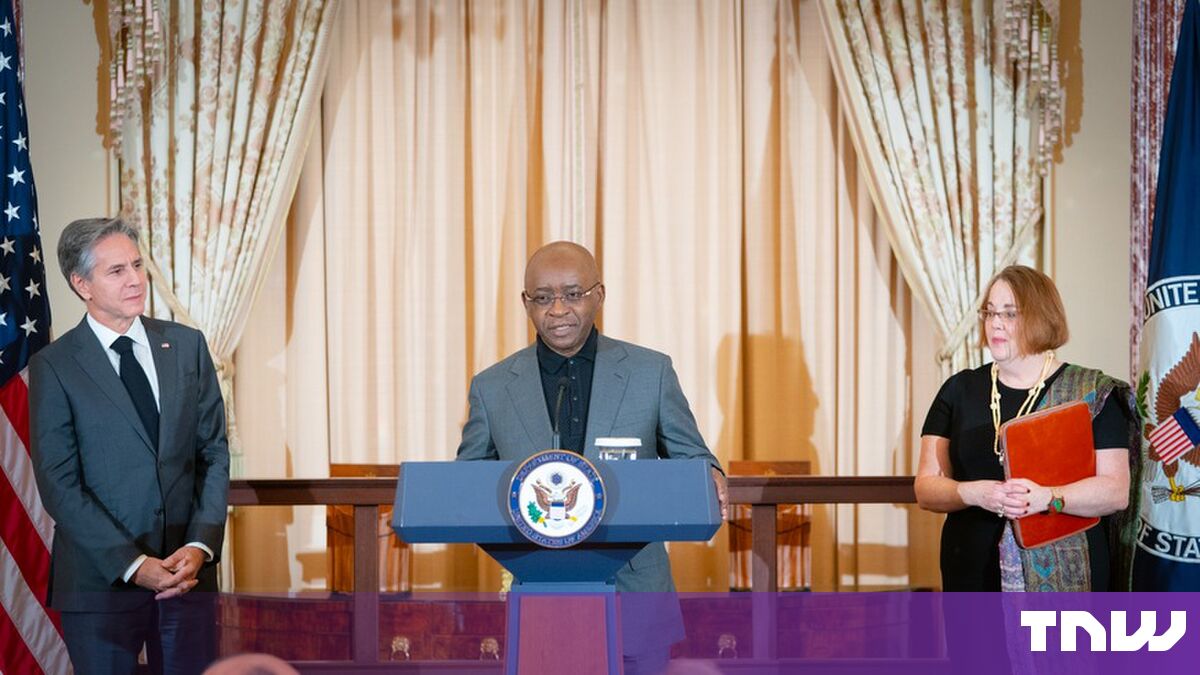
Akogo has traveled the world warning that AI poses an existential bioweapons threat. He discussed it on the sidelines of the World Bank Group and International Monetary Fund Spring Meetings held in Washington, D.C., last year. He discussed the broader risk over dinner with Microsoft co-founder Bill Gates in 2023, whom he described as “on the fence” at the time. This year, Gates has issued numerous public warnings. “A.I. has crossed the threshold that its ability to empower a bioterrorist to kill hundreds of millions, that exists today,” he said on The Ezra Klein Show in September. The study has been discussed within Interpol, showing just how far it has reached.
“I think the fact that the Ghanaian AI lab examined this and highlighted the potential for misuse shows that African institutions are contributing to … potentially to the governance [of AI],” Adam Abdullahi, a fellow at the International Biosecurity and Biosafety Initiative for Science, told Rest of World .
LLMs have become even more capable since the study came out and the barrier for entry has lowered, Ayantola Alayande, a researcher at the Global Center on AI Governance, told Rest of World. “It wouldn’t be a surprise now to see even … [lay] users generate this sort of output via chatbots.”
Scholars have long warned about AI’s bioweapons threat, but it is only recently that AI systems have truly outperformed Ph.D.-level biologists .
In 2022, scientists at a US drug company ran a similar experiment as the MinoHealth team. They built a generative machine learning software that produced designs for possible chemical weapons.
What is different with the minoHealth Lab study, Akogo said, is the kind of AI involved. His team used a general purpose LLM trained for biology and drug discovery.
Researchers have since gotten a number of LLMs to drop their inbuilt safeguards in a process called “jailbreaking”, and generated bioweapons advice and other kinds of hazardous content. This includes Kimi, by the Chinese company Moonshot AI; Grok; Claude; and ChatGPT, said Peter Garraghan, founder of AI security company Mindgard . All it takes is persistence and creativity with language to learn how to phrase requests to the model, he told Rest of World .
“You don’t need to be a technical expert to do jailbreaking,” he said . It took his team one day to break Kimi .
SpaceXAI, Anthropic, OpenAI, and Moonshot did not respond to a request for comment.
The latest AI models have stronger safeguards , particularly when it comes to biological misuse requests, but even these are not foolproof, according to the AI Security Institute, a U.K. government research organization.
The danger became more real this September when Anthropic reported five cases where people tried to use its AI models in ways that could support biological weapons development. Bioweapons are now the top AI misuse risk , according to Ken McCallum, director general of MI5, the U.K.’s intelligence agency. “The misuse case to which I’d attach greatest weight – is AI’s potential to change the stakes on existing or even new bioweapons,” he said.
When Akogo founded MinoHealth Labs in 2016, he wasn’t worried about bioweapons. Rather, he wanted to make care available to all by solving Ghana’s health worker shortage using AI.
That goal took Akogo to the edge of AI development in 2022, when his team began work on an LLM named Moremi AI. A year later, they received $149,533 from the Gates Foundation to build a foundation model that can analyze medical images for radiologists. The model would eventually process both text and images, answer medical questions, help interpret scans, and draft reports. It would also help design drugs.
The ambition is similar in scope to top Silicon Valley labs such as OpenAI and Anthropic, Leo Anthony Celi, a principal research scientist at the MIT Laboratory of Computational Physiology, told Rest of World. In October 2025, Anthropic launched Claude for Life Sciences , and this April, Open AI launched GPT-Rosalind . Both are AI tools developed to accelerate biology research and drug discovery. Investment in AI powered drug discovery reached $8.4 billion in 2025, more than double the $4.1 billion invested in 2023, according to a 2026 McKinsey report .
MinoHealth has a fraction of these resources and a 20-member team working in a modest bungalow in Accra that is the anti-thesis of Silicon Valley’s futuristic campuses .
In the early days, Akogo had sleepless nights. He worried his competitors were better funded, and had more talent. But he has since decided there is room for multiple companies working on specific use cases.
“I have a small team of extremely capable people so if that means we’re punching above our weight, I guess … it’s just more exciting,” he said.
When his team tested their model, Moremi Bio, in 2024 to see if it could be made to ignore safeguards, it took them only a few days, Akogo recalled. Few people back then knew that biology LLMs’ could have a dual purpose, so he decided to publish his findings. “To the best of our knowledge, [looking at published studies], this was the first time anyone was showing that LLMs specifically could design biological weapons,” he said.
AI models shouldn’t be able to design potential bioweapons, Abdullahi said. “The whole idea of putting guardrails is that it should never really kind of get to that stage, so to speak.”
Bad actors could potentially send the bioweapon designs to DNA synthesis labs to make the molecules. Although some labs screen orders for potentially toxic sequences, this process could be hacked by a malicious actor using AI, Akogo said.
In June, the heads of OpenAI, Anthropic, and Google DeepMind joined a call for U.S. lawmakers to make such checks mandatory .
Governments across Africa recognize that open-source frontier models have lowered the technical barrier to generate toxins, said Obuya from Kenya’s Ministry of Information, Communications and the Digital Economy. Cloud laboratories and AI models have created a need for regulation, she said. Intelligence agencies are setting up specialized desks to track threats at the “intersection of cyber defense and biology,” she said.
As AI design tools develop, screening must keep pace, Sandra Roy, program manager at the International Gene Synthesis Consortium, a voluntary group of nucleic acid providers, told Rest of World . They support legislation that would mandate screening across the nucleic acid supply chain, she said.
“We are also working with model developers to strengthen our ability to detect AI-designed sequences that may be engineered to evade screening, and we will keep updating our tools as the threat evolves,” she said.
Moremi Bio is currently good at a few things. For instance, it has proposed hundreds of drug candidates for diseases such as cancer, tuberculosis, and dengue. The team is now working as part of a European Union-funded consortium to develop monoclonal antibodies and diagnostics for mpox and malaria. The company is predominantly funded through sales of its AI system, Akogo said.
The promise of AI in healthcare and biology aside, Akogo continues to raise the alarm over AI risks, especially bioweapons. He believes the United Nations should set up a dedicated working group to study the risks of AI. He also suggested tighter controls over synthesis. His goal isn’t to scare people, but rather, to balance AI optimism with caution.
“I think there’s several things we can do that could limit and minimize those dangers,” he said.