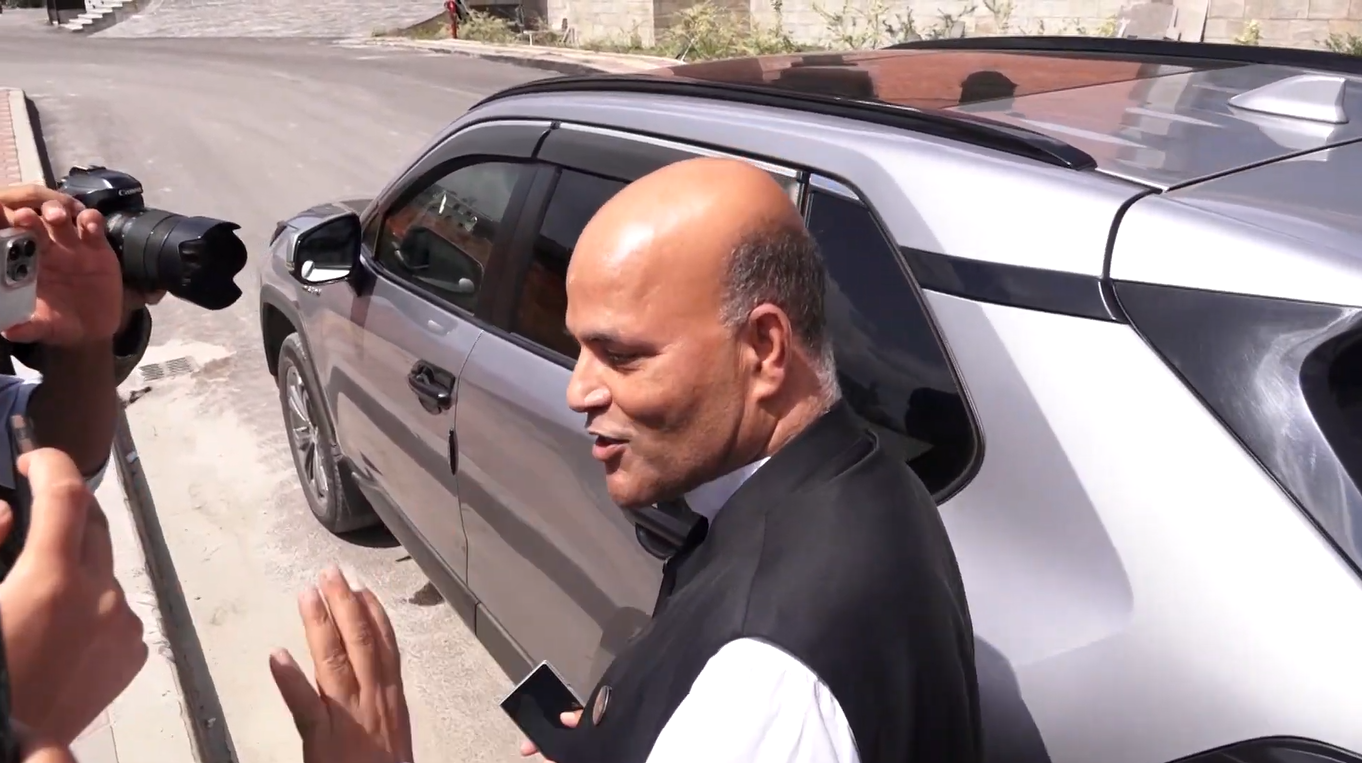
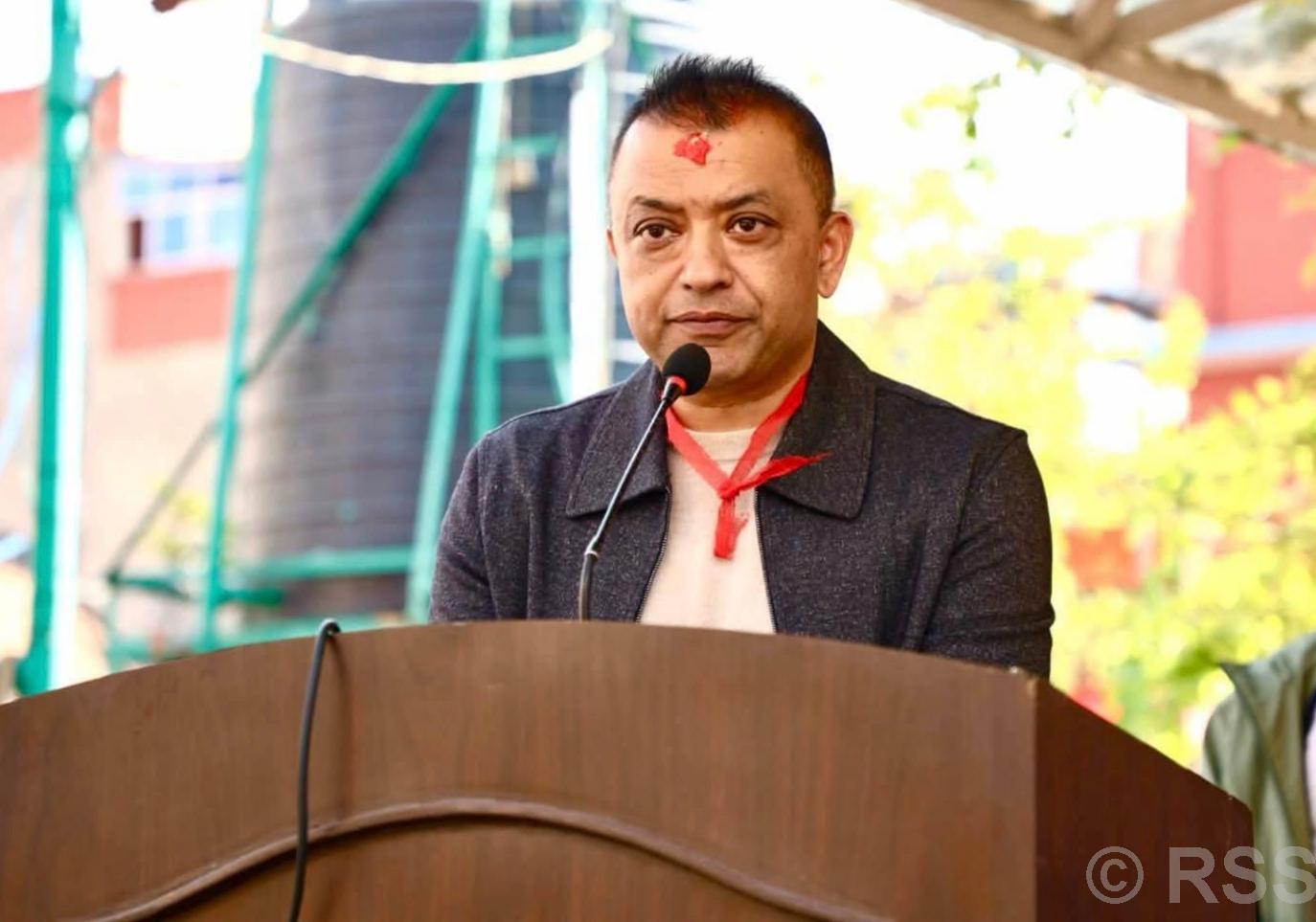
Kathmandu. Sarlaahi Constituency-4 Federal Lawmaker Dr. Amresh Kumar Singh is about to start a Mechi-Mahakali trek with the objective of raising issues of national unity, social harmony, and public concern. The trek will be formally inaugurated by Rastriya Swatantra Party (RSP) Chairman Rabi Lamichhane from the historic Janaki Temple premises in Janakpurdham on the occasion of the Chhath festival. Although the announcement was made to start from Janaki Temple, the actual trek will proceed from the Mechi bridge in Bhadrapur, Jhapa. Lawmaker Singh has scheduled the first phase of the trek for 60 days along the Hulaaki Highway from Kartik 30 to Magh 30. Subsequently, the second phase will involve a trek along the Mid-Hills Highway from Jhulaghat in Baitadi to Chiwabhanjyang in Panchthar. Lawmaker Singh stated that the main objective of the trek is to maintain national unity and social harmony by preventing any divisions based on caste, religion, party, community, or geography. He mentioned that he is going to the villages and settlements to understand the real problems of the people, breaking the old tradition of leaders giving speeches and people listening. During the trek, the plan is to walk for five hours daily and spend seven hours listening to and documenting the problems of farmers, laborers, women, Dalits, Muslims, and businesspeople. He clarified that the problems collected in this manner will be presented to the parliament and the Prime Minister to initiate policy-level solutions. Commenting on the government's performance, Dr. Singh noted that the current government is trying to accelerate the control of corruption and service delivery. He stated that due to legal and procedural reasons, development budgets are not spent in the first trimester, and development construction will only gain momentum after November. Emphasizing the need to learn from the history of the collapse of two-thirds majority governments in 2015 BS and 2074 BS, he expressed the view that 'the failure of this government would be equivalent to the failure of the entire country, hence this government must be sustained for its full five-year term.' Presented here is the edited excerpt of the conversation with Dr. Singh: You are inaugurating the Mechi-Mahakali journey today, what is its specific objective? The main objective is for mutual unity and prosperity among Nepalis. Today, on the occasion of Chhath festival, we are inaugurating it from the premises of Janaki Temple and Gangasagar in Janakpur, worshipping the rising sun. However, the actual trek begins from the Mechi bridge in Bhadrapur, Jhapa. The core objective is that there should be no conflict or ill will between any Nepali and another Nepali in the name of caste, religion, party, community, or geography. Our common responsibility now is to spread the message of national unity and social harmony and to advance good governance and development in the country. The timing for this has also been chosen today. Chhath festival is not just a festival of the Terai but one of the major festivals of the entire country. This morning, I also worshipped the rising sun, and so did our party chairman. Shortly, we will both go to visit Janaki Temple. The reason for its inauguration from the premises of Janaki Temple is that in the last election too, we started our campaign from a public assembly here after visiting Janaki Temple on the morning of the fifth. It is our duty to thank the public who gave us the mandate to form a two-thirds majority government. The main objective of this trek is that there should be no discrimination or ill will of any kind in our country, and the nation should move forward on the path of development. Until now, the tradition was for leaders to give speeches and people to listen; but this time, I will go to the doorsteps of the people to listen to their sorrows, pains, and problems. The rule of this trek is to walk for five hours daily and listen to people's concerns for seven hours. This will include listening to the problems of farmers, laborers, women, traders, Muslims, Dalits, and every class and segment of society. We will listen to and document where the obstacles to our country's development lie and what the fundamental problems of the people are. I am going to the doorsteps of the people to understand the problems of each district and place. For this, I have planned two treks. The first will be a 60-day journey along the Hulaaki Highway from Kartik 30 to Magh 30. After that, the second phase will be a trek along the Mid-Hills Highway from Jhulaghat in Baitadi to Chiwabhanjyang in Panchthar. Through these two treks, I will listen to the problems of the people of both the Madhesh and the hills, provide solace for their suffering, and strive to resolve those problems by taking them to parliament or the Prime Minister. Although your party has formed a government under its leadership with unprecedented public mandate in the last election, there are voices suggesting that the general public has not been able to feel the expected results or change even after seven months. This dissatisfaction is also evident among the people of Madhesh. You yourself have been saying that a major movement will happen after the festivals. Does your journey help in understanding that dissatisfaction in a situation where disillusionment with the government is spreading over these seven months? The main thing is that I am going among the people to listen to their problems directly. I am focused on how to maintain social harmony and unity by understanding the problems of the people, the geography, and society. The main objective of this is national unity. My clear understanding is that the nation cannot be strong unless the internal national unity of the country is strong. Despite having a government with nearly a two-thirds majority, it is gradually becoming apparent that it has not been able to work as per public expectations, isn't that so? That's not the case; the government is trying to do good work, and some good work has been done. Compared to the past, corruption is being controlled. As far as development construction and service delivery are concerned, service delivery has been accelerated in many places. Development construction work will only start after November. Our administrative and legal procedural structure itself has a system where development budgets are hardly spent in the first trimester and only start in the second trimester. It seems there is a lack of coordination or alignment between the party and the government regarding the government's working style, doesn't it? Dr. Amresh Kumar Singh: That is not the case. There is no ill will between our party and the government; full cooperation and unity prevail. So, how are the people of Madhesh viewing these seven months? You yourself are a representative from that region. The people's aspirations have increased significantly. When the public's expectations are very high, it appears as if the delivery has not been as per expectations immediately. However, I am confident that the government will address public expectations in the coming days. Some time ago, incidents occurred in areas like Devangaj in Sunsari, which disturbed social harmony and had repercussions in Madhesh. As an experienced leader who understands the situation here and to prevent such incidents from recurring, what is the main task the government needs to do now? The main tasks for the government are good governance and development. Attention must be paid to issues related to people's education, health, employment, and daily life. Farmers need to be provided with relief, irrigation, fertilizers, and seeds, and their produce must be ensured a fair price. The most important thing is to increase economic investment and economic activity. If economic activity does not increase, employment will not be created, and people will become disillusioned. The government has prioritized good governance; however, discussions are emerging in the media about actions contrary to good governance even from within the Prime Minister's Secretariat and other mechanisms. In such a situation, how can the public trust the government? Let's not rush to judgment now; we need to wait for some time. The rainy season and festival period have just ended. On the other hand, various political parties that have been out of power have their own restlessness and anger. External power centers also desire a government favorable to them. However, I am confident that this government will work in the best interest of Nepal and the Nepali people, and the public should also trust it. What will be the political landscape of Nepal like after the Prime Minister's visit to India concludes? The government will move forward with even greater strength. The government will work with determination to establish good governance among the public. Good governance, development, and prosperity are our main responsibilities and slogans. Does the current government have that capability? Certainly, it does. If a two-thirds majority government does not possess that capability, who else will? You tell me! However, past experiences show that even a two-thirds majority government has collapsed, don't they? Yes, we have learned serious lessons from past events. I have clarified this before. Whether it was the two-thirds majority government formed in 2015 BS or the one in 2074 BS, learning from those events, we must sustain this government for its full five years. We have no other option but to sustain this government. The failure of this government is the failure of the entire country.
Read full story at source ( english.ratopati.com )