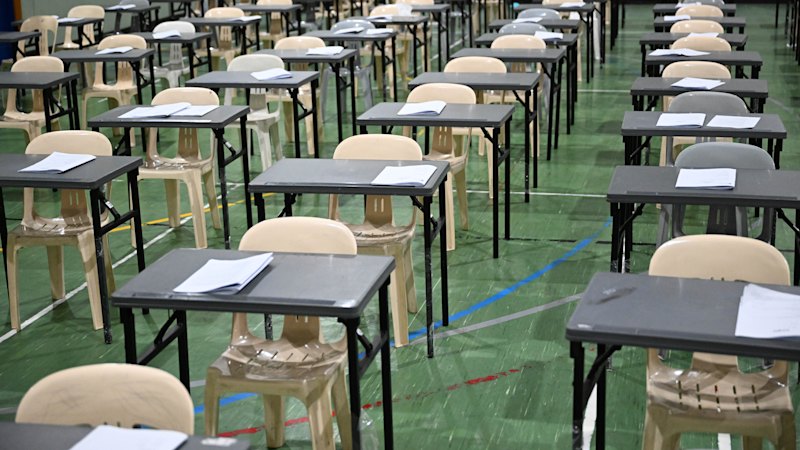
Six law students have submitted a writ petition to the Supreme Court challenging the practice of automatically classifying academic work produced with the help of artificial intelligence as plagiarism.
The petition calls for a clear legal distinction between the use of AI and actual plagiarism. It argues that questioning students’ research papers, dissertations, conference papers and other academic work, or taking disciplinary action against them solely on the basis of AI-detection software, could be unjustified.
The petitioners say such software can flag even work written entirely by the students themselves, while offering no reliable means of challenging the results.
“I wrote my dissertation myself, but my campus rejected it after software flagged it as AI-generated,” said petitioner Roshan Auji. “Although the software produces results based on estimates, I was given no opportunity to challenge them. It is unfair to put a student’s academic future at risk on the basis of such an assessment.”
The students also argue that the use of AI alone should not be grounds for classifying academic work as plagiarism or a copyright violation.
“There is no clear legal framework governing AI-related plagiarism in Nepal. The results produced by iThenticate are not 100 percent reliable,” said petitioner Bibek Chaudhary. “Even when Supreme Court verdicts were tested, the software indicated 70 to 80 percent AI use. Clear legal standards are therefore needed on the reliability of such tools, the legality of regulations governing their use and students’ right to privacy.”
The petition names the government, the Office of the Prime Minister and Council of Ministers, the Ministry of Education and Sports, and other relevant government and academic institutions as defendants.
Submitted on Friday, the petition is currently under review for registration at the Supreme Court.
Kiran Paudel is a journalist associated with Kantipur TV.