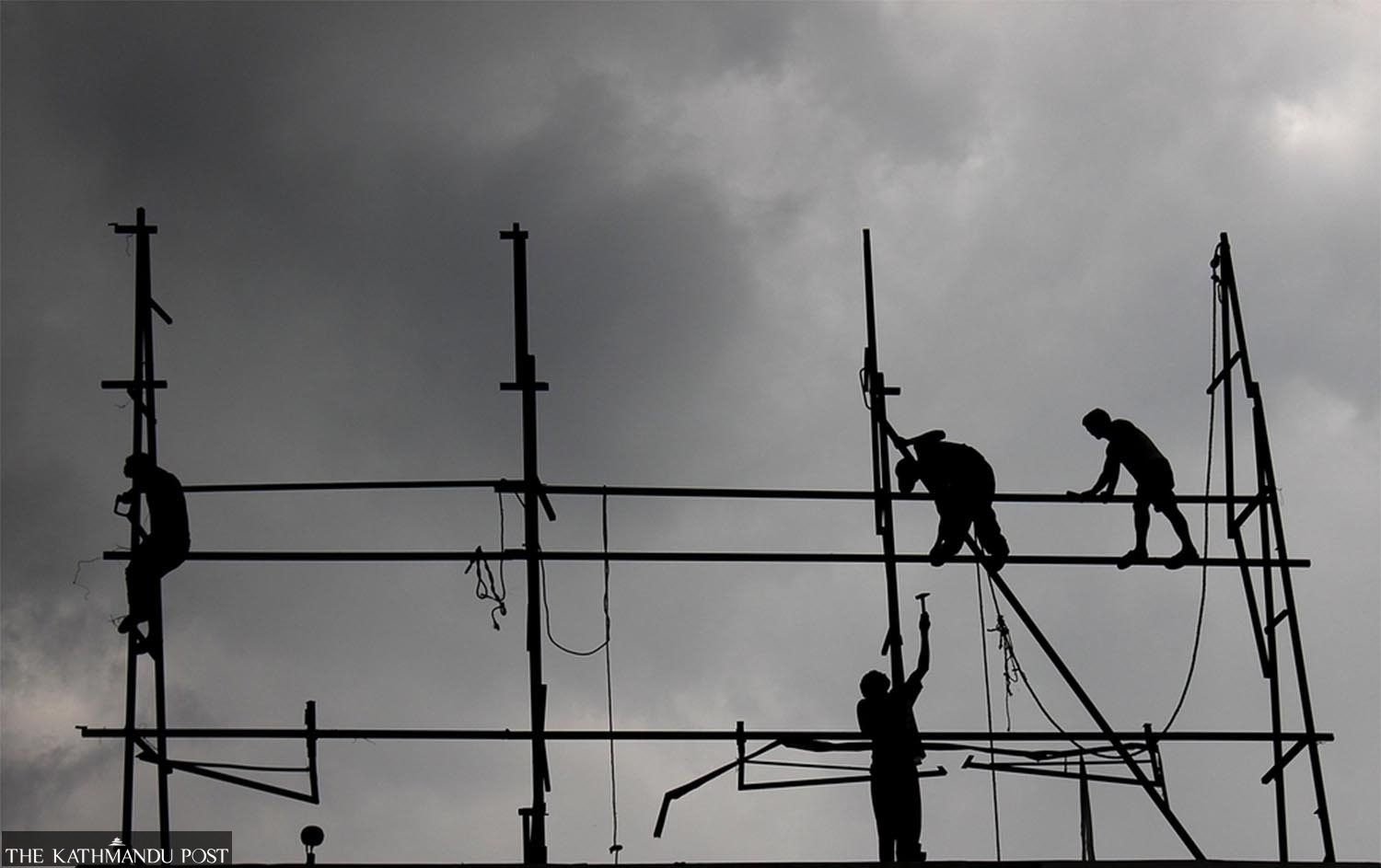
The government has set a minimum monthly wage of Rs43,500, excluding social security contributions, for unskilled workers employed on publicly funded projects—more than twice the minimum paid in the private sector.
The Public Procurement Monitoring Office, under the Office of the Prime Minister and Council of Ministers, issued the Work Procedure on Remuneration and Social Security of Workers Associated with Public Procurement, 2026 with government approval. Made public on November 7, it divides workers into five categories and applies to all work carried out through public procurement.
The lowest category, covering unskilled workers, is entitled to Rs43,500 a month. The private-sector minimum, including the cost-of-living allowance, is Rs19,550 a month, or Rs754 a day. That rate has been in force since July 17, 2025, under the Labour Act 2017.
The new rule requires employers to deposit an amount equal to 20 percent of workers’ wages into the Social Security Fund, with the government agency and employer each contributing 10 percent. It also applies to workers in government-owned firms and factories.
The newly set wage also exceeds the wages received by the workers in various Gulf countries. The rate exceeds Qatar’s 1,000-riyal minimum for unskilled workers, around Rs41,360 excluding food; other Gulf states generally enforce contract wages of 800 to 1,000 riyals, or Rs32,000 to Rs41,000.
The procedure uses the national minimum wage published in the Nepal Gazette under Section 106 of the Labour Act as the basis for calculating pay. It covers construction, goods, consultancy, and other services procured under the Public Procurement Act 2007.
The rules bind public agencies, contractors, subcontractors, labour suppliers, and companies providing goods, information technology, consultancy, or other services. Wages and social security contributions must be paid through workers’ bank accounts. Non-compliant employers may face suspension of running-bill payments, procurement blacklisting, and direct payment to workers by the public agency. Cases may also be referred to authorities for action over labour exploitation.
Contractors and labour suppliers must recruit unemployed people registered at employment, skills and entrepreneurship centers of local units, rather than hiring at their discretion. Local governments are expected to help workers open bank accounts, obtain permanent account numbers, and enrol in the Social Security Fund. Employers must submit records of workers’ categories, numbers, worksites, attendance, wages, and social security deposits before receiving running-bill payments or joining further procurement processes.
The policy has drawn objections from labour suppliers and construction companies, who say they were not adequately consulted.
Rameshwar Shah, president of the Nepal Labour Suppliers Association, said the government had not held even a basic discussion with the association. “This procedure will create conflict in the labour market. The government should have assessed whether the market can sustain it,” Shah told Kantipur. “When it is already difficult to pay Rs19,000 under the Labour Act, it is hard to believe that workers on government projects will receive more than Rs43,000.”
Construction businesses warn that the wage floor will sharply increase the cost of publicly funded projects. Shiva Hari Ghimire, general secretary of the Federation of Contractors’ Associations of Nepal, said the procedure could not be implemented immediately without a detailed wage rate analysis.
“It cannot be implemented straightaway without analysing the rates,” said Ghimire. “Where will employers find the money to pay the 20 percent contribution? The government must revise the norms and specifications accordingly.” He said contractors had not been consulted before the procedure was issued.
The procedure has also angered temporary, contract, and daily-wage employees in government agencies. All Nepal Government, Temporary, Daily Wage, Contract Workers’ Union says the rules do not address its demands.
Kashiraj Shrestha, president of the union, said that the government had acted unilaterally and appeared to be moving towards employing existing workers through third parties. “We don’t agree with this. The court has already issued a verdict on our demands, and it should be implemented,” he said. “Our concerns should be addressed through the forthcoming Civil Service Act. This procedure is unfair to us.”
The dispute comes amid longstanding concerns over social protection for workers in Nepal’s construction and informal sectors. Construction workers had been demanding access to the contribution-based Social Security Fund.
Hom Karki is a reporter with two decades experience covering migrant workers issues and the Nepali diaspora. He was previously based in the Gulf for Kantipur Daily.