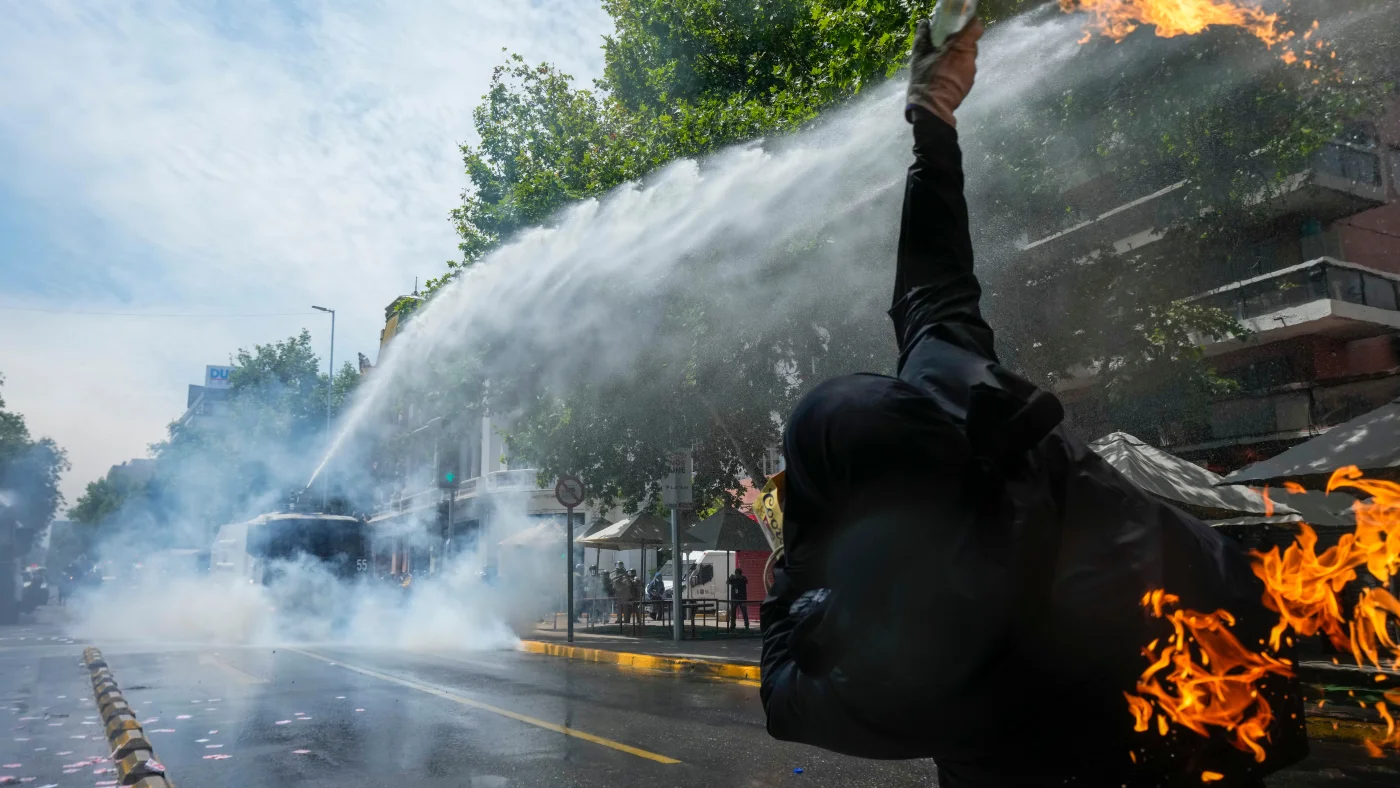
French police have detained 219 people during protests against the high cost of living and for better education.
Incidents were reported in several cities, including Marseille, Grenoble and Lyon. Protesters set rubbish bins alight and threw objects at the police.
The situation remained manageable overall, France's Interior Ministry said on Saturday.
Some 106,000 people demonstrated nationwide, with over 24,000 people taking to the streets in Paris alone.
There were 137 protest events in total, according to official data. The organisers put the number of demonstrators at around 200,000.
Your trusted source for staying up-to-date with the world around you. Get free daily news updates and analysis, straight to your inbox.
The ministry said fewer people joined the protests compared with last weekend, when 146,000 people participated nationwide.
A month ago, 565,000 people took to the streets, with violent riots, looting and violence breaking out on the fringes of demonstrations.
The mass protest emerged from secondary schools where pupils have for weeks been demanding more teaching staff, funding for dilapidated buildings and an end to injustices in the education system.
In mid-October, the protests converged with cost of living protests, including calls from the Yellow Vests movement.
While fewer people are joining the demonstrations, this does not mean an end to the protests about social conditions.
Trade unions have again called for a strike on Tuesday.
Tens of thousands of people marched through more than 30 cities and towns across Portugal in the largest protest yet against soaring housing costs that many say have put buying or renting a home beyond their reach.
The housing crisis has fuelled weeks of demonstrations. Some activists have camped in central squares in Lisbon and Porto, the country's two largest cities.
Riot police with dogs have dispersed some protests, drawing accusations of heavy-handed tactics.
The demonstrations took inspiration from protests that began in neighbouring Spain in October over similar housing concerns.
Marching under the slogan "We won't let them steal our right to housing," participants ranged from teenagers to retirees. Drums, music and chants accompanied the Lisbon march as protesters carried large banners and flags.
"Things have become intolerable," said Ana Encarnação, 42, citing rising living costs and the widening gap between rich and poor.
Activists want ceilings placed on rent increases, greater legal protection for tenants against eviction, and more affordable housing.
House prices in Portugal have risen much faster than incomes, statistics show.
Between 2015 and 2025, Portugal posted the biggest jump in the European Union in the home price-to-income ratio, with an increase of 61 per cent, followed by the Netherlands with 34 per cent, the EU statistical office Eurostat said last week.
There is no indication that the rise in housing costs is slowing.
Between the first quarter of last year and the first quarter of 2026, housing prices rose by almost 20 per cent, the National Statistics Institute, a government agency, said last month.
Rental prices, too, have climbed significantly, recording a 68 per cent increase since 2020.