You have reached your maximum number of saved items.
Remove items from your saved list to add more.
You've used all of your gift articles. 3 more will become available on the 1st of every month.
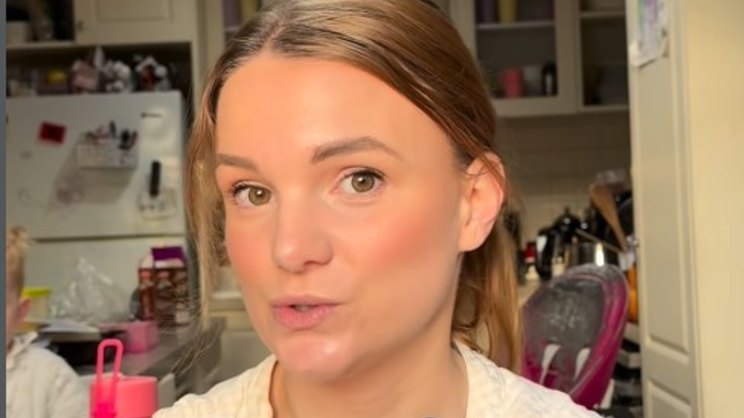
Last week, an Instagram account that shares tips on living frugally kicked off the conversation Australia has been struggling to have. In a post that went viral , Jenn, from Melbourne, spoke about how much she “earns” from Centrelink each month as a single stay-at-home mum of three. She listed what she “made” from various payments. Her total “income”, as she called it, came to $4124.
The language she used triggered a huge blowback. One comment, liked almost 8000 times and representative of much of the response, read “In very poor taste to use the phrase ‘you MAKE’. No babe, you RECEIVE.” And with that, in one 30-second clip, Jenn kicked off the mother of all discussions about reciprocity, entitlement, and the social services state that bubbles away under the surface of the budget debate.
Jenn defended herself in a follow-up post. “Whether you think I earned it or not,” she wrote, “I didn’t rort the system. Australia’s social security system is doing exactly what it’s supposed to do - allowing my family to turn our situation around without being plunged into homelessness overnight.”
And the battle continued, over those who make and those who mooch.
But why can’t they both be right? It’s simultaneously true that Australians are proud and glad of our social safety net, and concerned that it is vulnerable to exploitation. Jenn, who lost her job and marriage in the course of this year, is absolutely right that the system has kicked in as intended. A mother and her young kids won’t go hungry or homeless as a result. But the commenter who wrote underneath the “earning” post that Jenn gets $100 more than they do per month working four days a week, “and ironically I work at Centrelink”, is right too. As is the nurse earning a comparable amount. It can feel unfair for people who go to work day after day, in jobs they don’t necessarily love, that someone gets the same amount of money from taxpayers without showing up for a single shift.
But thank goodness for them. Without people who believe in the dignity intrinsic to supporting ourselves and our families, there would be no surplus to support those among us who fall on hard times. Without people who show up, hit deadlines, work hard, and thanklessly contribute to the common kitty each year, there would also be no services – as well as no companies to pay tax, and no commodities to take royalties from. Which means without them, there would be no government supports – no Medicare, no aged care, no NDIS, no social safety net, and no support for Jenn to get back on her feet after what must’ve been a really rough year.
Yet these are precisely the people the government seems to have forgotten about as it heads into the mid-year update on government spending with growing national debt. Or rather, it has come to believe that they can be assuaged if they too just get enough services. In a phrase you’ll now hear ministers say repeatedly, they believe their role is “to continue to deliver the services people rely on every day”.
The government has lost sight of the productive backbone of the economy that needs to be enabled, not endlessly “served”. To be clear, the services referred to are not the types of large-scale things only federal governments are well-placed to deliver – roads, for instance, and national defence. Rather, they are increasingly granular “cost of living supports”. The money handed out to help people make ends meet because inflation is going up and real wages are going backwards.
Government as the provider of everyday services is the philosophy that has made it impossible to balance the national accounts. It’s the reason the treasurer believes others should nominate ways to cut the budget , though that’s pretty much precisely his job description.
The philosophy is even baked into the combination of portfolios held by Katy Gallagher, leaving her hopelessly conflicted in her roles. She is at once both minister for the public service – the delivery mechanism through which the government “delivers the services people rely on every day” – and minister for finance – that is, notionally responsible for helping Chalmers to run a red line over excess spending in order to balance the books. How can a minister who believes her role is to provide every important service that Australians require ever reduce the overall spend?
For a government that sees its role as service delivery rather than economic enablement, there is no logical end to spending. If it’s the government’s role to provide services at a level that exceeds a safety net for those who need it, where is the point at which it says “enough”?
Medicare, which ensures that everyone in Australia can access healthcare, could always provide higher quality care. And why not free dental? Likewise, aged care. A report on ABC 730 the other night told the sad story of a woman in her 90s who could not get more home care, despite being evidently frail. But why just more home care? Why not a live-in carer? The need was evident. So what’s the limit?
As Jenn said in her video, $4124 a month isn’t much for a mother with three kids to live off in this inflationary environment. She’d like to earn more too. Fair enough. And hopefully she will soon, perhaps not in the disrupted field she trained in, but there are plenty of professions that require fewer skills.
But the disincentives to do so were right there in the comments to her post – she could well end up earning less than she’s currently receiving and having to pay to put her kids in care as well. Just like the people who piled in to express their dismay that this is how their, how our, taxes are deployed.
And that’s how service-led government holds people down, even as it offers hand-outs to “help” people up. The anger against Jenn was fundamentally misdirected: the entitled party here isn’t a mother in a temporary bog, but a government that tries to buy our votes with the money we give them. Parnell Palme McGuinness is an insights and advocacy strategist. She has done work for the Liberal Party and the German Greens and is a senior fellow at the Centre for Independent Studies. She is also an advisory board member of Australians For Prosperity, which is part-funded by the coal industry.
You have reached your maximum number of saved items.
Remove items from your saved list to add more.
You've used all of your gift articles. 3 more will become available on the 1st of every month.