


This audio is voiced by AI and may occasionally mispronounce words.
Share your feedback and help us improve this feature. Read more about how we use AI at SBS here.
This article contains references to sexual and image-based abuse.
Artificial intelligence may be changing the world, but not all of its advances are progress.
From fabricated intimate images to deepfake pornography, AI is creating new ways to target women and girls, with the scale of the problem growing alongside the technology.
According to a 2023 study by Security Hero, a United States-focused consumer digital privacy platform and review site, the number of deepfake videos online increased by 550 per cent between 2019 and 2023. Deepfake pornography makes up 98 per cent of all deepfake videos online, with 99 per cent targeting women.
The problem extends beyond deepfakes. Research by the Australian National Research Organisation for Women's Safety (ANROWS) found that sexual and image-based abuse was one of the four most common forms of technology-facilitated abuse, alongside monitoring and controlling behaviours, emotional abuse , and threats and harassment.
Your trusted source for staying up-to-date with the world around you. Get free daily news updates and analysis, straight to your inbox.
Published in 2022, the study surveyed more than 4,500 Australian adults about their experiences of technology-facilitated abuse. It found more than half had experienced at least one form of abuse, with the rate rising to 71.5 per cent among 18- to-24-year-olds.
One in four adults had experienced sexual and image-based abuse. Participants reported feeling controlled, humiliated, depressed and afraid as a result.
In a statement to SBS News, ANROWS CEO Tessa Boyd-Caine said: "We are seeing people who use violence quickly adapting their abuse to utilise new technologies such as location tracking, controlling vehicles remotely and image-based sexual abuse."
"Technology can change the reach, persistence and scale of abuse, making it constant, even when people are physically apart.
"Often, it's our everyday devices and platforms that are being used to exert control and inflict harm."
The abuse is also playing out in public life, with some female politicians among its targets.
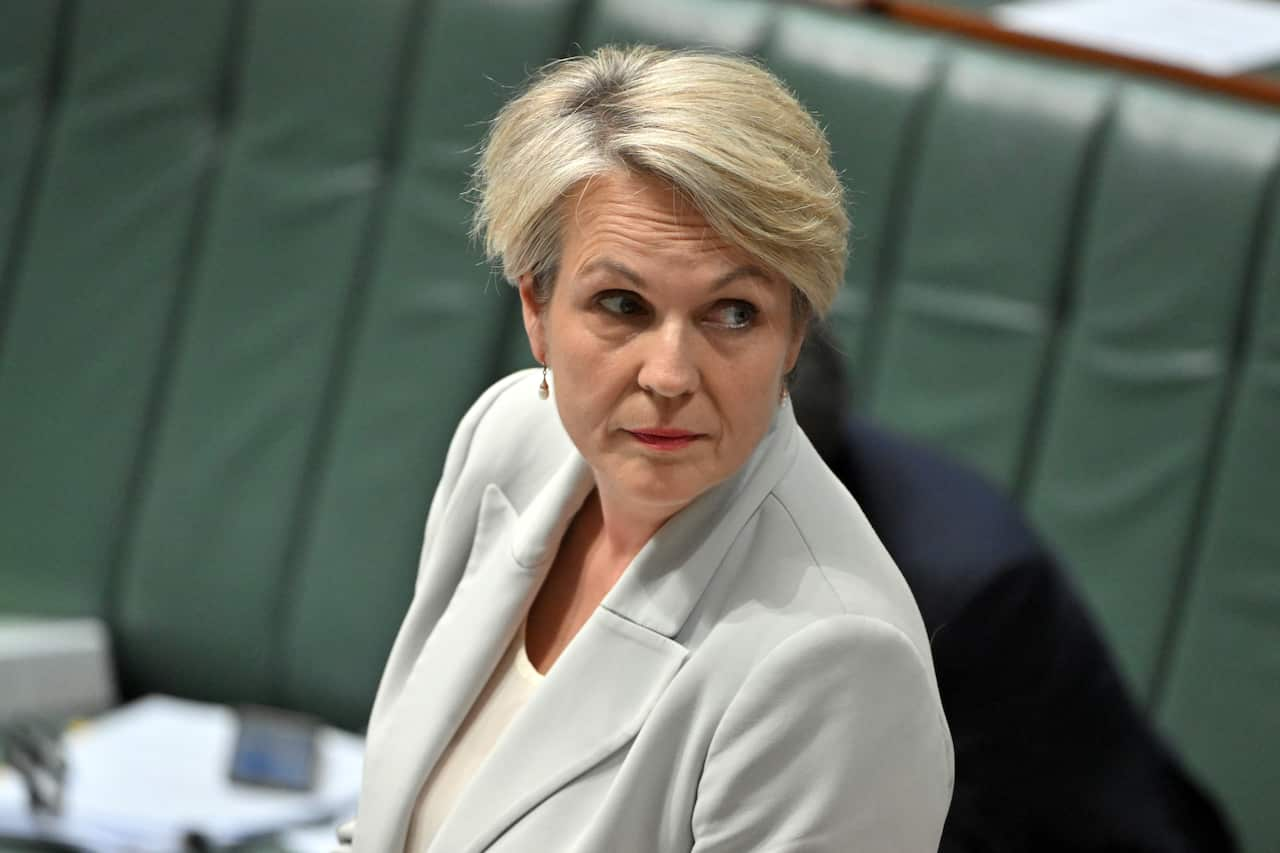
In a joint doorstop interview at Parliament House in Canberra in October, Social Services Minister Tanya Plibersek described the scale of the abuse as "unprecedented”.
As AI reshapes the digital landscape, experts say the stakes are becoming harder to ignore: why are women disproportionately affected, what responsibility do developers carry, and can regulation keep pace with the technology?
While technology-facilitated abuse can affect anyone, its impact is often shaped by existing gender inequalities — including who holds power and influence in the technology sector.
Jeannie Marie Paterson, professor of law and co-director of the University of Melbourne's Centre for Artificial Intelligence and Digital Ethics, tells SBS News: "We know that female politicians and leaders are many times more likely to be represented in synthetic, non-consensual intimate images, or deepfakes."
Paterson says the visual nature of deepfakes makes them particularly damaging.
"We place so much faith in what we see," she says.
She says the problem also extends to who shapes the technology and whose voices influence its development.
"When you think about who gets to speak about technology, typically, people at newspapers who write on AI are men, people who speak for companies about AI are men, people developing AI are men," she says.
"There are women in tech companies, but often they're doing policy or marketing."
Australia's eSafety Commissioner Julie Inman Grant also highlighted the gendered nature of online abuse in her opening statement to the Senate Estimates committee in October.
A November 2025 report by United Nations Women, co-authored by Laura Bates, founder of The Everyday Sexism Project, provides further evidence of this imbalance in the AI industry. The study found women make up just 30 per cent of the world's AI professionals.
Of the 138 countries assessed, only 24 referenced gender in their national AI strategies, while just 18 included substantive measures to address how AI could affect women and reinforce gender-based discrimination.
Beyond who develops AI, Paterson says those building the technology must also take responsibility for how it operates and the harm it can cause.
AI "doesn't really learn as it goes", she says.
"What happens is that the models are retrained at regular intervals ... It just gets better at predicting our own preferences.
"Saying it learns as it goes leaves out the responsibility of the developers and designers who actually set this technology up to operate in particular ways and bear responsibility for that."
Paterson says AI developers and designers can introduce safeguards or "put in guardrails" to influence how AI systems behave.
"Anybody who has used Grok compared to Claude can notice the difference in choices," she says.
However, she says tech companies often argue that safeguards will "stifle innovation". She views this as a distraction from their responsibility to prevent harm.
"We don't say to anybody building a dangerous car, 'go right ahead because we value your right to innovate'.
"We say 'you can innovate, but the car can't hurt people' ... Yet we don't have that same response to AI when it comes to harming women."
People targeted by AI-generated deepfakes can seek help through the criminal justice system or the eSafety Commissioner, who can help victims and, in certain circumstances, require platforms to remove intimate images shared without consent.
But Inman Grant has warned that existing protections must keep pace with AI-driven risks.
In October, she told a parliamentary inquiry that AI-powered 'nudify' apps were being downloaded about 200,000 times a month in Australia. She said her office has taken enforcement action against eight such services.
She has also called for stronger regulatory powers to independently test AI systems and assess whether companies have adequate safeguards in place.
The Australian government has also proposed a series of reforms through the Digital Duty of Care legislation , introduced in parliament last month.
The proposed legislation would require online service providers to take reasonable steps to prevent harm and implement safety measures. It would also strengthen the eSafety Commissioner's powers to enforce compliance, including fines and stronger content removal measures.
Boyd-Caine from ANROWS says responses must also reflect the experiences of those affected by technology-facilitated abuse.
"We need to keep updating our evidence, practice and systems to respond to what people are actually experiencing," she says.
"Beyond pornography, there are many ways that deepfakes can be used to humiliate, intimidate, control and abuse women."
Paterson describes the reforms as "proactive and involved" but says governments must make "strong demands" of "tech companies and platforms so that these sorts of harms can't be perpetrated in the first place".
"We just should not be able to create deepfake images of real people or synthetic people."
For her, the issue ultimately comes down to responsibility, rather than regulation alone.
Paterson says ethics must remain at the centre of AI development and use .
"AI is not autonomous. AI is something that is created and, to some degree, controlled by human developers and the people who deploy and use it," she says.
She believes AI can become more "ethical" when women have a greater say in its design and everyday Australians better understand how the technology works.
"We need to improve AI literacy so that we do understand how these technologies work and how we might respond to them," she says.
"Some of the most useful uses of AI come from smaller models, models that have been specifically fine-tuned to avoid the more harmful aspects or genuinely assist people to navigate health systems or legal systems."
Paterson says greater public understanding and participation can help ensure technology companies develop AI "for the people".
"AI serves humans; it should be beneficial and we're absolutely entitled to have a public conversation where the voices of women and other underrepresented groups are heard.
"It's not autonomous. We have the capacity to make this technology what we want."
If you or someone you know is impacted by sexual assault, call 1800RESPECT on 1800 737 732, text 0458 737 732, or visit 1800RESPECT.org.au . In an emergency, call 000.