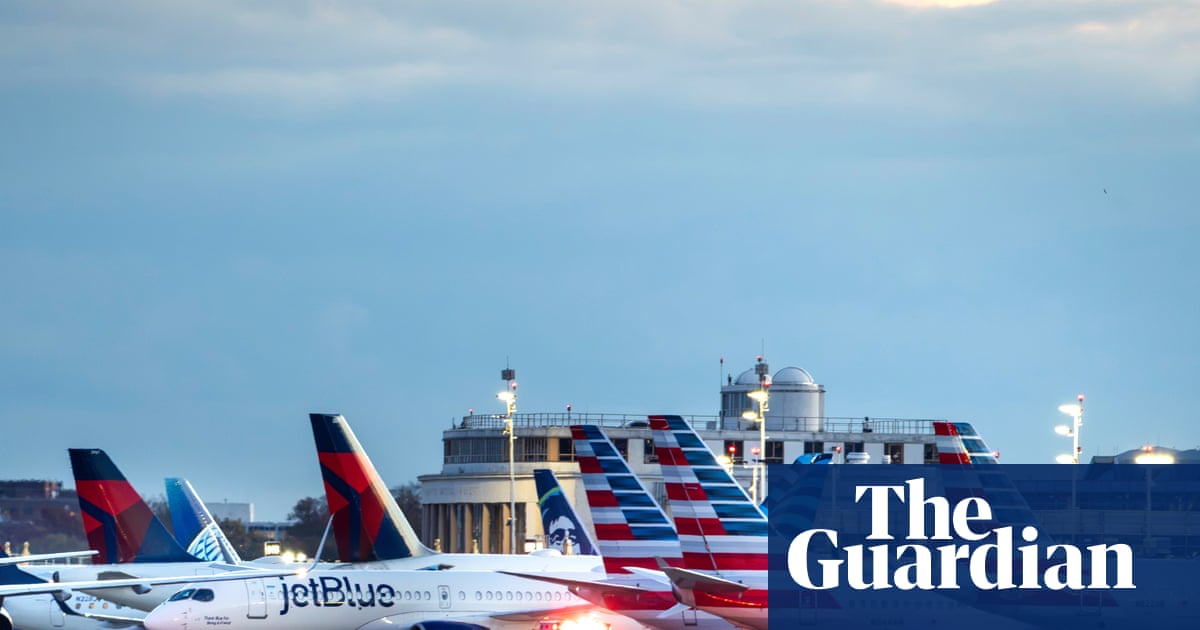
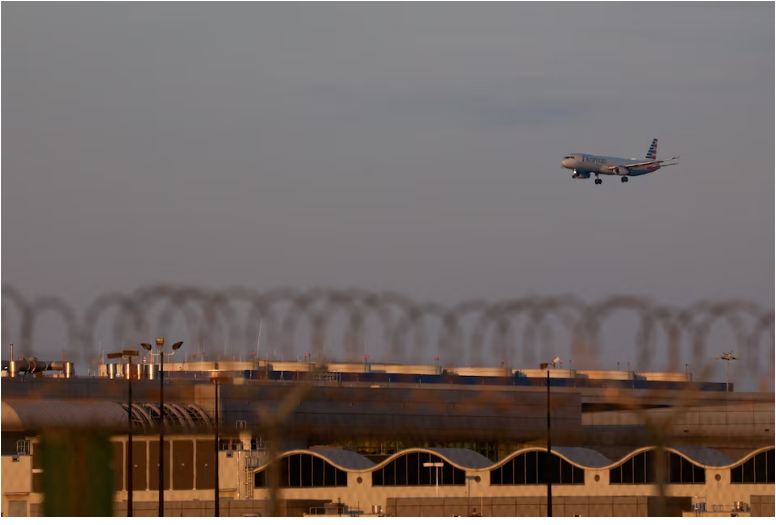
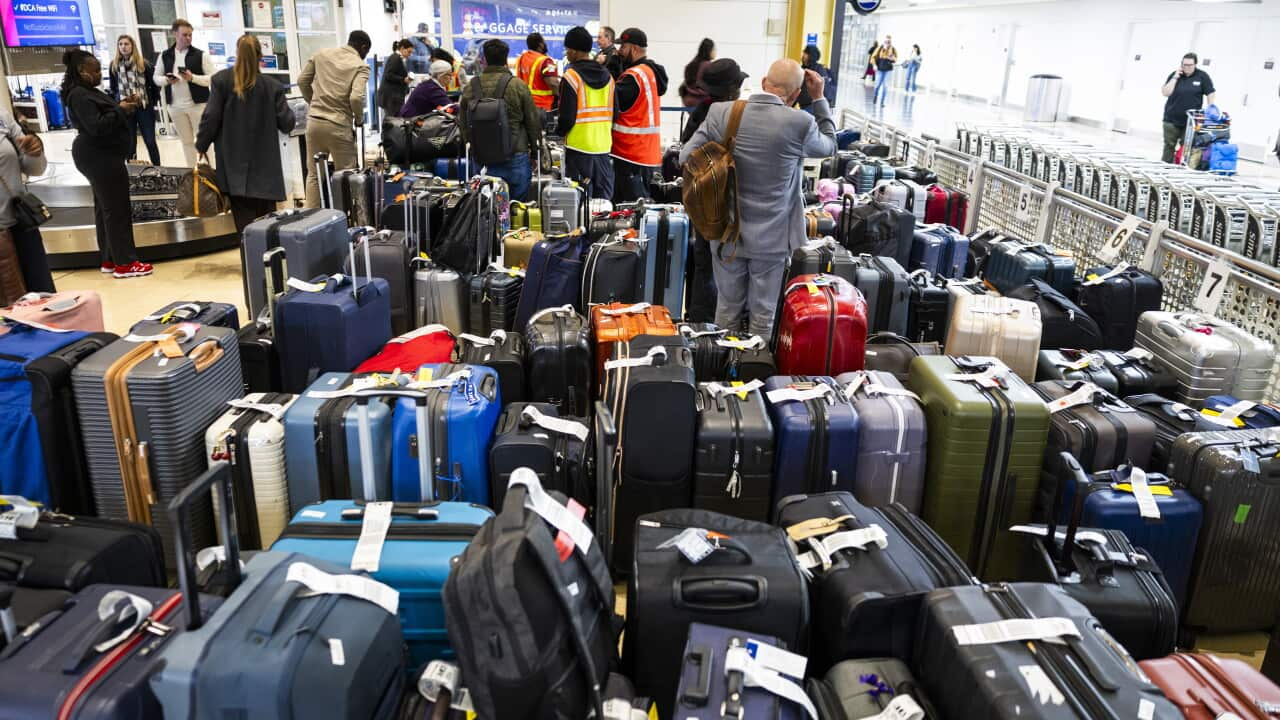
Communications failures in the air on Friday were followed by communications failures on the ground.
The government’s muddled messaging about the FAA’s nationwide ground stop added to the anxieties of stranded passengers and induced conspiracy theories about the “real” cause of the chaos.
Officials held a second press conference on Saturday morning to address questions and alleviate concerns, but it started late due to technical difficulties — an unfortunate metaphor of the larger problem.
The flight chaos came right on the heels of a global Microsoft outage that lasted the better part of a day. The tech giant explained the situation in hard-to-decipher social media posts, adding to the confusion about why Outlook email wasn’t working.
Duffy says either faulty router or contractor error likely caused airspace meltdown
This week’s Microsoft and airport meltdowns were unrelated, but both contributed to an unnerving sense of instability inside systems that most people take for granted every day.
In both cases, social media platforms were stacked with comments from users asking if rogue AI models were to blame and speculating about a broader breakdown in infrastructure.
At Saturday’s press conference, Transportation Secretary Sean Duffy said the travel disruption was due to an isolated incident with an old telecommunication system.
“We see zero evidence of anything nefarious and zero evidence of anything AI-related,” FAA administrator Bryan Bedford added.
Saturday’s explanations, though, were deemed too little, too late by lawmakers and crisis communication experts who said the initial response made a bad situation even worse.
“The basics of crisis communications are not difficult to grasp,” said CNN senior national security analyst Juliette Kayyem. “In the moment, leaders need to be transparent and clear. They need to tell people what is known, what is not known, and what they are doing to close that gap. We got little of that on Friday.”
The communications failures extended to the individual airlines that had to reroute and cancel flights.
The government’s initial 4 p.m. ET announcement about the national ground stop was short — because time was of the essence — and open to many different interpretations.
The announcement said all departures were stopped “due to extraordinary circumstances and for reasons of safety.”
That message could have meant almost anything. Some travelers worried about a possible terror attack, while others wondered if the air traffic control system had been hacked.
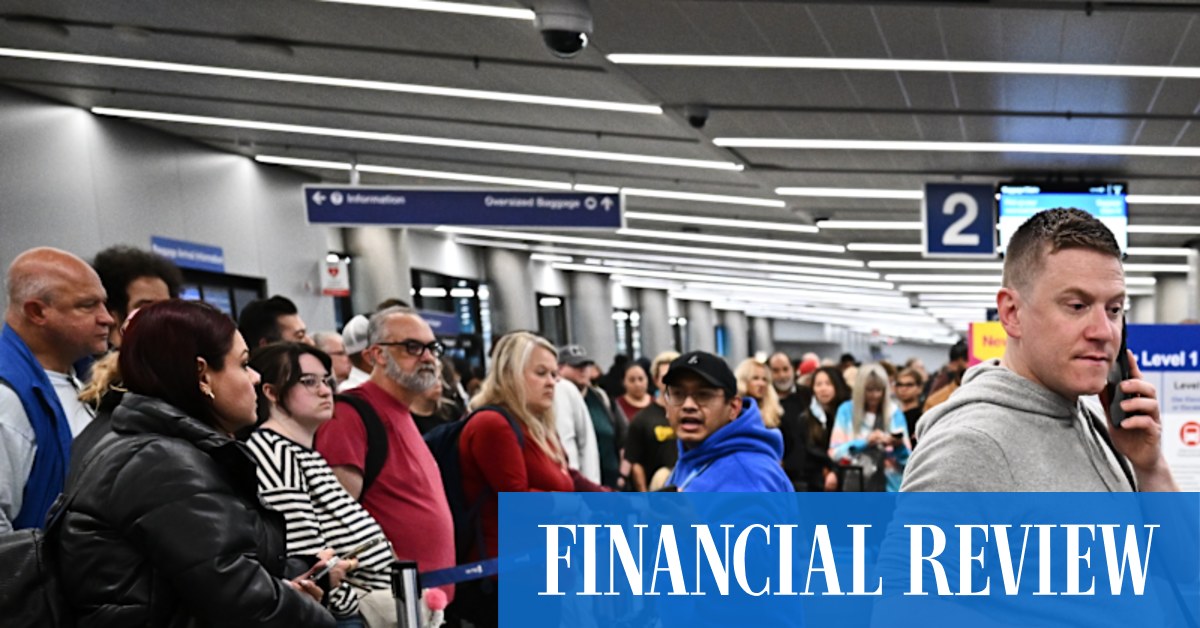
Answers were in short supply. At major airports, hundreds of passengers still streamed into security lines in hopes their flights would still take off. Overhead announcements at Newark Liberty International Airport didn’t acknowledge the ground stop for more than an hour.
Airlines were also inconsistent in their communications with fliers. Bryson Moser of Millersburg, Indiana, said he was stuck on a runway at Chicago’s O’Hare International Airport for roughly eight hours before his flight to Charleston, South Carolina, was eventually canceled.
“Our pilot was cut off from United,” Moser told CNN. “Every pilot on the runway said they were having no luck. Call after call to the airline for what to do, with no answer. Our pilot did his best to tell us what he could.”
Homeland Security Secretary Markwayne Mullin spoke with reporters at the White House shortly after 5 p.m. ET and said “everyone is safe,” but still left many viewers and fliers confused about the situation.
Mullin and Duffy then held a primetime press briefing. But the widespread criticism of the briefing underlined the fact that President Donald Trump and members of his administration suffer from a trust deficit.
In some cases, officials have actively sown distrust of the government they run. Duffy made headlines last September for saying he has a “hard time believing the government anymore” and suggesting that he believes in a lot of conspiracy theories.
Mullin discouraged conspiracy thinking during Friday’s briefing. But the “lack of consistent messaging” by Mullin and Duffy “did not project competency or comfort,” Kayyem said.
“I often say that in a crisis, people need ‘facts and hope.’ That’s what they want; that’s what they deserve,” she said. “‘Facts’ about what is happening and what they can expect. And ‘hope’ that leaders are doing everything they can to fix it. I didn’t see that yesterday.”
Democratic Rep. George Whitesides of California, a former chief of staff at NASA, wrote on X that “the lack of communications from the administration” was “really poor.”
“The Transportation and Homeland Security leaders were slow to provide updates, and when they did speak, they didn’t have good explanations about what was happening, nor whether it would happen again,” Whitesides wrote.