Alice Huang's relationship with Jensen Huang is now the subject of multiple investigations. ( ABC News: Lindsay Dunbar )
During his decades-long career with the CIA, Dennis Wilder spent a lot of time in China.
And whenever he returned to his hotel room in the evenings, he says, the same thing kept happening.
"Almost inevitably, a young lady, very attractive, would step onto the elevator," he says.
"I would press the button for my floor. She would come up with me. And then she'd ask if I wanted her to come to my room."
Wilder, who was a China specialist with the agency and now lectures at Georgetown University, says he never took the obvious bait. But he knows plenty of American men did.
The next morning, they would get a knock on the door. They would be greeted by someone with incriminating photos, warned they had broken the law, and encouraged to "cooperate" — often by sharing sensitive information.
This "honey trap" tactic is a staple of spy novels. But it is also a very real method used by China's Ministry of State Security (MSS), Wilder says.
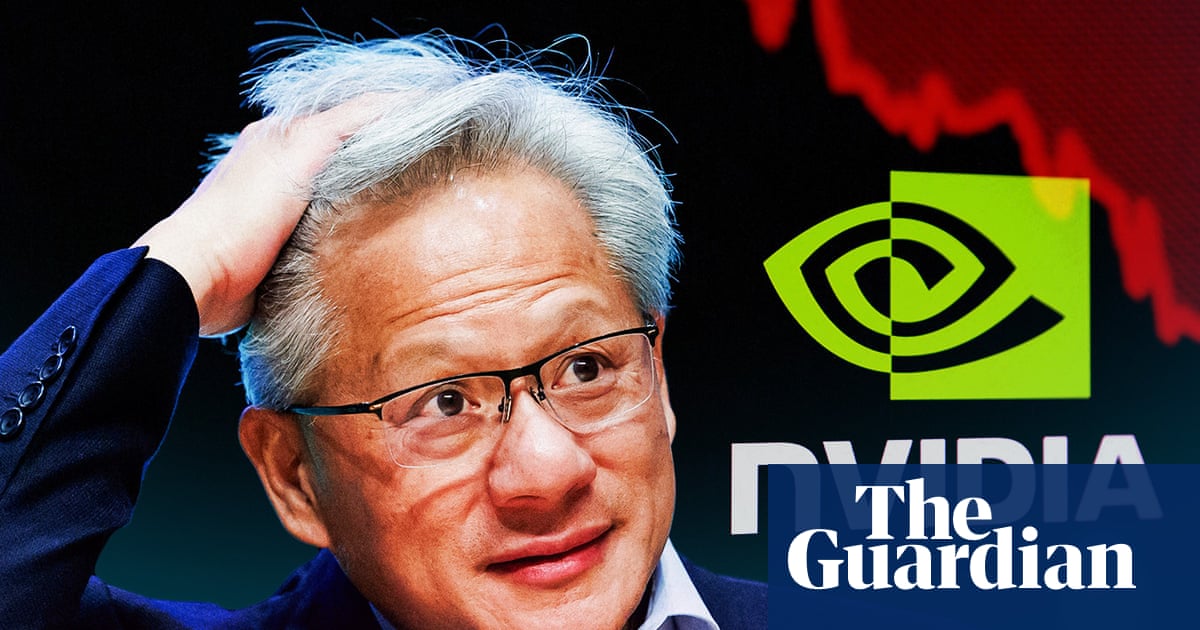
The intelligence agency's activities are in the spotlight following the resignation of Nvidia chief Jensen Huang amid a swirl of suggestions he had been in a relationship with a suspected MSS asset.
After spying suspicions became public, Nvidia said it had no reason to believe national security was compromised. ( Reuters: Robert Galbraith )
Several former intelligence officers told the ABC the saga had also highlighted the US's haphazard approach to countering Chinese espionage.
"Inside the intelligence community, they'll tell you we're getting shellacked," former intelligence officer Nicholas Eftimiades says.
China denies being behind anything nefarious in the Huang case, but multiple investigations are underway. Wilder sees it as a cautionary tale.
"Many, many American businessmen, diplomats, defence attaches unfortunately have fallen for this," he says.
"It happens still, frequently. The MSS, in fact, is much more bold than they used to be."
Silicon Valley has become increasingly wary of espionage threats, particularly as the US and China aggressively compete on AI technology.
OpenAI was reminded of the risks when an employee, a Saudi national, was charged with wrapping a recording device in toilet paper and planting it inside a conference room last month.
OpenAI company training warns employees that spies may try to seduce them, among other strategies, The Wall Street Journal reported in October.
The training advises staff to avoid wearing OpenAI's logo outside the office, to use screen protectors to reduce visibility on public transport, and thoroughly wipe whiteboards after use in case onsite cleaning staff are compromised.
But it is rare for someone at CEO level, like Huang, to be a target, says Holden Triplett, a former FBI special agent who worked in Beijing.
"It's possible that MSS knew that he had already had out-of-marriage relationships," Triplett says, referring to media reports alleging Mr Huang had two other affairs.
"They may have detected a vulnerability and put someone who might be of interest to him nearby."
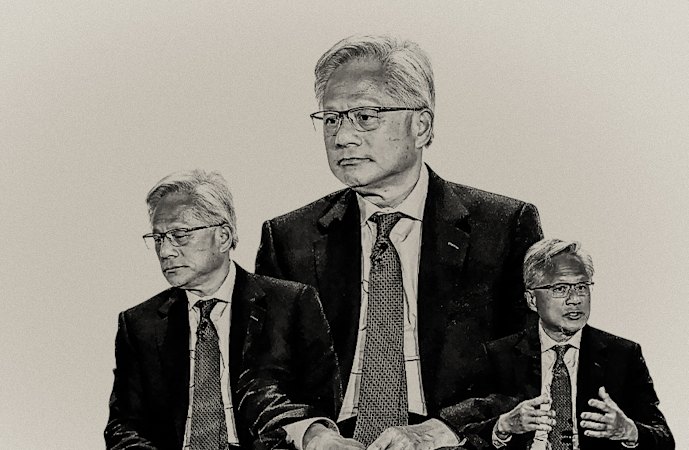
That is among the theories that may be probed by the FBI, the US Congress and the Nvidia board, which are all investigating Huang's relationship with tech executive Alice Huang (no relation).
They will examine whether she was a Chinese asset recruited by the MSS to spy on Jensen Huang, influence his dealings with government, steal Nvidia's secrets, or all of the above.
They are also expected to look into her company, Megaspeed.
US officials reportedly suspect it has smuggled Nvidia's highest-powered chips into China, despite export restrictions designed to prevent them from reaching the country.
(Megaspeed this week said it welcomed the government scrutiny and was committed to demonstrating through concrete actions that it operates in accordance with the law.)
China's foreign ministry said allegations of spying in relation to Alice Huang and Jensen Huang (no relation) were "unsubstantiated" and "smears against China". ( Reuters: CTI )
Intelligence agencies have been looking into similar questions for months, according to a series of reports in the New York Times.
But China says they are "smears". "The US should stop fabricating the 'Chinese spy' narratives as a pretext for imposing technology restrictions," Chinese spokeswoman Mao Ning said this week.
Triplett, who now runs a risk-advisory firm, says the most concerning issue is how the relationship may have undermined those restrictions.
"By potentially having conversations with [Jensen Huang], understanding how export controls work and what Nvidia is willing to do, how much were they able to circumvent the export controls that we've had in the last few years?" Triplett says.
US President Donald Trump was informed about intelligence agencies' suspicions of Alice Huang last year and again in May, according to the Times.
But Trump told a press conference he did not know of the allegations when he invited Mr Huang on a trip to China earlier this year.
Pressed further on when he was told, he said he would "have to check".
"It could have been mentioned," he said.
"Certainly, it didn't make much of an impact on me."
Nvidia earlier said it has no reason to believe national security or company secrets were compromised.
In recent years, the FBI has been talking about Chinese economic espionage as its "top counterintelligence priority". An FBI website describes it as a "grave threat to the economic well-being and democratic values of the United States".
But the former intelligence officials who spoke to the ABC all said they were concerned by the US's lack of a strategy to respond to it.
Donald Trump has expressed personal support for Jensen Huang since the allegations became public. ( Reuters: Evan Vucci )
"Looking at this in totality, we've got a huge issue where China is, in some ways, on a war footing with us," Triplett says.
"And we are not on the same footing with them, unfortunately."
"What we are doing now isn't working," he says.
"We need to find measures that will work, where China says, 'It's not in our interest to get the US mad.'"
Trump was repeatedly asked about the Nvidia issues during the week, but his answers did not go far beyond expressions of personal support for Huang, and his uncertainty about what he was told when.
When speaking more generally about Chinese spying, Trump often responds by saying the US engages in similar activities.
"Someone said, 'China is spying on us, Sir,'" he said at a rally earlier this month, before the Nvidia story broke. "I said, 'We're spying on them too. Don't worry about it.'"
Wilder sees Trump's relatively relaxed attitude as a problem.
"The president of the United States keeps saying, 'Everybody does all of this.' Well, if you take that attitude, then the Chinese see free rein," he says.
"In the Cold War, we pressed back every time the Soviets did something. We would eject supposed diplomats, we would press back.