You have reached your maximum number of saved items.
Remove items from your saved list to add more.
You've used all of your gift articles. 3 more will become available on the 1st of every month.
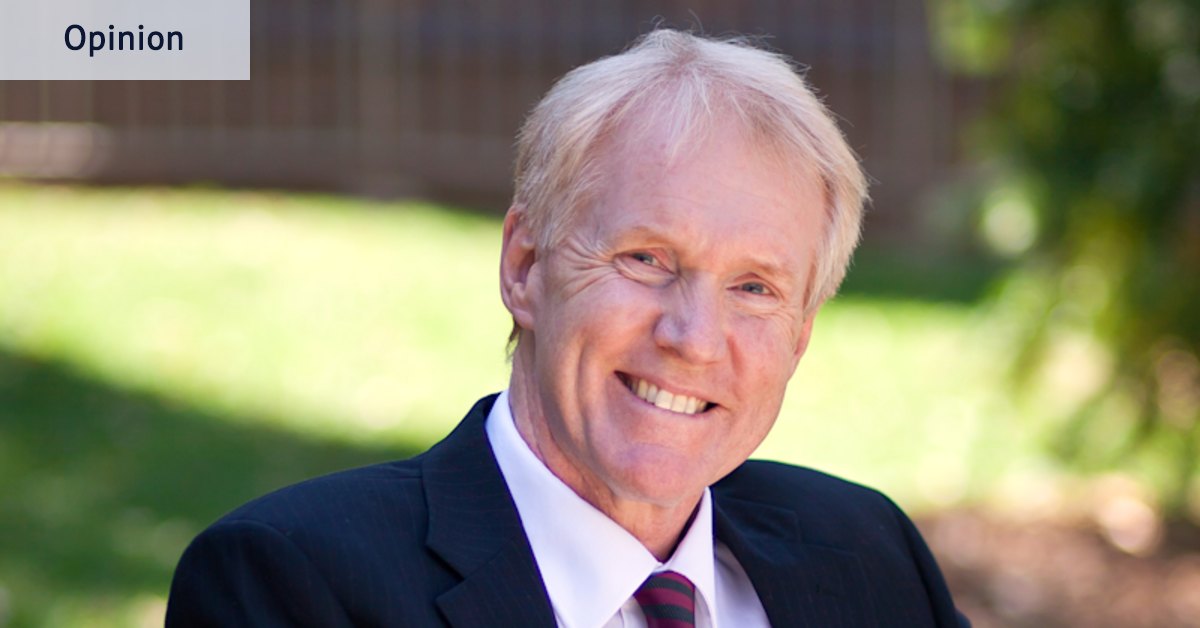
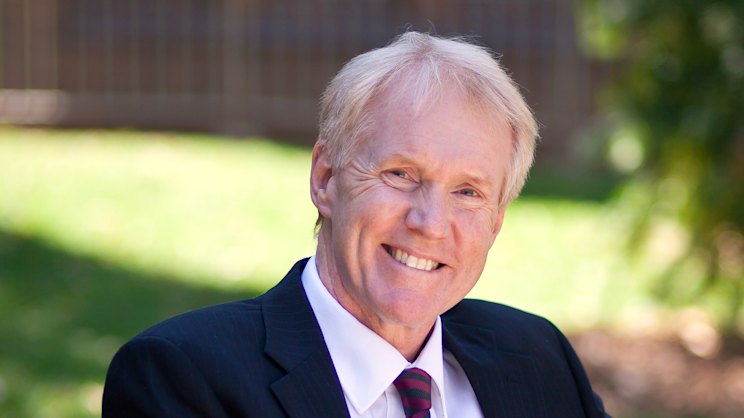
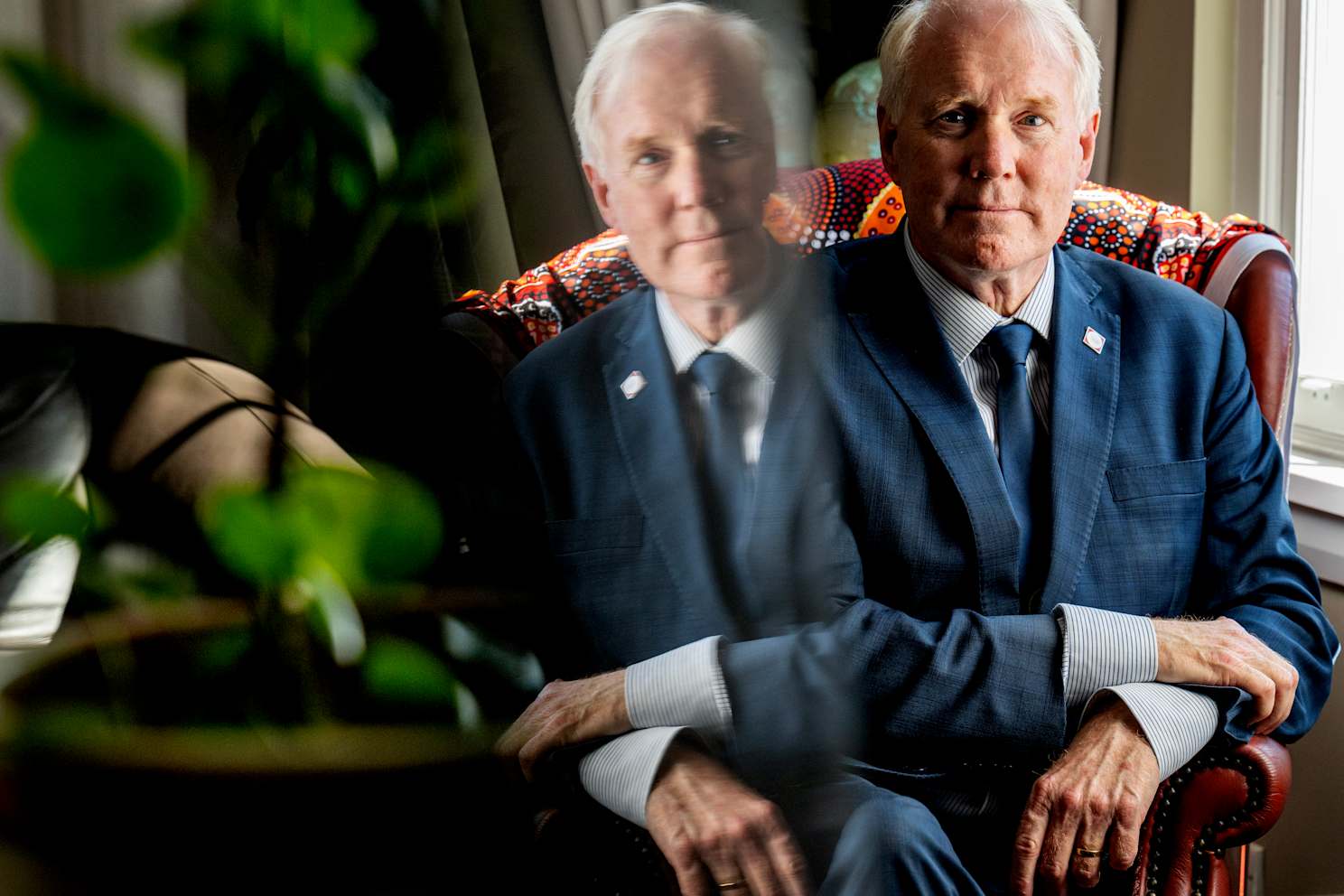
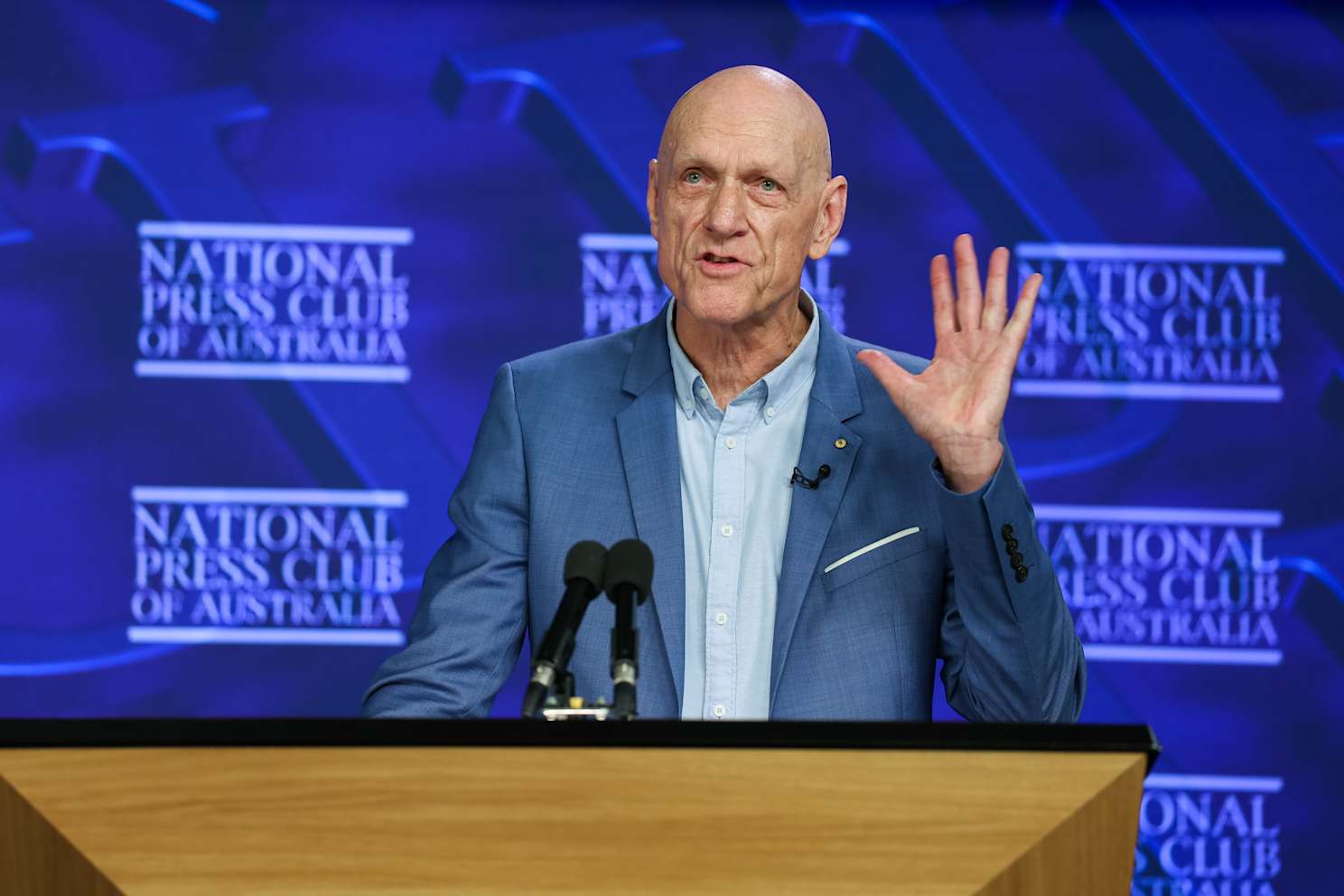
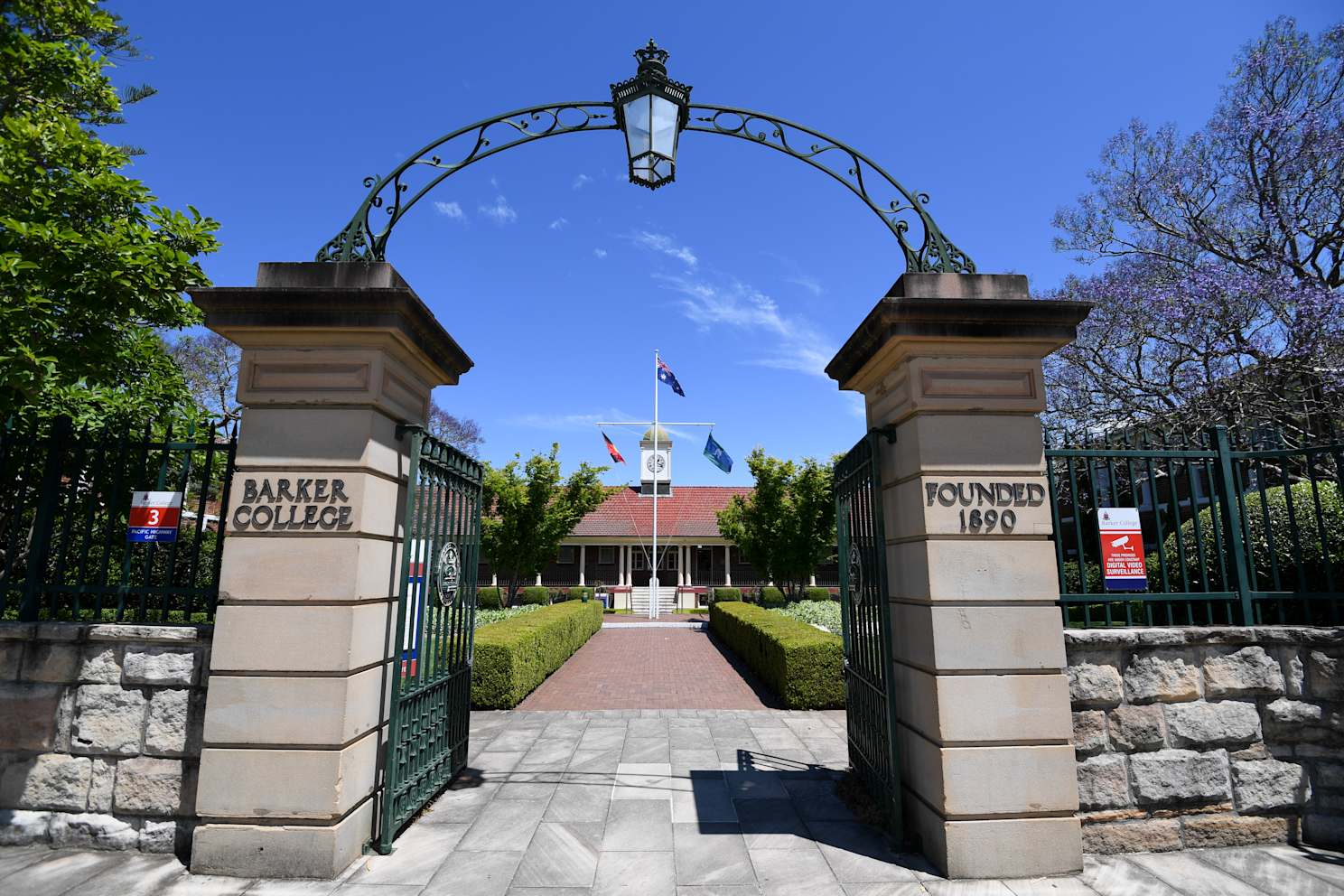
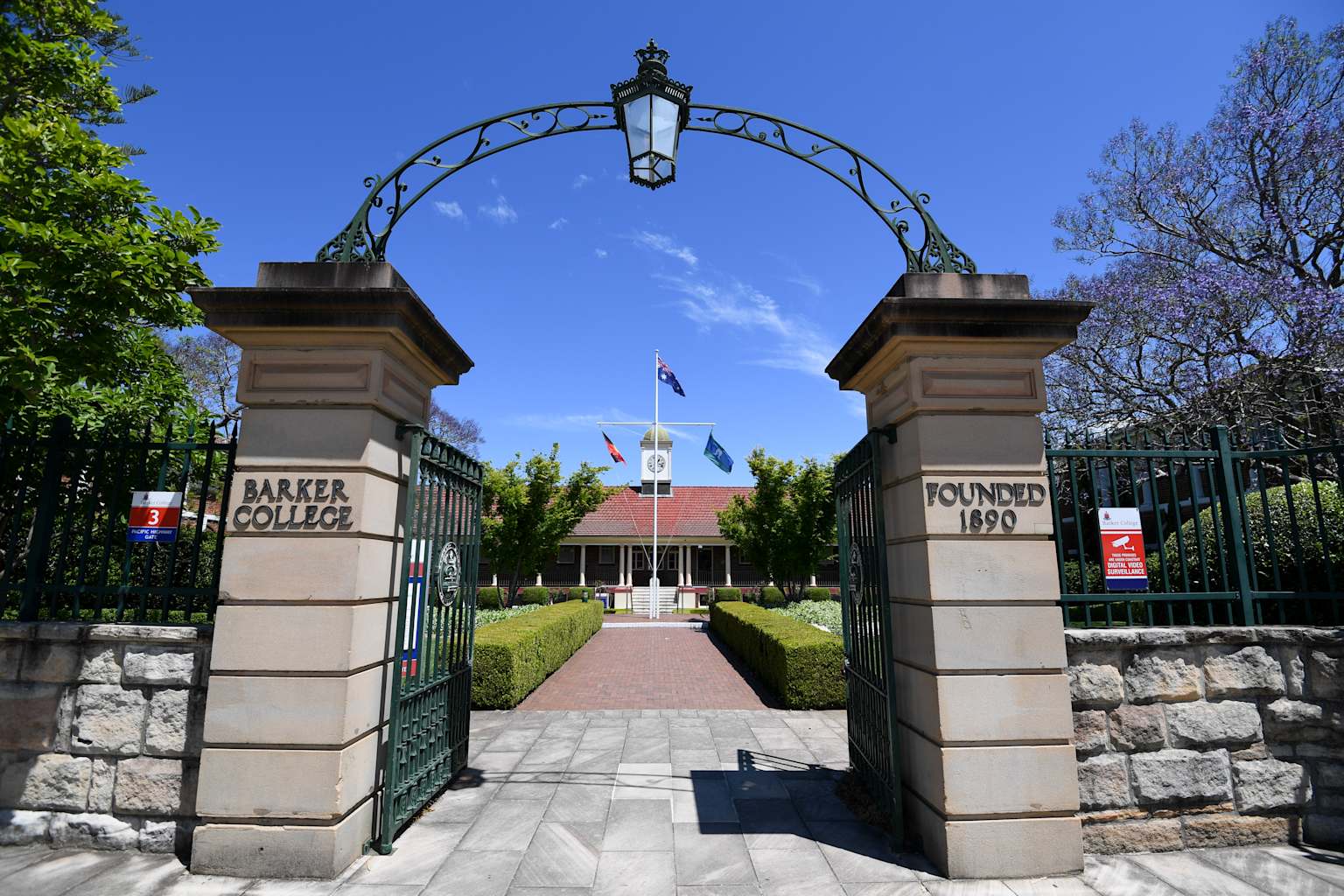
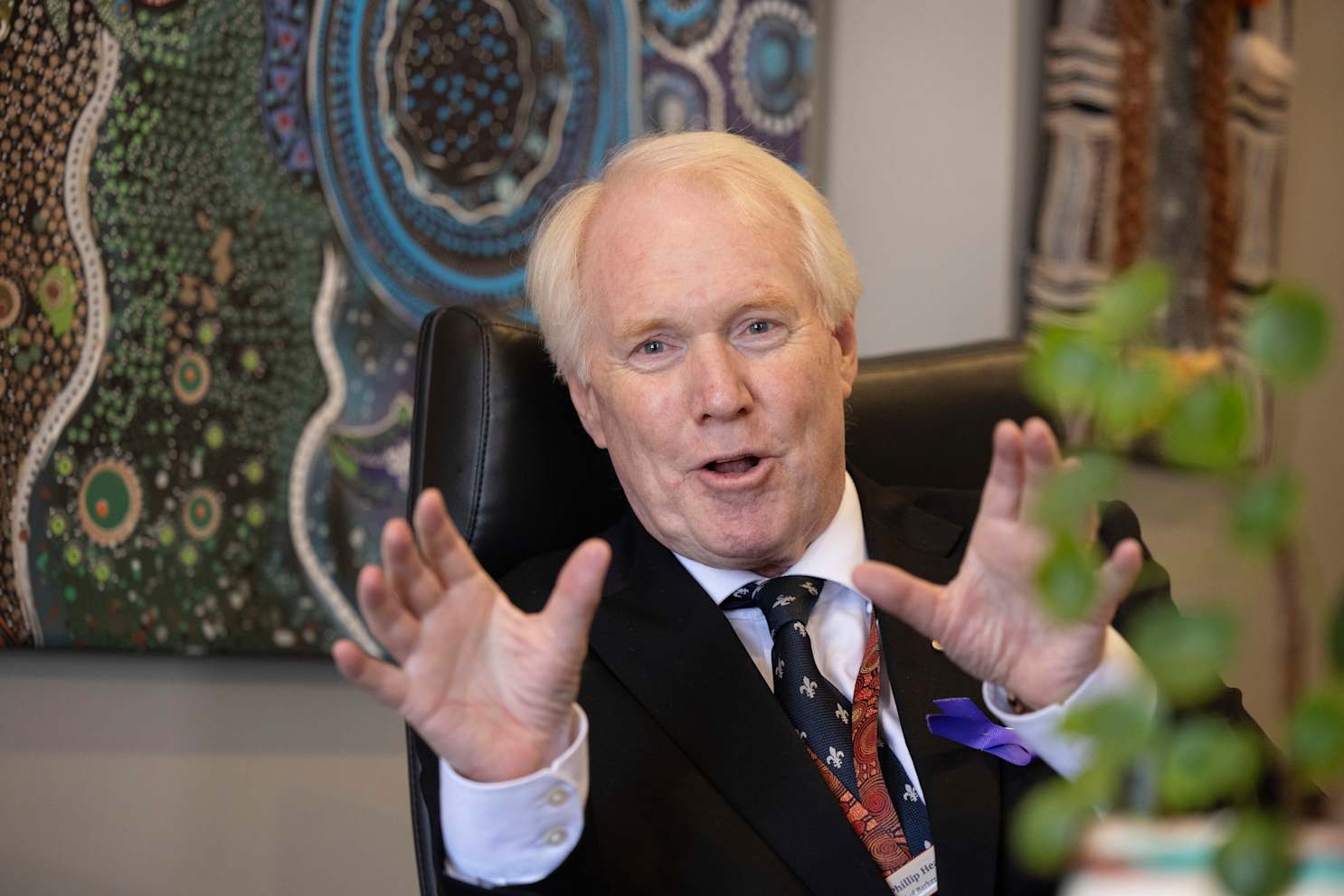
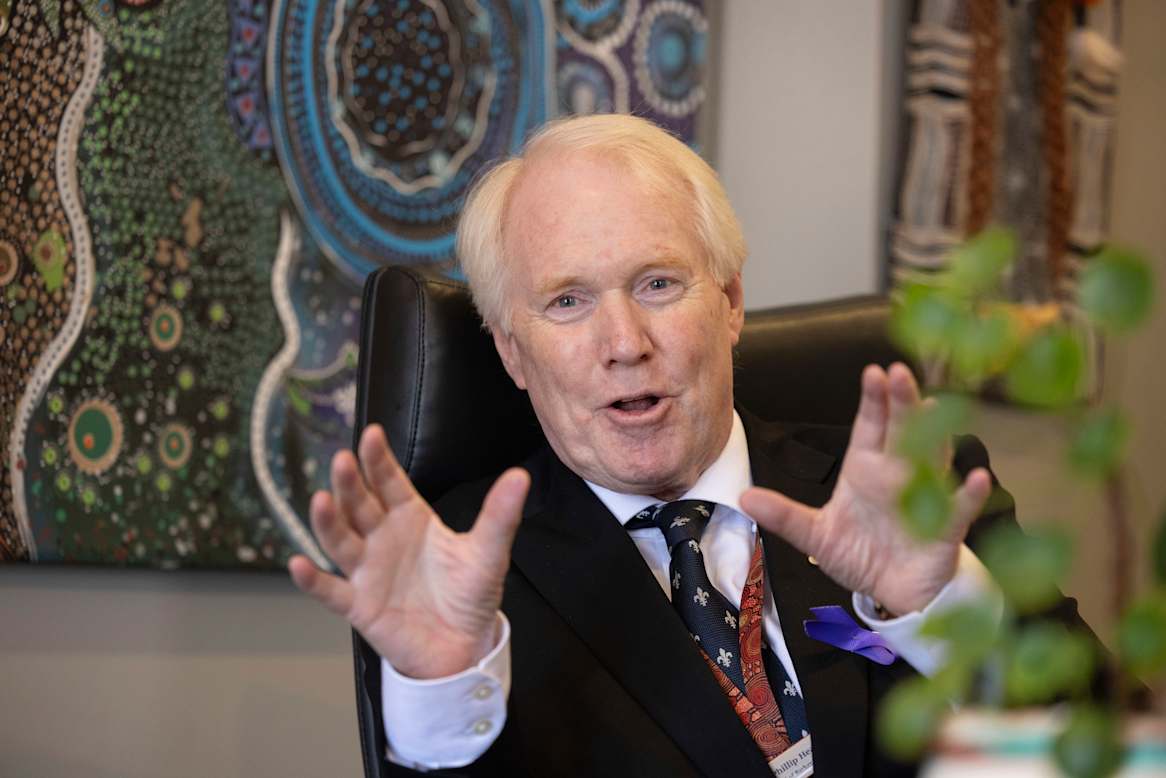
Phillip Heath AM is the principal of Barker College, and was named principal of the year at the 2023 Australian Education Awards.
Peter FitzSimons: Phillip Heath, I’m particularly glad to talk to you because although we arranged this interview 12 hours ago, when it comes to the enduring employment of principals of famous private schools in Sydney, it’s carnage out there!
Fitz: Yesterday we had the principal of Waverley announce his forthcoming departure, joining the principal of Knox and, earlier this year, the principals of The King’s School and Scots. My question: What is going on? What are the forces that have been unleashed? While T.S. Eliot’s J. Alfred Prufrock measured his life in coffee spoons, Sydney’s private school principals tended to measure theirs in decades. What’s happening ?
PH: Look, I think there is a new dawn of reality about the rigours of institutional leadership, and the heavy toll there is to pay. So there may be a coincidence about the timing, but there probably is a deeper reality about the diminished longevity of people in roles like that, as they try and work out how they can manage within a family, how far they can push themselves. I’ve been doing this job for over 30 years, in three different schools, and bear the marks in my body, so to speak, of what that feels like, and particularly the impact on family.
Fitz: You sound like a man who, late on a Friday night, sometimes must share a glass of wine with his wife and say in an exhausted manner, “You know what? I don’t need this any more!”
PH: [ Offers a corkscrew laugh. ] Yeah, you have to be driven by something that’s powerful enough to actually endure those times because they are there, pretty much every day. What’s happened, I think, more recently though, on things like social media is there is an unprecedented level of hostility directed at institutions or its response to whatever frustrations may arise – and when that gets personified around a face, around a person, around a title, that gets hard. The result of which is, if you have a sensitive soul – as you’d hope most leaders do – you’ve got to ask the question: Is it worth it? And the answer has to be in the strong affirmative to keep going.
Fitz: We don’t know, but some of those principals likely got the tap. Personally, do you iron five shirts every Sunday evening, or is that optimistic?
PH: I actually do! I’m pretty hopeless domestically, but I love clean floors and ironed shirts.
Fitz: OK, let’s go through some key issues. What do you think of the HSC? Does it need an overhaul?
PH: I think it’s desperately in need of an overhaul. The HSC was started in 1967. There’s almost nothing in the world started at an institutional level that has survived, but the HSC is the exception. And it needs change. If I had complete freedom, I would make the HSC an eight-unit course – not the current system of students being tested on their best 10 units – and you’d have an additional two units then for a special interest study that developed character and potential, particularly around those areas where a student has personal interests.
PH: I’m looking at musicians and sportspeople and others who have particular skills and gifts and aptitudes but don’t have time to pursue them. We’re overcooking our kids, and it’s a cookie-cutter system. There’s a central piece that we’re not even discussing: What does an educated kid in Australia look like? What do we all want them to know, and to do, to be able to live in the world? What type of Australia do we want? How do we want them to conduct themselves? How do we want them to engage in the world?
Fitz: Too much pressure on them right now?
PH: Correct. We should be teaching what’s necessary for them to live a healthy, balanced, well-organised, well-considered life, with strong friendships and great experiences, having fun. Our kids are sad. Our kids are stressed, and we’ve kind of hardwired that into the HSC. I am not rejecting stress for its own sake. I think there is some value that comes from distress and from anxiety. Many of us wouldn’t do anything without it. I get that. But at 16, 17 and 18 years old, if you think the world is there for you to enjoy and experience, I want you to be able to do that. But these are unpopular thoughts, I might say. So they’re not really being considered.
Fitz: What you’re proposing is very interesting to me, if a little on the touchy-feely side of things.
PH: I think within the other eight units, we can get all the intellectual rigour that we need, while still allowing a student – in those golden years – to develop intellectually and personally. I get the argument that it’s touchy-feely, but so’s life.
Fitz: Allow me to say these are surprising thoughts, generally, but they’re absolutely “storm-the-barricades revolutionary” for a principal from Barker?
PH: Yeah, that’s why I don’t say them very often. You lured me into your trap by asking a great question about it.
Fitz: Do you think the response to the latest Scots scandal, where three students were charged with sexual assault, was adequate, and do you accept that single-sex male private schools breed entitlement and toxic masculinity?
PH: No response is ever fully adequate, particularly in the context of appalling things that happen in human lives, and I would never cast stones about that. But the abiding tragedy is that the kind of language of dealing with tensions of the kind that happen in some schools tends to be divisive rather than inclusive. It tends to say it’s all the fault of X or Y, or this gender, and that’s too simplistic an answer to a complex question.
Fitz: Nevertheless, from 2014 onwards, you oversaw Barker becoming completely co-ed. Let’s say the first question on your own general studies HSC exam is: “School A is co-ed and school B is all male. Which is the most likely to breed toxic masculinity and entitlement?” What’s your answer?
PH: I love co-ed schools because gender becomes person. That is to say, I cannot objectify a female because I know them by name. They sit with me in my classroom. They are my friends. I care for them and their prosperity and wellbeing. They’re not objects to photograph and trade. And I like co-ed because girls form relationships with males where they learn their own power and influence and authority, and use it well. And boys listen and use their listening well. So I like those things. But to say it is more likely to be toxic in one environment over another is probably a bit unfair on those all-boys schools that are making a huge effort in this space.
Fitz: Like Joey’s, which is going really well.
PH: I loved your piece on Joey’s. It was beautifully constructed.
Fitz: Thank you! And so on to school funding. I note that even so rich a school as Barker has previously received $4710 per student from federal and state governments. It brings to mind the line sung by your most famous alumnus, Peter Garrett: “The rich get richer, the poor get the picture!” I mean, that’s an amazing amount of money for Barker to be receiving.
PH: I love Peter Garrett. And I think there are two issues that run parallel. One is that every Australian citizen and the children of all of those citizens are supported by the Commonwealth and the state to receive an education. The greater amount of that fund goes to government schools, where there’s greater need for resources. Private effort then kicks in to add to that funding. But the tension comes because while on the one hand we love choice as an expression about democratic freedoms, we also love egalitarianism. In Australia, I can choose to live where I want, to drive what I want, enjoy the things that I want to, and send my kids to what schools I want, without losing government funding. But yes, there are some egregious examples, as you suggest, where a vastly resourced school can build more facilities, and flatter themselves by building a more grand edifice, or win more premierships. And none of that is a good look. And I think the community has a legitimate resentment about that.
Fitz: I’ll tell you what is a good look: a rich school like Barker breaking the mould to put serious effort into Indigenous and refugee education. You’ve been driving that. What’s that about?
PH: Well, if you have been the recipient of great blessings in this country, you need to be a blessing in return. I’ve used language there that you may not be comfortable with, but if you’ve enjoyed the best of this country, you need to give the best back.
Fitz: Do you think I’ll be uncomfortable with “blessing” because I’m not a religious nutter, and you are?
PH: Well, yes, the word “blessing” carries a whole narrative of how I see the world. I was blessed.
PH: Well, I’m from poor stock. I came from a fibro two-bedroom house in an unfashionable part of Wollongong and, because of the reforms of the great Gough Whitlam, was able to get educated to work in schools which have had enormous resources. And my belief is that having enormous resources is completely unacceptable if you don’t do something with them to make the whole country a better place, not just your institution.
Fitz: Again, as the principal of Barker at Hornsby, you are an unlikely man to be vaunting the charms of Gough. I treasure the story told by the late Barry Cohen, who recounted how Gough’s first function as the new opposition leader was at Hornsby RSL, where the RSL president said: “Ladies and gentlemen, I want you to put your hands together for Mr ROLF Whitlam!” Gough leant over to the local member next to him and said, “Comrade … we are among savages.”
PH: [ Laughs uproariously. ] That’s one of the reasons why I love Hornsby. It’s on the wrong side of the tracks in many people’s minds, but it’s eclectic enough to have good schools, good places to be, but also people of different socioeconomic and cultural difference.
Fitz: And yet, you’re not doing this as a peripheral charity program. This is an institutional commitment, with three new Barker campuses delivering education for Indigenous children – on the Central Coast, at Wollombi, and up in Arnhem Land. You’re putting serious resources to it.
PH: Yes, and we’ve been very well supported. People get that it’s not OK to drive past schools that want for resources and say, “So sorry for you.” We have to get involved. I spoke to Rio Tinto, who were helpful and gave me some funds, as did some philanthropic associations. We raised over $12 million to build the school up in Arnhem Land. I’m still searching for another $5 million to get the job finished, but it’ll be OK.
Fitz: And you send your teachers and some of your students up there to have exchanges?
PH: Yes, regularly. We’ve got an equal number of white and young Indigenous educators who are working with us, and it’s about as good a model as you can get. It won the best First Nations education program award this year at the Australian Education Awards.
Fitz: Meanwhile, you’ve also got Marri Mittigar School, offering education for refugee students, which is on campus at Barker?
PH: Yes, that’s the second area that’s a matter of national conscience. How we’ve dealt with our borders has been lauded in some places while it has horrified others. It’s a divisive issue. I take no view about those political decisions, but I know many families have been driven away from home and safety under fear of death and persecution and find themselves in this country, and I want them to feel welcome here. So, Marri Mittigar is a Dharug phrase which means “a place of many friends”. So, we’ve got Ukrainians, Afghans, Gazans, Iranians, Venezuelans and so forth, all in this community. I want it to be a place where many people from differing experiences, drawn together by the trauma of their past, can find a safe place to learn English, to recover, to learn something about the culture of living in Australia, and to be equipped to go out and do something beautiful after they’re finished. I have always loved the line attributed to Victor Hugo, “When you open a school, you close a prison.”
Fitz: I am told it’s going brilliantly. You must be very proud.
PH: Yes, but one of the abiding disappointments of my career is that I have not yet been able to encourage lots of schools to lean in and do this kind of work. I’m probably going to say something controversial here, and probably will regret it. [ Fitz: Please do. ] Many schools bring onto their campuses underprivileged students funded from other sources, who meet some of the background context I’ve just talked about: First Nations people and so forth. The amount of sacrifices they’re making is probably a bit negligible, considering the resources that they have. And we should have 50 to 100 of these types of schools around the country, and I just wonder where the rest of my sector is.
Fitz: Have you got full support from the Barker community and the school council?
PH: The answer to that is yes. They’ve been lovely. The Barker community has been incredible, and they are proud of the fact we’re doing these things. Most of them have never met an Aboriginal person, let alone a refugee, and it demystifies and makes human those powerful stories. And yeah, the kids themselves are delighted about it. They really want to know more and get closer. The school council, naturally, with their fiduciary responsibilities and governance obligations, have been probing. But as we have gone further, they’ve become more comfortable and ever more proud of what we’re doing.
Fitz: Well, allow me to say bravo, bravo, bravo, Roger, bravo. Over and out.
You have reached your maximum number of saved items.
Remove items from your saved list to add more.
You've used all of your gift articles. 3 more will become available on the 1st of every month.