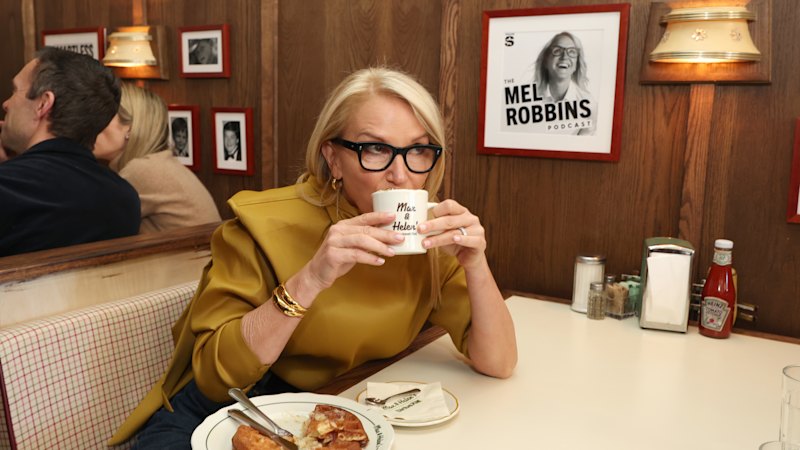
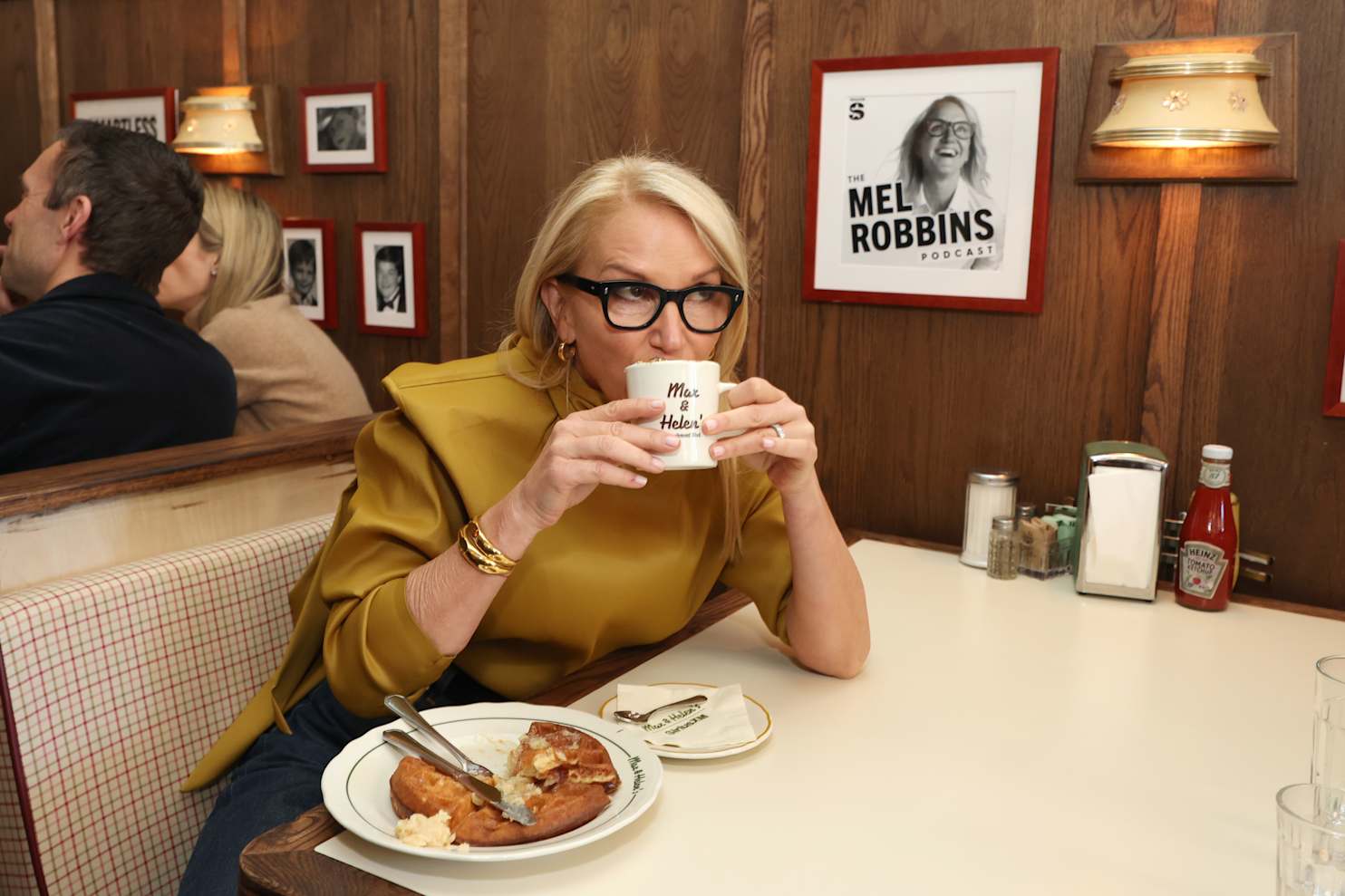
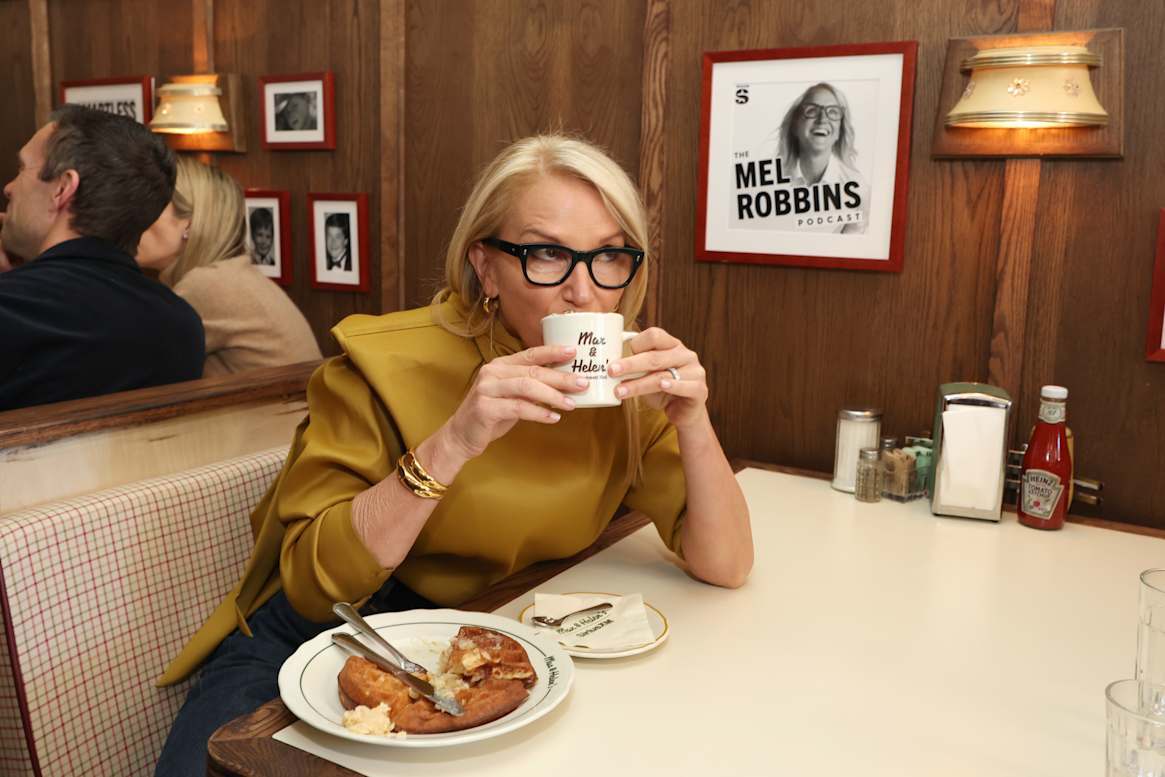
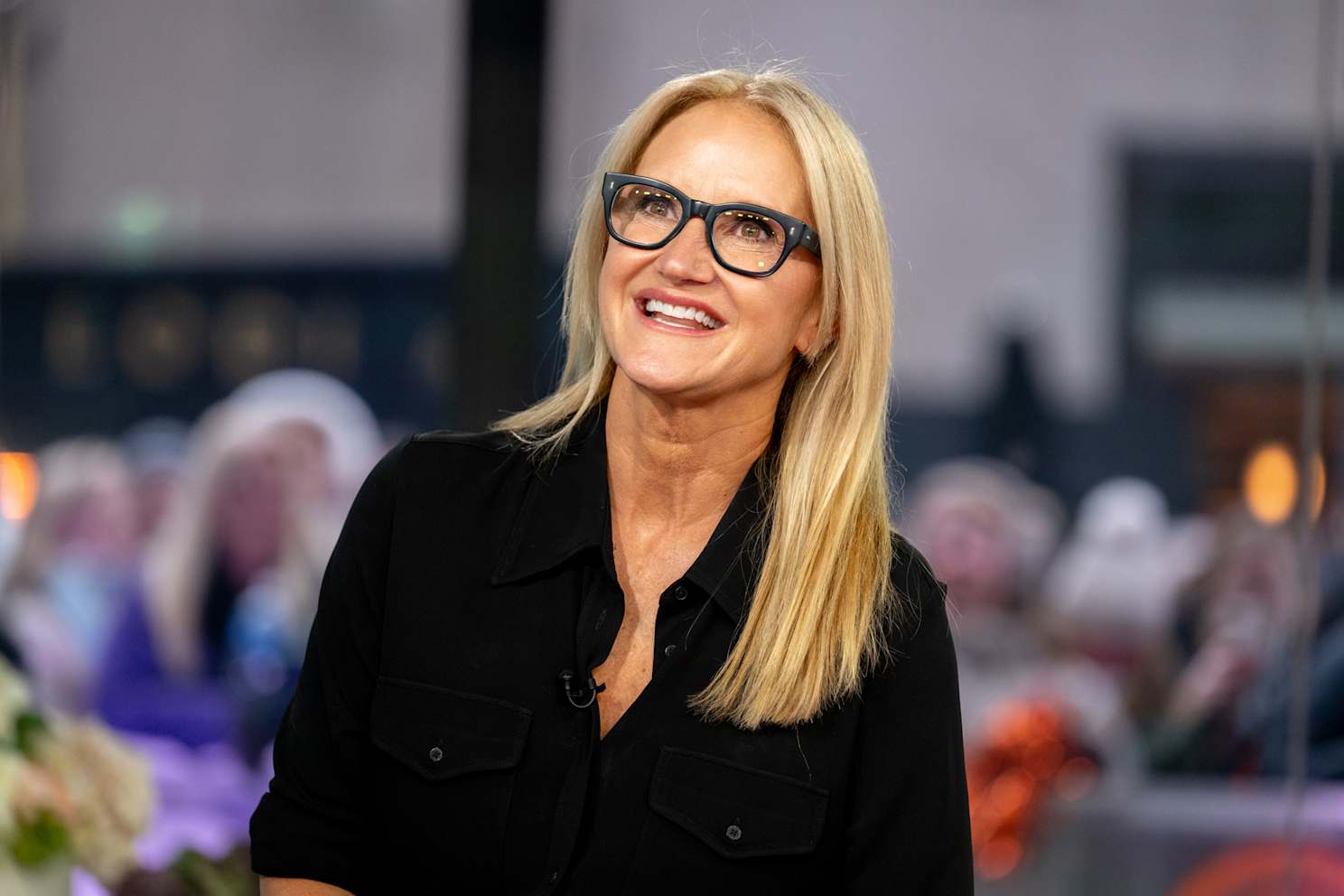
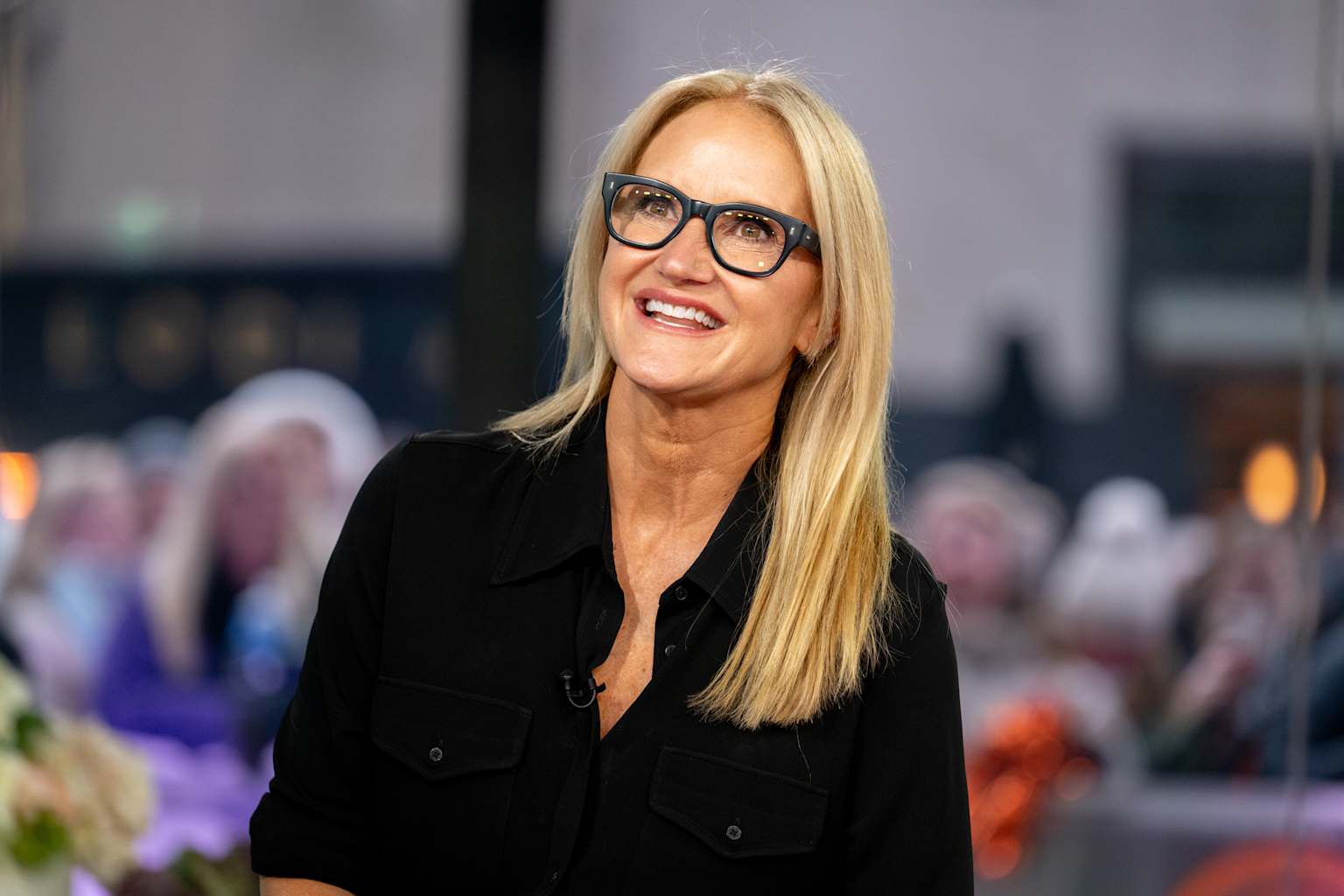
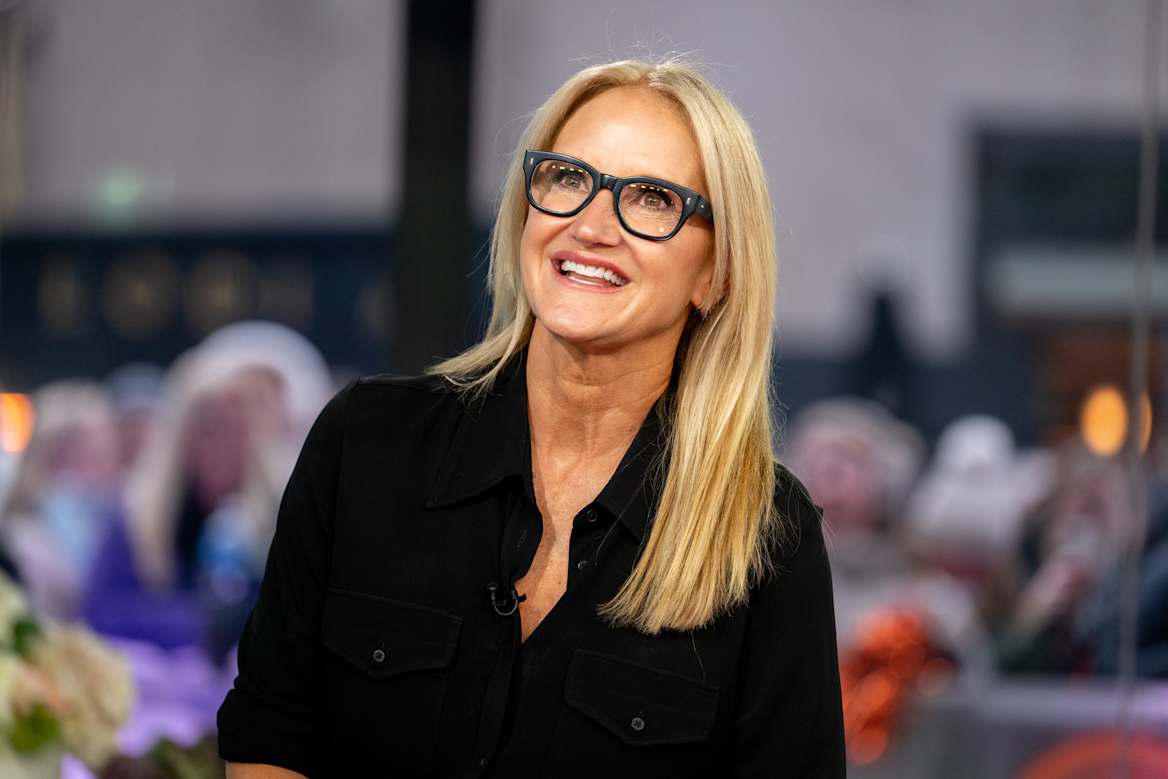
At the risk of oversharing early in the story, it’s 2026, anxiety is everyone’s prevailing mood and like many people, I seem to spend my days doom-scrolling through social feeds on the brink of emotional panic. Walking into breakfast with podcaster and life coach Mel Robbins, I could be forgiven for thinking she’s going to solve all my problems between the pastry course and our scrambled eggs.
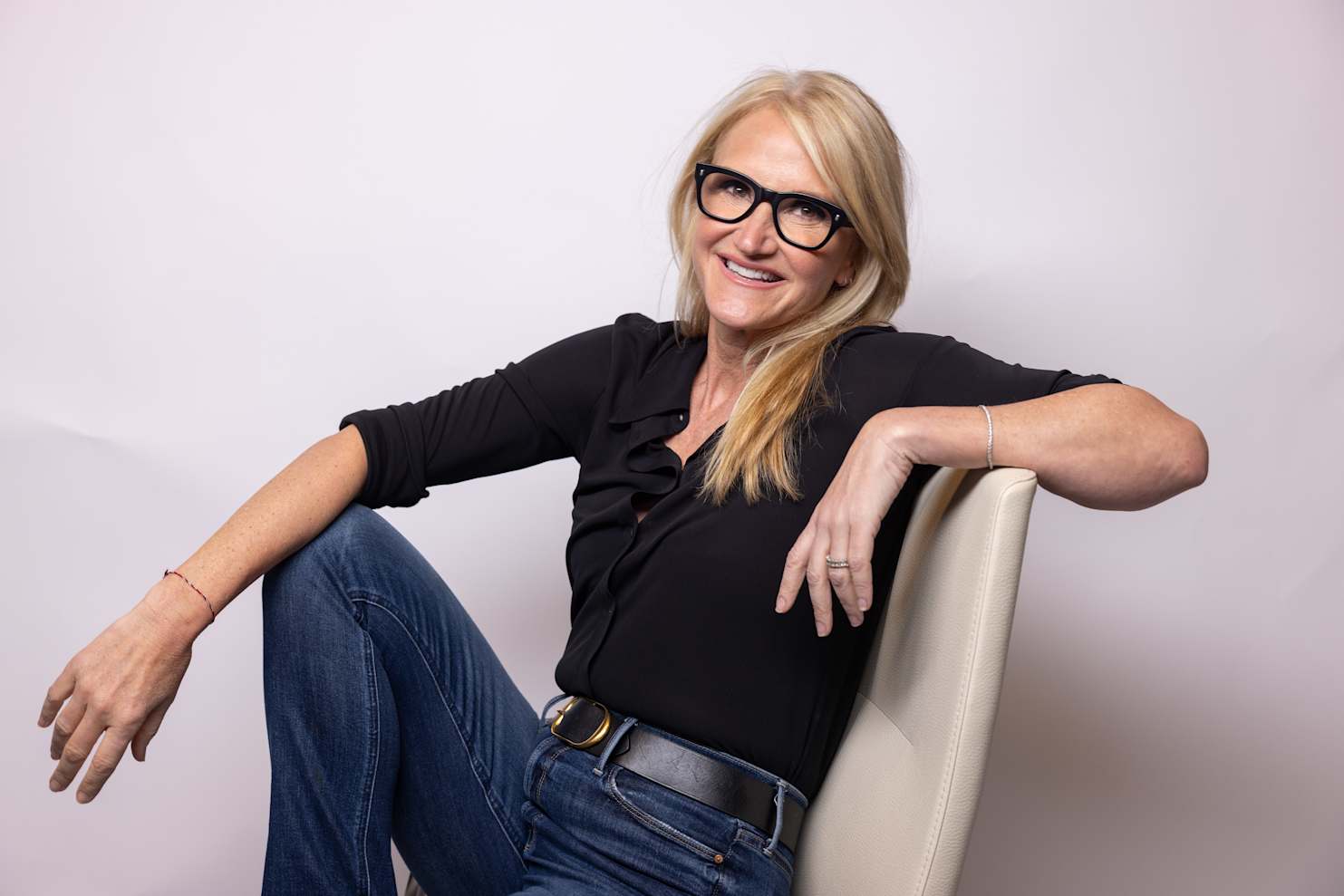
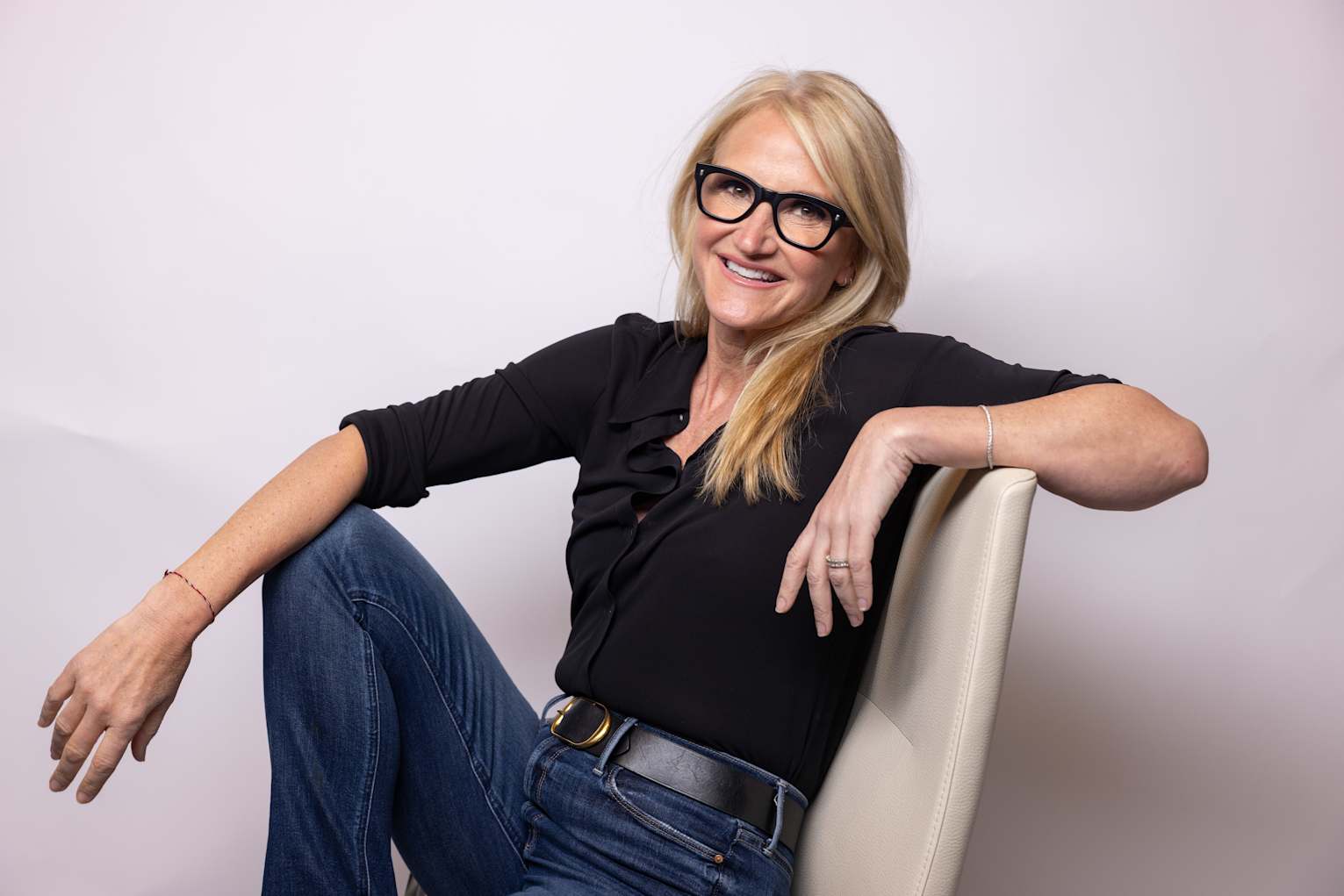
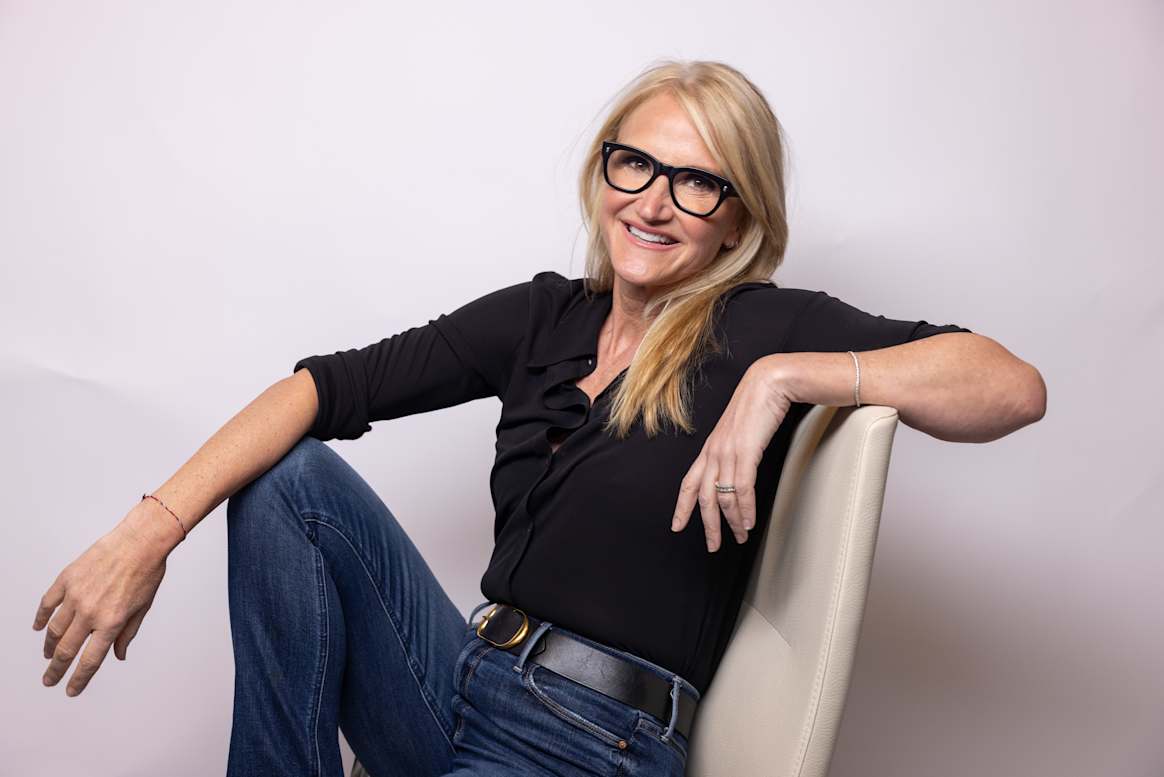
The surprise twist in the tale? She kinda fixed me. And almost entirely before either of us had taken a bite. Robbins is the 58-year-old Kansas City, Missouri-born author, lawyer and podcaster whose speciality is not so much fixing you, but helping you fix yourself. Her TEDx talk, How to Stop Screwing Yourself Over , and her book Stop Saying You’re Fine , read like bumper stickers for life. And since 2022, she has been the host of The Mel Robbins Podcast .
Her most successful book, The Let Them Theory , goes something like this: you need to let go of the need to control other people’s opinions, expectations and behaviours, while focusing your energy entirely on your own intentional response. That second, slightly less famous bit, is known as “let me”. It’s like The Secret , with less wishful thinking and more effort.
So, what’s the bit everyone misses? “Only saying the first part of the theory: let them. If [you] only say let them, the more you recognise that your boss is a jerk and your siblings don’t do their part and your friends don’t call you back or your partner’s disrespectful, the lonelier you feel,” Robbins says. “The second part, let me, is where you remind yourself that it’s the response to the things that you can’t control, it’s the response to the people that stress you out, that’s where your power and peace comes.”
People also make the mistake of believing that “let them” is permission to allow others to disrespect them, Robbins adds. Actually, “you’re revealing who people are,” she says. “And you’re forcing yourself to see who people are through their behaviour, and then take responsibility for how you then respond to the disrespect.”
And what’s the worst thing in the self-help sphere? The words self-help themselves. “I don’t like the words. I really don’t because we have an external life that people project out in the world, and then we have an internal life. And the internal life to me is a very, very, very important thing. What I don’t like about ‘self-help’ is that it signals two things: that you’re alone, and you can only do it on your own, and that there’s something wrong with you.
“To me, I feel like what we’re talking about on the show is life itself and the things about life that bring meaning to your life,” Robbins adds. “How to thrive, not perform, but how to be content where you are. How to recognise the simple joys that create meaning. How to not get so caught up in what the world wants you to think that you actually lose connection with yourself and the people that matter to you.”
The Mel Robbins Podcast is one of the world’s most popular podcasts, downloaded in 194 countries and has an audience measured somewhere near 40 million, across digital and social platforms. The funny bit? Robbins says she never set out to become a public figure.
“You would have to be a sociopath to launch a show and think that it would be this successful,” she says, laughing. “I just wanted to do something long-form that helped me as a 50-year-old woman learn more and make my life better and connect with people.
“When people recognise me, it’s like seeing that teacher in high school that believed in you,” she adds. “I am not a person that they recognise as a celebrity. I am a person that they recognise as the person who believed in them. So I represent something they see in themselves.”
Fundamental to her podcast mission, she says, is that the podcast itself is free. “It’s not about virality, it’s about impact. If you’re thinking about virality, you’re thinking about a gotcha, you’re thinking about a sound bite,” she says. “If your mission is impact, you produce something a completely different way. [So], how do we produce not for the person in the chair, but for the person who’s listening?”
Anything is on the table except for politics. Why? She has three reasons. “One is based on the neuroscience research of how people are influenced. When you give your opinion, people stop listening, especially on issues they’ve already made a decision on. People are influenced through your example, not through your opinion about politics.
“Two, our show is a shelter in a storm. It is a place where you can turn to and know that you will not be bombarded with politics. You will not hear political ads. You will not hear political parties. You will not hear political opinions on our show.”
And three? “I believe I can do more political good if I can help people settle their nervous system, if I can remind them of their better selves, if I can encourage them to start being more compassionate and accepting with their families, if I can get them to have harder conversations and feel more connected to work and meaning.
“We are all more alike,” she adds. “We all really want to solve the same problems, and we’ve allowed the discourse to be hijacked by the most extreme, loud voice and voices. And that is what people need to wake up to.”
In a rare moment for a modern-day podcaster, Robbins sat down with Oprah Winfrey for a 79-minute interview in September. The encounter was significant, generated much media noise and is a topic journalists still question her about. In a sense, it stems from the fact that they are, despite different media trajectories, similar women.
Both are motivational speakers who operate from a loose journalistic framework: details are checked, ethics are factored into the work. Both use their platforms to advocate for change within; that is, to encourage their audiences to find or build the tools to improve themselves. And both have a commanding presence on their platforms: Winfrey on traditional TV, and Robbins in the podcasting and streaming video space.
“If I had to say who was on my imaginary advisory board that I always looked up to, it would be Oprah Winfrey, [iconic American children’s TV host] Mr Rogers, Howard Stern, Dolly Parton and [American radio host] Delilah,” Robbins says. “All of those people felt like they were talking to normal people and that they cared about us, and they were themselves.”
Winfrey, Robbins adds, has been a mentor from afar for her entire career. When they met, Winfrey opened the discussion by saying that for the preceding 2½ decades, she had tried to teach, and it was clear that Robbins had heard her. “I see myself in you; I see you in me,” Winfrey said.
Making a study of Winfrey’s work, Robbins adds, it is clear that the reason she “was the greatest at that craft was that she knew the job. And the job was to speak to a woman in her kitchen who was busy and overwhelmed and wanted more for herself and her family and had dreams and felt a little forgotten.”
And their encounter? “She truly means everything she says, she lives by the things she’s teaching, and she has done the work to wrestle the very difficult things that she’s experienced in her own childhood and life to the ground, to understand how even the hardest things shape you.”
And as for me? How can I get my own wheels out of the mud before the waitress brings the bill? Picking up the conversation later, on a video call, Robbins is to the point. “You just actually said it,” she says, doing that thing she does where she fixes me but kindly gives me the credit.
“You become aware that you are in a thinking spiral. [So], create a big list of all the reasons why thinking negatively sucks. Magnify the ick. When you magnify how it’s hurting you, it switches gears in your brain, and your brain starts to see the thinking as a negative, and that helps you to break the loop.
“Thinking positive doesn’t actually change anxiety,” she adds. “It’s catching it, and then starting to break it apart by going, ‘is this actually helping me or is this destroying me?’ But you’ve already done it by saying, ‘I’m sick of this, I don’t want to live my life this way.’
“Becoming aware that you’re doing something that’s actually making your life worse is the single most important step to beginning to change it.”
The Mel Robbins Podcast is available on Spotify, Apple Podcasts, YouTube and Amazon Music.
Make the most of your health, relationships, fitness and nutrition with our Live Well newsletter . Get it in your inbox every Monday .
You have reached your maximum number of saved items.
Remove items from your saved list to add more.
You've used all of your gift articles. 3 more will become available on the 1st of every month.