

Bristol could become home to the UK’s first “wetland city” thanks to a charity’s efforts to create vast wildlife corridors that will reduce flood risk and give people more access to green and blue spaces.
The Wildfowl & Wetlands Trust (WWT) said the five-year initiative would include more than 200 projects to restore and create wetlands across the city. These will range from small household rainwater ponds and street-level rain gardens to restoring river habitats, reconnecting rivers with their floodplains, and creating new wetlands.
It hopes to achieve wetland city accreditation under the Ramsar convention, the international treaty on wetland conservation, which recognises cities that protect and make wise use of their urban wetlands.
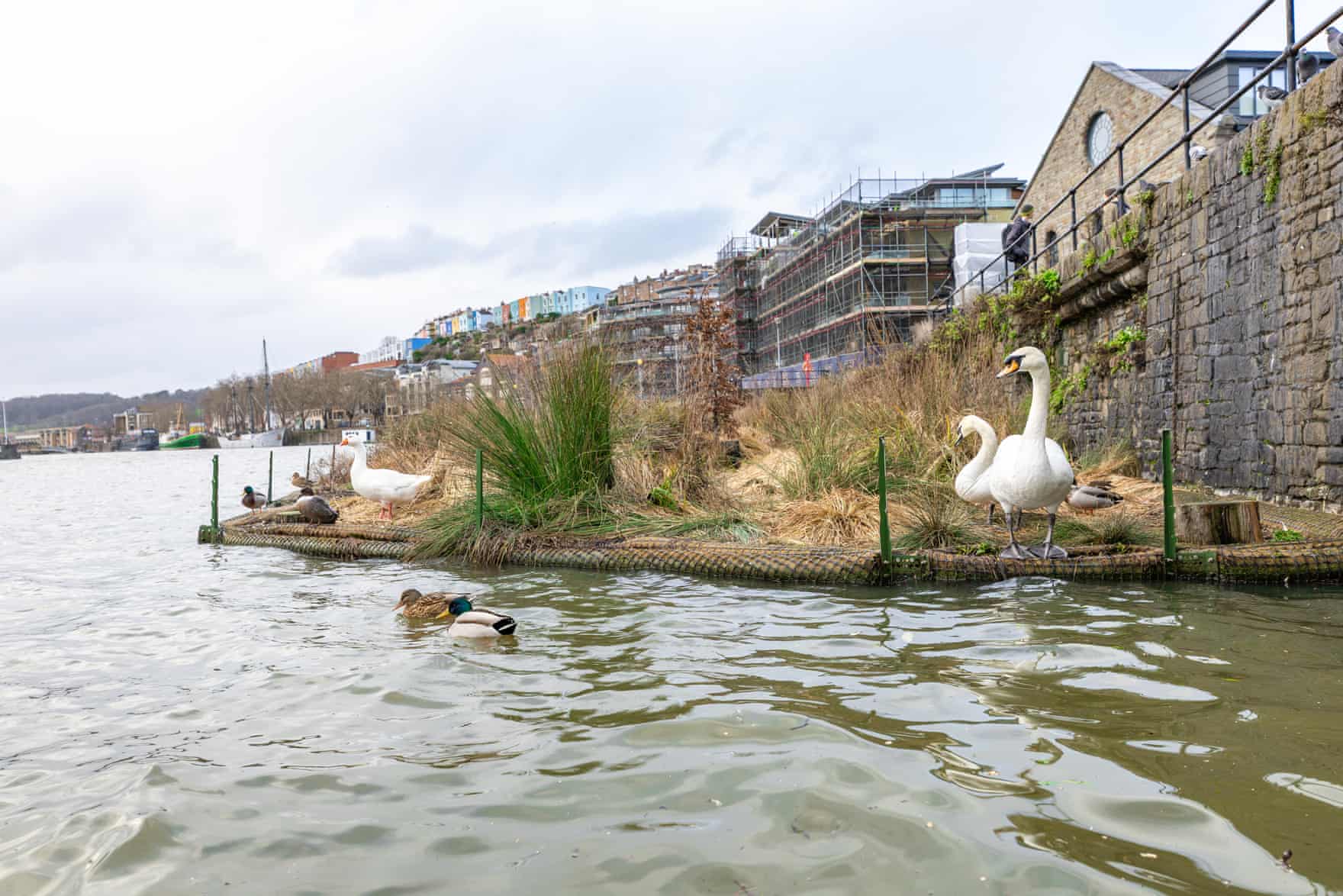
The charity kickstarted the project in September by installing floating wetlands, made of buoyant modules covered in wetland plants, at three sites in Bristol’s city-centre harbour. They help to create a more welcoming habitat for insects, birds and other wildlife.
“Within minutes, dragonflies and other wildlife were appearing. Nature was being drawn to it,” said Peter Lee, the programmes lead at WWT. “It sparked a conversation – people were saying: ‘Why can’t it always be like this?’”
Louise Kennedy, who is managing the project in Bristol, said 40% of species around the world were reliant on wetlands: “At WWT we often say they’re in freefall, given the number we’ve already lost. In a world that is increasingly urbanised, figuring out where pockets of wetland can be restored and protected within our cities massively improves biodiversity.
“It also improves access to nature for large segments of the population, who wouldn’t necessarily have access to wildlife reserves in rural locations.”
Lee said that, because wetlands absorb and store water more effectively than impermeable surfaces such as concrete, they are a great way to reuse rainwater and prevent flooding during heavy rainfall. “It’s a rethink of how we manage the water that lands in the city,” he said. “Instead of trying to get water out of the city as quickly as possible through drains and combined sewers, which overflow when it rains, we can actually manage the water where it lands.”
“Rain falling on a roof – that’s some of the purest, best-quality water there is,” he added. “Rather than channelling it straight into a combined sewer, we can use that water as a resource.”
There are 74 accredited wetland cities in 27 countries, 22 of them in China. Lee said bids elsewhere had usually been state-led, often driven by a city’s mayor, but WWT’s project in Bristol is funded by the insurer Aviva, which is contributing £8.9m over the five years.
Lee said he hoped Bristol would become a template for other UK towns and cities, and that it could demonstrate the economic case for wetlands, including commercial returns such as higher mooring fees and more footfall in the city centre.
“By proving the commercial and economic case for investment in wetlands, we won’t always need to rely on a big philanthropic donation – instead that’s seed funding to kickstart a much bigger programme,” he said.
The charity had looked at a number of cities to launch the wetland city project, he added, but Bristol stood out, pointing to the city’s maritime heritage. “Look at the placenames across Bristol – they’re full of water references,” he said. “It’s got 100 miles of waterways within the city, a lot of them hidden and tucked away.”
Tony Dyer, the leader of Bristol city council, said: “Bristol has always been shaped by its relationship with water, and this exciting programme shows how we can work with nature to tackle some of the biggest challenges facing our city.
“By creating and restoring wetlands across Bristol, we can help reduce flood risk, support wildlife, improve people’s health and wellbeing, and help build resilience to a changing climate.”