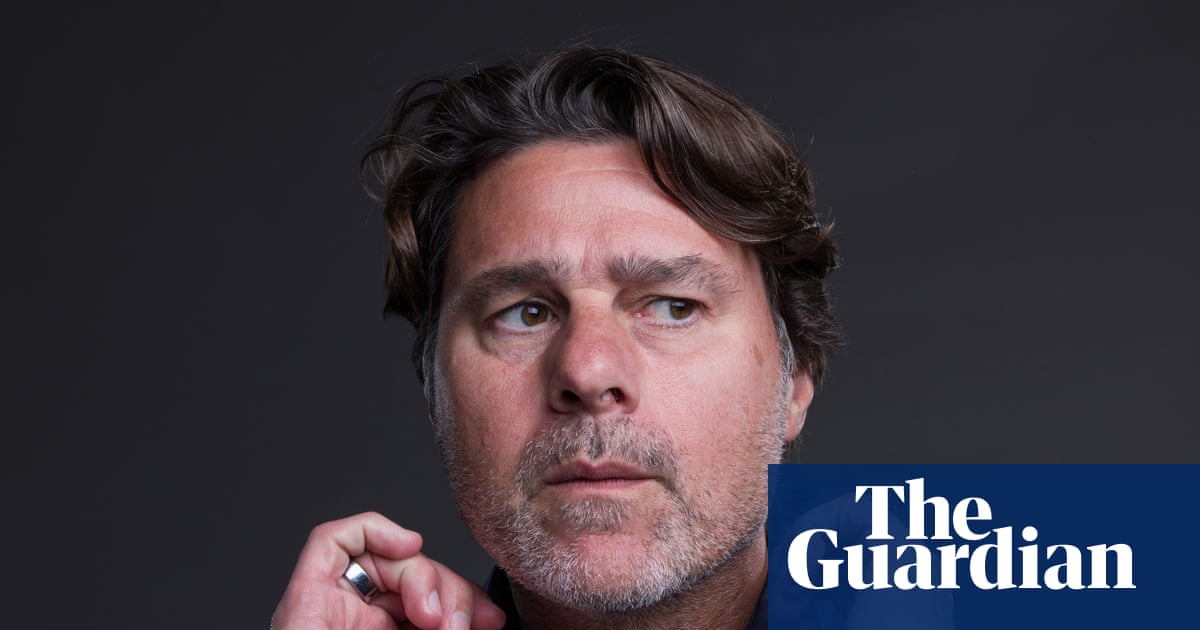
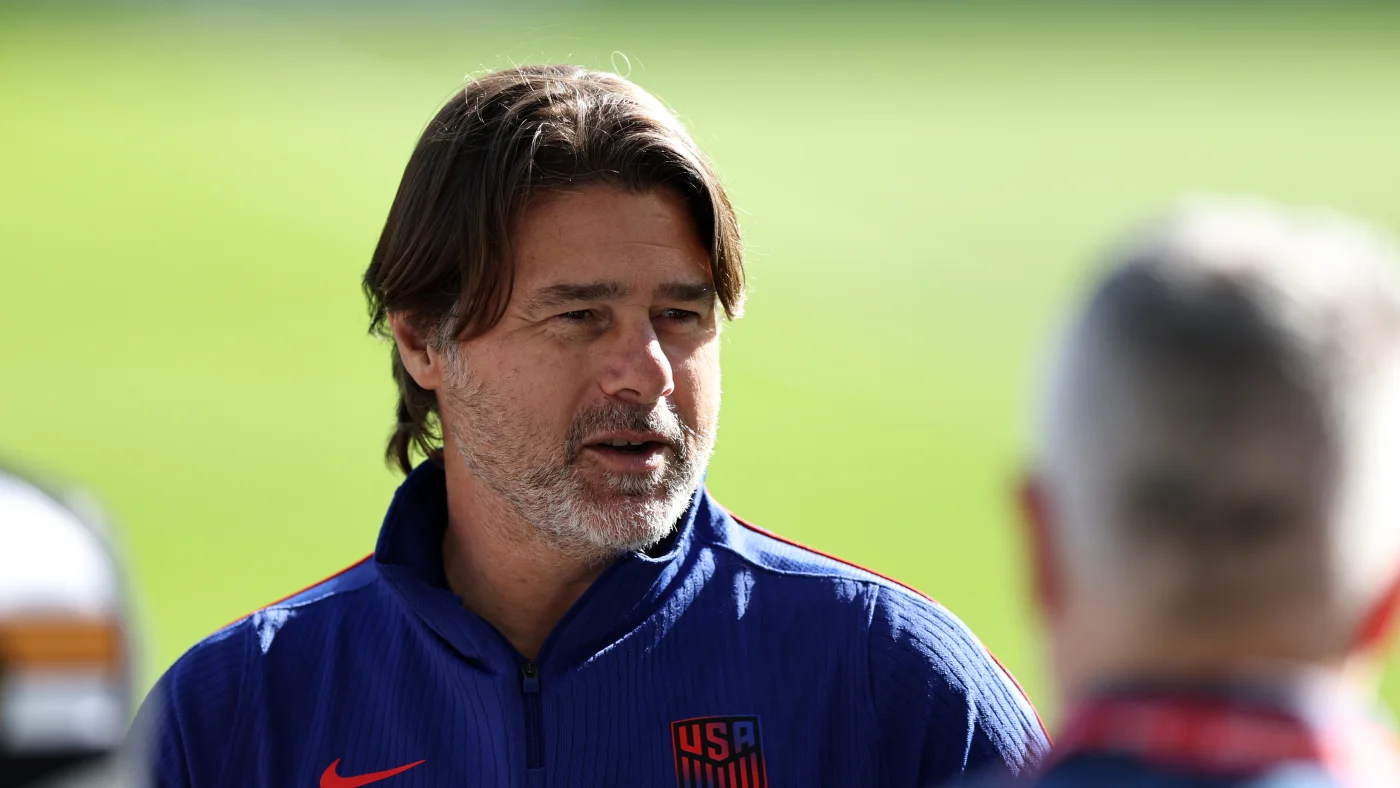
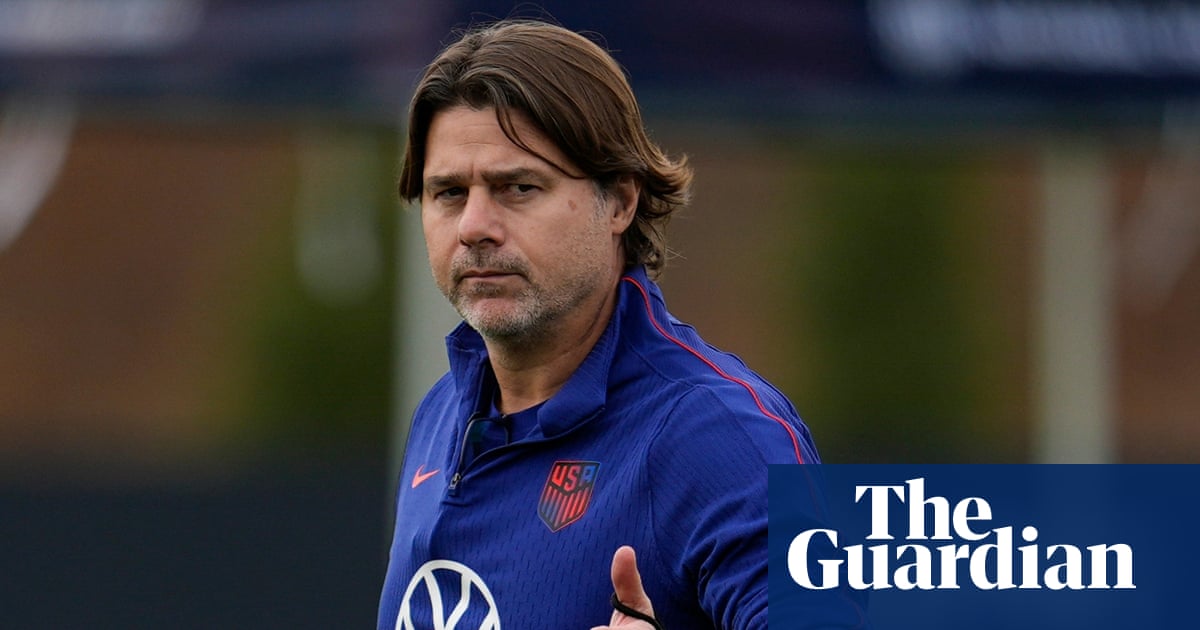
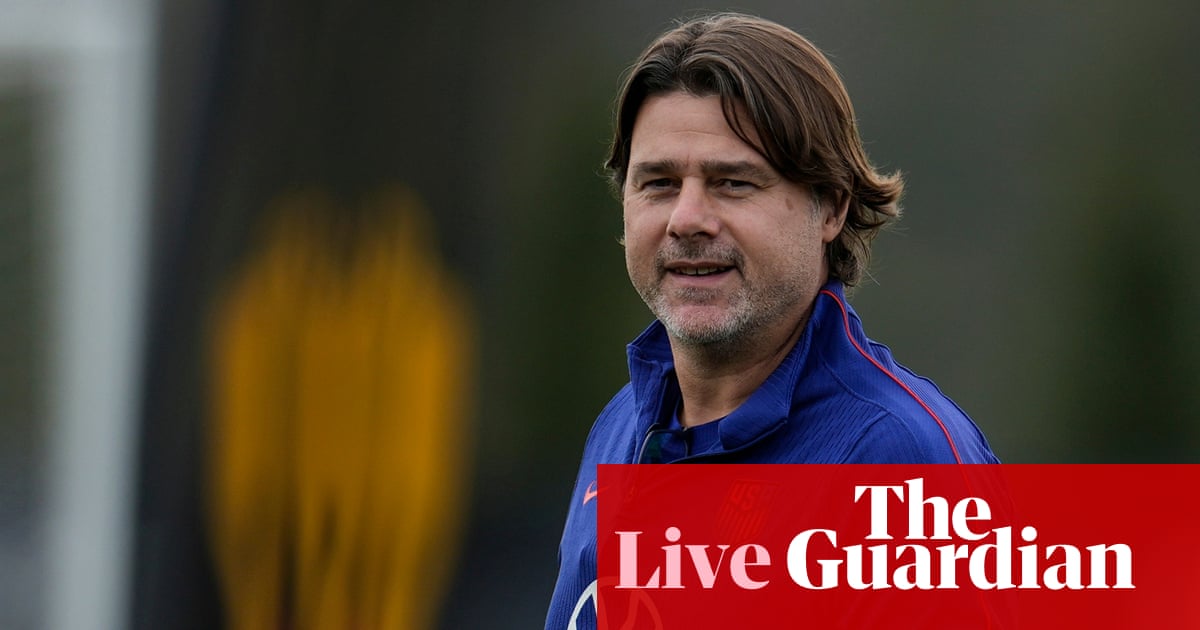
Maurucio Pochettino (right) was first mentioned as a contender to manage Manchester United when Louis van Gaal was sacked in May 2016
When Mauricio Pochettino was asked the three Premier League managers he would have loved to have played for, he was unequivocal.
"Sir Alex Ferguson, Sir Alex Ferguson, Sir Alex Ferguson," replied Pochettino, who is set to be the next manager of Manchester United .
In 2023, the Argentine - then at Chelsea , and dressed in full Blues training gear - was being interviewed by Sky Sports. Still he felt a need to express his adoration for Ferguson.
Six years prior to that interview, while managing Tottenham , he had shared lunch with the legendary former United manager.
"When I was young, when I started my career as a manager, he was always my inspiration, my reference," Pochettino said.
"And when you can share two hours with a person who was the greatest manager in the history of football, you can only enjoy."
Hiring United managers has been complicated since Ferguson's departure in 2013, and one of the most prominent complications has been a back-and-forth around the club's DNA.
For some, winning by any means necessary should take precedence, while others believe the style of play and cultural heritage of United's most successful period is vital to the club's identity.
In recent years, United's managerial merry-go-round has alternated between European coaches with their own fixed styles of play, and former players from the Ferguson era.
But between his tactics of choice and his adoration for the former United boss, Pochettino may be uniquely placed to bridge the gap between both camps.
Pochettino a decade in Man Utd's making - but Carrick deserves better
Michael Carrick's United produced a series of good results to finish last season with a run unmatched by any other team in the league. They looked great, but it was a greatness built on attacking in a transition-heavy manner.
Under Carrick, in games they had less than 50% of the ball, they only lost once. In those 13 games, they boasted a win-rate of 62%. This dropped to 36% in games they had the majority of possession.
This style of play suited their direct attackers and protected their defenders.
At the same time, Casemiro's set-piece prowess provided United a reliable way to break the deadlock against deep defences - something they have struggled with this season.
With United a goal up, opponents stepped forward, giving Carrick's men more space. They could play to their strengths again, attacking quickly. It worked.
But teams at the top are reluctant to play in this way. Carrick's vision for United was a side that played slick football, with short passes in build-up intuitively, referencing Paris St-Germain's midfield three as a source of inspiration.
Building up in this manner, to entice and escape from pressure, before looking to find the forwards quickly, was the plan Carrick was working towards.
This didn't come to fruition and trying to take United from a successful counter-attacking side to one that could reliably beat teams while keeping the ball was the same hurdle that undid Ole Gunnar Solskjar and Erik ten Hag.
Former players under Sir Alex Ferguson, both Ole Gunnar Solskjar and Michael Carrick leaned into United’s historic style when crafting their game-models
Pochettino gives United an interesting solution to this problem.
In his own words, he has described his sides as needing "to be protagonists, always press high, work hard and be dynamic". He refers to himself as a "disciple" of the legendary Argentina boss Marcelo Bielsa, who he played for.
If you wanted an immediate comparison in the Premier League to a coach who resembles Pochettino's ideas in possession, it would be worth looking at Liverpool 's Andoni Iraola, who similarly cites Bielsa as his reference.
These are coaches who, while taking the initiative, encourage vertical football. For as different as the clubs are, both the fans of United and Liverpool have enjoyed success when their teams have played high-octane football.
This summer's World Cup was a strong showcase of Pochettino's style of play and his recent tactical adaptation.
Rather than a fixed, positional style of play - akin to the work of somebody like Manchester City 's Enzo Maresca - Pochettino's USA had only certain players being tasked with holding their position.
This approach posed problems for teams who defended in a zonal manner - defending specific areas rather than individual players.
The US midfielders being able to move freely meant they could step into areas of the pitch between the zones that were being defended, which resulted in their players often being unmarked with time and space on the ball.
By playing in close proximity to each other in the middle of the pitch, the US found another benefit.
Small-space passing combinations helped draw the opposing team up towards the ball and combined with clever off-ball movement to stretch the pitch, allowed the US to find their striker with few defenders around him.
Pochettino's men looked to thread through-balls in behind and early after enticing the opposition's press and the speedy Folarin Balogun was able to turn those chances into goals.
Here is a good example of USA's fluid midfield four under Pochettino. The right-sided midfielder McKennie has placed himself near his three midfield team-mates, leaving the right half-space empty. With a four against three in that area of the pitch, USA are best placed to play quick combinations before looking to find their attackers in space.
Here we can the swapping of left-winger Pulisic and left-back Robinson. In this example, Robinson inverts into the fluid midfield four with Pulisic positioned on the touchline for balance. When out wide, Pulisic was able to showcase impressive one-against-one dribbling throughout the match too.
This combination of a fluid midfield, small-space passing and direct through-balls doesn't sound dissimilar to what Carrick was trying to move towards implementing this season.
And although that may worry United fans, the similarity in principles will benefit the players.
"My philosophy is to give a freer style with a good organisation," were Pochettino's words in 2014.
Although philosophically similar, that latter part - a clearer organisation to his freer style - is likely to be what Carrick was unable to reliably offer his players.
For fans of top sides, fast-paced, vertical football tends to be accepted when it comes from a place of being proactive - think Ferguson's United or Jurgen Klopp's Liverpool - wanting to keep the ball, but not passing it for passing's sake.
Fast-paced, vertical football tends to be frowned upon when it comes from a place of conceding possession and defending your own goal for long periods of the match.
The first half of Carrick's stint did appear proactive, while his 4-2-4 press worked well. Leaving four players high was a risk that allowed them to win the ball back and score quickly, but as teams figured this out, United failed to adapt.
There also appeared to be a drop in the team's fitness the longer United went from the departure of ex-boss Ruben Amorim, who left United well conditioned, albeit on the back of a schedule without European football.
Here we see United's narrow 4-2-4 defensive shape in the first half against Como
Hiring Pochettino will immediately begin the process of turning United into a well-drilled side, capable of applying intense pressure, likely in a co-ordinated manner.
Pochettino enjoyed relative success with Spurs , built on this intensity and co-ordination, that differentiated him from the rest of the league.
With that unique selling point more common now than a decade ago, how he builds on it will dictate how his tenure unfolds.
But watching Brighton this season, he can be assured that an approach founded on intensity off the ball can work in the Premier League in 2026, with Fabian Hurzeler's men second in the league, with the fourth highest average possession, 10 games in.
Pochettino, from a footballing point of view, feels extremely aligned to the values of Ferguson's United, and as a result will implement numerous similarities to the things Carrick wanted, but ultimately failed, to deliver.
His wealth of experience make him a more proven entity than the departing United manager and if he can get his team fit and pressing high, in typically Pochettino fashion, they should see an upturn in form.
Expanding on his managerial approach, while managing Spurs he explained how "the most important thing [was] to create a good shape for players to be comfortable and to show their real qualities".
Rather than relying on pre-defined pattern, he looks to empower individuals to solve attacking problems. Taking this approach means recruitment of top talent matters more than ever.
"He [gave] me the confidence and licence to go where I wanted on the pitch, where I [could] use my strengths," said Cole Palmer, who enjoyed his most productive Premier League season under Pochettino at Chelsea .
United have good attackers but they will need to take the same initiative Palmer did, if platformed to their strengths - something Pochettino does well.
If they don't, and if Pochettino is to stumble, it will likely be in United's inability to break down stubborn defences when asked to dominate the ball - in what would feel like Groundhog Day, again.