
Today's Microsoft outage has highlighted the risks of relying on cloud-based communications and Australians should be expecting more disruptions in the future, one expert says.
RMIT Associate Professor of engineering Mark Gregory says companies are not applying best practice in their processes.
"If we look at the outages that have occurred with Optus and Telstra, and also Vodafone , in some way they've all related back to a reduction in the amount of funds being put into the engineering side of the business," he said.
"So that when equipment goes down, or it's misconfigured, you then end up with a catastrophic outcome."
A major Telstra mobile outage in July that sparked chaos, with Triple Zero calls and businesses affected, was linked to the failure to maintain ageing equipment .
Your trusted source for staying up-to-date with the world around you. Get free daily news updates and analysis, straight to your inbox.
Gregory said engineering processes developed over hundreds of years generally follow a path of testing, checking with small groups, small pilot platforms and testing again before changes are rolled out.
"But that process is often either not used, or it's shortened because of the timelines that companies place on their engineering teams."
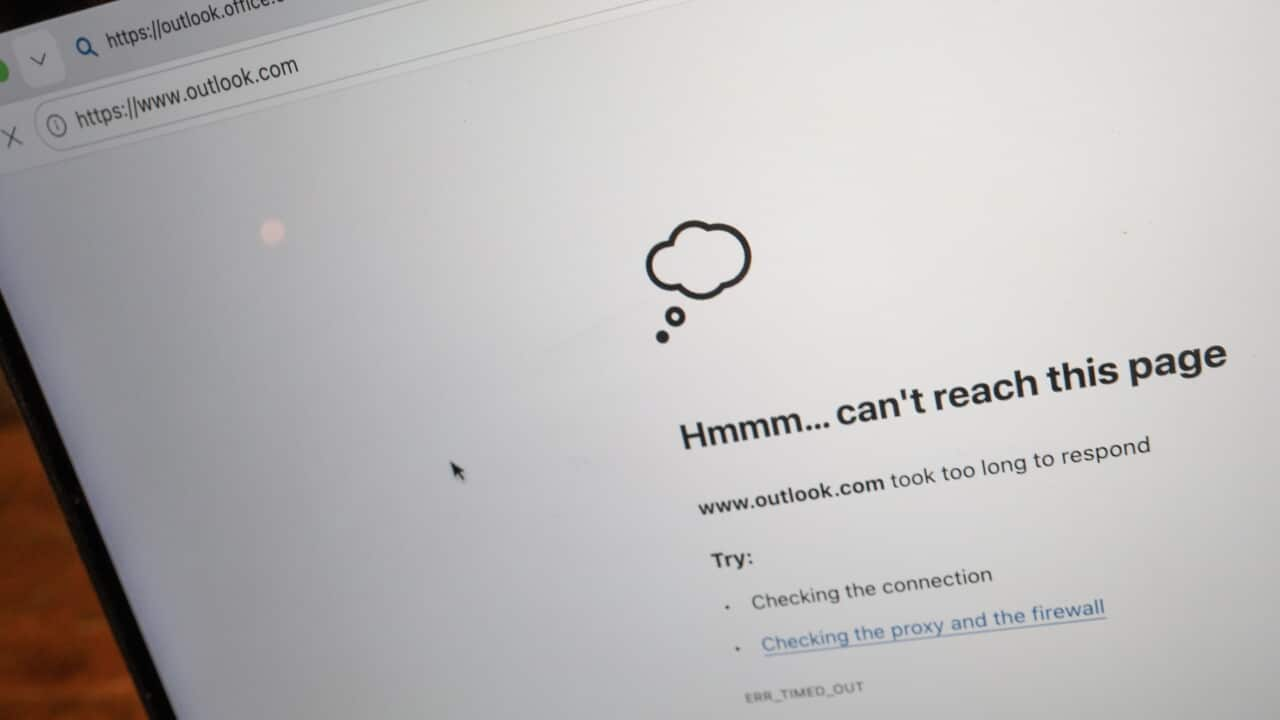
The Microsoft outage on Friday disrupted the use of popular programs such as Outlook and impacted the Australian Federal Police and Australian Security Intelligence Organisation.
Gregory said a network misconfiguration — when settings don't match what the network expects — appears to have resulted in some cloud servers being disconnected from Outlook.
"Unbelieveably, they've had to reboot them to get them to rejoin the cloud," Gregory said.
He said businesses are trying to speed up the process of making changes, updates or improvements to their software and systems, and this is coming at a cost.
"The updates have been coming very quickly nowadays compared with what we experienced 10 or 15 years ago."
These frequent updates, along with increasing hacking attacks, have seen a rise in outages in recent years, but there are actions businesses and individuals can take to minimise the disruption.
Gregory said companies in Australia have already been advised to plan for national outages of telephone networks after a series of failures.
"So if you're a Telstra customer, you need to have an Optus SIM card or something on another network as a backup."
It's also important for companies, businesses, individuals and families to also have backups of software systems so that alternatives are available when one system fails.
"If you're an Outlook or Microsoft user, you keep a Google or Gmail account as a backup so that you're still able to communicate or receive emails," Gregory said.
Software is increasingly connected to cloud servers and he said businesses should also consider backups for human resource progams, billing, invoicing and accounting software.
"Unfortunately, I see many businesses that are not prepared to look at having that redundancy or backup approaches, and they simply rely upon everything being available," he said.
"And when it's not, their staff are really just being left in limbo.
"Therefore, the problem becomes one that the staff have to carry."
In the past, businesses stored data and software programs within their own systems and offices.
"Due to the cost of doing that, over time companies have migrated their email into the cloud to use Office 365 or other hosted solutions," he said.
But Gregory said businesses are starting to understand the importance of having greater control over their services.
"If you have your systems and services being provided from a long way away, such as the United States or Asia, the chances of failure increase," he said.
"'[Locating] them locally — such as within their own business or within the cloud situated in Sydney or Melbourne or Brisbane — you do see less outages when that occurs."
The advantage of this approach could be seen during the Microsoft outage as businesses whose emails were hosted by a company separate to the Microsoft Exchange Online, were still able to use programs such as Outlook despite the wider disruption.
SBS has previously spoken to experts who say it's time for individuals and businesses to stop putting so much data and other information online, but Gregory said the computerisation of business processes is probably not going to change.
"It's a typical part of our daily lives today," he said.
"The question for many organisations has to be whether they rely solely upon cloud solution providers, or do they utilise alternative approaches such as self-hosted [services] or having those software packages run within the organisation."
Gregory said organisations need to work out the best options for themselves so they can still operate when these incidents occur.
"The only downside of course is cost," he said.
"You're paying for this alternative solution. [But] it's very difficult for companies to have hundreds or thousands of staff sitting around looking at computers unable to do anything, it's not productive.
Gregory says organisations also need address hacking attacks, which are on the rise partly because AI is making them easier.
"Nearly every major organisation in Australia has been hacked," he said.
"Quite often it's been because of a reluctance by the management teams and those organisations to actually spend the money that's needed to protect the company from hackers."
He believes the fines for failing to adopt best practice approaches are very low, and so companies were still underspending.
"The next phase will be class actions and people suing companies for losing their personal data," he said.
"And we really need to see more of that because Australia is still being hacked too often."