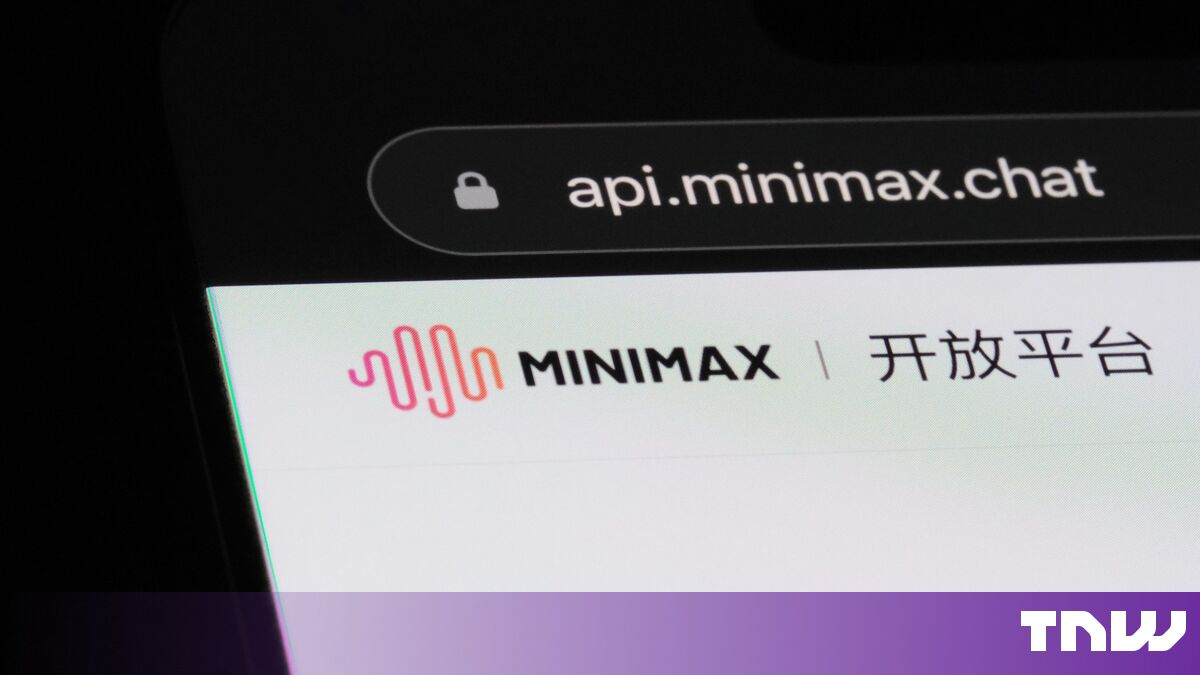
“Since the policy was announced, two leading companies, DeepSeek and MiniMax, have successfully completed the registration process and obtained open-source and overseas licensing rights.”
That is what Yuyuan Tantian, a WeChat account affiliated with state broadcaster CCTV, said in a post late on Thursday. The post sets out how the China AI export controls proposed on 16 October will work. Most AI technology will stay free to export, it said.
DeepSeek and MiniMax did not immediately reply to requests for comment, Reuters reported. DeepSeek reportedly raised $15bn from Tencent and CATL this week. TNW has not independently verified the post.
The commerce and science ministries want to add 23 AI technologies to China’s list of technologies banned or restricted from export. They include large models, agents and computing clusters, according to the ministry’s announcement . Companies must register before they export a listed technology. Public comments close on 15 November.
The post said the rules target three areas. The first is data. The rules would ban exports of large models trained on China’s “core data”. They would restrict models trained on “important data”, whatever their size.
The second is sensitive use. Agents above a set performance level face restrictions. Agents built mainly for critical information infrastructure, defence or core government affairs face a ban.
The third is computing power. AI chip design and high-speed links for large computing clusters are on the list.
The catalogue also sets numbers for large models, the post said. They are training compute above 10 26 floating-point operations, more than 2 trillion parameters, or capability in the global top ten.
Offering a restricted model through API calls, apps, web pages, SaaS or lightweight local deployment is not a technology export, the post said.
“Simply put, AI companies can continue with their commercialization efforts as usual,” it said.
Open-source technology gets automatic licensing, which the post described as “immediate reporting and export”. So do Chinese companies’ own computing centres abroad, chip tape-out overseas, joint research and work on international standards.
Technology already public through open source or academic papers falls outside the rules. Exports tied to cooperation among members of the World AI Cooperation Organization would get more support.
Liu Jing and Liu Hongmei of Beijing Dacheng Law Offices took part in the consultations, the post said. The control points for some AI items changed after the first draft, they told the account. Many of the concerns companies raised show up in the published version, they said.
Restricted technologies can still go abroad with a licence, Liu Hongmei said. That would not disrupt companies’ overseas plans.
The post set the rules against the US approach. It cited the Commerce Department’s AI diffusion framework of January 2025. It also cited an “alliance strategy” it attributed to Anthropic’s CEO , Dario Amodei.
“But China did not take this path,” the post said.
In a separate post on Friday, the account said overseas internet users had urged other Chinese open-source models to follow suit, Reuters reported.
Get the most important tech news in your inbox each week.