You have reached your maximum number of saved items.
Remove items from your saved list to add more.
You've used all of your gift articles. 3 more will become available on the 1st of every month.
It’s hard to know, when you’re in a foreign country, what all the commotion is about. You see a large crowd taking to the streets and assume it’s probably a festival or some other celebration, the kind of thing that takes place in certain countries on a regular basis.
And so when I was staying in La Paz in Bolivia a few years ago and spotted more people than usual moving through streets that are usually choked with vehicular traffic rather than pedestrian, I figured it was worth joining in to see what was happening.
It turned out what was happening was a protest march. It quickly became clear when I spotted the banners and flags and picked up on the atmosphere that people weren’t celebrating but rather demonstrating.
It’s a good idea to just clear out in a situation like this. There’s really nothing you as a traveller can gain from inserting yourself into a local political demonstration.
So I headed back to my hotel and took cover, deciding to ride it out with some local Bolivian TV. Those protests remained peaceful, as it turned out, and I went out later in the evening and discovered that marches in Bolivia can quickly turn into good-natured drinking sessions.
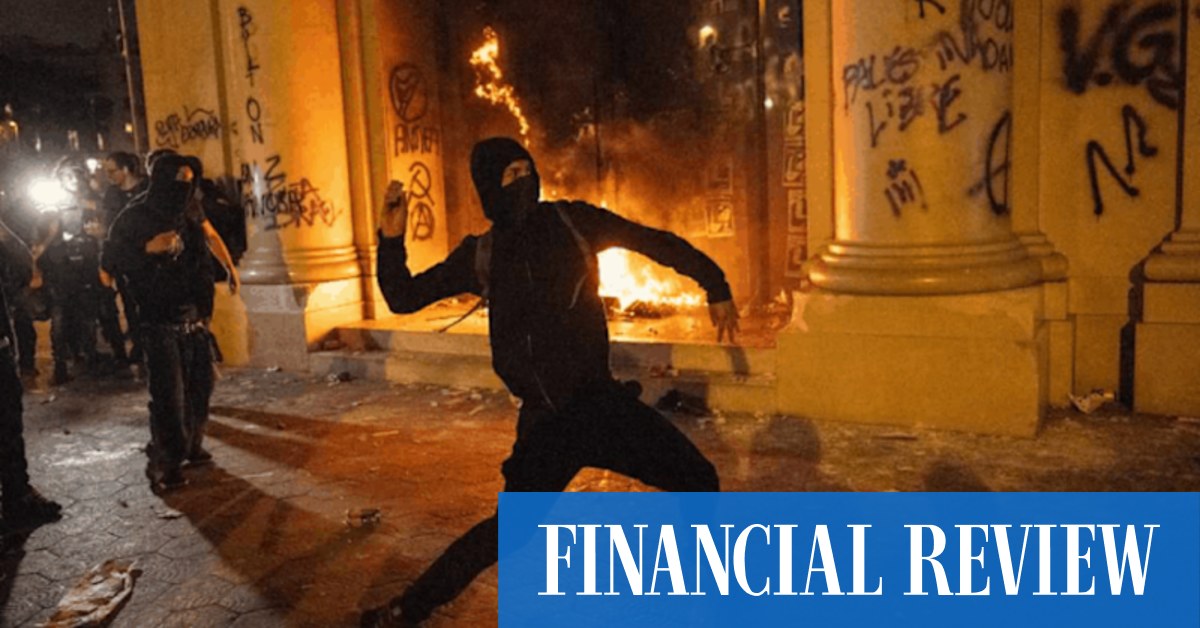
Travellers are having to make similar decisions – though maybe without the post-demonstration drinks – in Europe right now. There has been a wave of violent protests sweeping France and Italy, with Paris in particular the site of widespread looting and clashes with police .
The latest travel news, tips and inspiration delivered to your inbox. Sign up now.
Student protests are also taking place in Italy, Belgium, Spain, Portugal and Greece, with activists upset by the rising cost of living and higher education fees.
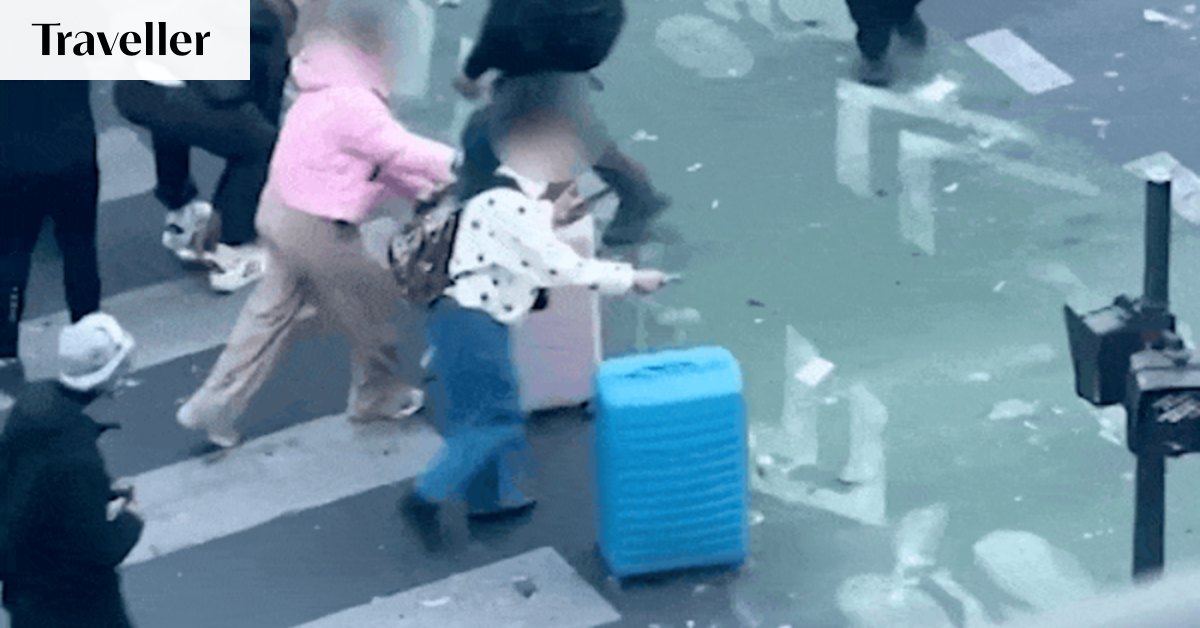
While there has been footage of French residents casually enjoying a coffee and a cigarette while the city literally burns around them, and even tourists pushing through demonstrations with their suitcases, for the most part, travellers have not been so blasé: hotel bookings in Paris are down 10 per cent due to the unrest. Curfews in place for parts of France this weekend, and major attractions such as the Louvre will be closed on Saturday.
For travellers visiting Europe soon, it’s worth having a careful read over your insurance policy to see if you’re covered for any cancellations or changes relating to the unrest.
“Travel insurance cover for riots and civil unrest can vary significantly between policies,” says Natalie Ball, chief operating officer for 1Cover Travel Insurance. “Some situations may be excluded, particularly where an event was foreseeable or a traveller chooses to travel against official advice.
“Before you leave, check the latest Smartraveller advice for your destination, and make sure you understand the limits and exclusions in your travel insurance policy. Don’t assume that every disruption caused by civil unrest will be covered.”
Jess Strange, chief customer officer for Southern Cross Travel Insurance, agrees that government advisories should be travellers’ first port of call.
“Our advice to customers in a situation like this is to always check Smartraveller,” she says, “and then check your own policy documentation. Because depending on the circumstances, and whether travel advisories have been issued, it might change. So make sure you check your documentation and call your insurer as well.”
This situation also serves as a warning to book travel insurance in advance because those who book a policy now, knowing the riots are taking place, will more than likely not be covered for cancellations and other issues caused by a known event.
“If you’ve booked a trip to France and actually now you can’t go because there’s a travel advisory issued, if you had booked your insurance in advance you would be able to make a claim and have your costs refunded,” Strange says. “But often people will book insurance the day before they go.”
The current Smartraveller warning level for France is yellow, “exercise a high degree of caution”. Italy, meanwhile, is green, “exercise normal safety precautions”, as is Greece and Spain. Tour operators on the ground report that it’s mostly business as usual for travellers in these countries.
“There have been no cancellations or impacts to Intrepid trips across these regions as a result of the recent protests,” says Yann Wulser, managing director of Intrepid Travel’s business in France. “Our local teams in Paris, Marseille and Lyon have been closely monitoring the situation on the ground and report that the situation has calmed significantly since last weekend.”
Kate Baker, general manager of Australia-based tour company Utracks, agrees, and says Australian travellers tend to be a resilient bunch.
“None of our trips have been impacted by the riots,” she says. “But if clients were to contact us, the advice would be just follow the advice of DFAT [the Department of Foreign Affairs and Trade], which is to avoid demonstrations, and avoid areas of conflict.
“I’ve seen some images of people walking through Paris with their luggage, trying to get through barricades; I haven’t heard of any tourists being hurt, though. And people understand that when you see riots on the news, it’s reasonably isolated to certain areas. It’s not the whole of Paris that’s burning.”
As I was reminded in Bolivia then, it’s best to avoid demonstrations, check to see what your insurance policy covers, and wait until the situation has settled before joining in for drinks.
You have reached your maximum number of saved items.
Remove items from your saved list to add more.
You've used all of your gift articles. 3 more will become available on the 1st of every month.