Four years into the AI boom, the government and corporate Australia still have no idea what AI means for the future and how many jobs will be lost.
While panellists and speakers at the Financial Review AI Forum spoke with great clarity on their work to achieve returns on investment in the technology and the policies shaping its use in the workplace, what remained abundantly clear is that nobody knows where any of this is heading.
Large business technology users – represented by Westpac’s Andrew McMullan – spoke strongly about how the big four banks are racing to beat each other, Xero’s Angad Soin was convincingly confident about the future of established software companies in the face of the so-called SaaSpocalypse, while Workplace Relations Minister Amanda Rishworth assured attendees that the necessary work was being done to consider where human workers fit in.
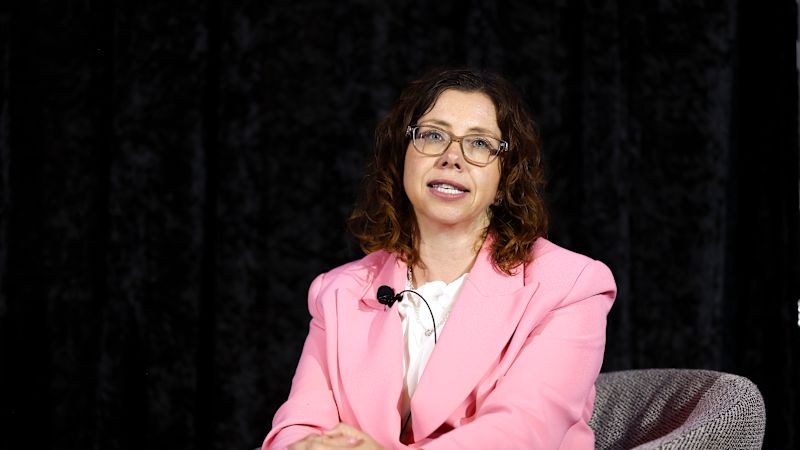
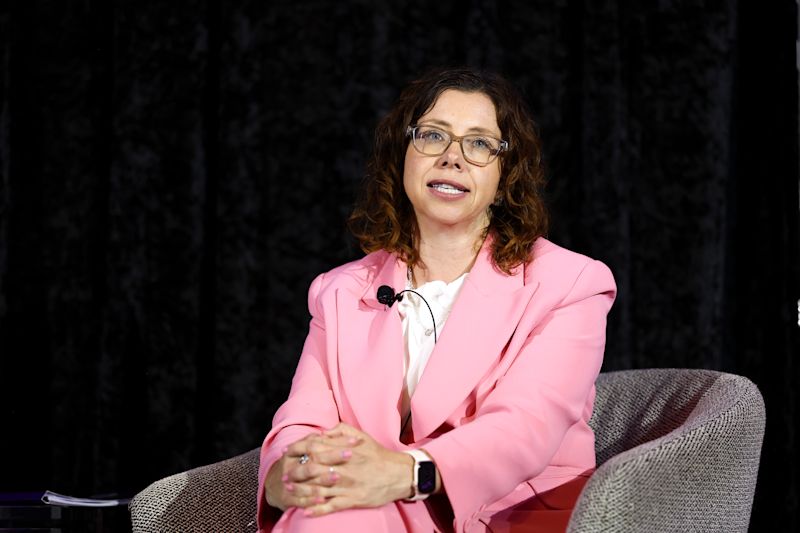
Amanda Rishworth says employees need to have a share of the AI dividend. Dominic Lorrimer
McMullan was able to point to an example of AI helping Westpac migrate systems at its St George Bank subsidiary on to its own tech stack, as part of a major transformation program called Unite, three years earlier than expected. But, four years after OpenAI wowed the world with the introduction of ChatGPT, many of the benefits being highlighted by businesses from AI use are still theoretical.
More importantly to many Australians, the conversations about impacts on the workforce are steeped in unrealistic best-case scenarios that rely on commercial organisations having a social conscience. The first phases of AI job losses are already being felt across corporate Australia, but the government’s best practice guide for AI adoption in the workplace, announced by Rishworth at the forum , is voluntary for companies to adopt and stops short of considering any major policy reforms.
Its consultation process continues until the end of January.
“Our government is obviously taking the broad impacts that AI could have on the labour market seriously … at this point, it does still seem that in Australia, it is having a moderate impact,” Rishworth said.
“There are obviously new jobs emerging, but that is not to take away from the fact that it is very unnerving for many Australians to see some of these headlines.”
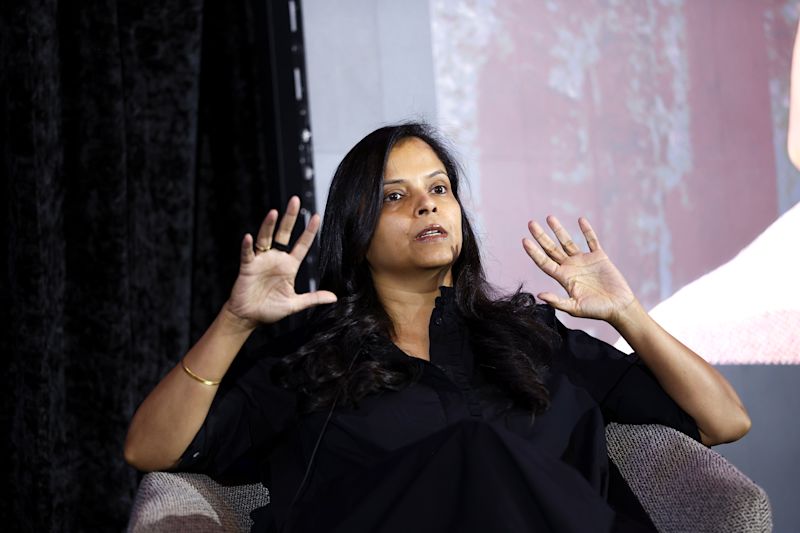
Avani Prabhakar, Atlassian’s chief people and AI enablement officer says uni students should follow their passions, rather than try and guess what the AI era job market will require. Dominic Lorrimer
The headlines refer to a flurry of redundancy rounds this year, mostly in technology-related roles. Job losses linked to AI – either directly in company announcements, or indirectly through offshoring deals that will inevitably be automated away in future – number in the thousands, across organisations including WiseTech Global, Atlassian, Commonwealth Bank, ANZ Bank, Westpac, Bunnings and Qantas.
Rishworth’s best practice guide involves employers consulting workers before adopting AI, codifying AI rights in collective agreements and sharing the technology’s benefits through higher pay or shorter hours. But it also contains warnings about the danger of workers being loaded up with more complex tasks that bots can’t do , and suffering intrusive surveillance.
Framed around the three pillars of planning, enabling and embedding, the guide urges employers to co-operate with workers as early as possible, including “meaningful engagement before a decision is made to introduce AI”. It sounds like corporate theatre, to eventually be used to justify future job changes.
A question from the audience about whether the government was considering universal basic income payments was laughed off as a joke; but the concept is one regularly floated as a likely necessity by the founders of AI companies leading the charge.
“We are not considering a universal basic income payment at the moment … we are still seeing jobs being created in this country,” Rishworth said. “I think the question is how do you ensure people have the capability and the confidence to take on new roles or different tasks within their roles?”
This is the idea that AI is changing rather than replacing roles, which sounds good in business conferences, but unrealistic when you speak anecdotally to people in industry, when they are talking candidly about hiring plans and automation.
Atlassian’s chief people and AI enablement officer Avani Prabhakar conceded that, even within one organisation, conflicting goals exist when it comes to deploying AI.
“When I speak to the chief people officer, they are just super focused on upskilling … training and job losses and unions. But when you talk to the CIO or CTO, they couldn’t care less about any of those things,” she said. “Nothing against CIOs in this room right now, but their focus is ‘where is the ROI?’ And ‘how many tokens are being spent?’”
Altruistic thinking about national employment levels and workers’ future employment prospects away from the company are unlikely to factor heavily in any commercial organisation’s thinking.
In the real world, a question for many people at the start of their professional years is what they should study at university.
Until recently people were told that learning to code was the ticket to corporate riches; now those are the first jobs that AI has confined to history.
It is hard enough to make study choices at the best of times. But when large companies openly admit they don’t know what their workforces will look like in a few years due to AI advances, young people could understandably feel like they are gambling with their futures.
Prabhakar told the AI Forum that universities and students should combine study with practical, real-world use of AI, with students more responsible than ever to look outside their coursework to find internships where they could see how AI use was evolving.
“This one is very close to home because my daughter just finished her HSC, and my advice to her as a mother was ‘please make a decision on what you want to study based on your passion, not out of fear [of AI]’,” Prabhakar said.
“You won’t do well, no matter what AI does in that particular field [with fear]. You should still always follow your passions and not worry about studying a particular field.”