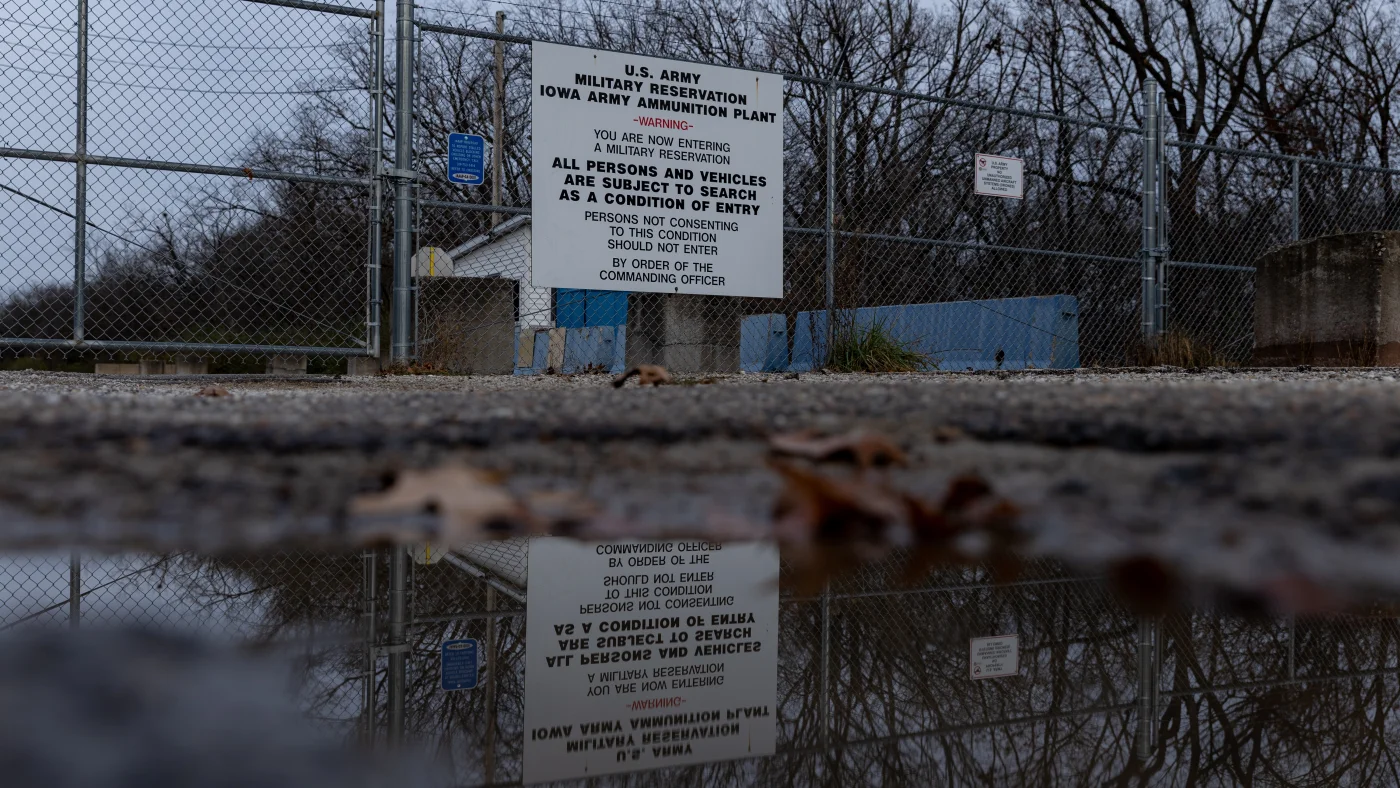
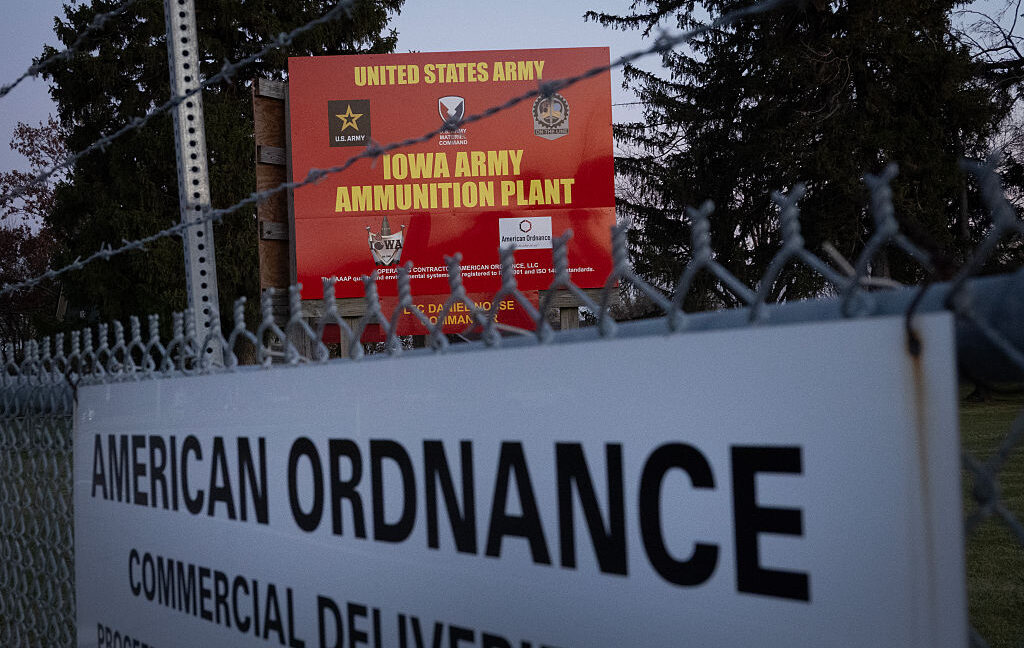
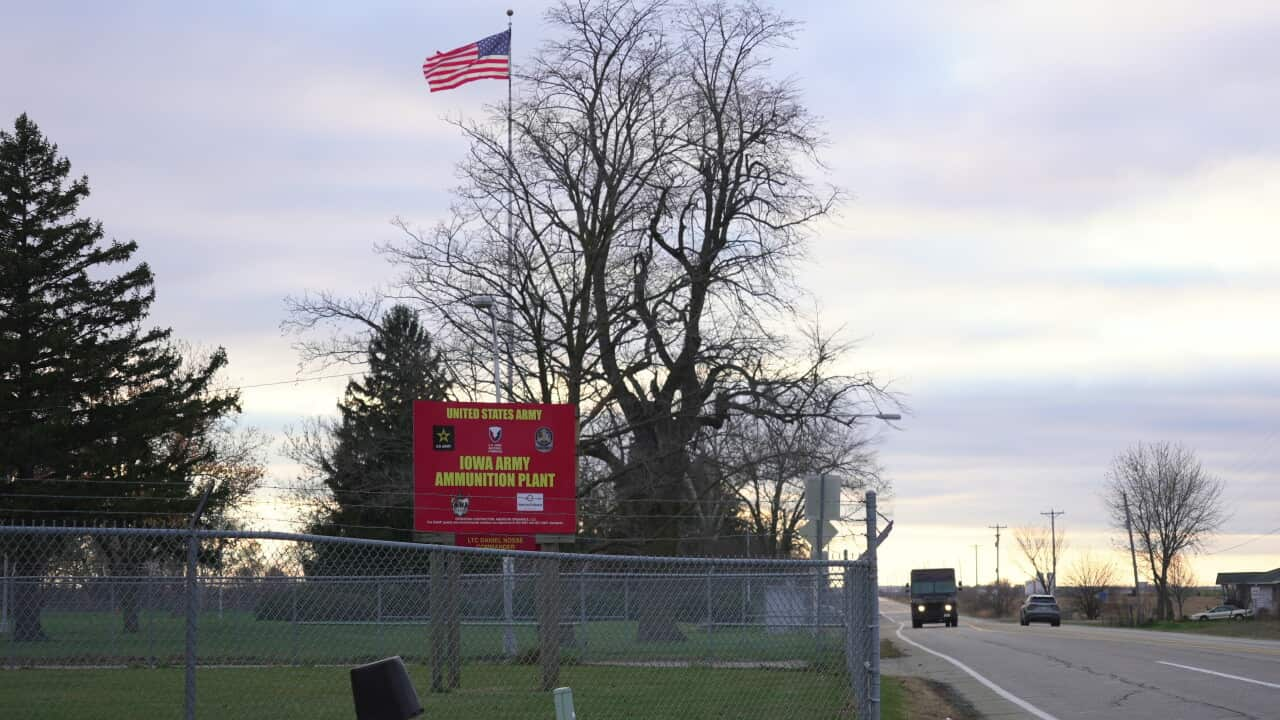
A large stockpile of lead-rich explosives in the Midwestern state of Iowa has been destroyed in controlled detonations by the United States Army, ending a brief legal battle spurred by concerns that toxic dust from the fallout would endanger residents, livestock and farmland.
Video showed that the nearly 4,500kg (10,000lb) of lead azide – a highly volatile, lead-based explosive that has been used in military munitions since World War I – was detonated in two successive open-air detonations on Wednesday at around 9am (15:00 GMT).
Environmental groups have raised concerns that the explosions would release particles that could eventually land on homes, crops and livestock far beyond the detonation site, potentially travelling more than 160km (100 miles).
Before the detonations at the Iowa Army Ammunition Plant, outgoing Republican Governor Kim Reynolds declared a disaster emergency across three counties in southeastern Iowa – Des Moines, Lee and Van Buren – activating state and county emergency response plans.
Shortly before the controlled detonations, Assistant Secretary of the Army Jordan Gillis appeared in a video on X, discussing the decision behind the detonation and explaining how the Army is attempting to mitigate the particles released. “The choice that we faced here was between a spontaneous, uncontrolled detonation of dangerous material or a controlled detonation where we could choose the time and place to optimize the conditions to deliver the best result – not just for our operation but for the safety of the public,” Gillis said.
Revised wind projections released by the Army on Tuesday showed that airborne lead particles would shift southwest into northeast Missouri, prompting health officials there to advise residents 8km to 32km (5 to 20 miles) southwest of the plant to shelter indoors with windows and doors shut until an all-clear is issued.
Amid a groundswell of concern over the prospect of toxic lead fallout, some residents have warned of the added burden the operation could place on communities already contending with chronic economic pressures, including a shortage of affordable housing, rising food costs and stretched local services.
The detonation’s impact will be felt across Des Moines County, which covers the city of Burlington and the rural community of Middletown, immediately adjacent to the ammunition plant.
Home to about 38,000 Iowans, the county had 38 percent of its households below the Asset Limited, Income Constrained, Employed (ALICE) threshold in 2024, according to the latest figures published by United for ALICE, a national research initiative.
“We shouldn’t have to experience an environmental disaster to become worthy of national attention or investment,” Megan Brincks, chairwoman of the Burlington Homelessness Task Force, told Al Jazeera.
Brincks, a Burlington resident who previously worked in the ammunition plant’s chemistry laboratory, stressed that the Army’s shelter-in-place orders cannot suspend the daily obligations of those whose work keeps the community running.
“Our food-insecure families will still need food tomorrow,” Brincks said, adding: “People experiencing homelessness will still need shelter. Individuals will still need transportation to medical appointments.”
“Unfortunately, the world doesn’t stop spinning because this is happening in our back yard.”
The blasts rocked one of southeastern Iowa’s most heavily cultivated stretches of land in a state that ranks second only to California in agricultural output value.
According to the US Department of Agriculture (USDA), Iowa is a leading producer of corn and soya beans and ranks first in the country in commercial red meat and egg production.
Across Des Moines County, about 648 farms span nearly 60,300 hectares (149,000 acres), including more than 49,775 hectares (123,000 acres) of cropland.
On Tuesday, Richard Fordyce, an undersecretary at the USDA, said the agency and the Iowa Department of Agriculture and Land Stewardship estimated that about 350 farms across Iowa and Missouri could lie within the projected plume area.
The prospect has stoked alarm over the risk of lead leaching into soil and groundwater, compromising crops and livestock and jeopardising the livelihoods of the farmers whose land underpins a vital part of the country’s food supply.
Will Sander, an associate professor of preventive medicine and public health at the University of Illinois Urbana-Champaign, said much of Iowa’s corn and soya bean harvest has already been completed, reducing the likelihood of acute exposure to this season’s crops.
Cattle producers, he said, should cover feed and water supplies where possible to limit animals’ ingestion of lead dust even if they cannot bring their herds under shelter.
“The acute exposure is the biggest risk in this situation, … that lead will not have dispersed and diluted into the environment,” Sander told Al Jazeera.
“For [these] farmers, land is their currency,” Eri Saikawa, a professor of environmental sciences at Emory University, said. “It is not acceptable that their livelihood is impacted this way. It also impacts all of us who rely on these farmers and their crops.”