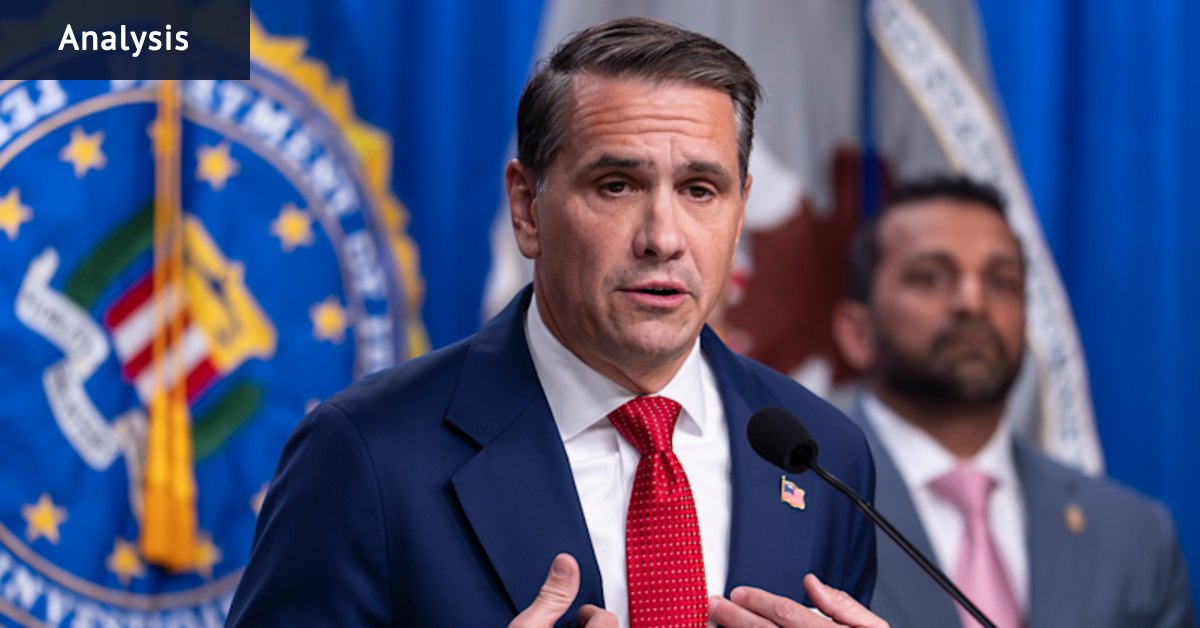
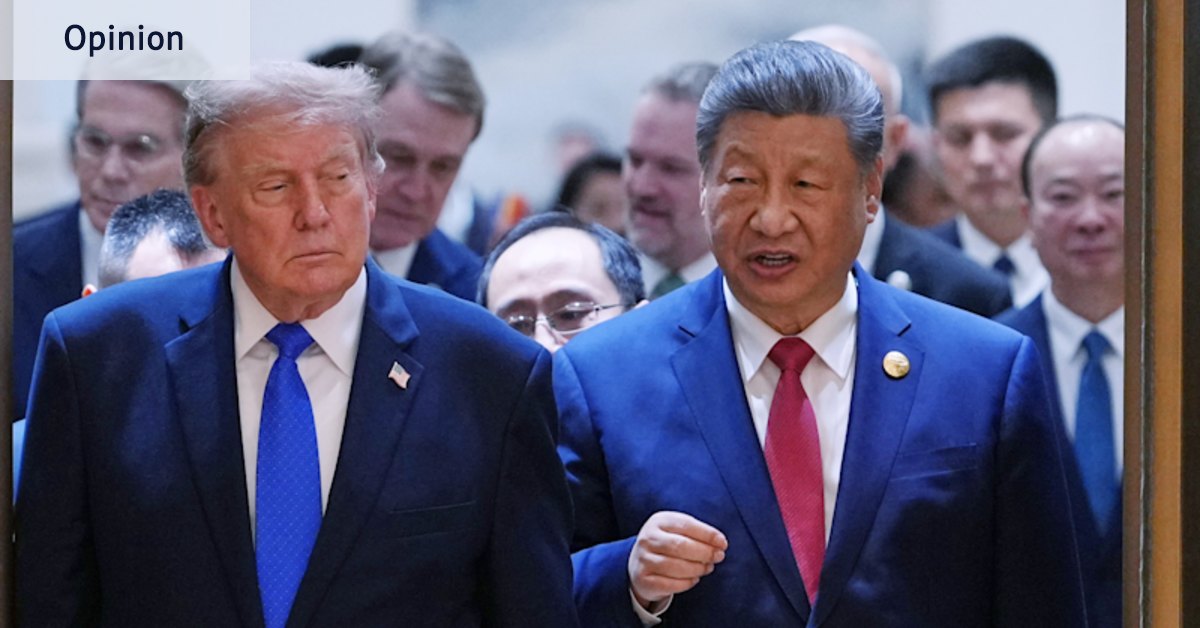
President Donald Trump’s move to compel Nvidia to reinstall Jensen Huang as its CEO was an extraordinary and dicey intervention into the inner workings of a major American company — one that could seemingly backfire on all involved.
It’s also a political gift to Democrats.
Democrats have been wrestling with how to prioritize an almost impossible number of investigative targets when they take over Congress in January. And there is growing evidence that Americans have a limited appetite for those investigations. Democrats have trodden uneasily, for example, around the prospect of impeaching Trump again .
But here, just three weeks after the 2026 midterm elections, Trump has handed them not just a tantalizing and immediate investigate target — but one that many Republicans seem just as eager to probe.
It also looks as though the whole controversy might further splinter the GOP at a really inopportune time for the party.
Among the biggest questions: Why and how Nvidia’s board of directors reinstalled Huang as CEO on Monday morning amid pressure from Trump. And why they did so despite ongoing questions about prohibited Nvidia chips finding their way into the hands of the Chinese, and Huang’s affair with a woman who US officials feared could be working with Chinese intelligence.
Despite Trump’s assurance in a CNBC interview on Monday that Republicans would support Huang being reinstalled, there has been precious little evidence of that.
In fact, many prominent Republicans have been rather unsparing .
Arkansas Sen. Tom Cotton, the top Republican on the Senate Intelligence Committee, said that the “controversy with Nvidia and Megaspeed is just the tip of the iceberg, and it’s not resolved because Jensen Huang has his job back.”
Cotton pledged to investigate the matter and pass related legislation “one way or the other.”
Sen. Kevin Cramer of North Dakota added: “The legal and reputational risk of hiring a CEO who may very well be convicted in the United States or other nations of violating espionage and export control laws is now born by the board of Nvidia, but the national security risk is passed along to the United States military and its citizens.”
Other Republicans called Huang’s reinstatement a “mistake,” while leaders of key committees pledged to investigate.
Few Republicans had harsh words specifically for Trump and the role he played — in keeping with the GOP’s general tendency to dance around criticizing the president directly — but the statements served notice that they won’t let the issue lie.
And that’s really helpful for Democrats.
Almost none of their other investigative targets have this kind of bipartisan buy in.
Republicans have expressed the occasional concern about the Trump administration’s boat strikes on alleged drug traffickers being extrajudicial, for instance. And they’ve been uneasy about Trump’s White House ballroom project, legal retribution campaign, the Epstein files and the Iran war.
But the party has never shown this same fervor to get to the bottom of things.
And that’s because this is an issue that obscures partisan lines for many of these Republicans.
Many of them are the kinds of China hawks that Trump once professed to be. And that makes it much more difficult for them to just let this one be.
All of which is a recipe for major GOP divides between those China hawks and the MAGA true-believes.
And that’s about the last thing the GOP needs after an election that proved how splintered and unenthusiastic the MAGA coalition already is.
If there is a drawback to making Huang and Nvidia a focus of congressional investigations, it’s that it’s difficult to explain complex issues of AI, chips, export blacklists and whether a CEO like him might be compromised.
There also might never be hard and fast conclusions that everyone will agree upon. Intelligence is often murky.
But other than that, it’s a great target. This involves, after all:
The appeal of investigating an affair with a possible Chinese intelligence asset speaks for itself. This is the stuff that political thrillers and spy novels are made of.
But beyond that, Trump used the bully pulpit of the presidency to get a close, powerful ally who donated $25 million to Trump’s ballroom reinstated as CEO. It’s a story about the elites rigging things for themselves.
Trump has also repeatedly traded Nvidia stock over the last two years — to the tune of tens of millions of dollars , CNBC has reported. (The White House has denied that Trump has any control over his investment accounts, saying that the portfolio is independently managed by “third-party financial institutions.”)
Democrats have quickly leapt to cast the arrangement as a corrupt bargain .
And the CNN Voter Poll of the midterms reinforced there’s an appetite for that narrative; it showed more voters said government corruption was a “crucial” factor in their vote even more than cost of living issues.
And lastly, this narrative involves a highly convenient foil: the Chinese government. The GOP has spent years building up the Chinese Communist Party as boogeyman, and now that could be a problem for them if they don’t take action.
A CNN poll in September showed just 4% of Americans felt China was an “ally,” while three-quarters said it was either “unfriendly” (44%) or an “enemy” (32%).
Russia’s numbers were worse, but Americans have generally viewed China as a more formidable foe. Gallup polling in 2023 and 2024 showed 41%-50% of Americans regarded China as the United States’ greatest enemy, compared to 26%-32% for Russia.
In other words, there are plenty of reasons to believe Americans’ eyeballs will remain fixed on investigations related to the Nvidia scandal — and plenty of people who seem eager to conduct those investigations, too.