Topic: State and Territory Elections
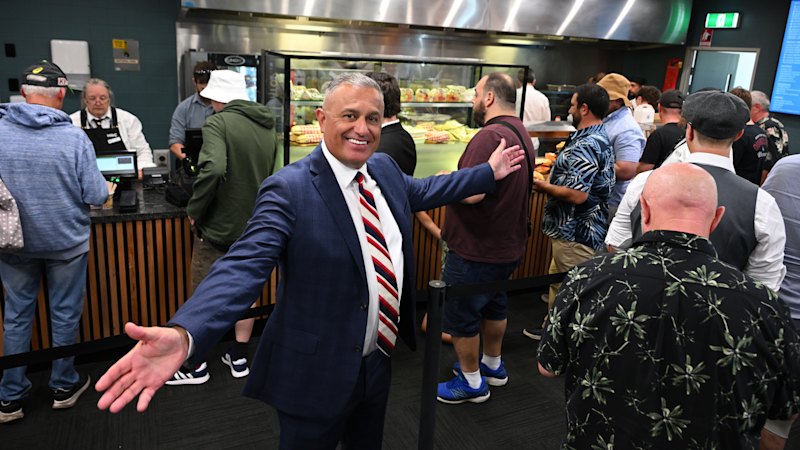
The Legislative Council operates much like the federal Senate. ( AAP: Diego Fedele )
The 88 electorates in Victoria's lower house always get more attention during election campaigns, because those are the races that will determine who governs the state for the next four years.
But changes to the state's electoral system and current opinion polling mean the powerful upper house is set for a massive shake-up this year.
Expect to see a huge number of new faces on the red benches of the Legislative Council and a lot of current members defeated at the ballot box.
Voters will also need to change the way they vote, and number at least five boxes rather than just one as they could previously.
Here is everything you need to know about the Legislative Council election, and how to ensure your vote counts.
The Legislative Council operates much like the federal Senate, as a so-called "house of review".
It can't bring down a government by blocking its budget, but every bill has to pass through the upper house before it can become a law, and it is rare for a government to have sole control of the chamber.
Unless the polls are very, very wrong, that will be the case this election too, and so the next government is going to have to negotiate its legislation through a divided chamber.
There are 40 members, with five of them elected in each of the eight upper house regions. Five of the regions are in Melbourne, and the other three primarily cover regional Victoria.
In the final sitting weeks of this year, the government passed legislation that will dramatically change how upper house elections are counted, and winners are determined.
Victoria was the last state in Australia still using group voting tickets, but these have now been abolished.
This was the system that saw the vast majority of voters handing the decision about where their preferences flowed in the upper house to the party they gave their first preference too.
Parties lodged group voting tickets that determined where your vote went if they got excluded, and over many elections we saw micro-parties register and team up to take advantage of this system and harvest preferences.
The parliament of Victoria in Melbourne in June 2026. ( ABC News: Danielle Bonica )
This harvesting saw MLCs elected to parliament like Rob Barton of the Transport Matters Party, who won a seat in 2018 after polling just 0.6 per cent.
It is hard to believe he would have been elected if voters had chosen their own preferences.
With group voting tickets gone, voters are in full control of where their ballot flows, and candidates will be much less likely to be elected from minuscule primary votes.
It means most of the current non-Greens crossbenchers will likely struggle to retain their seats, including Georgie Purcell from the Animal Justice Party and David Limbrick from the Libertarian Party.
The Animal Justice Party's Georgie Purcell. ( Supplied )
Instead of just voting '1' for a single party above the line, you should number at least five parties above the line or five candidates below the line.
You can number as many boxes as you like beyond that, but you should keep your numbering either solely above the line or solely below the line.
This is very similar to the same requirement in a Senate election, except that in federal elections you are instructed to number at least six boxes above the line.
With One Nation currently polling around 10 times higher than its 2022 upper house result statewide, expect the party to gain significant influence regardless of what happens in the Legislative Assembly.
One Nation's only current Legislative Councillor Rikkie-Lee Tyrrell is likely to be re-elected, and she should be joined by a member from each of the other seven regions as well.
One Nation's Rickie-Lee Tyrell is likely to be re-elected. ( Supplied )
There are some regions where One Nation could be in contention to win two of the five seats.
Some of these gains will come at the expense of current crossbench parties, but Labor also seems likely to lose some ground in the upper house this year.
Four years ago, Labor won two Legislative Council seats in every region except Northern Victoria.
But this year, several of those seats appear at risk, and we have seen a number of Labor MLCs shifting to contest new regions this year to improve their chances of re-election.
The Liberals will be hoping to find some gains in regions like Northern Metropolitan or South-Eastern Metropolitan, while the Greens will be hoping to build on the four seats they won last election, including in Melbourne's western and south-eastern suburbs.
Beyond those four parties, there are very few candidates with a real chance of election.
It means that if, as is now widely expected, the Coalition led by Jess Wilson ends up forming government, it is very likely that the next government will have two or three different ways to get legislation passed, by working with Labor, One Nation, or the Greens.
Counting for the upper house regions starts on election night, but it will be slower to report than the lower house.
The Legislative Assembly is counted first because that's where government is formed, and the upper house ballots also take longer to count because they are larger and more complicated.
We should get a sense of how parties have performed on election night, and within a day or two we'll likely know who the winners are in most seats.
But the winners of the fifth and final seat in each region could be much harder to determine.
We may be waiting a couple of weeks for the distribution of preferences to occur in some or all of those final eight positions.