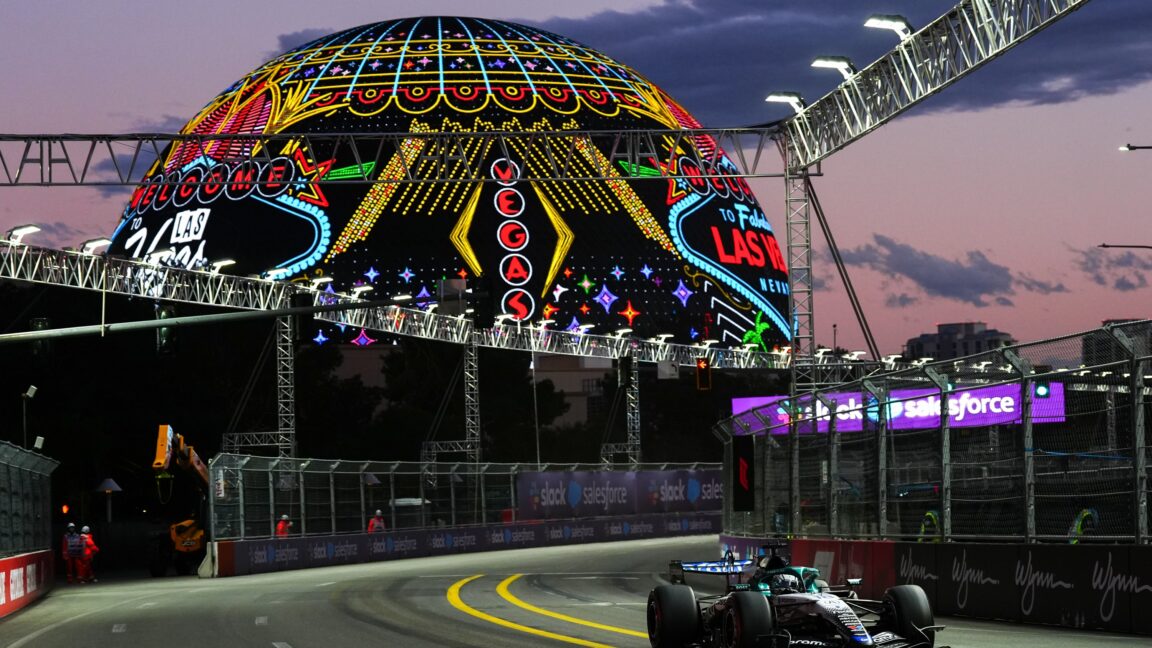
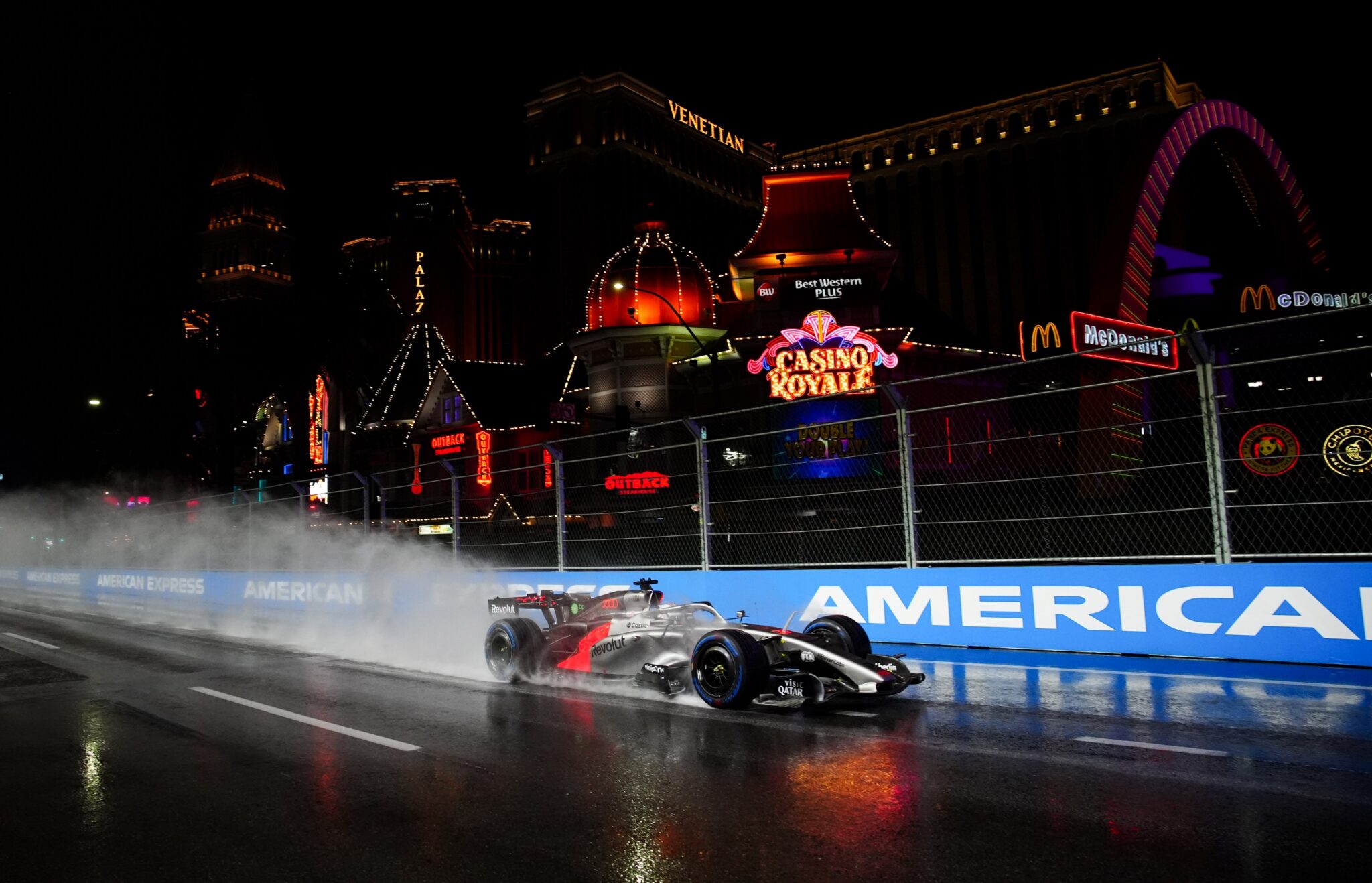
Las Vegas welcomed Formula 1 to its streets this past weekend. And for the first time since the event’s inception in 2023 , the Grand Prix delivered on a long-promised spectacle. The racing was closer to an IndyCar oval race than anything F1 fans will have seen since slipstreaming was the order of the day at places like Monza and Hockenheim, back when humans were still landing on the Moon and downforce had yet to fundamentally change racing.
The Vegas street circuit—the one that looks like an upside-down pig—is an extreme outlier on the calendar. It has plenty of long straights, so this year’s cars still suffer from energy starvation throughout the lap, as the inadequate size of their lithium-ion hybrid batteries means they become depleted very quickly , leaving the cars on just over half power with their V6 engines operating without the benefit of the hybrid’s electric motor.
But the 17 turns are mostly all low speed, so there’s no risk of seeing the cars driving demoralizingly slowly through corners that are supposed to test one’s mettle .
And because it takes place at night, in the desert, in November, it’s cold— much, much colder than anywhere else the sport will visit all year . This coming weekend in the Middle East, track temperatures may well exceed 122° F (50° C ); on Saturday night in Nevada the track was a mere 59° F (15° C). Combined with the concrete streets, that spells low grip, but there is an added benefit—virtually no tire wear or overheating.
And finally, there’s the slipstream. This was far more powerful than in years past, thanks to the new aerodynamic regulations . We saw this play out in qualifying, which took place on Friday night when Mercedes’ Kimi Antonelli snatched pole position by being the last man on track and benefiting from all the cars in front of him each clearing the air out of his way. Conversely, the Ferrari duo of Lewis Hamilton and Charles Leclerc had a torrid time by not working together—a preview for the following night, as we’ll see…