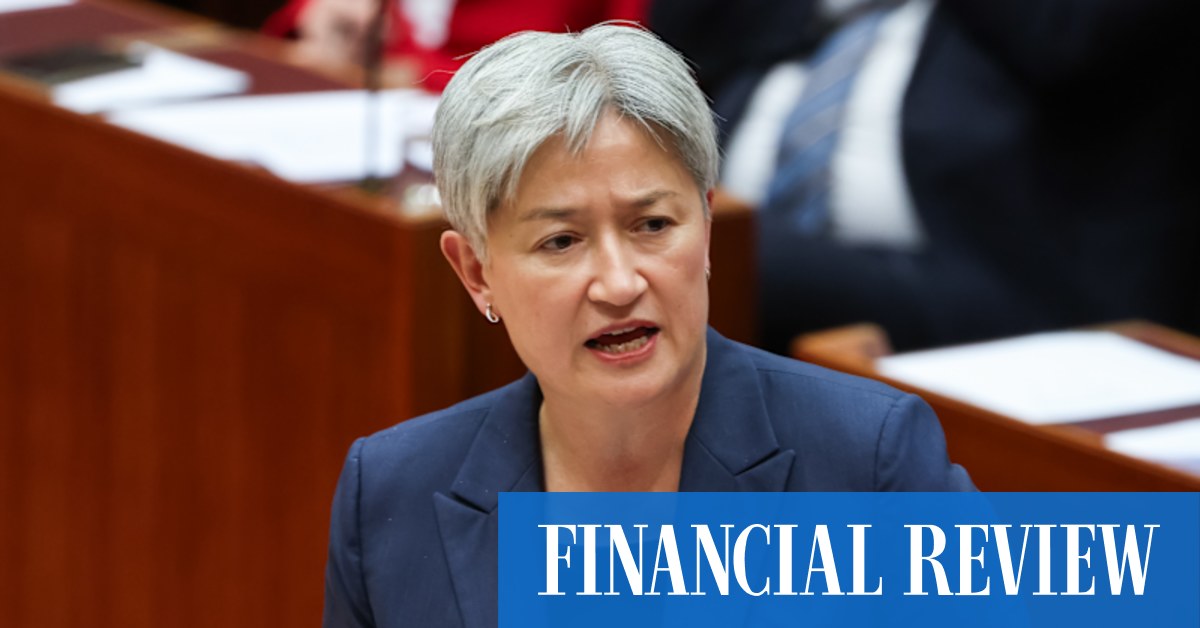
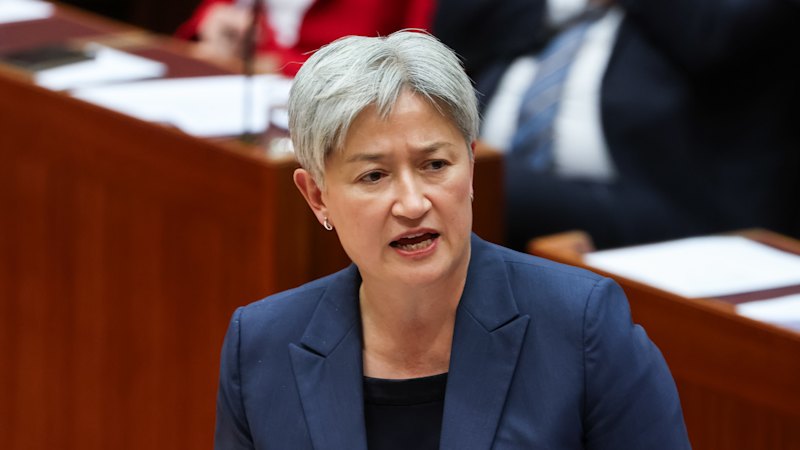
Penny Wong says growing competition between the US and China is making the world more dangerous. ( ABC News: Matt Roberts )
Foreign Minister Penny Wong will warn that rivalry between the United States and China is making the world less stable and increasing the risk of conflict.
She says Australia must build stronger ties with other countries to protect its independence and influence decisions made by global powers.
Senator Wong will deliver her major foreign policy address to the Senate on Tuesday.
The United States and China are increasingly willing to wield their power without regard for the rules that have helped prevent major conflict for decades, Foreign Minister Penny Wong will warn.
In a stark assessment of the world order, Senator Wong will use a major foreign policy speech on Tuesday to say international institutions are increasingly paralysed by tensions between powerful nations, weakening their ability to resolve or prevent disputes.
"Rules without power cannot secure peace. Power without rules cannot sustain it," she will say in an address to the Senate.
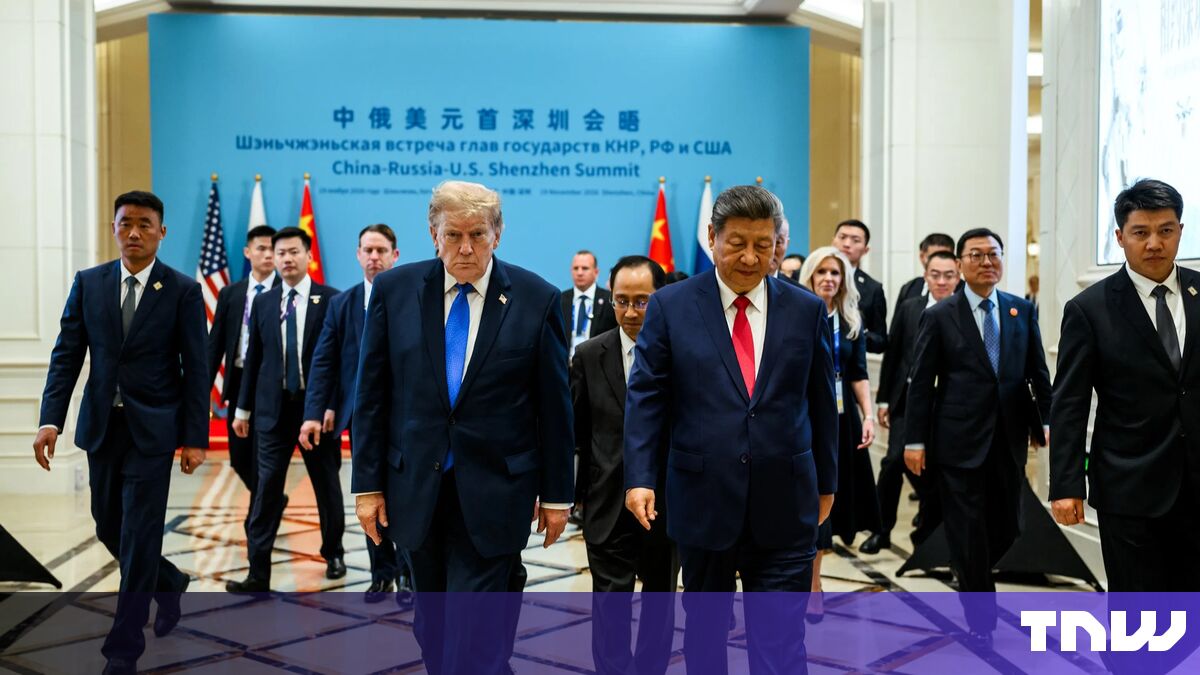
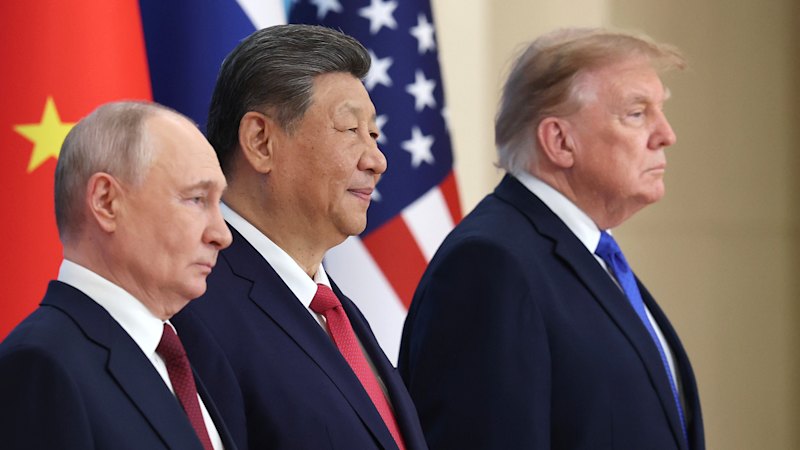
Xi Jinping, Donald Trump and Vladimir Putin emerged from their historic talks in Shenzhen with broad statements but few concrete details about how those ambitions would be achieved. ( The Canadian Press: Adrian Wyld via AP )
The warning comes days after US President Donald Trump, Chinese President Xi Jinping and Russian President Vladimir Putin held landmark talks in China, emerging with a joint declaration that did not refer to the Ukraine invasion or the Iran war.
Meanwhile, the Albanese government has been focused on strengthening Australia's influence in the Indo-Pacific, deepening security and economic ties with neighbouring countries while maintaining the US alliance and managing its relationship with China.
The diplomatic push continues this week with Prime Minister Anthony Albanese expected to host Singapore's prime minister, Lawrence Wong, and Solomon Islands Prime Minister Matthew Wale in Canberra, following a series of summits with world leaders across Asia.
In her speech on Tuesday, Senator Wong will say Beijing is seeking to reshape the world in its own interests, while Washington is redefining its role and what it expects of allies, leaving countries like Australia facing greater pressure to protect their sovereignty.
"The great powers, the United States and China, are competing across every domain, with less regard for the guardrails that once kept competition from tipping into conflict," she will say.
Senator Wong will say the competition between the US and China remains the "strategic dynamic of our time," particularly in Australia's region.
She will argue China is "intensifying" its efforts to "remake the multilateral system" and increasingly militarising disputed issues.
"China is undertaking the largest military build-up by any country since the Second World War, without the transparency and reassurance the region expects," she will say.
Senator Wong will also note the US National Security Strategy released this year specifically says the "days of the United States propping up the entire world order like Atlas are over".
In the wake of the midterm elections, which delivered a resounding loss to the Republican Party and Mr Trump's MAGA movement, Senator Wong will say the direction of US policy is "still being contested at home in ways that will affect the entire world".
Senator Wong will say Australia plans to continue to "clearly" state its views on areas of disagreement with China.
"We believe a stable relationship, in which differences can be managed, is better for Australia, better for China and better for our region," she will say.
Senator Wong will argue that while the US and China remain the dominant global powers, countries like Australia, India, Indonesia, Japan and South Korea are gaining greater economic, diplomatic and military influence.
She will say the number of mid-sized powers has nearly doubled since the end of the Cold War, while the US and China's combined share of global GDP has largely plateaued over the past decade.
But Senator Wong will also warn growing international instability has made it harder for smaller nations to protect their independence, let alone expand their influence.
"It is increasingly costly for middle powers and smaller nations to simply hold the strategic space they have, let alone expand it," she will say.
Senator Wong will argue Australia must deepen partnerships with like-minded countries to ensure the world's superpowers do not dictate its interests.
"Amplified middle power diplomacy characterises our approach, bringing together countries that can achieve more in partnership than any one of us could achieve alone," she will say.
In addition to working with other countries in the region and traditional allies in Europe, Senator Wong will say Australia is deepening its relationship with nations in Africa and Latin America.
Senator Wong will pitch Australia as a "strong defender" of multilateralism and say the government cannot "pretend" global and regional institutions are "working as they should".
"The UN is facing serious financial pressures. Decision-making is too often paralysed by great power dynamics," she will say.
The foreign minister will argue the breakdown in international cooperation has made it harder to address global challenges, with countries increasingly unable to reach consensus.
"And when the capacity to act collectively is weakened, every other challenge becomes harder to manage," she will say.
But Senator Wong will reject abandoning the multilateral system, instead calling for reform, including the UN Security Council.
"Middle powers would not help themselves by walking away from multilateralism because it's imperfect," she will say.
"It would leave a vacuum, and vacuums are rarely filled by peace."