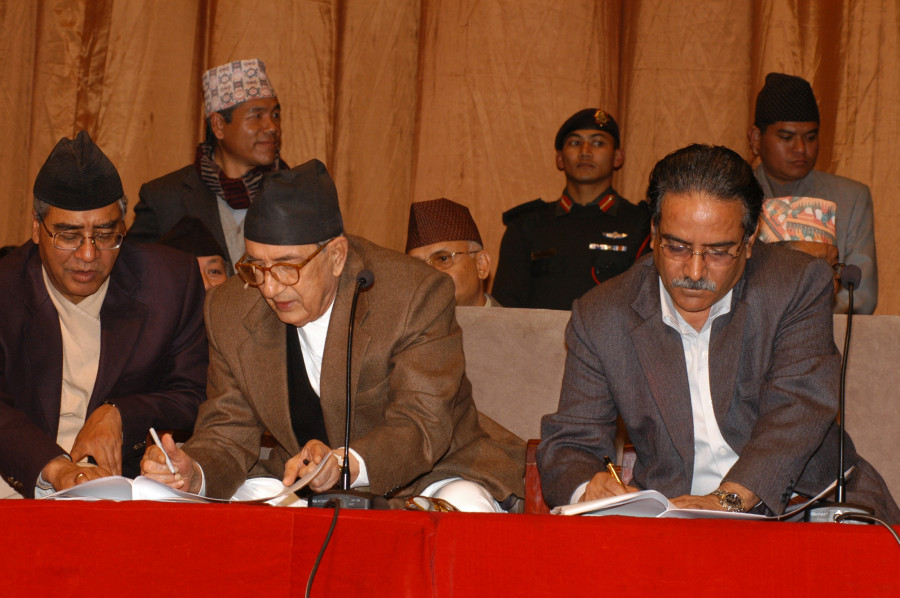
Saturday marked 20 years since the signing of the Comprehensive Peace Accord, which formally ended Nepal’s decade-long insurgency and paved the way for the Maoists’ entry into mainstream politics. The agreement laid the foundation for a peaceful political transition, envisioning the integration of Maoist combatants into the security forces, the promulgation of a new constitution through a Constituent Assembly and justice for thousands of victims of atrocities committed by both the state and the Maoist insurgents. While the first two objectives were largely achieved, the third remains unfinished.
The anniversary is not just a celebration of Nepal’s peaceful transition from conflict. It is also a reminder of how the victims of the insurgency continue to be denied justice, even as the country has undergone successive political changes. Successive governments, including those of the old political parties, have failed to prioritise transitional justice. The Rastriya Swatantra Party, which came to power promising to break from the political establishment, has so far offered little hope that it intends to do things differently.
Apart from deciding to provide compensation to some victims based on recommendations from the National Human Rights Commission, the government has taken no meaningful steps to address their concerns. Its handling of the transitional justice process has been particularly disappointing. In the first week of May, the Balendra Shah administration, through an ordinance, relieved hundreds of officials from universities, commissions and other political positions. Among them were the 10 office-bearers of the Truth and Reconciliation Commission and the Commission of Investigation on Enforced Disappeared Persons, five from each mechanism. Six months later, the government has yet to appoint their replacements, nor has it initiated a meaningful consultation process on how to move the process forward.
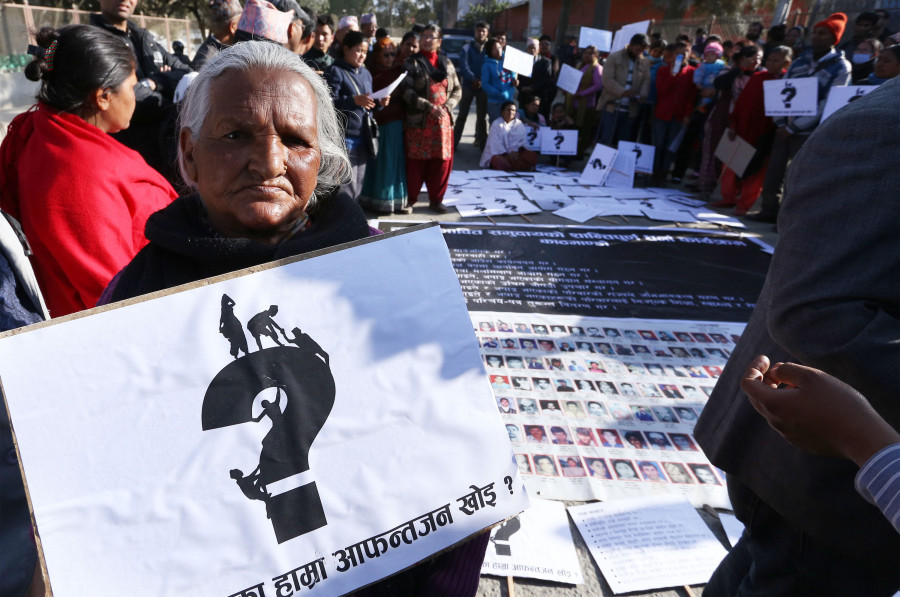
Victims have been especially frustrated by the government's refusal to engage with them. Despite repeated calls for dialogue, their concerns have been ignored. A group of victims even submitted a written request seeking a meeting with Law and Justice Minister Sobita Gautam, but received no response. With no response from the government, they have also staged protests time and again. Yet the protests have failed to prompt the government to reconsider its approach.
Transitional justice cannot be pursued through bureaucratic decisions made behind closed doors. The process must be victim-centred, transparent and consultative. The appointment of commissioners, the amendment or implementation of relevant laws, and decisions on reparations, prosecutions and truth-seeking must all be guided by the concerns of those who suffered during the conflict. The victims are not obstacles to the process; they are its central stakeholders.
The RSP has an opportunity to demonstrate that it is genuinely different from the parties that have repeatedly failed to deliver justice. With no direct political baggage from the insurgency, it should have the political space to address the issue with greater urgency and credibility. But that opportunity will mean little if it continues to ignore victims or treats transitional justice as an issue that can be postponed indefinitely.
Twenty years after the peace accord, Nepal cannot claim to have completed its transition when thousands of victims continue to wait for truth, justice and reparations. Peace was never meant to be merely the absence of conflict. It was also a promise that those who suffered would not be forgotten. The government must honour that promise, beginning by listening to victims and ensuring that every step towards justice is transparent, inclusive and credible. It must immediately initiate the process of appointing officials to fill vacant positions through transparent and credible procedures, while ensuring that the commissions have adequate resources to fulfil their mandates.