



You have reached your maximum number of saved items.
Remove items from your saved list to add more.
You've used all of your gift articles. 3 more will become available on the 1st of every month.
When Ian “Molly” Meldrum talked about the small Mallee town of Quambatook, in Victoria’s north-west, where he grew up in the 1950s, his memories started close to the ground: the smell of cooch grass in the summer heat, endless swaying fields of wheat waiting for harvest. Soon, however, his gaze would rise. As a boy, Meldrum and his friends played a game at dusk, lying on their backs and counting aloud each star that appeared in the pristine night sky.
No one persevered longer than a young Ian Meldrum – noting hundreds, sometimes thousands, points of light – and all along he yearned to be closer to the celestial bodies. “There must be more to life,” Meldrum remembered thinking. “If only I could push myself off this planet and discover what would happen.”
In his unique, endearing way, he ended up doing just that. Meldrum, who died on Monday , got so far off this planet that he went into permanent orbit. A music journalist, record producer, and broadcaster, Meldrum was an iconic national figure who became Australia’s conduit to successive generations of chart-topping musicians. He gave us Countdown , catchphrases such as “do yourself a favour”, and a welter of “Molly” stories.
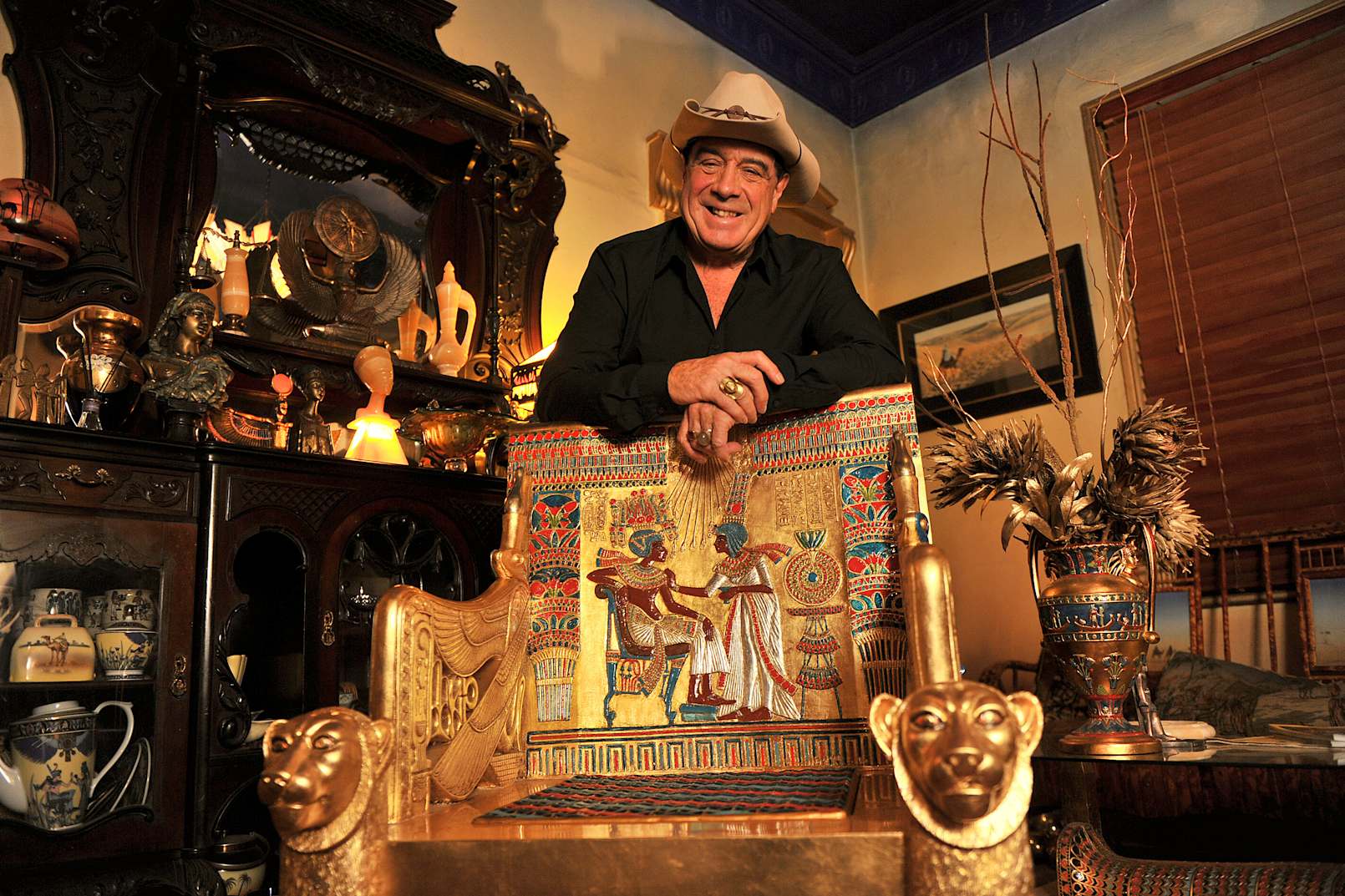
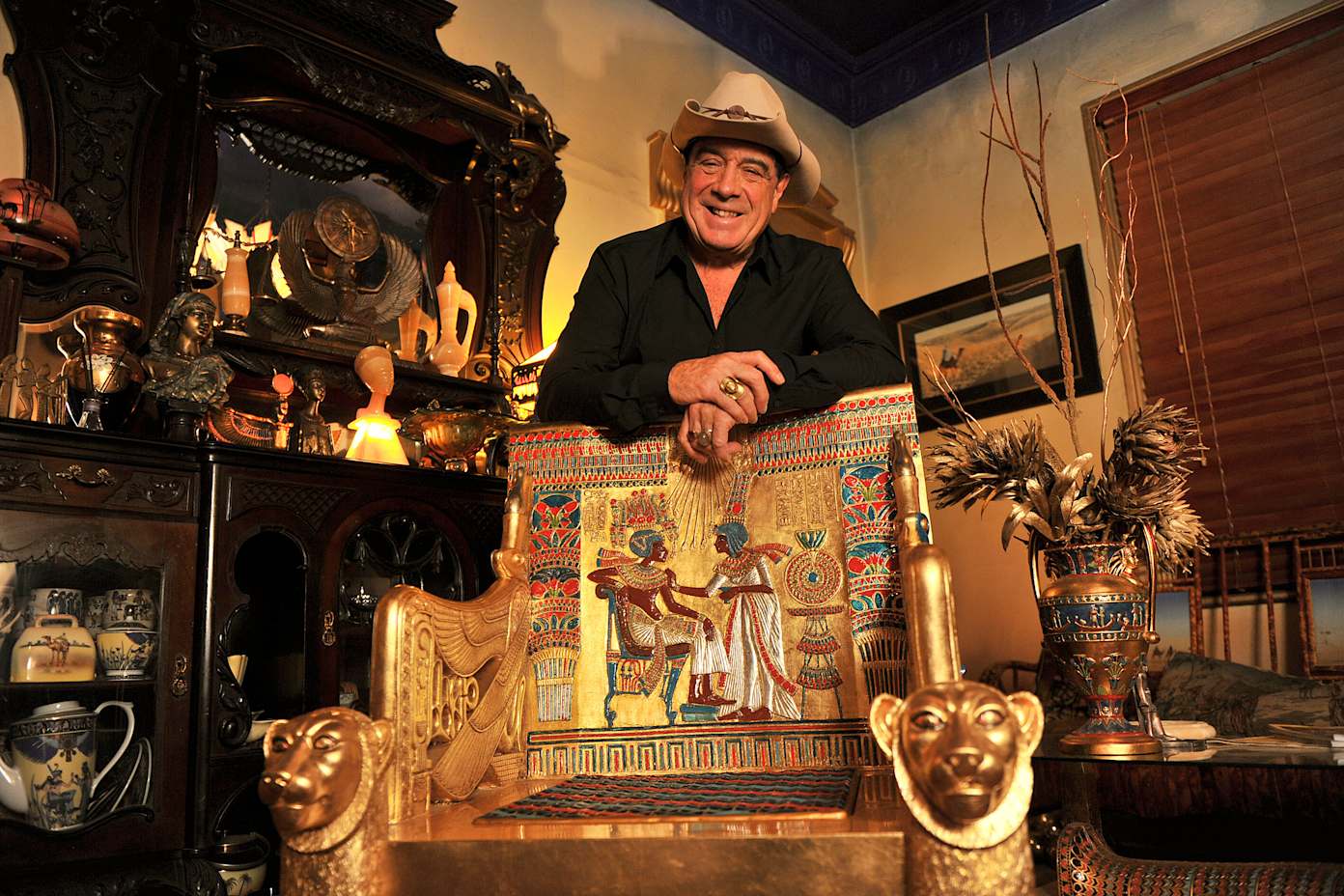
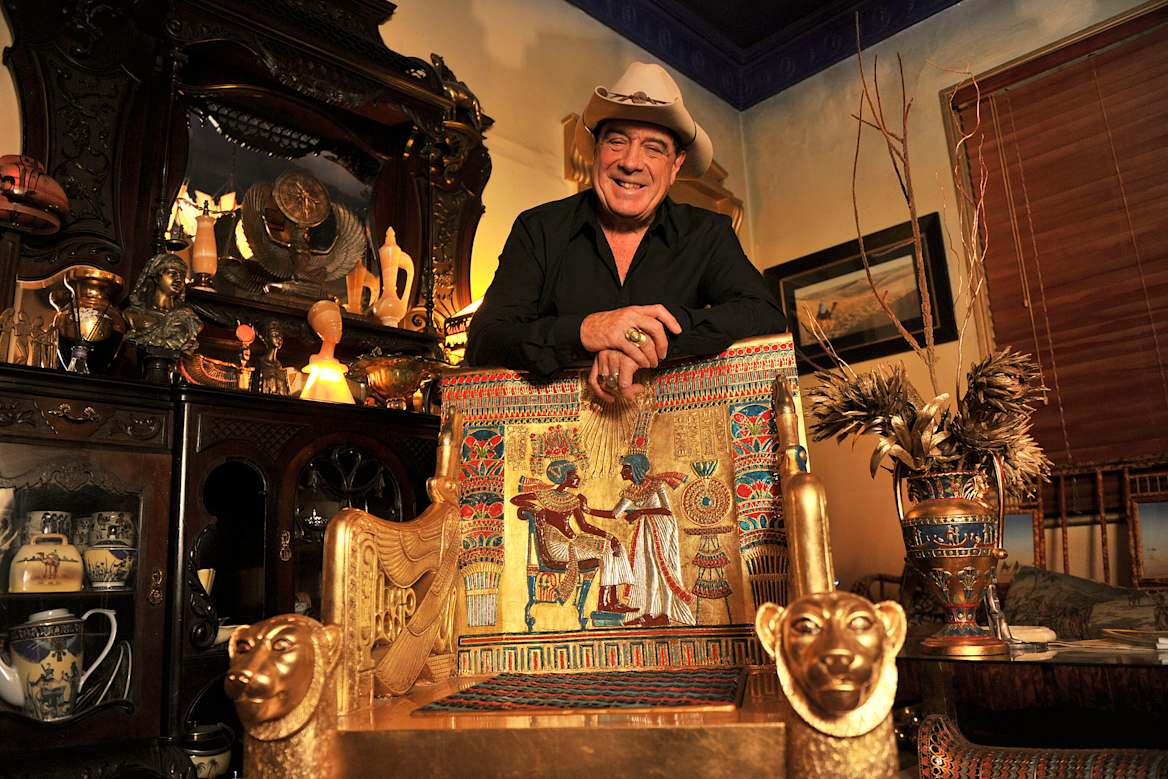
In November 2003, I spent several enjoyable afternoons watching Meldrum at work and then interviewing him, preparing a magazine profile that would never be written (the publishing company went bust). The location was Luxor, the house in inner city Richmond that Meldrum, a dedicated Egyptologist, had purchased in the early 1980s and turned into his base of operations.
Adobe was predominant, while statues of pharaohs dotted the corners of rooms. Luxor was a home, not a shrine to Meldrum’s career. The only piece of rock memorabilia that guests saw was a large, framed photograph of the Beatles – without hesitation Meldrum would credit John Lennon as his favourite songwriter of all time – inscribed with personal remarks and autographs by each of the Fab Four.
Although he could be coy about his age, with hindsight Meldrum had just turned 60. He was in great shape – the muscles on his arms had a healthy ripple to them, his skin was deeply tanned. He divided his time between Melbourne and Thailand, had regular DJ bookings and hosted Foxtel’s weekly music show The Drum . Shooting broadcast segments, he worked swiftly and with good humour. In between takes he would check on Ziggy, his beloved shih tzu-cross, or grab a cigarette.
Throughout the initial visit I sat to one side watching and discreetly taking notes. Whenever Meldrum walked by he smiled and nodded, not because he knew me but because everyone knew him. Meldrum made you feel welcome. He didn’t hold court. Only later, after we were introduced, did it emerge that Meldrum thought I was a specialist technician called in to repair his plasma screen television. He was apologetic, but I was secretly delighted. I now had my very own Molly story.
There were so many Molly stories that Meldrum would sometimes be surprised when a stranger would introduce themselves and tell him one he’d never heard. “Were you there when that happened?” he would wonder to himself.
Some of the stories Meldrum told could be star-studded. He casually uttered, by way of illustrating an answer, the stupendous phrase “Elton, Madonna, Bono” to me at one point. But Meldrum would sometimes use tales about his encounters with the famous to subtly comment on his life.
At one point during our wide-ranging discussions – Meldrum, like many professional interviewers, was a very tolerant interview subject – he mentioned how he was obsessed by actor Russell Crowe’s ability to inhabit a role. The pair had known each other since the early 1990s and when they had spoken recently, Meldrum asked Crowe how long a role stayed with him after the filming ceased.
This fascinated Ian Meldrum because he’s been playing the role of Molly Meldrum for much of his life. Molly – a nickname he earned from a Melbourne DJ in the ’60s that was partly a play on the Mallee – worked in front of the cameras, while Ian would wander down to his local supermarket to do the shopping and pick up some afternoon tea for his film crew and guests.
“If Molly Meldrum became a real obstacle to being Ian Meldrum, I would give it up,” he told me. “I couldn’t handle that, I enjoy talking to people too much.”
Ian and Molly were occasionally on the outs with each other, particularly when Countdown finished in 1987 and Ian thought Molly was self-opinionated and an inveterate name-dropper. The public didn’t see Ian that often. He was a lifelong cricket fanatic who prided himself on seeing every ball at an MCG Test match, a member of Mensa, and a visitor to Egyptian archaeological digs – with a working grasp of Arabic – 27 times between 1969 and 1990.
Also: Ian didn’t say “um” near as often as Molly did.
Meldrum didn’t appear overly concerned with how the public perceived him. He put real stock in the opinions of family and friends. Loyalty was a crucial concept to him. Meldrum had eventually come out as a gay man by simply being himself in the public eye, and he was subsequently open with me about his drinking. He steadily consumed glasses of vodka and orange juice during our afternoon sessions.
“I love a drink,” he noted, seeking neither sympathy nor delivering bravado. Occasionally, it descended into “a bender” at a club, he noted, which could go on long into the night and would only end when he, and no one else, decided it was done. Then it was home to Luxor, to sleep, swim, sauna, and self-reflect.
Meldrum was larger than life but also quite open. He firmly believed he was still a “country boy”, a bystander to the mythology and shenanigans. Often he would use a story he was telling to engage whoever else was in the room with us, whether it was his longtime cleaning lady and friend, Jenny, or his then 17-year-old adopted son, Morgan Scholes. If they got caught up in the narrative, Meldrum was delighted. If they chipped in, he would add even more detail.
If there was more to life, Ian “Molly” Meldrum always wanted to share it.