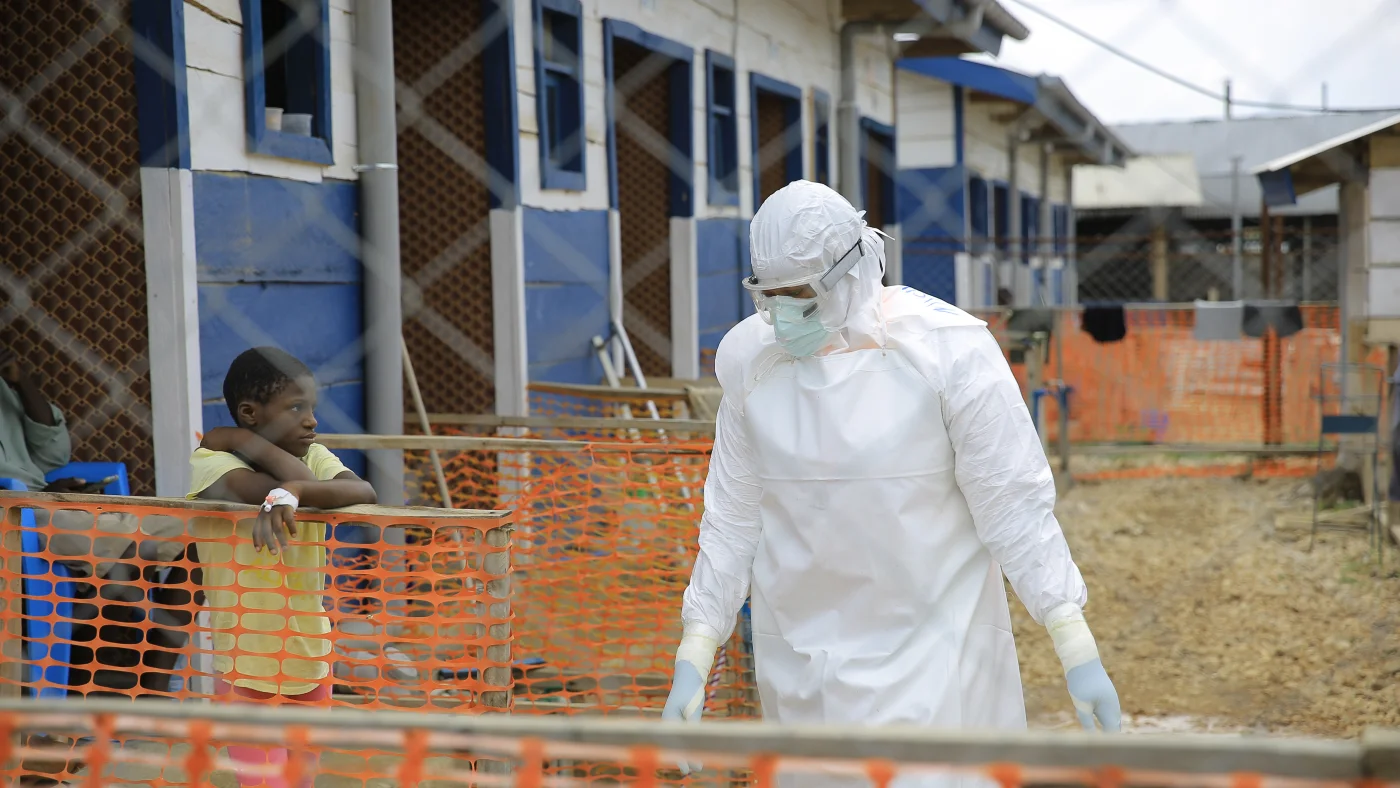
The World Health Organization (WHO) has warned that Africa faced a "complex" Ebola outbreak after the virus crossed from East Africa to Nigeria, marking the first case in the west of the continent.
Earlier this week, Nigeria announced it has an imported case of the Bundibugyo strain, currently causing a major Ebola outbreak in Democratic Republic of the Congo (DRC). It was detected in the wife of a diplomat who had traveled from Uganda to the Nigerian capital Abuja.
Health minister Muhammad Ali Pate said the woman's contacts had been tracked down since her arrival in Nigeria earlier this month, and that an undisclosed number of "high risk" individuals "have been quarantined, fully, in a facility".
Nigeria, the continent's most populous nation (around 242 million people), is the fourth African country affected by the outbreak. Kenya, in the east, has reported nine cases since 6 October. The country has been free of Ebola since 2014.
Your trusted source for staying up-to-date with the world around you. Get free daily news updates and analysis, straight to your inbox.
The outbreak began in DRC and has become the deadliest in the country's history, killing more than 4,000 people out of more than 9,000 confirmed cases since mid-May, according to health authorities.
It is caused by the Bundibugyo strain of the virus, for which there is still neither a vaccine nor a specific treatment.
"We are facing a more complex outbreak landscape," regional director for the WHO in Africa, Mohamed Janabi told an online media briefing.
The patient in Nigeria arrived in the capital Abuja on 3 October after being in Uganda since 16 September, the WHO representative in Nigeria Pavel Ursu said.
She flew to Abuja on an Ethiopian Airlines flight and transited through Addis Ababa, an emergency meeting of the Nigeria Centre for Disease Control and Prevention (NCDC) heard on Wednesday.
The woman is originally from Uganda but based in Abuja, Africa Centres for Disease Control and Prevention director general Jean Kaseya told the Agence France-Presse (AFP) news agency on Thursday.
He also said she did not go to DRC, as suggested earlier by Ugandan authorities, who have pushed back against new cases being linked to their country after being declared Ebola-free earlier this year.
Kaseya said officials are trying to piece together her travel history to establish where she could have been exposed, including the possibility that there might have been contact at the airport with Kenya's first victim, who also left Uganda on 3 October.
The Nigerian case has reignited memories of a widespread West African outbreak that struck several countries and killed more than 11,000 people between late 2013 and 2016.
Nigeria successfully held back that outbreak within its borders , resulting in only 19 infections and seven deaths — raising confidence the densely packed nation can respond effectively to new public health threats.
"It is contained, so far, the imported case. We have no evidence it has gone into the communities," Pate told a news conference in Abuja. "So our focus is on the contact tracing and ensuring that we know exactly where those contacts are."
But news of the high death rate out of DRC has some Nigerians worried.
Airport officials at the busy international airport in Lagos were all international inbound travellers on Friday.
"I'm scared because we have been hearing about the news, the way people are dying in the Congo," Patrick Akwongu, 61, who flew in from Italy with a layover in Addis Ababa told AFP.
But Bezalel Mfashingabo, 44, a Kenyan flying from Nairobi through Addis Ababa, wasn't too worried because the "infected" are in quarantine in his home country — and so "there is not much panic".
Ebola, which is transmitted through contact with bodily fluids and can cause severe internal and external bleeding and organ failure, has killed more than 15,000 people in Africa over the past 50 years.
In August, Uganda was declared officially Ebola-free by the WHO after recording 20 cases — almost all of them in people who had travelled from neighbouring DRC.
Uganda has pushed back against suggestions the patient in Nigeria might have contracted the virus in the country.
"It's preposterous to suggest that just because someone was holidaying in Uganda, which by the way has no cases of Ebola, is reason enough to drag us into a conversation about Ebola in Nigeria," Ugandan government spokesman Alan Kasujja told AFP.