Climate talks reached a standstill on Saturday night in Turkey as some countries mulled whether to force a showdown with Saudi Arabia and its allies over the global need to phase out fossil fuels.
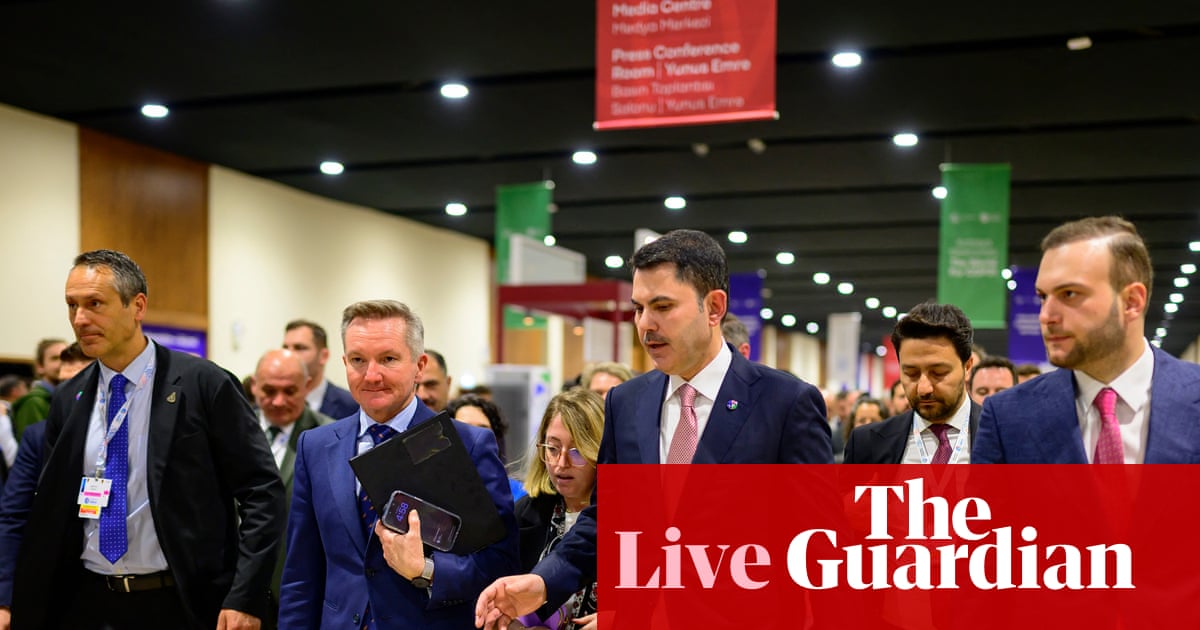
The joint presidencies of the Cop31 UN climate summit , Australia and Turkey, held meetings with scores of countries throughout Saturday, until late evening, as the fortnight-long talks overran without resolution, with countries and campaigners growing increasingly frustrated at the lack of progress.
The key sticking points concerned the insistence by a loose coalition of about 130 countries on including a reference to the “transition away from fossil fuels” in the final outcome of the talks, as well as demands by developing countries to bolster their rights to funding from the rich world, to help them adapt to the escalating impacts of the climate crisis.
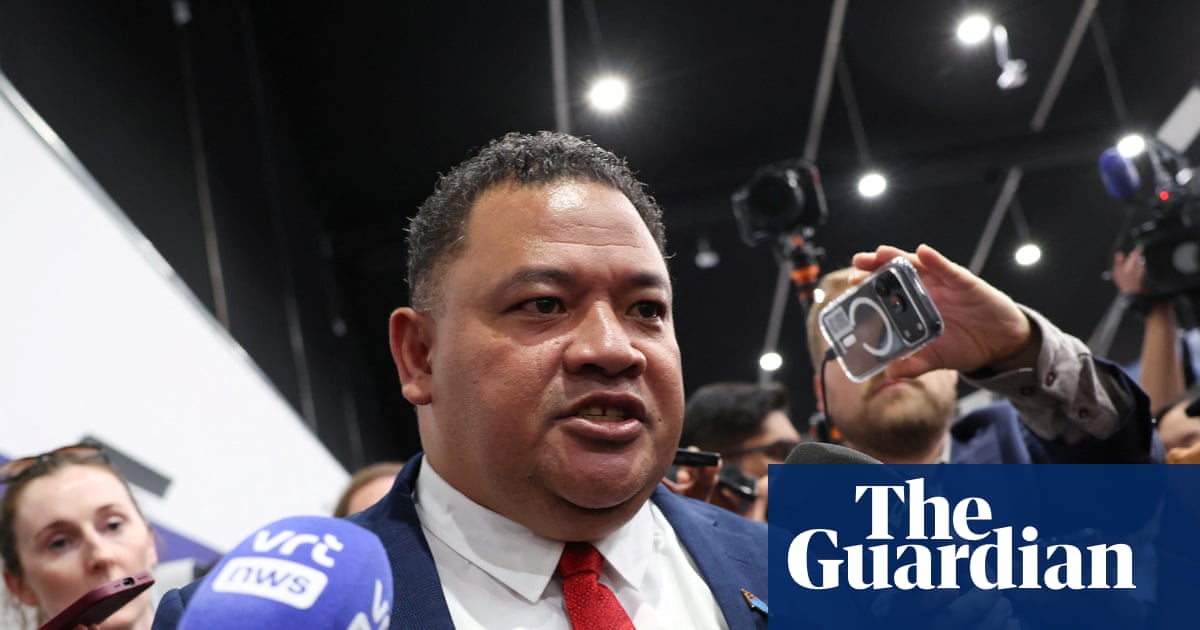
Maina Talia, climate minister for the low-lying Pacific island Tuvalu, said: “This [inclusion of a reference to fossil fuels] is a red line for us. We’re talking about the root cause of all this. [Without it] then we are wasting our time here.”
Mohamed Adow, director of the Power Shift Africa thinktank, said: “We came to Antalya needing progress on public climate finance, adaptation and fossil fuels. Instead we are fighting to stop governments retreating from promises they have already made. Rich countries have spend two weeks finding reasons not to deliver the [financial] support they promised. It feels like this meeting is unravelling.”
There were also strong disagreements over controversial “carbon capture and storage” (CCS) technology and a target to derive 35% of the world’s energy from electricity by 2035 . Saudi Arabia wants strong recommendations of CCS in the final outcome, known as a “cover decision”, from the talks, but other countries object, as this technology is seen by some as a way to perpetuate the fossil fuel industry. A compromise is possible, some suggested, if the role of CCS is downplayed and the push for electrification is strengthened.
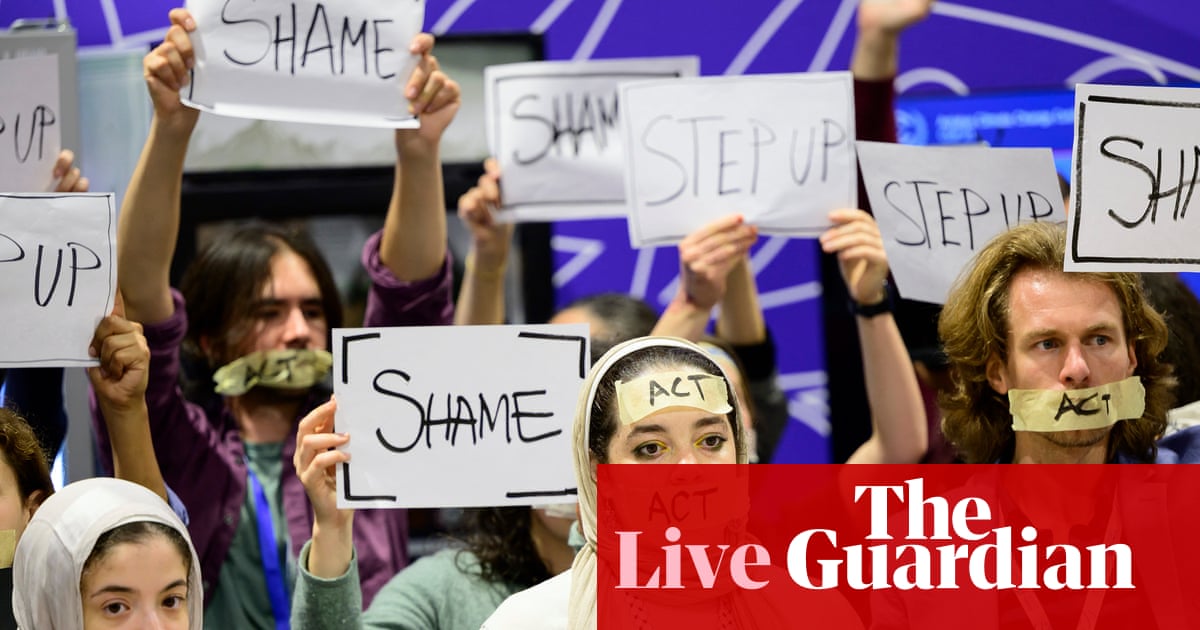
Campaigners laid the blame for the lack of progress on the fossil fuel industry, and the countries dependent on it, and on rich countries’ failure to deliver on promises of finance for the poor. “This must be the last time we allow fossil fuel interests, which are profiting so handsomely from the climate crisis, to hold us to ransom,” said Nick Dearden, director of the campaign group Global Justice Now. “It is abundantly clear by now that we will not be able to combat climate change as long as those who control the global economy can make money from coal, oil and gas.”
Harjeet Singh, global convenor of the Fill the Fund campaign, said: “You can’t ask developing countries to transform their economies while they’re drowning in disasters and debt. Whatever deal emerges in Antalya, the world should know why this Cop failed. It wasn’t a lack of solutions, it was a lack of money, and a lack of will from those who caused this crisis.”
The talks, which were scheduled to end on Friday evening, looked likely to continue into Sunday morning, with many delegates rescheduling their flights home. If enough delegates leave, the “conference of the parties” (Cop) may no longer meet the quorum required under the UN Framework Convention on Climate Change.
The “transition away from fossil fuels” was agreed at Cop28 in Dubai in 2023 , but Saudi Arabia and its allies prevented further progress on putting it into action. At last year’s Cop30 , the Brazilian hosts got round this by pledging to draft a global roadmap on the phaseout of fossil fuels.
This year, the resolution appeared in a first draft of the agreed outcome from these talks, but was excised from a revised draft published on Thursday . After further talks produced no progress, on Saturday evening, the EU, the UK, the world’s least developed countries, the small island states which are among the most vulnerable to the climate crisis, and many African countries, joined together to march to the presidency office and demand reinstatement of the reference .
This is the first Cop with a dual presidency, owing to a compromise forged last year after both Australia and Turkey bid to host. Claudio Angelo, of the Observatorio do Clima, said this was part of the problem. “It goes to show how a weak presidency, split bewteen two countries with little tradition in climate diplomacy, can be detrimental to a process already victimised by geopolitics,” he said.
One possible next step – which the Guardian understands to be under active consideration on Saturday night – could be to force an open meeting at which Saudi Arabia and any allies would be forced to publicly state their opposition to the stronger outcome that most other countries want.
This would be risky, as it could mean the collapse of the talks. But Bill Hare, chief executive of the Climate Analytics thinktank, and a Cop veteran, told the Guardian: “If the overwhelming number of countries here want a strong text, referencing the transition away from fossil fuels and so on, and Saudi Arabia is on its own, I think Saudi Arabia will probably not stand against the global consensus.”
The Guardian also understands that China and India, though not allied with the “progressive coalition” that includes the EU, the UK, the Alliance of Small Island States, the Least Developed Countries and others, numbering about 130 countries, are unlikely to stand against a deal.
Miatta Fahnbulleh, the UK’s energy minister, said: “We are working closely with partners to find a way through and secure an agreement that moves us forward. These are difficult negotiations, but discussions remain productive and there is a deal to be done.”