





You have reached your maximum number of saved items.
Remove items from your saved list to add more.
You've used all of your gift articles. 3 more will become available on the 1st of every month.
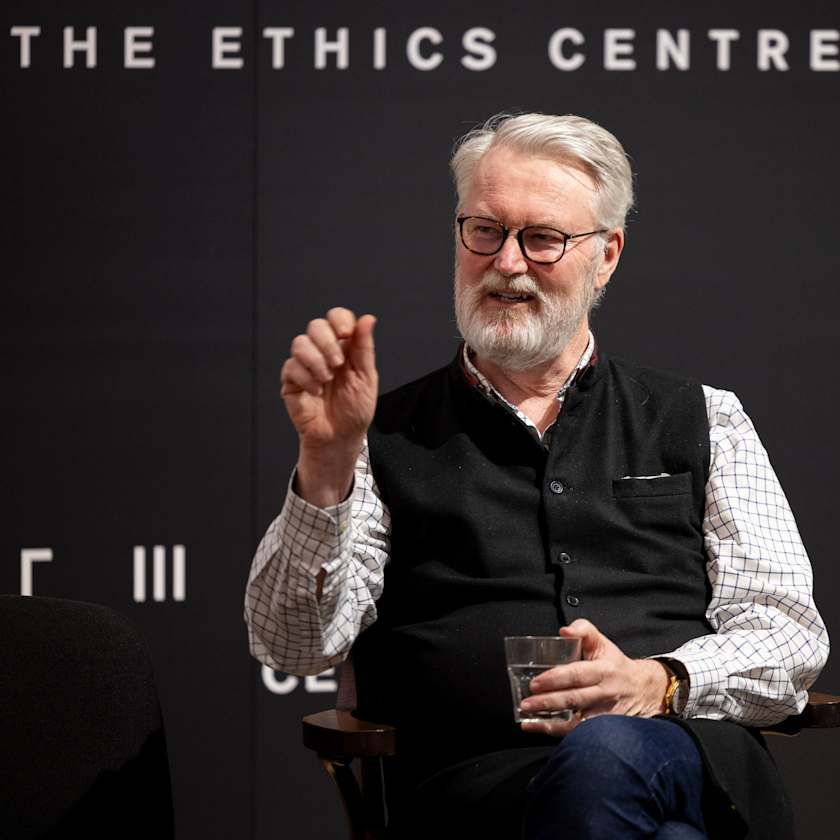
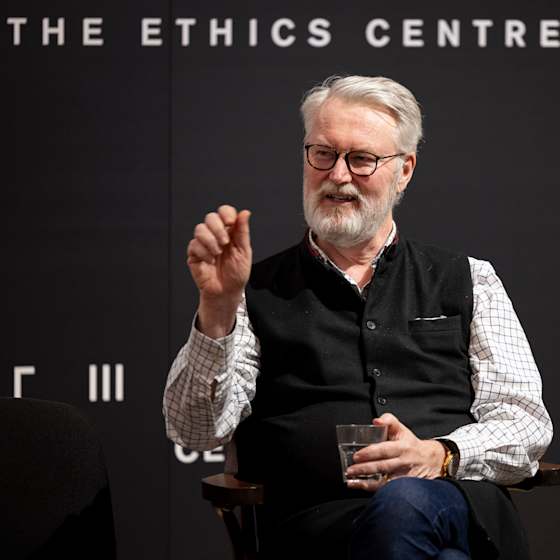
Simon Longstaff is the head of The Ethics Centre , which conducted a review into the culture of Australian cricket after the initial sandpaper scandal at Cape Town in 2018.
Fitz: I want to get to the cricket, Simon, but I think that as a matter of ethics, we should disclose that you and I are friends and were boarders together at Knox Grammar School in the 1970s, so know each other very well.
Fitz: But I don’t ever remember looking at you and thinking, “Now there’s a bloke who’s going to go on and lead the Ethics Centre and be a byword across Australia for integrity.”
SL: I’ve never pretended to be that! My feet are as much made of clay as anyone else’s.
Fitz: You will recall that the two major forces at Knox in the ’70s encouraging us to honesty were the Reverend Jim Donaldson and the disciplinarian Jock McConnell with the swishing cane? Did either of them make a big impact on you?
SL: Absolutely. I was occasionally – if unjustly – beaten with the cane.
Fitz: And did that help lead you to your current role?
SL: No, it was something far more profound that happened when I was seven. It lay in the death of my mother, because of her Roman Catholic beliefs. She felt she had to continue with a pregnancy, even after being told she and the baby would die if she didn’t terminate. She felt the child needed to be born and baptised to avoid (the now discredited state of) limbo, and so she went ahead with it. And a year and a day after giving birth, she did die, as predicted. But my brother Angus lived, and look … when you’re a seven-year-old and you wonder about how things like that can happen, it can get you thinking about the world, the way it works, and the way it should work.
Fitz: I … you … um … I’m very sorry to hear such a story. Moving on, you must have a good definition of ethics. Something from Edmund Burke, perhaps?
SL: Much older. It goes back to Socrates. It’s derived from the idea that the unexamined life is not worth living . So, unlike simple morality – where you can apply values and principles as a matter of habit – to live an ethical life is to live a life that’s examined, a life of reflective practice.
Fitz: OK, so let us then reflect on the situation in cricket. There’s a brilliant piece in the Herald this week – as a matter of fact, I wrote it – noting that, by and large, train smashes are prettier than this current mess. Do you agree?
SL: Absolutely. And the reason I think so is that the initial wrong inherent in the conduct that took place in South Africa is now made significantly worse, through the near-iron law of history that the cover-up does more damage than the original sin.
Fitz: Prima facie, the whole thing feels like the exemplar of the colossal damage that can be done by straying from ethical behaviour, and that progressively lower standards are set. And this keeps going until, as Malcolm Knox put it in his own column , we had the horror that “Cheating, and then lying about the cheating, were how a young man sought to find his place in the Australian men’s Test cricket team.”
SL: Yes. There are two things that undermine ethics every time. The first of those is hypocrisy, where you say you stand for one thing and you do something else. But behind that, the greater evil – when you talk to people who’ve been involved in ethical failure, and that ranges from the global financial crisis to what’s happened in cricket – the first thing that they will say to you, often with great sincerity, is, “I just didn’t see it at the time.” And then you ask, “Why didn’t you see it?” And they typically reply, “because everybody was doing it”, because “that’s just the way things were”. And so, what you soon learn is that it is the inability to engage in that reflective practice that leads otherwise good people – not wicked individuals – to make some terribly bad decisions, and that’s what’s unfolding before our eyes now.
SL: I must confess sympathy for all those involved. They would have been torn in multiple directions. On the one hand, wanting to be loyal to their teammates. On another, protecting their own position in the world and status in the game. And then there is the still, quiet voice of conscience.
Fitz: You’ve forgotten the most important bloody thing of all: getting the ball to bend, so we can take South African wickets and beat those mongrels in Cape Town!
SL: Well, what I discovered during the review we did about the cultural background of Australian cricket in 2018 was that they were pretty much conditioned to take exactly that approach.
SL: No, something far more troubling than that – to win without even counting the cost. That’s the core finding in the report we produced after we did the review.
SL: After Cape Town, it was deemed important to understand the underlying cultural factors, to explain how these otherwise good people could be led to do the things they did. And so we were given a very broad brief to talk to not just current players of the day, but past players, sponsors, people in the administration and so forth – and that’s where the picture started to become clear.
Fitz: Did you talk to the cricketers, face to face?
SL: Many of them, yes. It wasn’t just me; I had a team of people with whom I was working. But I spoke with Steve Smith in my kitchen in Cremorne, and David Warner in my office in Castlereagh Street.
SL: I didn’t, and I don’t think any of us did at the time. We tried to speak with Cam Bancroft. He declined an opportunity to be interviewed. I am pretty certain that we did not speak with Usman Khawaja – but cannot recall if he declined an invitation to participate.
Fitz: What was the conclusion that you came to?
SL: That Cricket Australia had overseen (and in some senses had caused) the development of a culture of winning without counting the costs, and the most significant application of that was that everybody, from players to support staff, to administrators, to people preparing wickets in the grounds, were ultimately treated just as commodities to be fashioned towards that end. It was that approach in which you could be sacked with a text message, that infected everything.
SL: In an earlier generation of Australian cricketers, if a person was acting in a way that was a bit out of line, the other players, usually senior ones, would get around them and say, “Look, pull your head in. You need to get yourself sorted out.” But by the time Cricket Australia had got to this point, they wouldn’t dare do that in case it had an adverse impact on the players’ performance on the field. If you pulled them up, they might score a few less runs or not bowl as fast. People had given up on the old ways because they just didn’t think that could count as worthwhile in the context of winning without counting the cost.
Fitz: And here we are, eight years later. What is the way forward?
SL: Well, from an ethical point of view, I’d plead with Cricket Australia: do not turn this into a legal matter. It’s not a failure of law. It’s a question of ethics, and appointing retired judges or KCs is not the appropriate way to address it. Secondly, I think that every one of those people involved needs to be afforded the opportunity to make an honourable choice: firstly, to meet together and reach a common understanding about what actually happened. Reasonable people can have different perceptions, and they need to understand how that has come about. And then they need to take the morally courageous step to own the truth of what occurred.
SL: It could. Once the truth is clear in the eyes of all, the important thing is to stand with that, because establishing the truth is where redemption begins, particularly if they are voluntarily disclosing the truth; rather than having the truth prised from them by some kind of inquisitorial system of investigation.
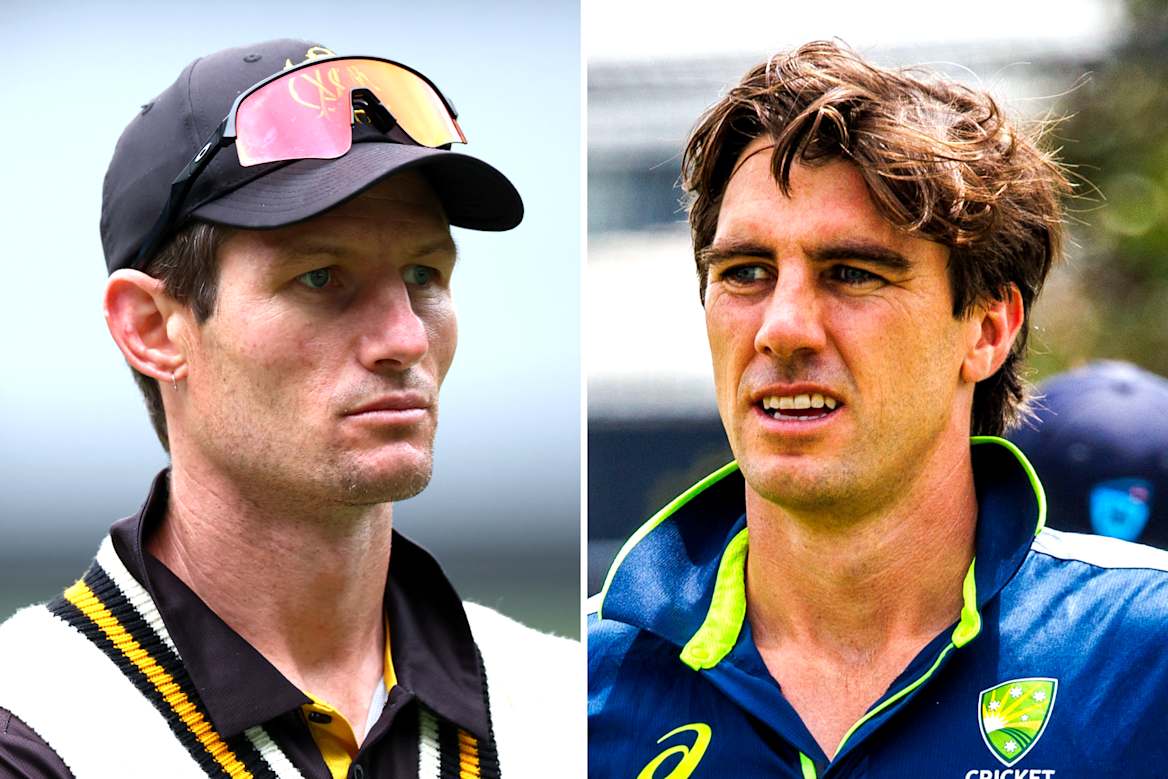
Fitz: It sounds like you broadly support Cricket Australia’s idea of a “forum” – where all are encouraged to come forward to tell their story – and yet a funny thing happened on the way to the forum. It was only three hours after they announced it on Wednesday that Cameron Bancroft dropped the nuclear bomb by telling his story and naming names. He was not saying, “I beg to differ”. He was saying, “These bastards are lying to you!”
SL: Yes, and Bancroft comes across as being absolutely sincere in his belief. But so does Pat Cummins in his statement that he, at least, did not know what was going on at the time of the ball tampering. As a young, immature bowler early in his Test career, it’s possible that Cummins did not pick up on what was happening. As things stand, I can’t rule out the possibility that everybody here is speaking the truth as they understand it to be. I’ve seen this happen on countless occasions where there have been completely opposite accounts. The truth is always in there to be found. Often the differences can be reconciled once all the facts are known. So, I think the right instinct is to create a space that affords all involved the opportunity to exercise moral courage. Their doing so will begin to remove the stain that now infects not just the past but the present dressing room.
Fitz: And yet, I put it to you that here in the real world, sometimes things are said from which there is no coming back – a line is crossed – and I respectfully submit your solution is a tad “touchy-feely”, and might even need a touch of sandpaper to roughen and toughen it up a bit?
SL: This is where I think people have a mistaken view of ethics. They think that ethics is somehow ‘soft’ and that ethical people are like little rabbits on the roadway of life while a big truck called “reality” bears down on them. Nice to pat, but destined to be “roadkill”! In fact, ethics requires you to be tough and courageous – not least when it comes to wrestling with, discerning the truth. The military produces some of the toughest people in the nation. For them, the highest virtue is not physical courage; it’s moral courage, and that’s what’s called for here. And that is not something which can emerge in a process run by retired judges or senior barristers, no matter how admirable they are.
Fitz: Sure, but right now it is inconceivable to me that Khawaja, Warner and Bancroft could ever break bread with Cummins, Mitchell Starc and Darren Lehmann?
SL: I’m not so sure about that. Right now, they are likely to believe that the others have lied. In some cases that might be correct. But in other cases, they might discover something more. There’s a difference between uttering something which is objectively false and telling a lie. If you are absolutely sincere in the claim you make, even though it is factually untrue, then that is not a lie. A lie is a deliberate act of deception.
Fitz: I can see the headline now, and I think it’s a fair one: “The Ethics Centre proposes the Seinfeld solution to Australia’s cricket crisis”, based on the famous George Costanza line that, “It’s not a lie if you believe it!”
SL: None of us observing all of this currently know what is true or false. I am not even sure that the players and coaches know all the facts. For example, there could be facts yet to be disclosed, which explain why Khawaja, Warner and Bancroft have one view, and Cummins another.
Fitz: For it to work, you’d need someone universally respected in the cricket world who might be able to bring them together for the sake of the game. I have the number of – the great man! – Dennis Lillee. He might be a very good start?
SL: Look, I would have a couple of people. You’d need someone with the independence and forensic capacity to look into such matters and to facilitate the necessary conversations. That person should be joined by at least one deeply experienced and well-respected individual who understands the world of elite cricket. D.K. Lillee would be perfect. Our report’s first recommendation was to establish an Ethics Commission that could be established with such a structure. It was purpose-made for an event of this kind. The structure was in place for three years. I have no idea if it continues. If so, it should be drawn on using the terms of reference put in place at its establishment. The right people will help to uncover the truth – including what lies at the heart of diametrically divergent claims. They can then help all those involved to display that moral courage that is the first step in moving back from the precipitous and dark place in which the game now finds itself.
You have reached your maximum number of saved items.
Remove items from your saved list to add more.
You've used all of your gift articles. 3 more will become available on the 1st of every month.