
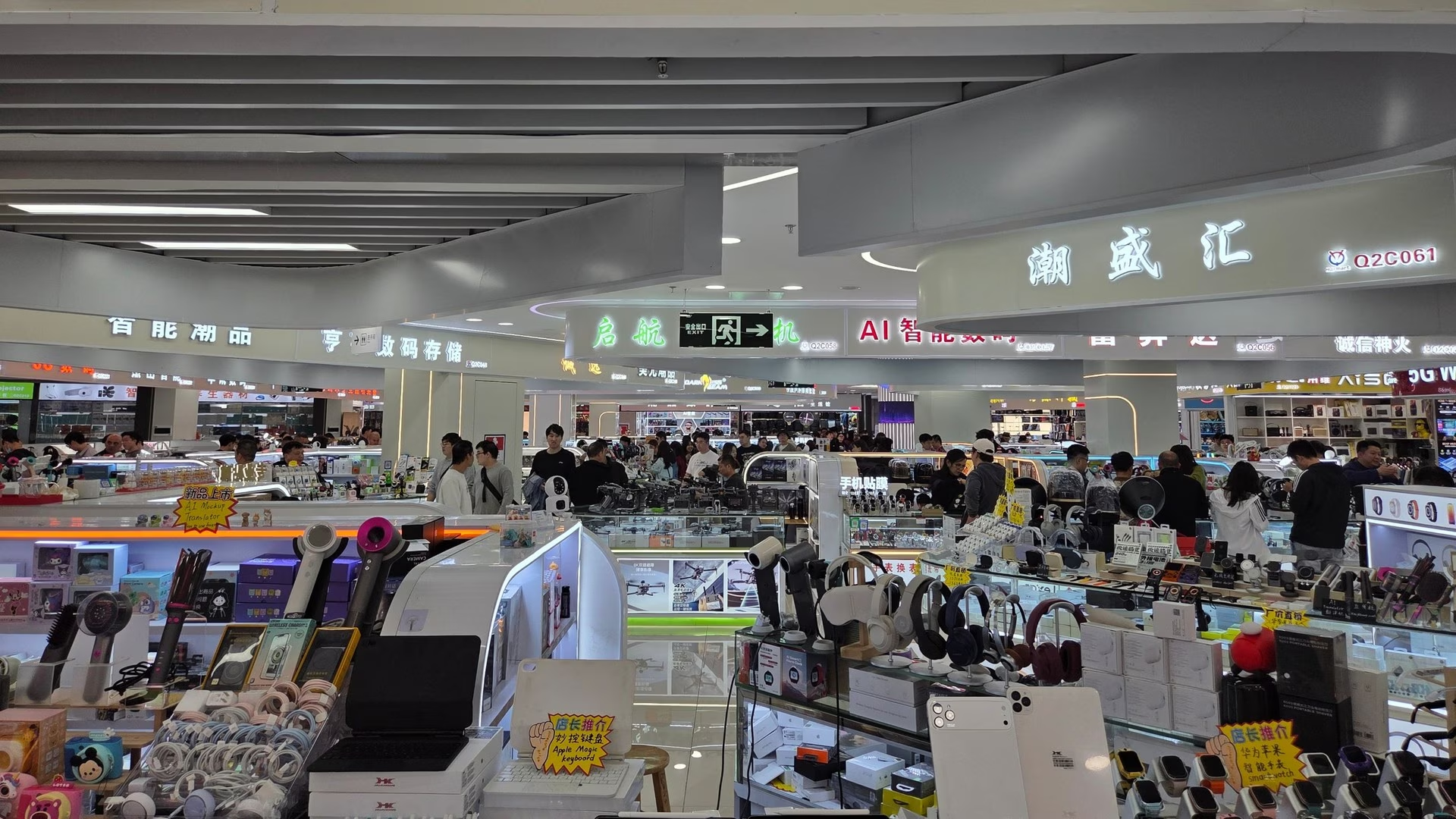
Shoppers at an electronics market in Shenzhen, China
China’s AI companies face a money problem as well as a chip shortage, The New York Times’ Sui-Lee Wee and Li You reported on Friday. China’s biggest tech firms will double their AI spending this year. Their AI labs bring in a fraction of it.
The figures come from a Rhodium Group report on China’s AI financing, published in September. Rhodium surveyed 13 listed Chinese firms. It expects their AI infrastructure capex to rise 103% this year, to 932bn yuan ($139bn). It forecasts more than 1.2tn yuan ($193bn) in 2027. Revenue from their AI labs covers less than 8% of this year’s spend, according to Rhodium.
“When you look at their numbers, it looks like they’re running on a treadmill that’s speeding up and getting harder to run,” Kyle Chan, a fellow at the Brookings Institution, told the Times.
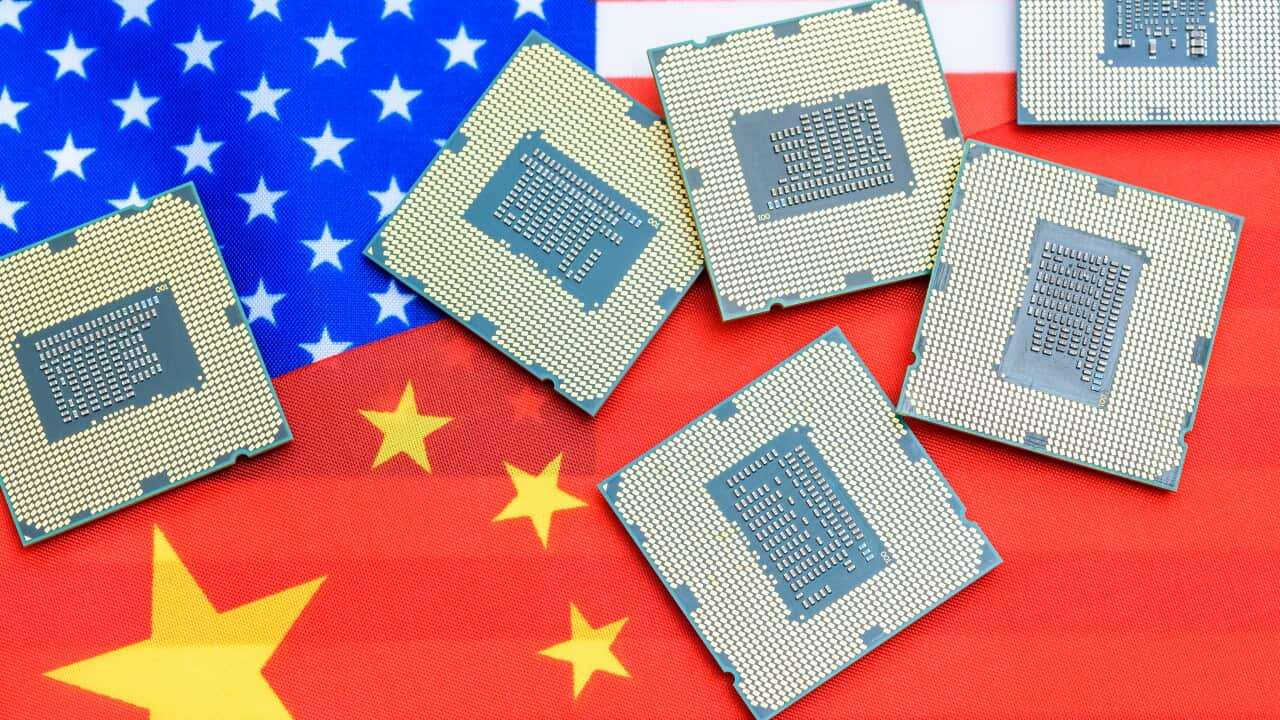
Most of the debate over China’s AI race has been about US export curbs on advanced chips. Washington moved this week to close one workaround, renting overseas data centres full of Nvidia hardware. Logan Wright, the Rhodium partner who co-wrote the report, sees a bigger hurdle. Financing constraints “will be probably more decisive” in the long run, he told the Times.
Rhodium puts China’s AI build-out at only 15% to 20% of the US level. The annual recurring revenue of all of China’s AI models was about $10.7bn, it found. That is roughly a tenth of what OpenAI and Anthropic report between them.
Alibaba, Baidu and Tencent, which back several of China’s top labs, now have negative cash flows, the Times reported. Tencent and Alibaba already warned this week that the new US curbs will slow growth in AI.
Investors have cooled too. China’s STAR 50 index, its answer to the Nasdaq, has fallen 43% since late July, the Times reported.
China’s bet on open-source models has made the gap harder to close. Z.ai released GLM-5.3 Flash in August and halved its prices for two weeks. It wanted users to run the model on its own servers. By November, about 20 rival providers charged less than Z.ai for its own model, the Times reported, citing OpenRouter data.
Compute is scarce and expensive. On Goofish, a Chinese second-hand marketplace, sellers have listed Nvidia’s DGX B300 server for nearly $3m. That is about eight times the US price, the Times found.
DeepSeek’s chief executive, Liang Wenfeng, said Huawei’s chips are only about two years behind Nvidia’s. But DeepSeek would need four Huawei 950 chips to match one Nvidia GB300, he said. The Times cited a leaked transcript of his call with investors.
“We simply can’t afford to train the largest models available right now,” Liang said. DeepSeek did not respond to the Times’ request for comment.
DeepSeek has raised more than $20bn, the Times reported, including a $15bn round backed by Tencent and CATL. Few rivals have such deep pockets.
Private AI investment in China reached $12.4bn in 2025, against $285.9bn in the US, according to Stanford’s AI Index . The index notes that this likely understates China’s total, because state guidance funds also pour money into AI. Foreign money has dried up, partly because Washington bars US venture capital from some Chinese technologies, the Times reported.
China still has strengths. Its researchers have repeatedly found ways to train and run models more cheaply. Han Lin, China country director at the Asia Group, told the Times the country has exceptional engineering talent and a government that can mobilise huge resources. What frontier technology also needs, he said, is risk capital that can absorb failure.
Get the most important tech news in your inbox each week.