Seven months after taking office with an ambitious economic reform agenda, the government of Prime Minister Balendra Shah faces a familiar but consequential problem: its promises of an investment-friendly environment have yet to translate into business confidence.
Finance Minister Swarnim Wagle began his tenure on March 27 by repealing 15 outdated laws covering fiscal, administrative, and property-related matters that had long been considered obstacles to business and investment. The move signalled an attempt to dismantle structural barriers to private sector growth and lay the groundwork for the government's ambitious economic agenda.
But the government's reform drive has been accompanied by contradictory signals. While Wagle was working to remove legal obstacles to investment, Home Minister Sudan Gurung was rounding up businesspeople, creating an atmosphere of uncertainty within the private sector.
The apparent disconnect between economic liberalisation and the government's approach to businesspeople has exposed a deeper challenge—rebuilding trust between the state and the private sector.
Business leaders say the problem is no longer simply the availability of credit or the cost of borrowing. It is the unpredictability of government decisions, the burden of dealing with multiple layers of administration, and the fear that business activities could expose entrepreneurs to investigation or prosecution.
The result is an investment climate in which businesses are reluctant to commit fresh capital, even as the government talks about accelerating growth, generating employment, and expanding productive sectors.
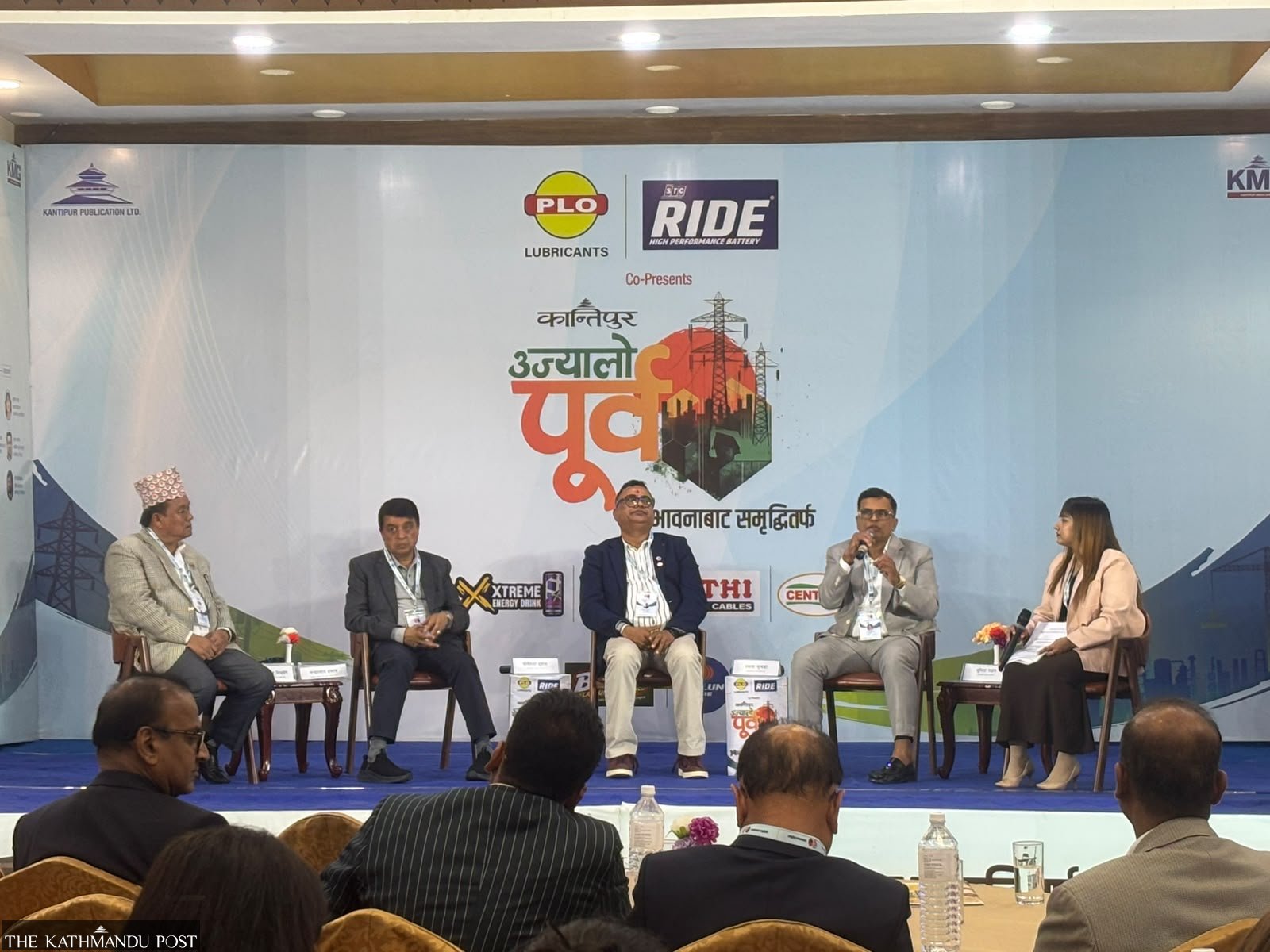
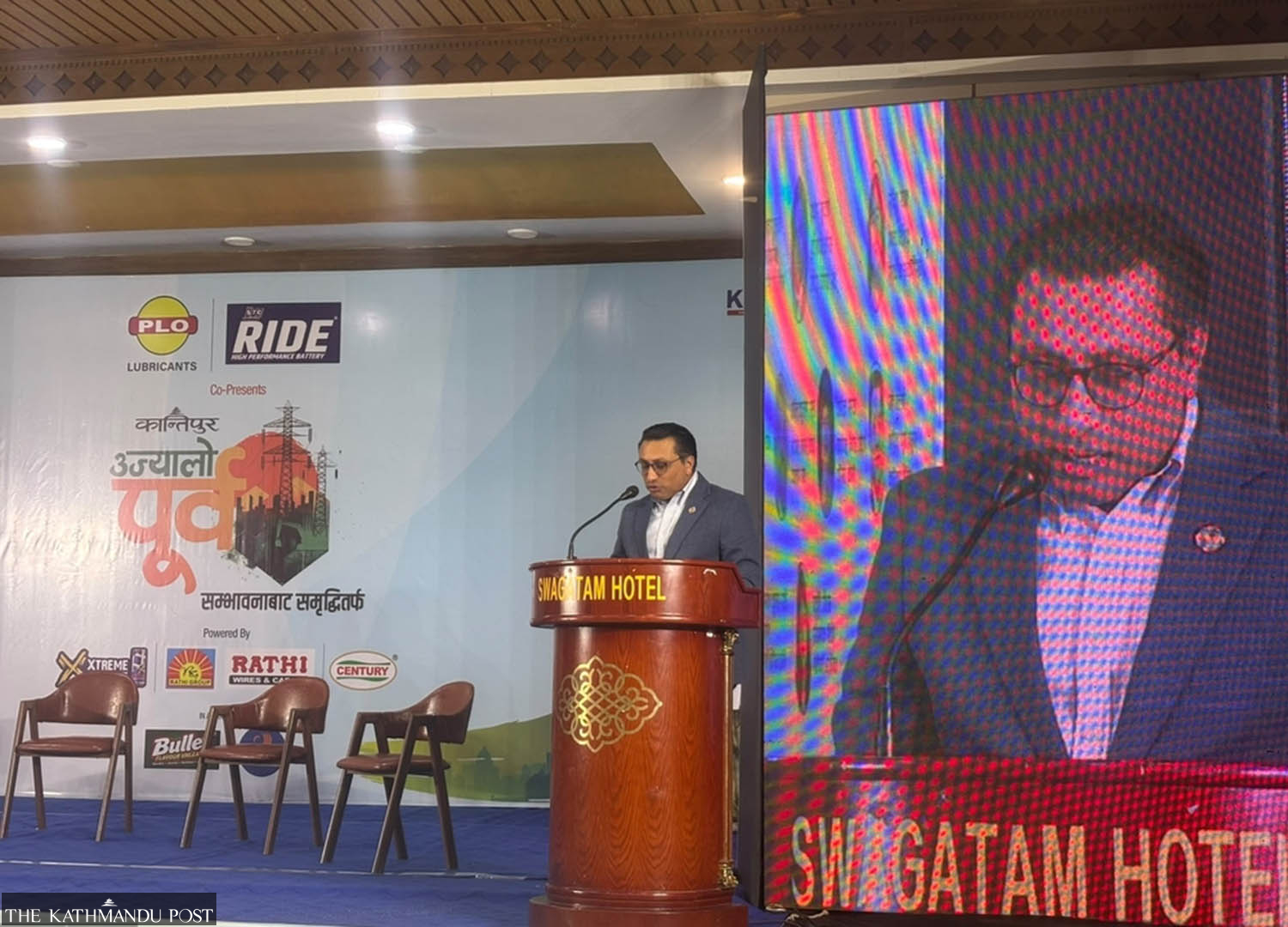
At the first session, titled 'How to Boost Business Confidence?', at 'Ujyalo Purba: From Potential to Prosperity' dialogue organised by the Kantipur Media Group in Biratnagar on Friday, industrialists and policymakers acknowledged that Nepal's investment potential remains largely untapped because the conditions necessary for businesses to operate with confidence have not materialised.
Bidur Kumar Lingthep, Koshi province's minister for economic affairs and planning, said improving the investment climate required a fundamental change in how the state and society viewed the private sector.
The private sector must be recognised as the backbone of the economy, a major source of employment, and a partner of the government, he said.
Recent political developments have created fear and insecurity among businesspeople and bureaucrats, Lingthep said. Even after the elections and formation of a new government, concerns about possible arrests and searches of business premises and homes have persisted.
He argued that the social tendency to portray industrialists and entrepreneurs as looters, fraudsters, and tax evaders was also damaging the investment climate.
The government must take the protection of private property seriously and build an environment in which businesses can operate without fear, he said.
The concerns point to a broader contradiction in Nepal's economic policy. While the government wants the private sector to drive investment, production, and job creation, businesses say they do not feel sufficiently protected or supported by the institutions expected to facilitate economic activity.
The government's ambitions are substantial. The ruling Rastriya Swatantra Party's 100-point roadmap aims to double Nepal's economy to $100 billion by 2031, with annual growth of 7 percent and large-scale employment creation.
Achieving that target would require a significant increase in private investment, industrial production, exports, and productivity. But the current hesitation among entrepreneurs suggests a widening gap between the government's economic ambitions and the confidence needed to realise them.
Prakash Mundada, former president of the Morang Chamber of Industries and Commerce, said business confidence remained low despite the government commanding a near two-thirds majority in the House of Representatives.
Nepal has considerable potential in industry, tourism, and other businesses, but entrepreneurs are still waiting to see whether the government's promises will translate into predictable policies and tangible improvements, he said.
Verbal assurances are insufficient, Mundada said, stressing the need for clear, written, and stable policies.
He said businesses had repeatedly adjusted to changing political and economic conditions, often without knowing what direction government policy would take.
"As Nepalis, where else can we go to work if not in Nepal? We are industrialists and businesspeople. What else can we do apart from business? So we have to go with the flow, whichever direction it takes us," he said.
Finance Minister Wagle acknowledged that the government was dealing with a difficult economic inheritance and multiple external and domestic challenges.
He said the country had experienced a decade of economic stagnation, weak private investment, limited expansion of productive sectors, inadequate employment opportunities, and declining confidence in economic institutions.
The government was also facing global conflicts, uncertainty in energy markets, supply chain disruptions, and the economic consequences of disasters such as the August 26 Bhotekoshi floods.
Wagle said economic reform could not be confined to the annual budget and needed to be a continuous process. Deep-rooted institutional weaknesses and anomalies accumulated over decades could not be eliminated within a few months, he added.
But he maintained that difficult circumstances could not justify inaction.
The government has also prepared a capital market reform action plan aimed at making the stock market a reliable source of long-term investment and capital formation rather than simply a reflection of daily price movements.
Wagle said the government was working to strengthen institutional credibility, improve transparency, ensure effective regulation, and protect investors.
Acknowledging delays in announcing an economic support package following the Bhotekoshi disaster, he said interim economic measures would be introduced within one to two weeks to remove obstacles to investment and production.
Yet, the concerns raised by businesspeople suggest that the obstacles go well beyond the issues that can be addressed through a support package or changes in financial regulations.
For many entrepreneurs, the biggest constraint is the time and resources consumed by administrative procedures, regulatory uncertainty, and the failure of local governments to provide basic infrastructure.
Mundada said businesspeople were spending most of their time dealing with administrative and management issues rather than running their companies.
"Instead of focusing on our businesses, we have to spend 80 percent of our time on other management-related matters, leaving only 20 percent for the actual business. It should be the other way around," said Mundada, who is also senior vice-president of the Koshi provincial chapter of the Confederation of Nepalese Industries.
Bholeshwar Dulal, senior vice-president of the Chamber of Industries, Morang, said the environment was not conducive to fresh industrial investment.
Entrepreneurs face administrative, policy-related and local-level hurdles at every stage, from setting up an industry to starting commercial production, he said.
Local governments, instead of resolving industrialists' problems, have been collecting membership fees and payments under various pretexts, Dulal said.
Even completing an initial environmental examination, a basic requirement for establishing certain industrial facilities, can take up to three years, he added.
Infrastructure deficiencies further compound the problem. Dulal said industrialists had repeatedly asked the government for the construction of a three-kilometre road to improve access to industrial areas, but their demands had gone unaddressed.
The consequences are visible in industrial capacity utilisation.
Factories in the region are operating at less than 40 percent of their capacity, Dulal said. “The industrial sector, which once had more than 600 factories and provided employment to over 100,000 people, has been weakening,” he said.
His argument also challenges the conventional emphasis on reducing interest rates as the primary way to encourage investment.
"We don’t need lower interest rates; we need stable policies. We are ready to pay bank interest, but please don’t change the policies for 10 years. We are ready to work and invest," he said.
The message is significant. Access to cheaper credit cannot by itself encourage investment when entrepreneurs are uncertain about regulatory requirements, administrative decisions, infrastructure availability, and the policy environment over the life of a project.
An industrial investment is typically a long-term commitment. Businesses need confidence that the rules governing their operations will remain predictable, that permits will be issued within reasonable timeframes and that infrastructure will be available when production begins.
Without these assurances, even financially viable projects can remain on the drawing board.
The government has initiated legal and policy changes, but business leaders say the effectiveness of these reforms will depend on whether they are implemented by the institutions responsible for delivering services.
Chandra Dhakal, former president of the Federation of Nepalese Chambers of Commerce and Industry, said the government needed to monitor whether amended laws were actually being implemented at the grassroots level.
During his tenure as FNCCI president, Dhakal said he had submitted recommendations for legal reforms to improve the business environment, some of which the government had subsequently taken forward.
But amending laws alone would not be sufficient if the agencies responsible for enforcing them continued with old practices.
"Although laws have been amended, many of them have not been implemented," he said.
He called for an examination of whether legal provisions intended to encourage investment were being implemented effectively at the local level.
Dhakal also said that banks and financial institutions were offering loans at relatively low interest rates, and businesses should be encouraged to channel available credit into productive sectors.
Effective implementation of policy reforms would encourage existing businesses to expand, attract new investment, and create employment, he said.
This exposes one of the central weaknesses of Nepal's reform efforts: the distance between policy formulation in Kathmandu and implementation by government agencies and local authorities.
Repealing outdated legislation may remove formal barriers, but it does not automatically change administrative practices, improve coordination between government agencies or ensure that local authorities follow the revised rules.
For investors, the experience of dealing with government institutions often matters more than what national policies say on paper.
Export ambitions need more than private initiative
Beyond the domestic investment climate, industrialists say Nepal must address weaknesses in export promotion, branding, packaging and international market access if it wants to turn its production potential into higher-value exports.
Mahesh Kumar Jaju, managing director of Asian Thai Foods Pvt Ltd, said Nepali businesses had largely been promoting their products in international markets through their own efforts, without significant government assistance.
His company exports products to 29 to 30 countries, having built its international presence using its own resources and capabilities.
Koshi province accounts for 20 percent of the country’s total production and 37 percent of its exports, Jaju said. Yet factories in the province are not operating at full capacity, with only around 44 percent of factories in operation.
Tea, chhurpi, ginger, and large cardamom are among the province's major export products. Koshi exports tea worth around Rs4 billion and chhurpi worth Rs5 billion annually, according to Jaju.
Despite this export potential, inadequate packaging, branding, and promotion have limited the ability of Nepali products to secure higher market value.
The continued export of raw or minimally processed products also constrains competitiveness, he said.
Jaju argued that the government needed to invest in international market promotion and facilitate Nepali businesses' participation in trade fairs and exhibitions.
"Exports can grow only when our products gain exposure in global markets," he said.
His concerns point to another gap in the government's economic ambitions. Increasing production alone will not deliver the desired export growth unless businesses can access international buyers, develop competitive products, and move up the value chain.
Banjade is the business bureau chief at Kantipur Media Group, where he covers economic issues and writes commentary.