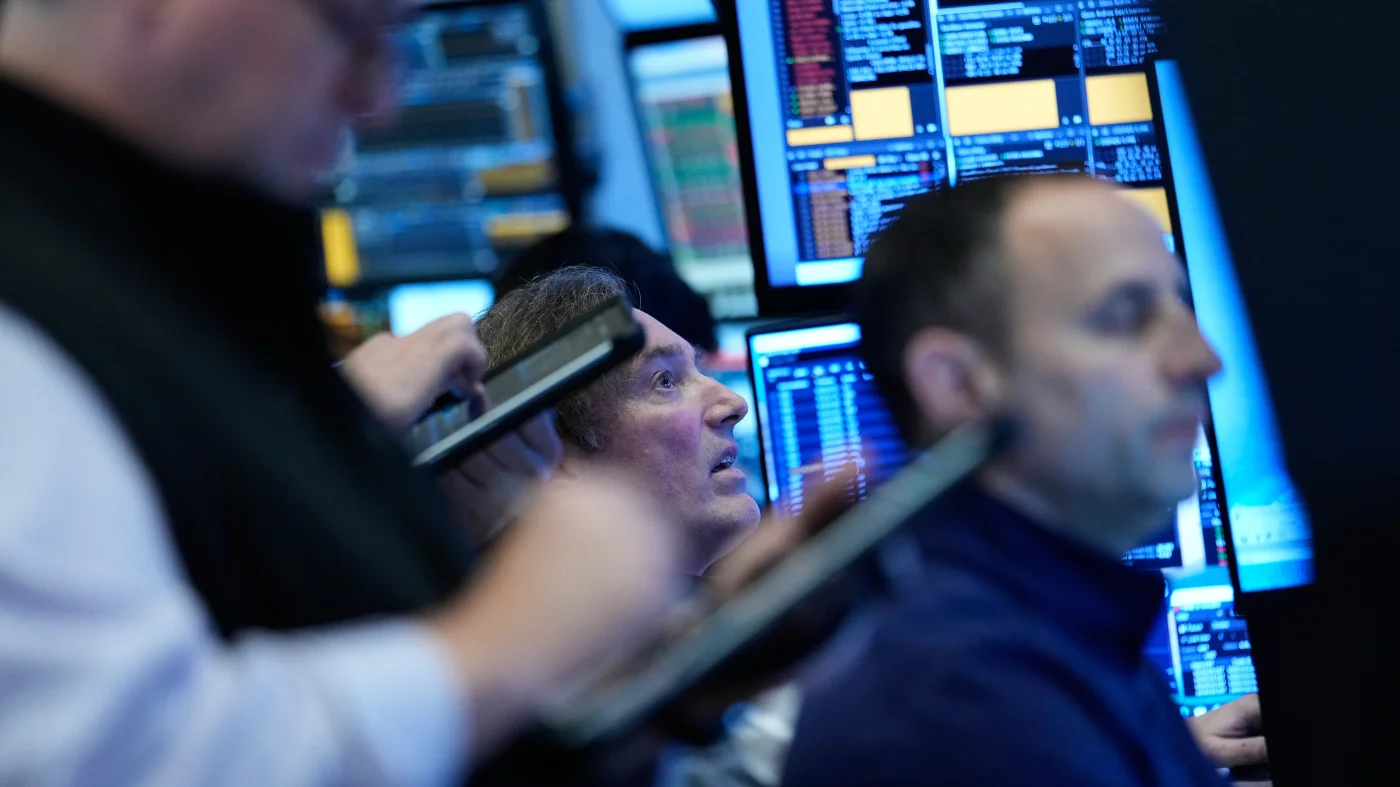
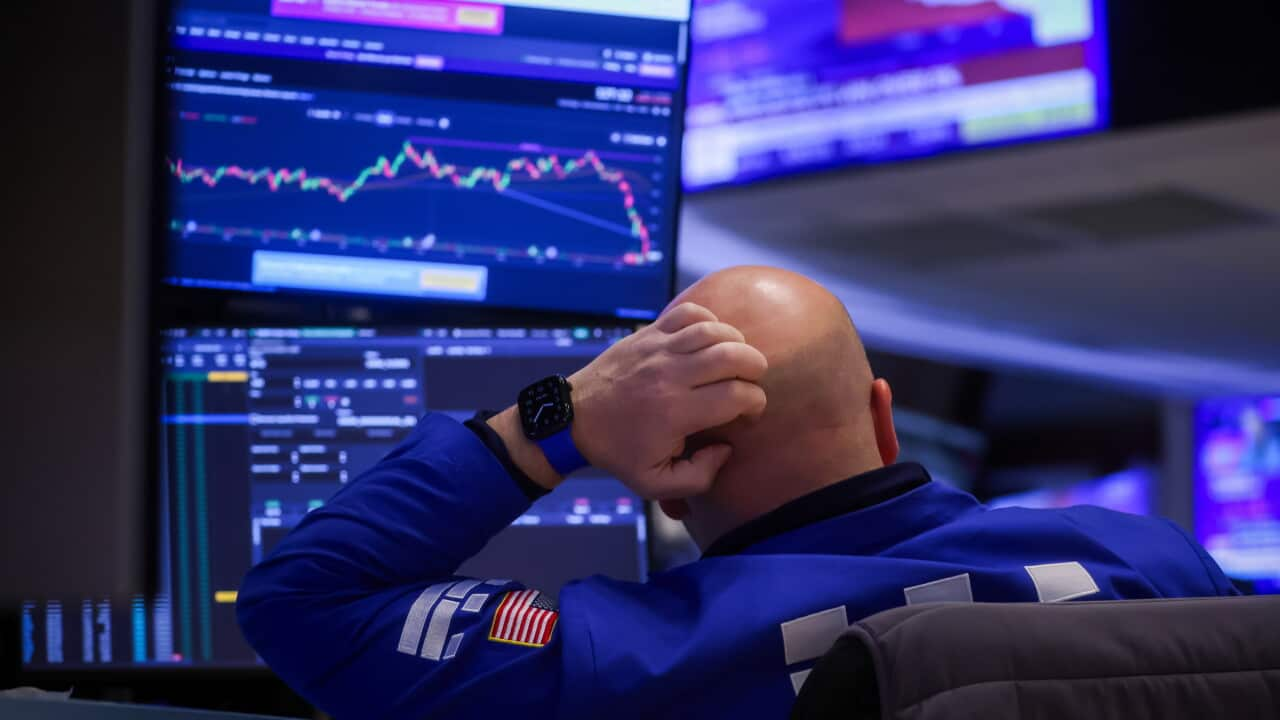
Esteemed Wharton professor Jeremy Siegel was more animated than usual on Friday afternoon... with good reason.
The normally staid author of "Stocks for the Long Run" spoke to CNBC on Friday as the market careened toward some ugly milestones. The S&P 500 and Dow Jones Industrial Average closed in correction territory, off more than 10% from their records. The Nasdaq Composite lost its gain for the year and the more concentrated Nasdaq-100 entered bear market territory on an intraday basis.
"These things are like straws that break the camel's back. You know what I mean? Everyone [is] all, 'I don't care, I don't care cause everything else is good' and when those straws keep on going... Bang," said Siegel.
Just a month-and-a-half ago, the S&P 500 and the Nasdaq Composite were at record highs. But the straws were already adding up by then and a market in denial is just now recognizing them.
Here are the reasons behind the sell-off:
The breaking point came this week in the form of the initial public offering of artificial intelligence leader Anthropic and a pick-up in the selling intensity for one-time AI chip leader Nvidia.
Anthropic upped its offering amount a day before going public despite the already dimming climate around AI-related stocks. The move ensured it would be the biggest IPO ever, but played into the fears that this debut — following SpaceX's monster offering over the summer — was a collective cash-out moment for the AI complex that will leave the investing masses holding the bag.
In other words, it could be the ultimate "sell the news" moment for the AI trade.
On Thursday, Anthropic traded from its $83 IPO price to a high above $115 before instantly rolling over and taking the AI trade with it. Anthropic's sell-off intensified Friday, and when the dust settled Anthropic closed the week at $88.91.
The Nasdaq posted its worst week since the Covid plunge of March 2020, down 10%.
Nvidia fell 14% on Friday with the selling intensifying after a Reuters headline hit the tape that the chipmaker's accounting is the focus of a Securities and Exchange Commission probe.
Nvidia is now down nearly 40% in November alone, a month that saw the AI bull market's leading salesman, Jensen Huang, resign as its CEO because of an affair with an alleged Chinese spy that raised speculation about whether the company's chips were ending up in Beijing's hands despite government restrictions.
To start the week, the Commerce Department tightened restrictions on U.S.-made chips to stop China from accessing them remotely from other countries.
A solid earnings report on Tuesday fell flat as Nvidia's board definitively ruled out any chance Huang would return, disappointing some of the stock's fanatics still holding out hope for his far-fetched return. Nvidia ended the week with a 23% loss.
The S&P 500 traded below its 200-day moving average — what's considered a measure of a security's long-term trend — on Tuesday and made a convincing break of it on Thursday. This turned many on Wall Street— like commodity trading Advisors — into automatic sellers on the market. So-called CTAs are individuals or organizations that advise others on trading futures and swaps across a range of assets.
"We know there's a lot of trend riders on these markets," said Siegel. "They have their trend lines. They've ridden it up and as soon as it goes down, they're selling and they're selling and they're selling and they just perpetuate" the decline, he said.
The Iran conflict has caused the price oil to surge and while it's off its highs it still remains above $83 a barrel, while the fees for transiting the Strait of Hormuz and the rest of the region keep persistent pressure on global prices.
A series of numbers earlier in the month showed inflation is still far from the Federal Reserve's 2% target, sparking a run of central bank officials to warn they may have to get more aggressive with interest rates.
After increasing rates in September by a quarter point, the Fed skipped a hike in late October and sparked concern among bond investors it may be falling behind the inflation fight. The 10-year Treasury yield subsequently jumped above 5% and stayed there until a flight of safe haven fixed income buying brought it back below that level on Friday.
Federal Reserve Governor Christopher Waller said this week that the Fed may need to do a half percentage point hike next month to catch up.
"I'm very, very concerned about inflation. It's kind of headed in the wrong direction, and it's spreading out," Waller told CNBC.
"Don't fight the Fed" has long been a maxim on Wall Street and right now expectations are that the central bank will need to raise rates in December and again in January.
And late-breaking on Friday was a report from the Financial Times that the Trump Administration is considering restarting strikes on Iran .
Before the grim market milestones were met on Friday, it had long lost its mojo on fears that the pace of growth driven by AI companies was slowing.
As Anthropic prepared to go public, its third-quarter figures released earlier this month showed revenue growth last quarter was 47%, down from 144% in the second quarter.
AI momentum trades, like the VanEck Semiconductor ETF and the iShares MSCI USA Momentum Factor ETF , all topped out during the summer.
The fears of slowing growth picked up this month after the Democrats won control of Congress and key governorships, fueling speculation that states — or even the whole country — could implement stricter rules on data center construction.
CoreWeave , which builds data centers using high amounts of debt, is down 71% from its high. Caterpillar , which has reinvented itself as an AI play because of data center construction and generators, is down more than 50% from its high.
The view of Siegel and many market observers is that the economy remains in good enough shape that this will just be a run-of-the-mill correction that resets a bull market that had raised people's expectations too high because of its early ferocity.
The S&P 500 returned more than 20% in 2023 and 2024 and then gained 16% last year.
"The average over long periods for the stock market is 8%, 9% a year up," said Siegel. "People began to think that 15 to 20 [percent] was going to be the norm with AI and we have to bring that down to reality."
The only problem with that theory is that the stock market and its wealth effect was one of the major factors underpinning the economy. Stocks are a greater source of household wealth — especially for baby boomers — than they ever have been before.
With the S&P 500 clinging to a 1% gain for the year, this stock market rout could end up tipping off a virtuous cycle that slows the economy, and in turn, leads to bigger equity losses.