

The US Senate has passed a bill to fast-track energy and datacenter projects by removing environmental and legal guardrails. The legislation has caused a fraught divide among Democrats and green groups over whether this will help or hinder the effort to tackle the climate crisis.
The sweeping bill, called the Bipartisan American Affordability and Jobs Act (or Baaja) , is now set for passage in the Republican-controlled House of Representatives before being signed by Donald Trump, who has claimed it will boost economic activity and lower energy costs.
Baaja essentially makes it far easier to build things of all descriptions: oil pipelines, power lines, windfarms, datacenters and much more.
It does this by restricting the often lengthy legal challenges to new projects, such as setting a 150-day limit on lawsuits, and weakening the role of key environmental statutes such as the Clean Water Act and the Endangered Species Act in determining the approval of new construction.
Energy-hungry datacenters will get their power more quickly, which in the US is mostly being derived from gas, a planet-heating fossil fuel . Large datacenters will, though, be forced to pay for their own grid and power costs in order to shield nearby communities.
The permitting of new transmission lines, crucial in connecting clean energy to where it is needed, is streamlined with more regional coordination in the process. This element of the bill, which could cut the time to build power lines in half, has been roundly praised by Democrats and green groups.
But the US will essentially be handcuffed to anything approved by the Trump administration, which has sought to throttle clean energy projects while attempting to boost fossil fuel development wherever possible .
Baaja makes it much harder for future administrations and even judges to revoke or amend permits, even if they were issued in a flawed way, and provides companies, including fossil fuel firms, the right to hefty compensation if they can show they were slowed down in some way by the government.
Baaja is hugely contentious among those keen to address the worsening climate crisis . Slashing environmental rules may speed up clean energy projects but will also “accelerate the extraction and burning of fossil fuels”, according to Jeff Merkley, a Democrat set to be the new chair of the Senate environment committee. Al Gore, the former US vice-president, told the Guardian the bill was a “serious mistake” as it would be used by Trump to “lock in a lot of new pipelines and fossil fuel facilities”.
Most environmental groups are aghast, arguing the recent midterm elections show Americans want stronger restrictions on datacenters and other polluting facilities. “It’s hard to imagine a more tone-deaf rejection of the American people,” said Brett Hartl, government affairs director at the Center for Biological Diversity. “Senate Democrats have decided to approve the largest giveaway in history to big polluters, the datacenter industry and tech oligarchs.”
Proponents point out that this could be the best, perhaps only, window to enable the construction of renewable projects currently bogged down in a morass of regulatory delays and objections. Waiting for an “imaginary perfect bill” when Democrats take control of Congress in January will mean nothing if Trump won’t sign it, Sheldon Whitehouse, a Democratic senator and co-sponsor of the bill, pointed out.
“I think we’re in a real crisis and I think we have to take what we can while we can and then continue to work,” he said. Whitehouse added that the urgency of global heating means “we have to keep going with this, because we are failing right now”.
Two Democratic senators, Whitehouse and Martin Heinrich, co-authored the bill with two Republicans – Senators Shelley Moore Capito and Mike Lee – and have said they did so to secure a rare compromise to fix the sluggish and costly way that the US builds infrastructure.
Whitehouse points out that environmental laws have long been used as roadblocks to aid the natural world, from the halting of oil pipelines to stopping the slaughter of whales, but now they are hindering the rapid buildout of clean energy projects required to address the climate crisis.
Removing such restraints will allow plenty of new dirty energy, too, but about 85% of all generation stuck waiting to come online in the US is solar, wind and battery storage. Expediting this should lead to some, albeit modest, reductions in greenhouse gas emissions – cutting up to 1.5bn tons of pollution in total by 2040, according to Rhodium Group .
“If we can create an open, competitive, level playing field, clean is cheap and cheap wins in the marketplace,” Heinrich said.
The midterm elections were centered on the cost of living and proponents point out that household electricity bills will drop, by as much as $78 a year by 2040 in Rhodium’s analysis. Negotiating the bill’s trade-offs “wasn’t easy”, Heinrich conceded, but “we don’t have to wait another year to deliver relief. We can act right now.”
But critics dismiss the cost savings and emissions reductions as meagre in comparison with allowing the fossil fuel industry, which has enthusiastically backed the bill, a permanent pass to push through polluting pipelines and power plants with scant recourse.
The emissions trend will depend a lot on what is now approved, with the current administration weighted heavily towards fossil fuels, and the future cost competitiveness of clean energy, both variables that could swing against the effort to do something about the climate crisis. In a worst-case scenario, emissions could flatline or even increase .
“This bill will deliver a mere $5 a month in savings 15 years from now but deliver a huge win for big tech and big oil right now,” said Merkley, who has criticized the pace of the bill, which was voted on without any hearings.
This lack of consultation has alarmed public lands advocates and Native American groups who fear that previously protected landscapes will now be opened up for oil and gas drilling.
“The bill was written behind closed doors without consulting tribal nations,” said Ira Matt, executive director of the National Association of Tribal Historic Preservation Officers. “It ignores the real causes of permitting delays and weakens requirements for federal agencies to consult with tribal nations and consider how projects could harm places of historic, cultural or spiritual importance to us.”
A better option, Merkley, Gore and most environmental groups have argued, is for a stronger bill to be crafted when Democrats take control of Congress in January. It’s unclear how much support there would be from Republicans, including Trump, for this, however.
“We can make it easier to build good things without selling out our friends and neighbors,” Merkley said. “Let’s do that in January with a Democratic majority writing the bill, not fossil fuel companies and their lobbyists.”
At its heart, Baaja is a legislative expression of the idea that building things in the US has become too slow, onerous and sclerotic. The US, the argument goes, has crumbling bridges, lacks high-speed rail and can’t erect integrated electrical grids because of a thicket of regulations and legal veto points that have been weaponized by nimbys, well-meaning advocates and special interests.
Such viewpoints were summed up in Abundance, a widely discussed 2025 book by journalists Ezra Klein and Derek Thompson that points to the US’s inability to build and innovate as a major national problem.
Klein, the New York Times columnist, has become an advocate of Baaja, opining that it was the most consequential rewriting of permitting laws in recent history and that “leaving the system unchanged is a guarantee of calamity”. He did express some concern, however, over how some of the vaguer elements of the bill will be applied by judges and others.
Other people are less concerned about the trade-offs of allowing new energy deployment. “Hippies aren’t going to get this shit done,” Chris Sacca, co-founder of Lowercarbon Capital, said at an Axios event this week, adding that “there are definitely going to be some shrubs or some rare frogs stepped on along the way”.
Environmental groups argue the bill will cause even more legal confusion and conflict than exists now and risks ignoring what the public demanded in the recent midterms.
“Trade-offs and compromises will always be realistic to achieve progress,” said Abigail Dillen, president of Earthjustice Action. “But this bill will usher in a gas rush that will fuel dirty datacenters, does not address the acute affordability crisis Americans are facing today and takes away the rights of communities to have a say in what gets built in their backyards.”
The premise of Abundance, too, works best when applied to issues such as housing, whereby unleashing more supply will help lower the soaring cost of purchasing a home.
The climate crisis, though, is a different challenge. More energy of all sorts won’t in itself prevent the world barreling into an unlivable, hothouse state . “ Getting more renewable energy online doesn’t tackle climate change if you simultaneously open the faucet wide for the burning of more fossil fuels,” Merkley said. “Unfortunately this bill does exactly that.”
The White House supports the passage of Baaja but Trump has already talked about selectively applying it. The president, who has a longstanding animus towards renewable energy and wind turbines in particular, said this month that “I will not approve wind turbines because wind turbines are a major loser.”
The Trump administration has repeatedly attempted to block clean energy projects , only to be rebuked by the courts, and the president’s outburst has been condemned by Democrats. Whitehouse has said that Baaja contains provisions that will prevent Trump from imposing his own predilections on federal permitting but critics claim the president has a history of selective compliance with federal law that is ominous.
“ He doesn’t play by the rules, he doesn’t respect the law and it’s not a mystery how he would try to implement this legislation,” Gore said of Trump.
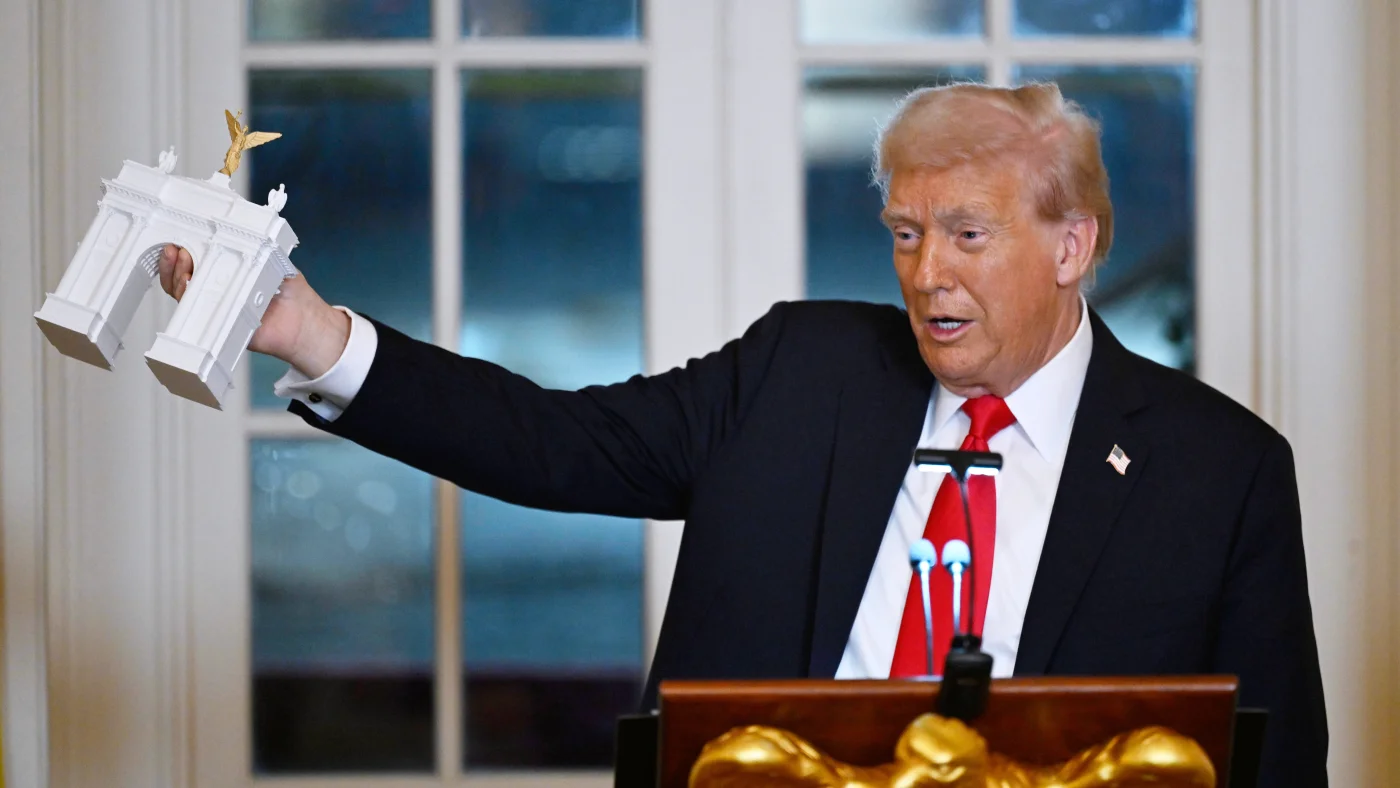
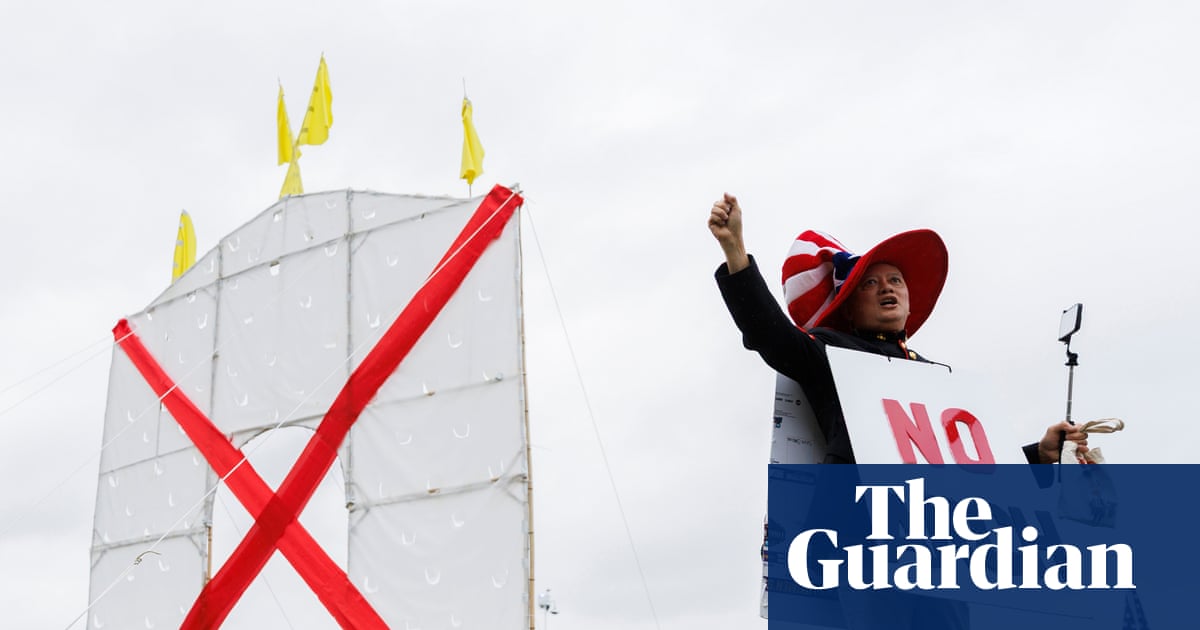
Trump has spent a considerable amount of his time and focus upon building a slew of projects in the Washington DC area, such as the White House ballroom, a new golf course, a refashioned Kennedy Center and a new, triumphal arch .
Baaja could help knock down hurdles to the president’s grand, gold-flecked ambitions by limiting court injunctions and narrowing environmental and historic reviews, environmental groups have argued.
They point to Baaja’s text, which states that objections to “any visual, atmospheric or audible element” cannot be used to stymie a project. The planned arch, for example, could loom over nearby sites and cast a shadow over Arlington national cemetery . Opposition to the arch on these grounds would be moot under Baaja.