

I n a public pool in Melbourne’s west, where the smell of chlorine hangs thick in the air, Dharmveer Kaur practises blowing bubbles in the shallow pool. Sounds echo across the enormous indoor aquatic centre, as people fresh from school and work mingle in the pools, spas and water slides. Kaur quietly concentrates on submerging her face in the water, following her instructor’s guidance in a lane away from the chaos.
To the young children taking swimming lessons in the lane beside her, the throngs of older men making their way to the spa, or the mother casually breastfeeding in the pool opposite her, Kaur’s bubble blowing may not seem remarkable. But for the woman who never learned to swim, it feels monumental.
When the 37-year-old started swimming lessons three months ago, she was nervous to even enter the pool.
“I had a little bit of [anxiety] putting my mouth into the water,” she says. “I told the teachers my situation and I’m slowly getting confident to breathe in water.”
After moving to Melbourne from the landlocked Indian state of Punjab in 2020, Kaur was struck by the way Melburnians regularly headed to beaches and pools to socialise. Her inability to join in felt like a barrier to more than just the water.
“I was very hesitant to be around people in the water,” she says. “I [was] losing my confidence and then that comes up in different things, like, how do I talk to others, to come in confidently, to be in the groups?”
When her daughter turned six months old, Kaur worried she wouldn’t be able to take her swimming, potentially passing on her fear of water and risking similar social exclusion. But the prospect of attending lessons alone, the cost and her husband’s doubt initially held her back.
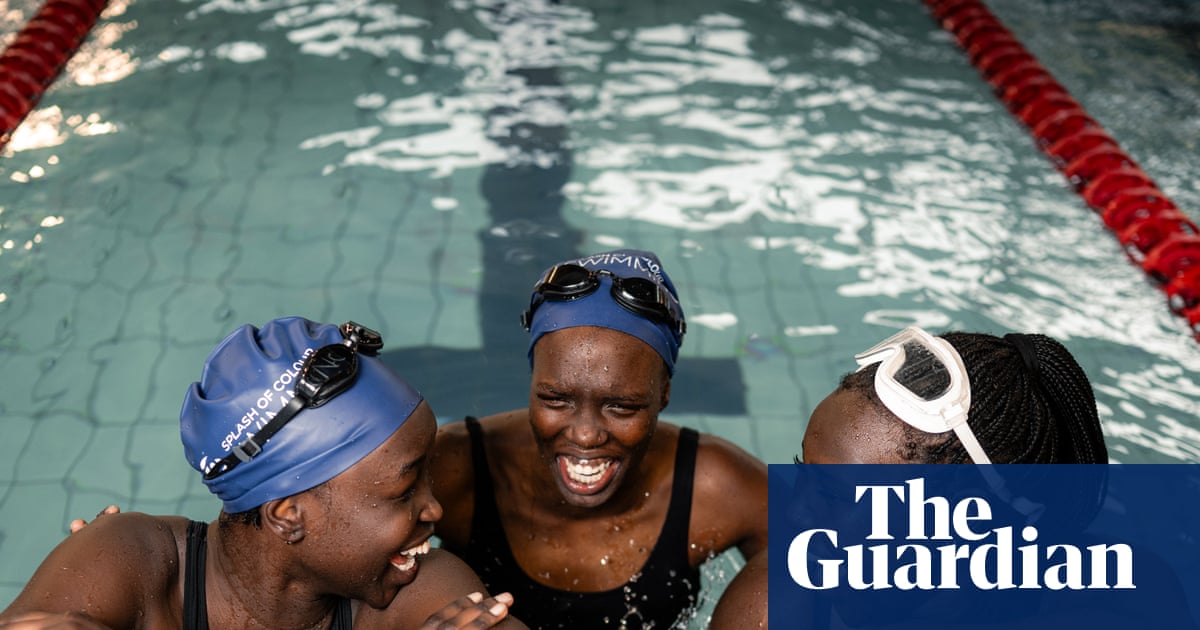
Kaur eventually found A Splash of Colour Swimming, a program for culturally and linguistically diverse adults learning to swim. The lessons were free, at a time of day when her daughter was in day care, and with other adult women at the nearby AquaPulse Centre in Hoppers Crossing.
For Kaur, the lessons have become as much about finding independence and community as learning to swim. Initially, her husband was reluctant to support her attending lessons; in their home town women were not encouraged to learn the skill.
“He was not giving me the car keys,” she says. “And so I said, ‘No, I have to go’. In that way, it gives me power and encouragement to get out of home for myself.”
It was the other women in the class who helped Kaur persevere.
“If I was doing this alone, with the barriers I was feeling at home, I don’t think I could have coped,” she says. “But I have my group. We have a class, and that was an excitement. I was like, ‘They are my people’.”
The founder of A Splash of Colour Swimming, Ennia Jones, says fear and a lack of self-confidence are common barriers among people who arrive in Australia without having learned to swim.
According to Royal Life Saving Australia, people born overseas account for one in three drowning deaths in Australia . Last year 313 people drowned across the country, 10% above the 10-year average. A report by the Australian Water Safety Council identified declining swimming skills, particularly among multicultural communities, as a contributing factor to the rise in drowning deaths.
Jones knows first-hand how deeply ingrained a fear of water can become. Having grown up in Zimbabwe without knowing how to swim, she only learned at 12 years old thanks to a school principal determined to break the intergenerational avoidance among younger Zimbabweans.
“One of the patterns we see in our program is that when parents have never learned to swim, uncertainty or fear around water can unintentionally be passed on to their children. Over time, avoiding the water can become normal within a family or community.”
It was only after moving to Newcastle and taking up lap swimming as an adult that she really fell in love with the water, seeing the benefits it provided her wellbeing. But she also noticed the lack of cultural diversity in public pools.
She began asking people within her own African community why they did not swim. She found many had never learned, and had come to fear the water, had concerns about swimwear, and faced barriers to finding the time and money for lessons.
Jones established A Splash of Colour as a response to what she had learned. She was pleasantly surprised when the first group was oversubscribed.
What started as a program of 20 women three years ago in Newcastle has now grown to between 300 and 500 people a week learning to swim across New South Wales, Victoria , the ACT and Queensland. The average participant is 55 years old, and the oldest is a 71-year-old woman determined to swim with her grandchildren.
The program supplies caps, goggles and swimming bags, and takes students on virtual tours of shops to show them where they can buy modest swimwear.
“If you’ve got braids like I do, finding a swimming cap in an ordinary store can be incredibly difficult. I once tried squeezing my braids into two standards caps. It was a disaster, and my hair still took ages to dry,” Jones says.
“Providing swimming caps that are actually designed for different hair volumes has made an enormous difference for our participants.”
It is important, she says, to allow people to approach the water at their own pace. For some, even getting in the water and blowing bubbles “is Everest”, says Jones. Before lessons begin, participants take part in ‘Brave Beginnings’ where they are given workbooks exploring water trauma, learn about swimming etiquette and are encouraged to gradually familiarise themselves with the water.
At the second-last class of term, Kelisha Veerasamy, 34, sits on the benches in the stuffy aquatic centre. Despite having a cold that prevents her from swimming, she has shown up to encourage the other women she’s developed friendships with over the 10-week course.
Veerasamy moved to Melbourne from South Africa four years ago. Learning to swim has been another step in establishing her new life.
“To learn a new skill can be quite overwhelming when you’re trying to learn everything else that was once normal for you,” she says.
She says the group of women helped remove the embarrassment she once associated with being an adult beginner. The women applaud when someone masters a new technique and encourage each other to persevere.
“There’s no judgment there,” she says.
Veerasamy says being confident in the water has opened up an “unexplored world”, helping her feel more connected to the Australian outdoors.
“I feel like we’ve integrated a lot more into the Australian culture and with the water,” she says. “We’ve already been taking my son to the beach, to splash in pools, and I want to jump in with him.”
The manager of the AquaPulse pool, Stacey Mancer, says watching participants become more comfortable in the water has been one of the most rewarding aspects of the program.
“This is why I do this job,” she says. “You may not be creating Olympic swimmers, but just building some confidence and some education about water safety is so important.”
Mancer says it’s important for swimming facilities to cater to diverse communities so as to continue operating as equalisers, accessible to all who want to enjoy the water.
At one centre Mancer worked at, the prime minister came to swim alongside locals who lived in the nearby housing commissions. “That’s the demographic you can get in a pool,” she says.