The United States, China and Russia have pledged to increase petrol supplies as the wars in Iran – started by Israel and the US – and Ukraine – started by Russia – continue to upend global energy markets.
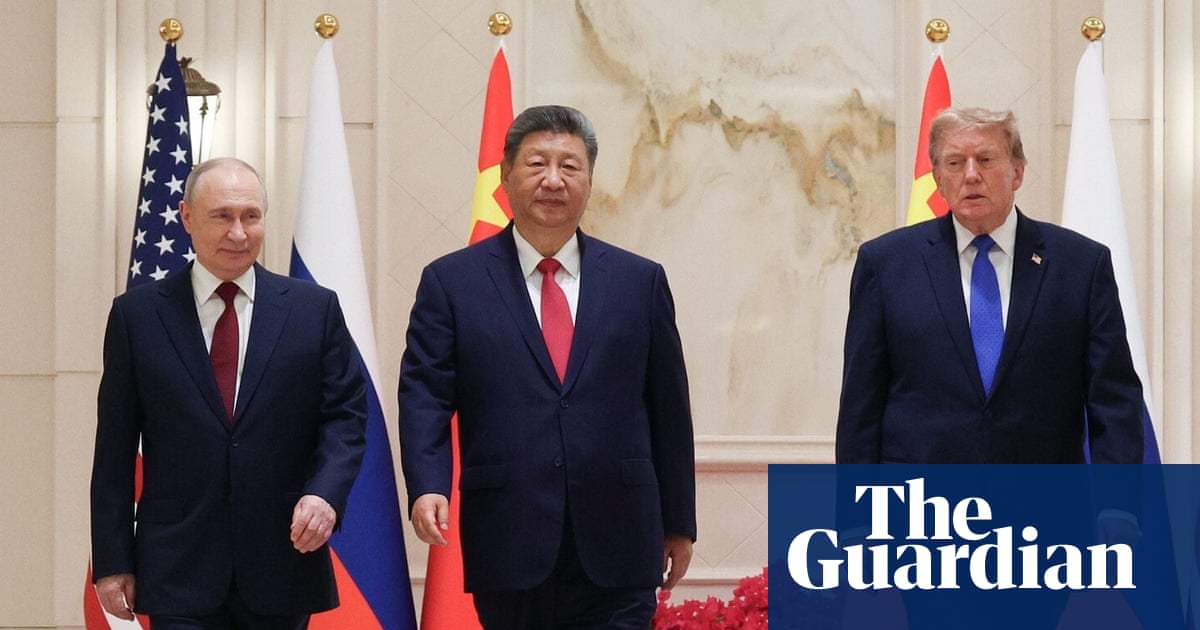
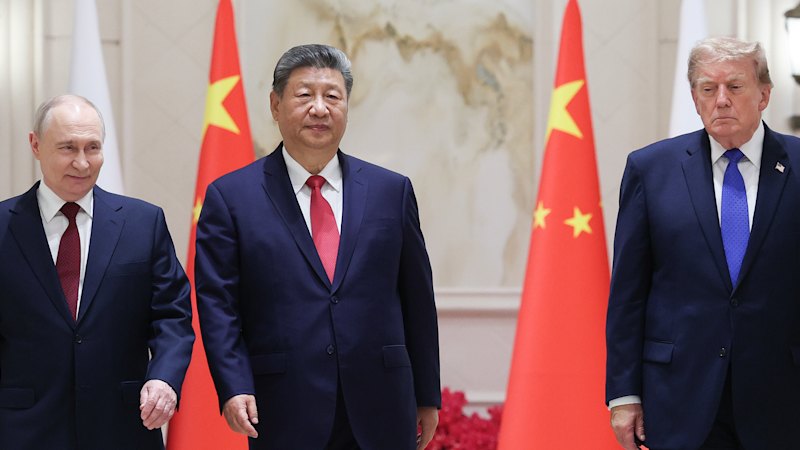
Following their trilateral summit in Shenzhen, China, on Thursday, US President Donald Trump, Chinese President Xi Jinping and Russia’s President Vladimir Putin said in a joint statement that they “plan to increase the production and supply of refined petroleum products for the benefit of all nations”.
The three leaders also “reaffirmed the importance of stable energy flows”.
But analysts are sceptical about how this will actually work amid the US having little to no spare refining capacity, Russia being constrained by continued Ukrainian attacks on its energy infrastructure and China’s crude oil imports disrupted by the US and Israel’s war on Iran.
“The trilateral statement should be treated as political noise rather than the first step to boosting global fuel supplies,” Hamad Hussain, a senior climate and commodities economist at Capital Economics, told Al Jazeera.
“The announcement sounds like it is designed to placate consumers and constituencies. Previous efforts to increase supply [like the US-Russian diesel deal] went nowhere,” Frederic Schneider, a nonresident senior fellow at the Middle East Council on Global Affairs, told Al Jazeera.
So is what the three leaders said impossible?
China and the US are the world’s biggest oil refiners by capacity, followed by Russia and India.
China has roughly 18.5 to 18.83 million barrels per day (bpd) of oil refining capacity. But refining in the country is dependent on its crude oil imports, which have been badly disrupted by the continuing US-Iran conflict in the Strait of Hormuz, through which Gulf oil exporters normally ship crude oil – much of it to Asia.
According to a November report by the US Energy Information Administration (EIA), crude oil refinery imports in China fell by 2.1 million bpd in the second quarter of 2026 and by an additional 0.8 million barrels bpd in the third quarter of the year.
As of January 1 this year, the US had an operable crude oil distillation capacity of about 18.16 million bpd. Production has increased since the war began, and is already running at near full capacity.
According to an October EIA report, “the US refinery fleet has run at higher-than-normal rates this year, with refinery utilisation averaging more than 95 percent of capacity between May and September, the highest for those months since 1998”.
Russia has roughly 6.5 million bpd of oil refining capacity, according to the International Energy Agency.
But Ukrainian drone strikes on its energy infrastructure have severely impacted its refining capacity. “In June, Russian refinery throughput fell to 3.8 million barrels per day, its lowest level in more than 20 years and roughly 30 percent below a year earlier,” a September International Energy Agency report noted.
Meanwhile, India has an oil refining capacity of about 5.36 million bpd, according to government figures. But New Delhi is also heavily dependent on crude oil imports, and this has been affected by blockades in the Strait of Hormuz.
According to the EIA, US refineries are currently running at close to maximum capacity.
This has been driven largely by “tight global supplies for distillate fuel oil, leading to high international demand for US distillate fuel oil exports”, a November EIA report states. Distillate fuel oil is refined petroleum which includes diesel fuels and light fuel oils.
Hussain said that while it may be profitable to refine more oil amid higher oil prices this year, the issue is that Washington “does not have spare capacity” to do so.
The Trump administration says it is determined to boost global fuel supply and US Energy Secretary Chris Wright has said his department is “talking about reopening every refinery we can” to do so.
According to a November 19 Reuters report, US refiner Valero Energy agreed to buy the century-old LyondellBasell Industries refinery near Houston, Texas, in October and restore a portion of the facility, adding 165,000 bpd of processing capacity by the end of 2027.
The plan would reverse years of refinery closures in the US and add about 1 percent to overall US refining capacity of 18 million bpd, Reuters reported. But analysts say the total price tag of acquiring and recommissioning this refinery could reach $1bn.
Since last year, long-range Ukrainian drone strikes on Russian oil refineries have resulted in serious fuel shortages across the country.
According to the IEA, in the first eight months of 2026, a Russian refinery was hit on average once every three days.
Reuters has reported that drone attacks have slashed Russian oil refineries’ combined crude processing volumes by 45 percent since late October and several regions have also begun limiting fuel.
On Friday, Reuters also reported that the Russia-installed governor of Crimea’s Sevastopol region, Mikhail Razvozhayev, said petrol sales there were being limited to one full car tank and 20 litres (5.3 gallons) in jerrycans at a number of pumping stations from Thursday.
He said the measures were being introduced to prevent people from filling canisters with hundreds of litres at a time, causing queues and preventing others from refilling.
The Siberian city of Tomsk also capped sales of petrol and diesel to 30 and 50 litres, respectively, from last week, according to local authorities.
On Thursday, the city of Penza, 770km (480 miles) southeast of Moscow, restricted petrol sales to 50 litres while limiting diesel to 200 litres per vehicle. At least half a dozen other regions introduced restrictions earlier this month.
With Ukrainian attacks continuing and Russia limiting fuel, refining more is currently a challenge for the country.
According to a November EIA report, Russia is also a major fuel exporter, especially of diesel. So any issues with its refining and decline in its exports will have a global impact.
While Trump and Putin agreed on a deal in October to allow some Russian diesel exports, none of the shipped fuel has reached customers, as traders have refused to take it .
The EIA noted that Russia’s loss of refinery operations has also “reduced refining activity in Asia and the Middle East, contributing to diesel prices increasing to the highest nominal levels on record in September”.
The conflict in the Strait of Hormuz strained crude oil imports to China earlier this year, but these have largely recovered.
While Beijing does not officially disclose the volumes of crude flowing into or out of its strategic and commercial stockpiles, Reuters reported that the world’s largest crude importer saw arrivals of 9.88 million bpd in October, up 9.4 percent from September’s 9.03 million bpd and the most since March, just after the war began.
Before the Iran war began on February 28, China was purchasing an average of 10.5 million barrels of crude per day by sea, according to sea-borne commodity data group Vortexa .
China also began stockpiling crude oil in October as imports recovered.
According to Hussain, “China does have some spare refinery capacity it could utilise”.
“But given that petrol and diesel inventories appear to be low in China, any increase in refined output may be used to replenish reserves rather than for export, which would keep global fuel supply constrained,” he said.
“In any case, the return of refined output from the Middle East will be key to lowering global fuel prices,” he added.