



Signal is blocking screenshots inside its app on iOS 27, and on Android when it detects an AI assistant trying to read the screen. The aim is to keep AI agents built into phone software away from private chats, Signal president Meredith Whittaker wrote in a blog post on Friday.
Signal gave the post to Reuters ahead of its release, and Reuters’ Katie Paul reported the move first.
“Right now, these agentic AI integrations are changing this environment in a way that’s making it increasingly hostile to privacy. This is an existential threat to Signal, and our ability to responsibly uphold our mission,” Whittaker wrote.
Her targets are Gemini Intelligence on Android and the Onscreen Awareness feature of Apple’s Siri AI . Both scan what is on the screen so they can answer questions and act for the user. Once captured, Signal data can end up in whatever local database or remote server the agent uses, outside Signal’s control, she wrote.
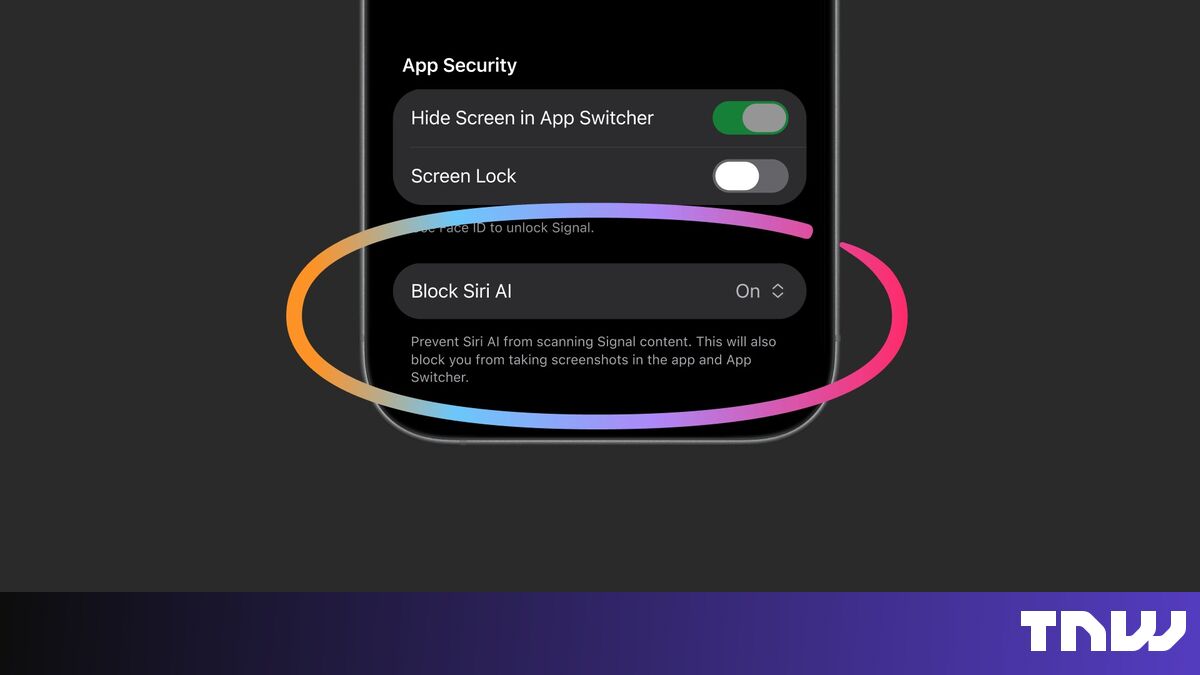
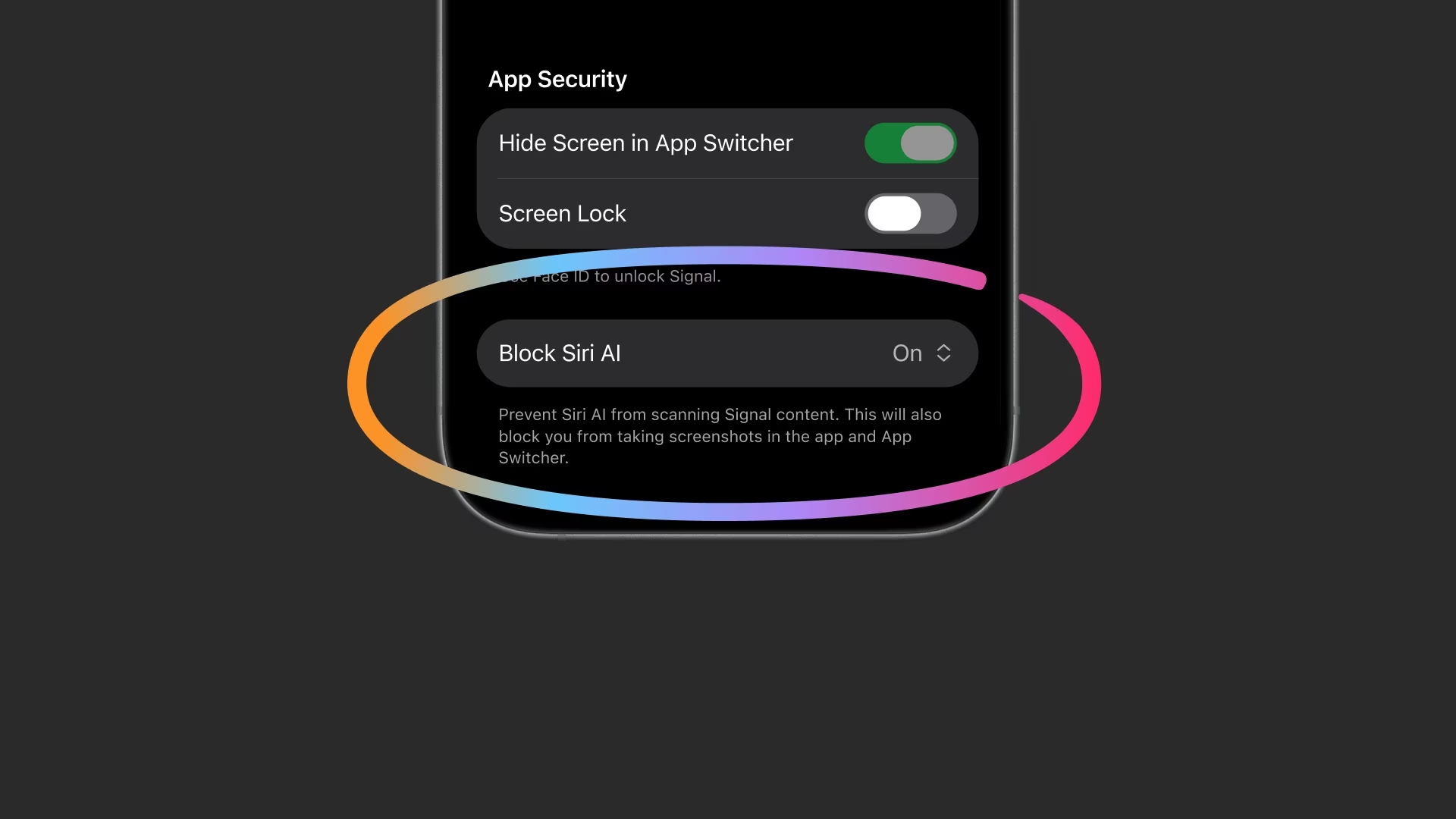
On iOS, a new “Block Siri AI” setting is on by default. Its description says it stops Siri AI from scanning Signal content and also blocks screenshots in the app and the App Switcher. On Android, Signal turns on its Screen security setting when an assistant tries to capture the screen.
Users get pop-up windows that let them switch the block off, depending on the device, Reuters reported. Whittaker warned that doing so could expose their own and their contacts’ messages to the agents.
She called the fix “incomplete”. Blocking screenshots does not stop agents from reaching content already stored on the phone through its filesystem.
Signal took the same step on Windows last year, against Microsoft’s Recall. It cannot do it on macOS. Apple, Google and Microsoft offer no easy way for apps to restrict AI data access without “drastic compromises” to how they work, Whittaker wrote. On a Mac, Signal suggests adding the app to the Excluded Apps list in the Siri settings, Digital Trends reported.
Signal asks for two things. Developers need an easy, documented way to opt their apps out of AI data access, from screen reading to files and notifications. The companies also need to explain how their agents access and process data. Confidential computing approaches “are not a complete solution”, Whittaker wrote.
She also wants tools to rein in third-party agents such as Meta’s Muse. These use the deep permissions people grant them at setup. Such agents use accessibility settings as “a skeleton key”, she wrote.
Muse got around its own Connector tool to pull Signal messages on a Mac and on Android, Reuters reported earlier this week. On the Mac, it used accessibility and screenshot tools. An Apple update this week closed that route but added new agent permissions with extra warnings, according to Reuters.
Meta told Reuters that agents need to see and use people’s computers to work for them. Muse reaches other apps only through permissions users explicitly grant, it said. Meta has denied similar claims before.
Signal said it is “cautiously optimistic” that Google and Apple are engaging with it on the issue. Whittaker has warned about agents since at least June.
“Signal is the canary in the coal mine, but this affects the entire ecosystem,” the post said.
Get the most important tech news in your inbox each week.