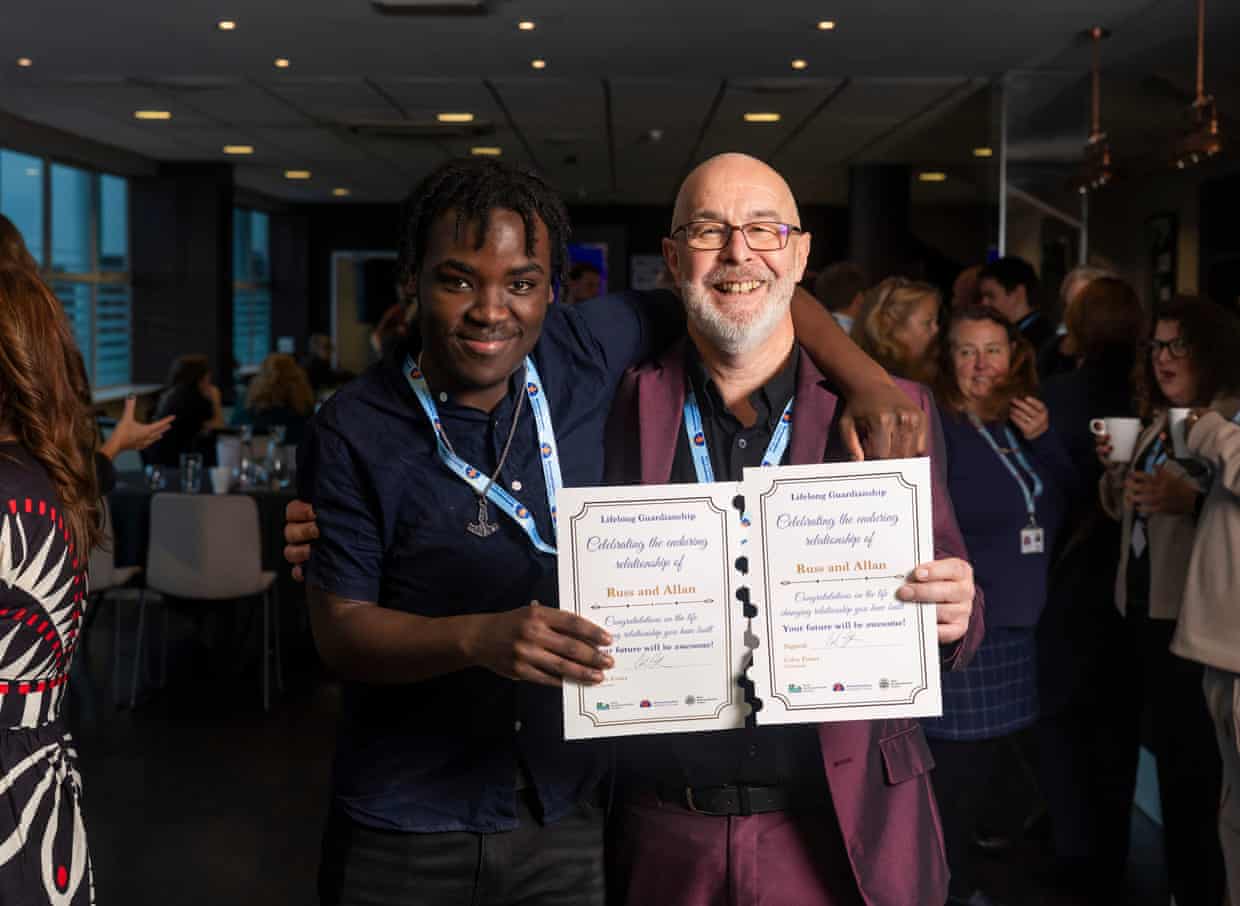


A llan was 14 years old and had been through eight foster families and a stint in a children’s home when he began living with foster carer Russ in Kettering – a move that would change the course of his life.
Russ, 63, fought for Allan to get the school placements he needed and took him to kickboxing every week, eventually joining in himself. When Allan turned 18, he moved out into his own flat, but the pair have stayed close.
“You’ve got me for life now, I’m coming to your wedding,” said Russ. “I think what makes our relationship so special is that we choose to be part of each other’s lives. It’s no longer defined by fostering, it’s just simply who we are together.
“He still comes back for me to take his braids out every six weeks. And he still comes and searches my cupboards for food.”
In Allan’s words: “Moving out meant leaving the house, but not the family.”
The pair were some of the first in the country to take part in a lifelong guardianship ceremony, launched by the government in July as a way for care leavers to publicly affirm a chosen relationship with significant person in their life.
That person could be former foster carer, a mentor, a member of a faith community, a friend, or a wider family figure, and ceremonies can be faith-based, secular or community-led.
Speaking in Northampton before the first ceremonies took place, the children’s minister, Josh MacAlister, said: “As human beings, we thrive through our connection with other people and we find these special moments to mark the people we care about and love.
“We do that with blessings, we do it with weddings, we do it at parties, and we’re doing it today for the first time in this country, with something that’s unique and distinct for care experienced people.”
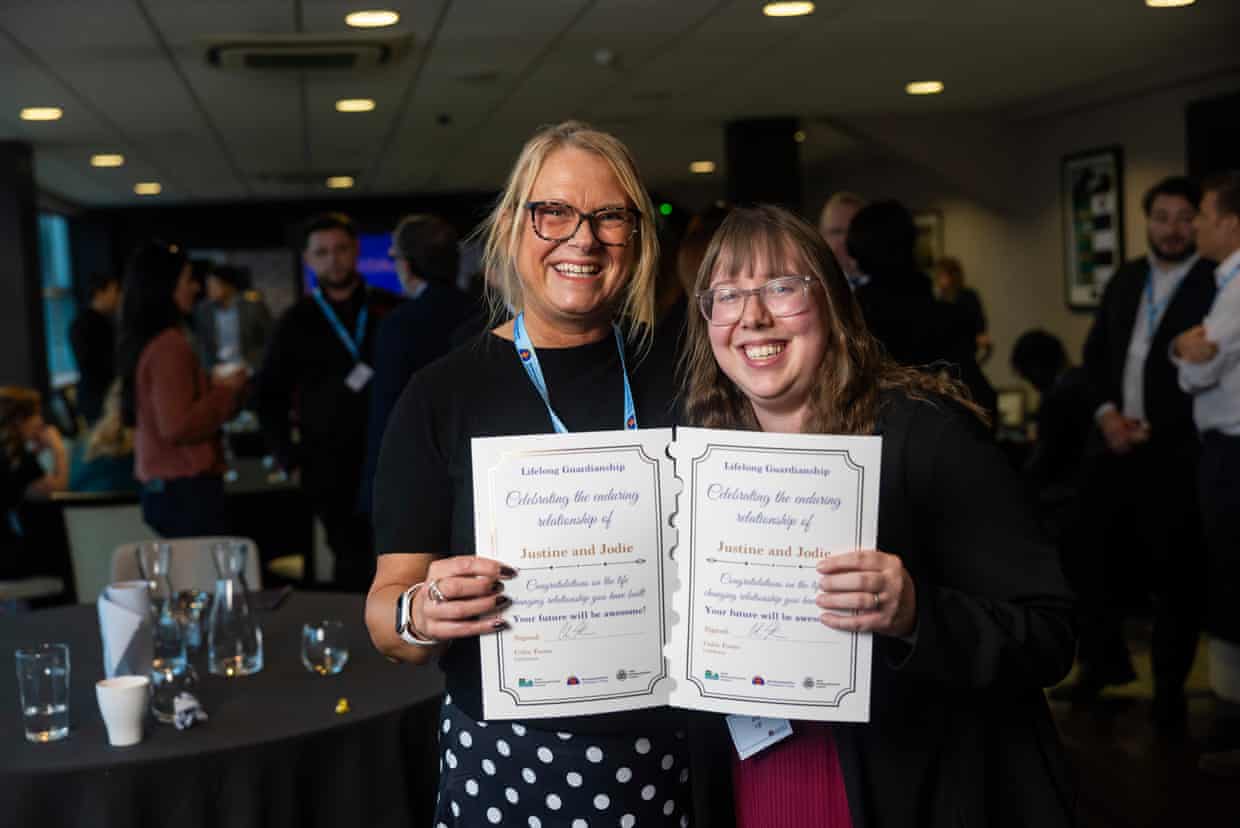
Each of the seven pairs taking part delivered short speeches explaining their relationship and feelings towards each other, before being presented with a lifelong guardian certificate, designed as two jigsaw pieces that fit together.
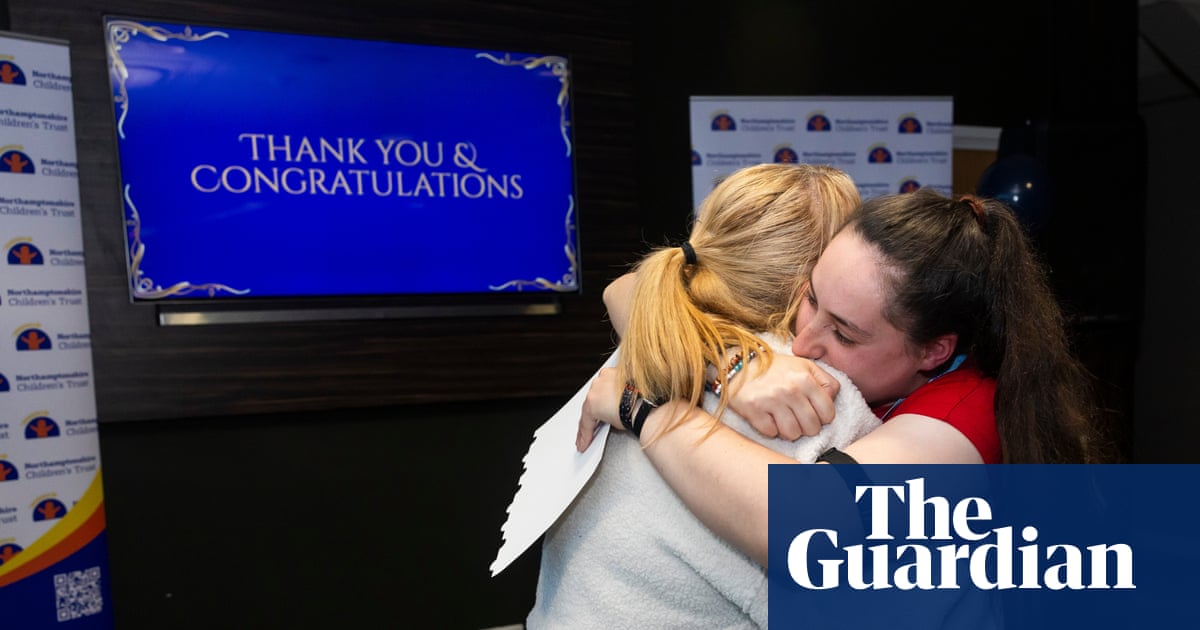
Colin Foster, chief executive of Northamptonshire Children’s Trust, acted as celebrant and navigated people through the teary-eyed event. “Any dry eyes in the house?” he asked at the end.
Russ said that when he met Allan, he couldn’t have imagined how much they would change each other’s lives.
“Five years on, he’s taught me so much about relationships, about trust, about the importance of seeing the person and not just the circumstances that we came together,” he said. “Today, we train together, we share friendship, we share experiences, and he’s encouraged me to be a better version of myself.”
In his speech, Allan said: “What matters most is knowing that I still have someone I can turn to. Whether I have a problem, need advice or simply want to talk – having my own home and independence hasn’t meant losing the relationship we built.”
Justine, 55, who was a personal adviser to 28-year-old Jodie as she transitioned out of the care system into adulthood, said she found the ceremony moving.
“It sparked a lot of emotions for both of us,” she said. “It’s going to be a lifelong relationship. I’ve gained another daughter and I’ve gained another grandson [Jodie’s son, Riley]. That to me is absolutely priceless.”
In her speech, Jody talked about how “when you grow up in the care system, professionals come and go. You get used to things being temporary and chapters ending before you are ready for them to close”.
She said Justine “treated me like a human being who deserves stability and someone firmly in her corner”, and sat at the top table at her wedding in 2022.
“The only relationship that I’ve maintained out of the care system is with Justine,” she said. “When you’re in care, there are a lot of endings, but this was never made to feel like an ending. So the ceremony has been really amazing to show other people how important the relationship is.”
Research has shown that care leavers face huge challenges, particularly due to the “care cliff”, when supports drops away at 18. They are more likely to end up homeless, unemployed and in the criminal justice system.
A landmark review found that profound isolation contributed to the deaths of more than 100 care leavers in England in a year.
MacAlister said the ceremonies were one small part of his enduring relationships strategy, which is designed to make the care system “absolutely obsessed with building connections around young people”.
He has also introduced a new metric to Ofsted and the Department for Education: the quality of young people’s care will be measured on whether their relationships are getting stronger or weaker.
“So much of care is about the mechanics of it and talking about placements, and that can often lead to relationships breaking down,” he said. “These ceremonies are about giving relationships a gravity and an acknowledgment from other people that it’s seen and it matters.
“I think this is one of the most powerful signals in the shift of care that we’ve got in England at the moment.”