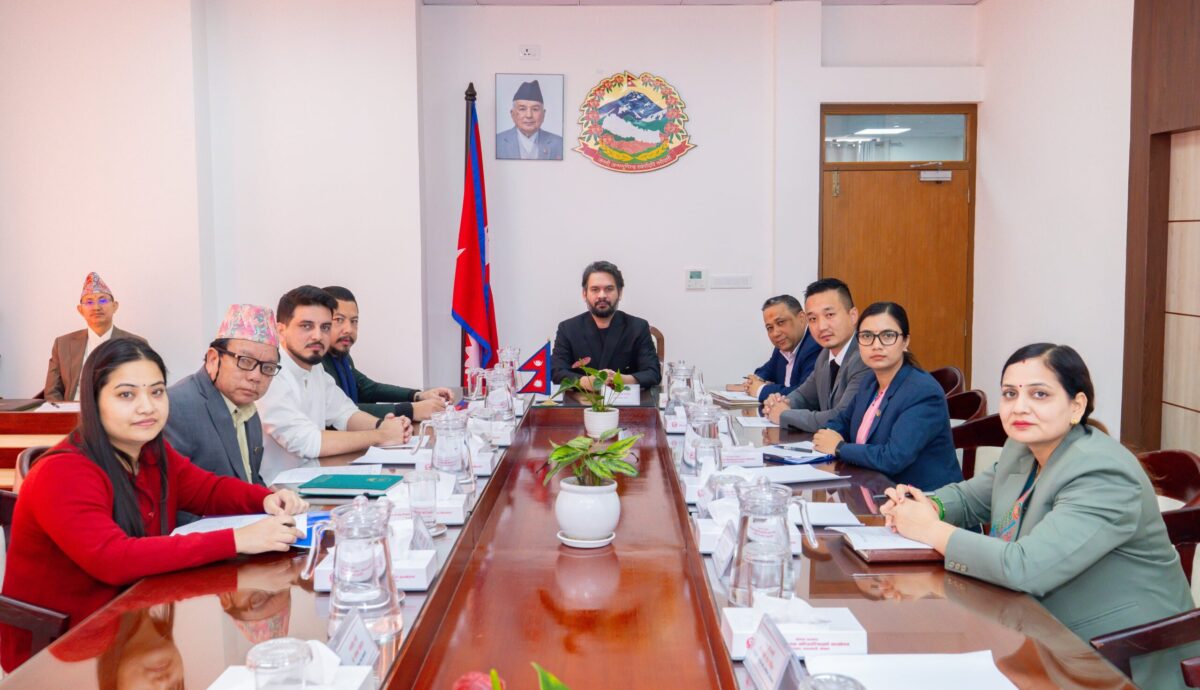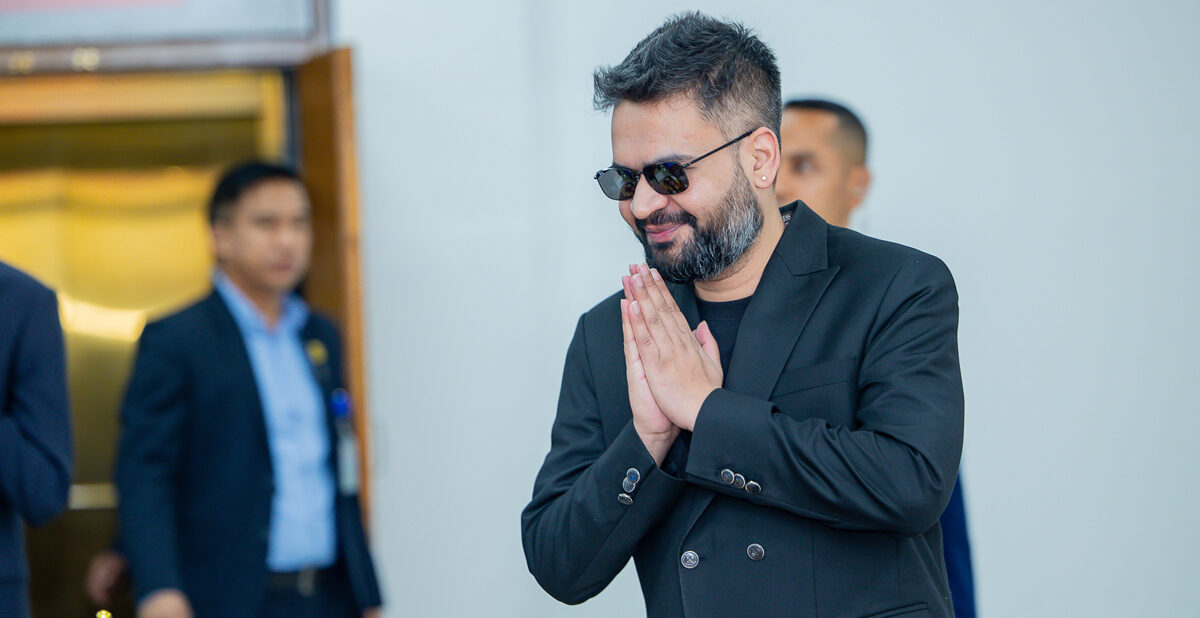
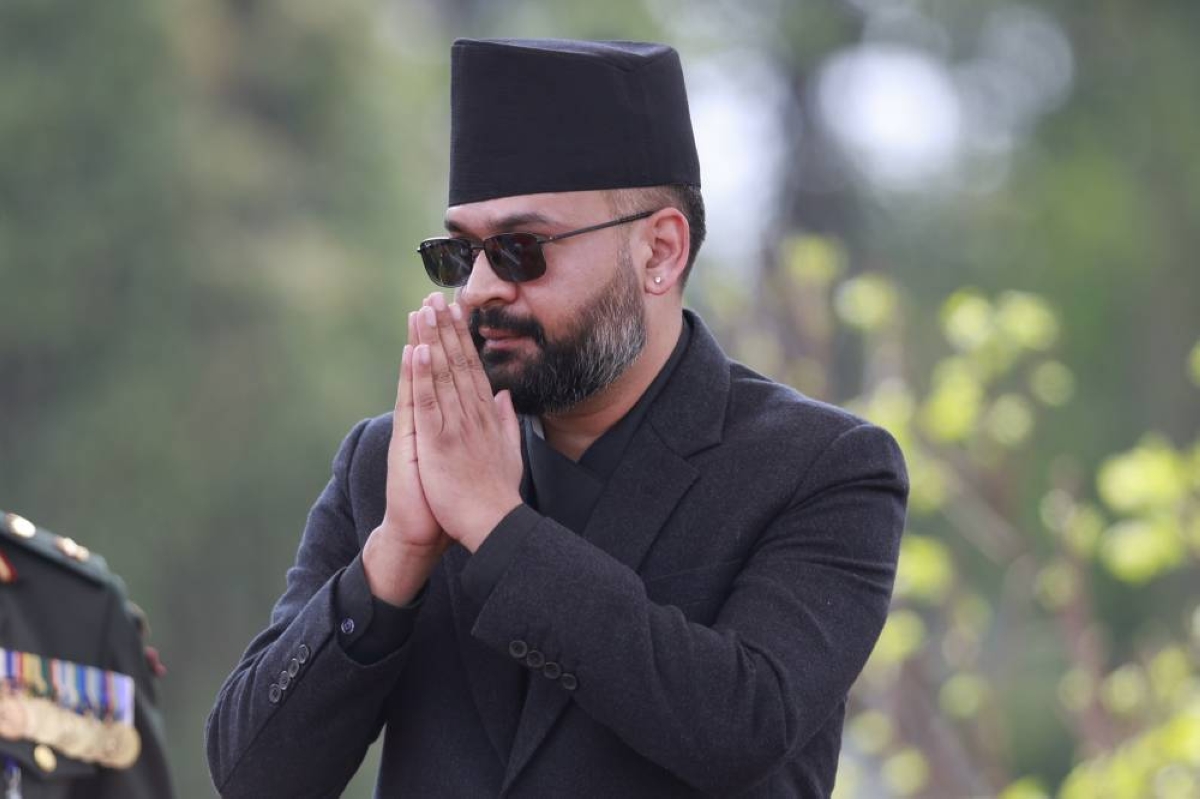
Prime Minister Balendra Shah/File photo
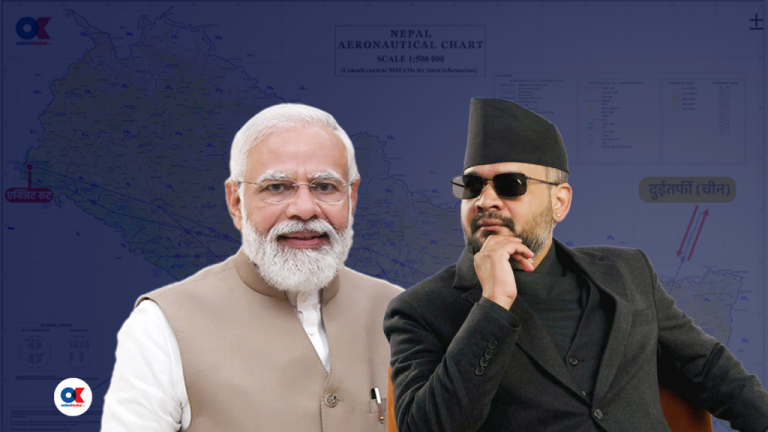
KATHMANDU: Prime Minister Balendra Shah (Balen) is travelling to India on Sunday (November 22) for a two-day state visit at the invitation of Indian Prime Minister Narendra Modi. Shah will leave for India at 1:45 pm on a scheduled Nepal Airlines flight and return home on Monday evening at 6:35 pm.
The visit comes at a significant moment in Nepal-India relations and presents an opportunity to strengthen bilateral ties while advancing issues central to Nepal’s national interests. For Shah, it will also be an early test of his government’s diplomatic approach and its ability to translate political goodwill into concrete outcomes.
Former foreign ministers and diplomatic observers have stressed that rebuilding mutual trust should be the foremost priority of the visit. They argue that Nepal must use the opportunity to address longstanding bilateral concerns while identifying areas of cooperation that offer tangible benefits to both countries. Trade imbalance, additional air-entry routes, border issues, energy cooperation, investment and connectivity are among the key priorities.
Former Foreign Minister Dr. Prakash Sharan Mahat believes the visit should be directed towards building a long-term relationship of trust, recognizing the diverse dimensions of Nepal-India ties. He emphasized that reducing Nepal’s widening trade deficit should be a major priority, alongside creating better opportunities for Nepali goods and services to enter the Indian market.
This is Balen Shah’s first official visit to India since assuming office and comes at the invitation of Indian Prime Minister Narendra Modi. During the visit, the two sides are expected to discuss Nepal-India relations, bilateral cooperation and various agreements and understandings aimed at strengthening ties between the neighbouring countries.
Mahat also drew attention to border-related concerns and the need to address operational challenges facing Bhairahawa and Pokhara international airports. He argues that Nepal should present its concerns clearly while remaining mindful of India’s interests and Nepal’s own sensitivities and national priorities. A productive visit, he suggests, must produce initiatives that accommodate the legitimate concerns of both sides.
Trust-building has also emerged as a central theme in the assessment of former Foreign Minister Pradeep Gyawali. He believes the two countries need to create an environment in which each other’s legitimate concerns are acknowledged and addressed. In his view, the visit should go beyond diplomatic formalities and open discussions on practical areas of economic partnership.
Gyawali particularly highlighted the importance of securing additional air routes for Nepal, recalling that an understanding on providing new routes had been reached during his 2018 visit to India. He also called for accelerating the implementation of hydropower projects and exploring opportunities for joint economic development. Identifying potential projects, developing cross-border value chains and expanding economic cooperation, he argues, would give the visit substantive meaning.
Air connectivity is similarly a major priority for former Foreign Minister Sujata Koirala, who believes the government should use the opportunity to advance unfinished bilateral initiatives. She considers additional air routes particularly important, noting that improved connectivity would benefit both countries by promoting regional tourism, increasing cross-border movement and facilitating trade. Greater cooperation in this area could also strengthen broader people-to-people relations.
Koirala emphasized the need for mutual understanding on Nepal’s proposals and a realistic assessment of which demands can be addressed through bilateral cooperation. Rather than allowing unresolved issues to remain on the diplomatic agenda indefinitely, she believes both sides should work towards practical agreements that serve their shared interests.
PM Balen Shah is scheduled to hold bilateral talks with Indian Prime Minister Narendra Modi at Hyderabad House at 11 am on Monday. Following the meeting, the two sides will exchange memorandums of understanding (MoUs) and issue a joint press statement at 12:25 pm.
Former Foreign Minister Upendra Yadav also underscored the need to transform bilateral relations into a partnership based on confidence and mutual understanding. He argues that investment, development and trade should form the foundation of the discussions, as progress in these areas could create opportunities for prosperity in both countries.
Yadav called for addressing persistent problems related to transit facilities, air routes and border disputes, while also improving the situation of people living in border communities. He stressed the importance of building understanding on security-related concerns and resolving practical difficulties faced by citizens along the Nepal-India border.
Energy cooperation, particularly the development of Nepal’s water resources and electricity trade, is another area he believes deserves attention. He has also highlighted the importance of securing India’s cooperation in facilitating Nepal’s electricity exports to Bangladesh, an issue that requires careful diplomatic engagement and regional coordination.
Beyond the immediate priorities identified by former foreign ministers, diplomats have emphasized the importance of maintaining a balanced and pragmatic approach to Nepal’s engagement with India.
Former Nepali Ambassador to India Dr. Shankar Sharma believes Nepal should remain open to cooperation with different countries according to its national needs rather than adopt rigid positions on what it will or will not pursue. He views the prime minister’s efforts to expedite preparations for the India visit positively, given the importance of the bilateral partnership.
On Monday, the second day of his visit, Prime Minister Shah will receive a formal reception at Rashtrapati Bhavan at 10 am. He will then visit Rajghat, the memorial to Mahatma Gandhi, at 10:40 am to pay his respects.
Sharma also sees considerable potential for concrete outcomes, noting that several bilateral projects and initiatives have progressed over the three years since the previous prime ministerial-level visit. Some projects have reached stages where their foundations can be laid or completed facilities inaugurated, creating opportunities for the visit to deliver tangible results.
However, he cautioned against expecting major new agreements, considering the relatively short preparation period. His assessment underlines the importance of focusing on achievable outcomes and advancing initiatives that are already sufficiently developed rather than making ambitious commitments without adequate groundwork.
Former Nepali Ambassador to India Vijay Kant Karna has also highlighted the strong foundations of Nepal-India relations and the natural convergence of interests in several areas, including energy, trade, investment, connectivity, disaster response and resilience building.
Karna believes both countries need to establish a common direction for cooperation in these sectors, backed by clearly defined timelines and regular follow-up mechanisms. Such an approach would provide government officials with a practical framework for moving bilateral commitments forward and help prevent agreements from remaining confined to official declarations.
Meanwhile, former Indian Ambassador to Nepal Ranjit Rae has emphasized the importance of addressing shared challenges through closer cooperation. Speaking at a programme in Lalitpur earlier this week, Rae described the emergence of a new generation of dynamic Nepali leaders following the September 2025 Gen Z movement as an encouraging development. He noted that the new political generation’s focus on economic development and relative distance from the political baggage of the past could create fresh opportunities for bilateral engagement.
Rae expressed hope that Shah’s visit would help strengthen mutual confidence through direct engagement and face-to-face interaction between the two prime ministers. Their first in-person meeting, he suggested, could provide an opportunity to renew bilateral ties and give fresh momentum to the relationship.
These perspectives highlight a broad consensus among former foreign ministers and diplomats that Nepal’s engagement with India should be guided by pragmatism, mutual respect and clearly defined national interests. While their priorities vary in emphasis, they converge on the need to strengthen trust and convert diplomatic engagement into measurable economic and developmental gains.
Nepal-India relations are rooted in history, geography, economic interdependence and deep people-to-people connections. Their significance extends well beyond the political relationship between the governments of the day. However, longstanding social and cultural ties must be matched by greater political confidence, institutional trust and practical cooperation. The relationship should not be reduced to periodic high-level visits or ceremonial expressions of friendship.
Nepal’s diplomatic experience also offers important lessons. Imbalanced diplomatic conduct, premature decisions and the pursuit of narrow domestic political interests have, at various points, undermined opportunities to advance long-term national priorities. Despite considerable natural resources and economic potential, Nepal has struggled to translate these advantages into sustained development, partly because of policy inconsistencies and weaknesses in strategic decision-making.
For the Balen Shah-led government, the challenge will be to avoid these pitfalls and pursue a consistent, national-interest-driven foreign policy. Nepal needs a relationship with India based on mutual respect, predictability and a clear understanding of each other’s interests. This requires both the confidence to articulate Nepal’s concerns and the diplomatic maturity to recognize areas where cooperation can generate shared benefits.
The success of the visit should not be measured by ceremonial gestures, public statements or political narratives on social media. Nor should it be framed as a contest in which either country must be seen as having won or lost. Its real value will depend on whether it generates momentum towards resolving longstanding bilateral concerns, reducing trade barriers, expanding economic opportunities, improving air and land connectivity, strengthening energy partnerships and safeguarding Nepal’s strategic autonomy.
For Balen, the challenge is to move beyond the politics of symbolism and demonstrate the substance of statecraft. The visit offers an opportunity to establish a more confident, consistent and forward-looking approach to Nepal-India relations. Ultimately, its significance will be determined not by the warmth of diplomatic rhetoric but by the willingness of both governments to translate mutual understanding into concrete action.
The official itinerary for Prime Minister Balendra Shah’s upcoming visit to India has been made public. According to the schedule released by India’s Ministry of External Affairs on Friday, Shah will undertake a two-day visit on November 22 and 23.
Prime Minister Shah is scheduled to arrive at Terminal 3 of Indira Gandhi International Airport in New Delhi at 3:15 pm Indian time (3:30 pm Nepali time) on Sunday.
Later in the evening, he will meet Indian External Affairs Minister S. Jaishankar at the Taj Mahal Hotel at 6 pm.
On Monday, the second day of his visit, Shah will receive a formal reception at Rashtrapati Bhavan at 10 am. He will then visit Rajghat, the memorial to Mahatma Gandhi, at 10:40 am to pay his respects.
Shah is scheduled to hold bilateral talks with Indian Prime Minister Narendra Modi at Hyderabad House at 11 am. Following the meeting, the two sides will exchange memorandums of understanding (MoUs) and issue a joint press statement at 12:25 pm.
Later in the afternoon, Shah will meet Indian President Droupadi Murmu at Rashtrapati Bhavan at 3:15 pm.
According to the itinerary, the prime minister will leave from India for Nepal at 4:50 pm on Monday (November 23).
This is Shah’s first official visit to India since assuming office and comes at the invitation of Prime Minister Modi. During the visit, the two sides are expected to discuss Nepal-India relations, bilateral cooperation and various agreements and understandings aimed at strengthening ties between the neighbouring countries.
Publish Date : 20 November 2026 17:18 PM
KATHMANDU: Prime Minister Balendra Shah (Balen) is travelling to India
KATHMANDU: The Nepal Stock Exchange (NEPSE) closed lower on Friday,
KATHMANDU: The government has collected more than Rs 334.23 million
KATHMANDU: The Election Commission (EC) on Friday held consultations with
KATHMANDU: The Chinese government has decided to provide a cash
Reg No.: 1222/075-76(DOI, Nepal)
Chairman: Naresh Shrestha
Contact: +977 1-4249158
©2026 Khabarhub | All rights reserved.



.png)